

If you are trying to understand what it means when a property is vested, the simple answer is this: a person or entity has a legal right to that property under the applicable documents and laws.
In real estate, property vesting is how ownership is officially established. It shows who owns the property, how they own it, and whether any special rules apply.
This matters to homeowners, buyers, heirs, investors, and real estate professionals because vesting helps show who has legal control. It can also affect inheritance, trust planning, court decisions, and property transfers.
You may hear about vesting when someone buys a home, inherits a house, places property in a trust, or receives property through a legal order. In all of these cases, the vesting details help explain who has rights to the property.
What Does It Mean When a Property Is Vested?

A vested property means the ownership right has already been established. In simple terms, the law recognises that a person or entity has a present interest in the property.
That does not always mean full freedom or total control. A vested interest can exist even if the owner cannot use the property right away, or if the property still has limits like a mortgage, lien, or dispute.
Present interest vs future interest
A present ownership interest means the person already has a legal stake in the property now.
A future interest means the person may receive rights later, but not yet. For example, someone may inherit property after another person passes away. Until that time, the interest may not be fully active.
Simple examples
- A home bought in one person’s name is usually vested in that person.
- A house left to a child in a will may become vested after the legal process is completed.
- Property placed in a trust may be vested in the trustee, not the person living in the home.
So, when you ask what it means for property to be vested, think of it as legal ownership rights being assigned or confirmed.
How Does Property Vesting Work?
The property vesting process usually starts with a legal document. That document tells the law who owns the property or who has the right to own it.
Common documents that affect vesting
- Deeds
- Title records
- Wills
- Trust documents
- Court orders
- Settlement agreements
These papers help show how the property is owned and transferred.
How vesting happens
Property may become vested through:
- A purchase
- Inheritance
- A gift
- A court decision
- A trust arrangement
For example, when a buyer closes on a house, the deed may name the new owner. That is one common way property becomes vested.
Vesting is not the same as recording.
This is an important point. Vesting ownership means the legal right exists. Recording means the transaction is entered into the public record.
A property can be vested in someone even before all records are updated, depending on the jurisdiction. That is why title records matter so much.
Joint ownership can change vesting.
Sometimes property is vested in more than one person. In that case, the deed may show shared ownership. The exact legal effect depends on how the ownership is written and where the property is located.
Because property laws differ, it is always smart to check the local rules that apply to your situation.
Types of Property Vesting and Common Examples
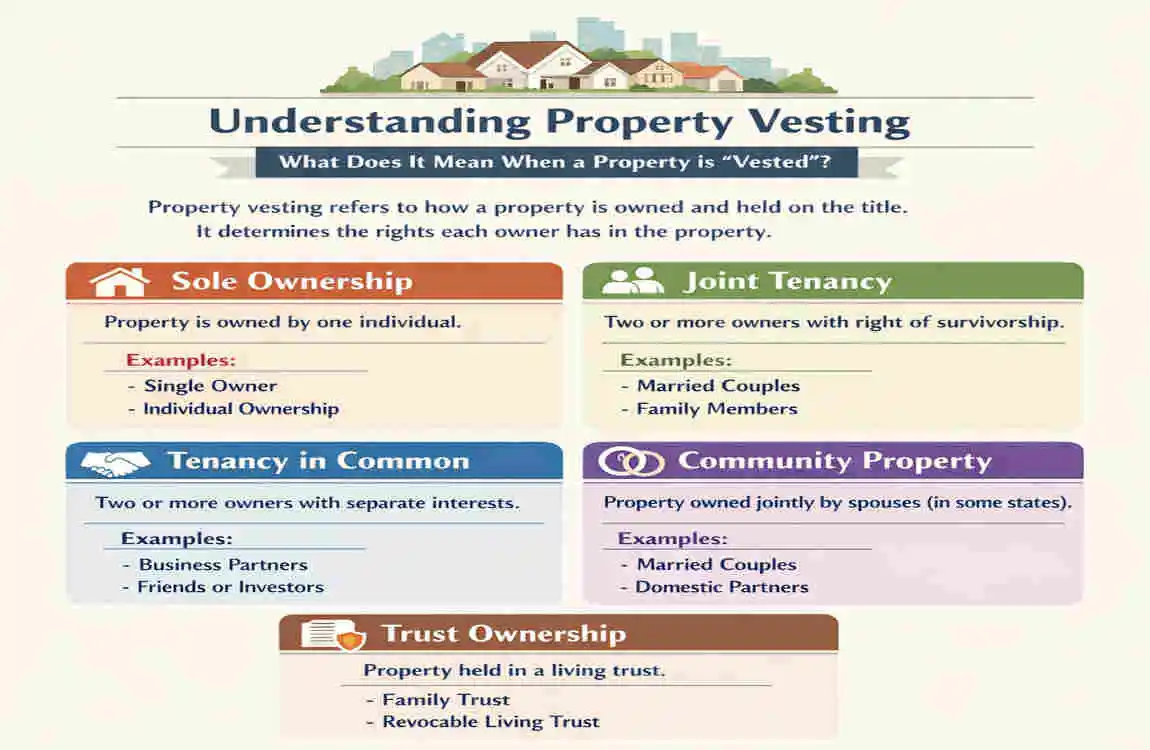
Individual ownership
This is the simplest form. One person or business entity owns the property outright.
Example: A buyer purchases a home in their own name. The title and deed show that person as the vested owner.
Joint ownership
Joint ownership means two or more people share ownership rights. These rights may be equal or unequal, depending on the document.
Example: A married couple may both be listed on the deed. They may each have a vested ownership interest.
Inheritance vesting
Property can also become vested through inheritance. This often happens after someone dies and the estate is settled.
Example: A parent leaves a house to a child in a will. The child may become the vested owner once the legal transfer is complete.
Trust ownership
Property may be vested in a trust. In this case, the trust document controls how the property is held and used.
Example: A homeowner places a rental property in a trust for family planning. The trustee may hold legal title, while the beneficiary has the benefit of the property under the trust terms.
Court-ordered vesting
Sometimes a court decides who gets the property. This may happen during divorce, probate, or a legal dispute.
Example: A divorce settlement may assign the home to one spouse. The court order can change how the property is vested.
Quick comparison table
Type of ownership: Who holds the right? Simple meaning
Individual ownership One person or entity One owner has the vested right
Joint ownership Two or more owners Ownership is shared
Inheritance Heir or beneficiary Rights come through a will or estate
Trust ownership Trustee under a trust Property is held for trust purposes
Court order Person named by the court Ownership is assigned legally
Benefits, Risks, and Important Legal Considerations
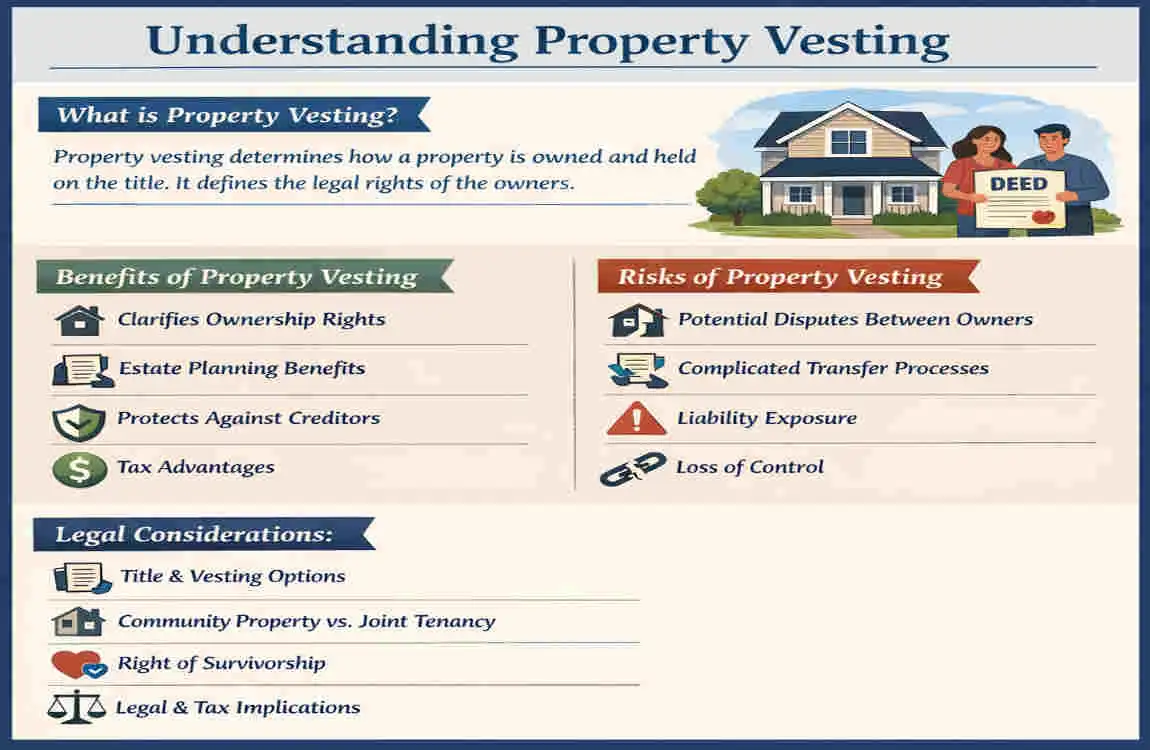
Clear vesting helps reduce confusion. It shows who owns the property and who may have authority to sell, transfer, or manage it.
Why clear vesting matters
- It supports estate planning
- It helps with inheritance
- It makes property transfers easier
- It can reduce disputes over ownership
For buyers, it also helps confirm that the seller has the right to transfer the property.
Risks to watch for
Even if a property is vested, problems can still exist. A vested property may still have:
- Mortgages
- Liens
- Title issues
- Ownership disputes
- Missing documents
- Unpaid debts
That is why vested ownership does not automatically mean the property is free and clear.
What buyers should review
Before buying, it is wise to check:
- The deed
- Property title records
- Trust documents, if involved
- Court records, if there was a legal dispute
If anything looks unclear, a real estate attorney or qualified property professional can help.
Frequently Asked Questions About Vested Property
What does it mean when a property is vested?
It means a person or entity has a legally recognised interest or ownership right in the property, based on the law and the documents involved.
Does vested property mean the property is fully owned?
Not always. A vested interest is a legal right, but it may still be limited by debts or shared-ownership rules.
Can a property be vested in more than one person?
Yes. Joint ownership can give multiple people vested rights in the same property.
What does it mean when property is vested in a trust?
It usually means the property is legally held under the trust’s terms, often by a trustee, for the benefit of named beneficiaries.
Can vested property be sold or transferred?
Sometimes yes, but it depends on the ownership type, legal limits, and local requirements.
Is vested property the same as registered property?
No. Vesting is about ownership rights. Registration records those rights in official records.
| Topic | Short Information |
|---|---|
| Meaning of Vested Property | Property rights or ownership that have been legally established or secured. |
| Property Vesting | The process of assigning or establishing legal ownership or an interest in property. |
| Vested Ownership | A person has an established legal interest in a property, although some conditions may still apply. |
| Common Examples | Property inherited by a beneficiary, real estate held in a trust, or property rights granted by law. |
| Types of Vesting | Sole ownership, joint tenancy, tenancy in common, or ownership through a trust, depending on local law. |
| Importance | Helps clarify who owns the property and who has legal rights over it. |
| Benefits | Can provide greater clarity about ownership, inheritance, and property transfers. |
| Possible Limitations | Mortgages, liens, legal disputes, or transfer restrictions may still affect the property. |
| How to Verify | Review the property deed, title records, trust documents, or relevant land registry records. |
