
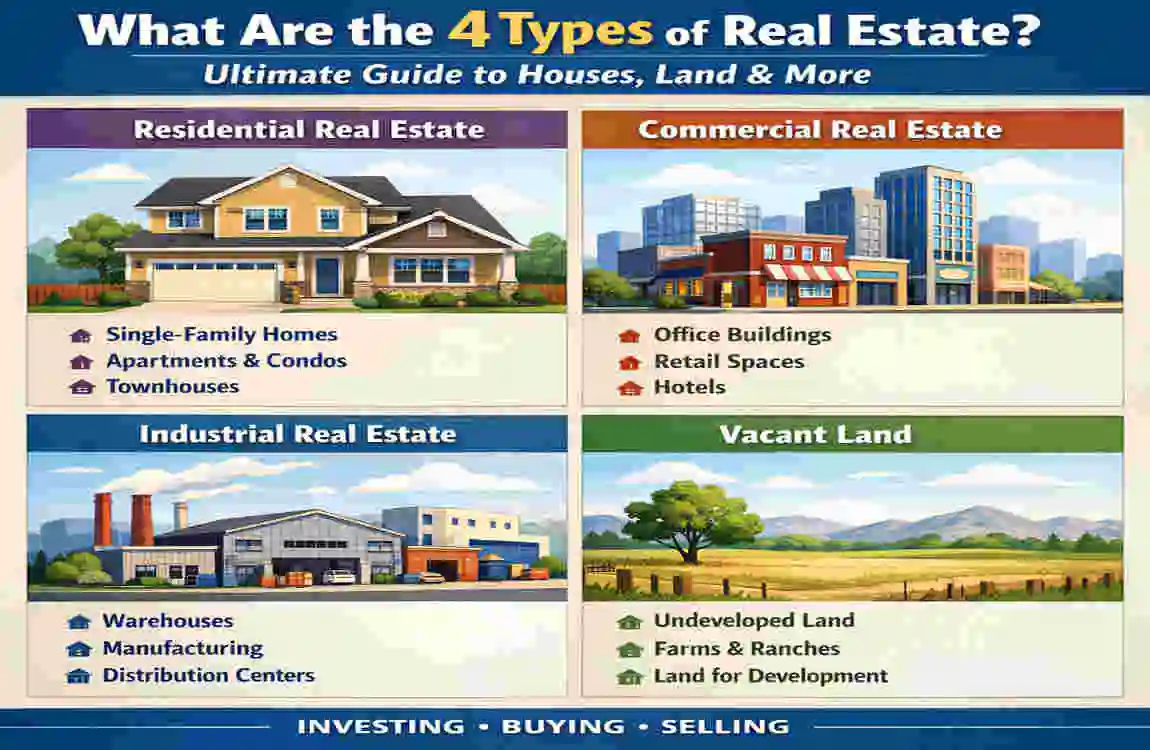
The global real estate market is booming, with its value reaching an astounding $4.5 trillion in 2026. Whether you’re a first-time homebuyer, an aspiring investor, or simply curious about the industry, understanding the 4 types of real estate is essential. These categories—residential, commercial, industrial, and land—form the foundation of the real estate world, each offering unique opportunities and challenges.
With trends like remote work driving suburban housing demand and sustainable development reshaping urban landscapes, knowing the ins and outs of these categories can help you make smarter decisions.
Residential Real Estate – Your Dream House Haven

When most people think of real estate, they picture homes—places where families grow, memories are made, and lives unfold. Residential real estate is all about properties designed for living, and it’s the most familiar and accessible type of real estate for many.
What Is Residential Real Estate?
Residential real estate includes properties where people live. This category covers a wide range of housing options, from single-family homes to sprawling apartment complexes. It’s the most personal type of real estate because it directly impacts people’s daily lives.
In 2026, residential real estate is evolving to meet modern needs. Eco-friendly smart homes are becoming increasingly popular, offering energy efficiency and advanced technology. Suburban areas, especially in regions like Lahore, are seeing a surge in demand as remote work allows people to move away from crowded city centers.
Key Features of Residential Real Estate:
- Types of properties: Single-family homes, townhouses, condos, apartments, and duplexes.
- Purpose: Primarily for living, though some properties are rented out for income.
- Trends: Sustainable housing, gated communities, and smart home technology.
Popular Types of Houses in Residential Real Estate
Residential real estate offers a variety of housing options to suit different lifestyles and budgets. Here are the most common types:
- Single-Family Homes:
- These are standalone houses designed for one family. They offer privacy, space, and the freedom to customize.
- Pros: High resale value, more privacy.
- Cons: Higher maintenance costs.
- Townhouses:
- Townhouses are multi-story homes that share walls with neighboring units. They’re popular in urban and suburban areas.
- Pros: Affordable, low maintenance.
- Cons: Limited privacy.
- Multi-Family Units (Duplexes, Triplexes):
- These properties house multiple families in separate units. They’re great for generating rental income.
- Pros: Income potential, shared maintenance.
- Cons: Higher upfront costs.
Type of House: Affordability, Maintenance, ROI Potential
Single-Family Home Moderate-High High High
Townhouse Moderate Low Moderate
Multi-Family Unit High Shared Very High
Investment Tips for Residential Properties
Investing in residential real estate can be highly rewarding, especially for beginners. Here are some tips to get started:
- Focus on Location: Properties in growing suburbs or near schools and amenities tend to appreciate faster.
- Consider Rental Yields: In regions like Pakistan, residential rental yields range from 7-10% annually.
- Start Small: If you’re new to investing, consider a single-family home or a duplex to minimize risk.
Commercial Real Estate – Profitable Business Spaces
While residential real estate focuses on living spaces, commercial real estate is all about business. These properties are designed to generate income, making them a favorite among seasoned investors.
Defining Commercial Real Estate
Commercial real estate includes properties used for business purposes, such as office buildings, retail stores, hotels, and warehouses. Unlike residential properties, these spaces are not meant for living but for generating revenue.
Examples of Commercial Real Estate:
- Office buildings in urban centers.
- Retail strips near residential neighborhoods.
- Hotels catering to tourists and business travelers.
Key Subtypes and House-Relevant Twists
Commercial real estate is incredibly diverse, with subtypes that often intersect with residential areas. For example:
- Retail Spaces: Shopping centers and strip malls located near housing developments attract foot traffic from nearby residents.
- Mixed-Use Properties: These combine residential and commercial spaces, such as apartments above retail stores.
- Office Conversions: Post-pandemic, many office buildings are being converted into live-work spaces to accommodate hybrid work models.
Why Invest in Commercial ?
Commercial real estate offers higher returns compared to residential properties, with yields ranging from 8-12% annually. It also provides tax benefits and long-term stability through multi-year leases.
Feature Commercial Real Estate Residential Real Estate
ROI 8-12% 7-10%
Lease Terms Long-term (5-10 years) Short-term (1 year)
Maintenance Tenant responsibility Owner responsibility
Industrial Real Estate – Powering Warehouses and Factories
Industrial real estate might not be as glamorous as residential or commercial properties. Still, it plays a crucial role in the economy. These properties are used for manufacturing, storage, and distribution.
Overview of Industrial Real Estate
Industrial real estate includes warehouses, factories, and distribution centers. These properties are often located near major transportation hubs, making them essential for supply chains.
Key Features:
- Purpose: Manufacturing, storage, and logistics.
- Examples: Amazon-style fulfillment centers, cold storage facilities for food.
Modern Industrial Trends
In 2026, industrial real estate is booming thanks to the rise of e-commerce and automation. Companies are investing in green industrial parks to reduce their environmental impact, and cold storage facilities are in high demand due to the growing food delivery industry.
Opportunities for Investors
Industrial properties offer stable, long-term leases and low maintenance costs. They’re ideal for investors looking for steady income with minimal involvement.
Land Real Estate – The Foundation for Future Houses
Land real estate is the most basic type of real estate, but it holds immense potential. Whether it’s a vacant plot or farmland, land is the foundation for all other types of real estate.
What Makes Land a Real Estate Type?
Land real estate includes undeveloped parcels, agricultural fields, and recreational plots. It’s a blank canvas for development, making it a popular choice for investors and developers.
Types of Land and Development Potential
- Agricultural Land: Used for farming and livestock.
- Recreational Land: Parks, campsites, and open spaces.
- Buildable Lots: Vacant plots ready for residential or commercial development.
Buying and Flipping Land Tips
Investing in land can be highly profitable, but it comes with risks. Always check zoning laws and infrastructure availability before purchasing. In Pakistan, land appreciation rates can reach 15% annually, making it a lucrative option for long-term investors.
Comparing the 4 Types of Real Estate: Which Is Right for You?
Choosing the right type of real estate depends on your goals, budget, and risk tolerance. Here’s a quick comparison:
TypeProsConsAvg. ROI
Residential Stable, personal use, High maintenance 7-10%
Commercial High income, long leases Higher upfront costs 8-12%
Industrial Low maintenance, stable Limited locations 6-8%
Land High appreciation potential No immediate income 10-15%
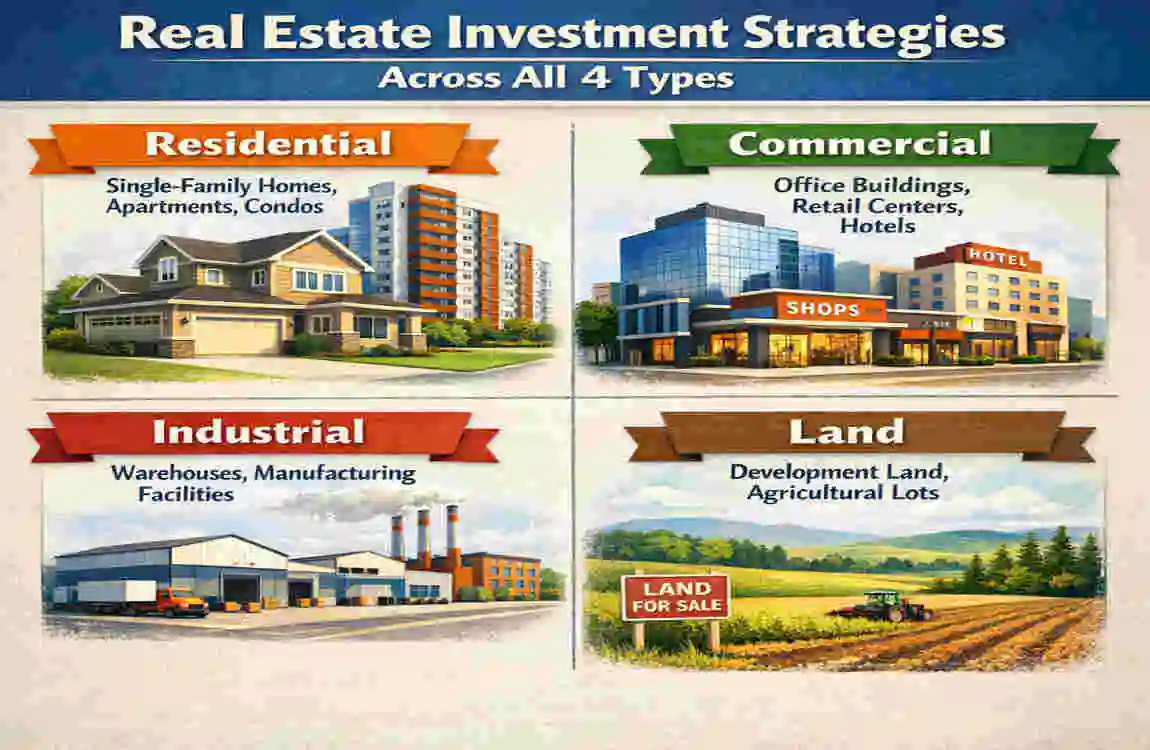
Real Estate Investment Strategies Across All 4 Types
To maximize your returns, consider diversifying across multiple real estate types. For example:
- Residential: Start with a rental property for steady income.
- Commercial: Invest in a retail space for higher yields.
- Industrial: Look for warehouses near growing cities.
- Land: Buy and hold undeveloped plots for long-term appreciation.
FAQs: Answering “What Are the 4 Types of Real Estate?”
What are the 4 types of real estate?
The four types are residential (homes), commercial (business spaces), industrial (warehouses), and land (undeveloped plots).
Which type includes houses?
Houses fall under residential real estate, which also includes apartments, condos, and townhouses.
What’s the best type for beginners?
Residential real estate is ideal for beginners due to its stability and familiarity.
Can I invest in multiple types?
Yes, diversifying across different types can reduce risk and increase returns.
Is land a good investment ?
Absolutely! Land offers high appreciation potential, especially in growing areas.
