

When people buy property, they often think they own everything about it. But real estate ownership is more specific than that. In truth, ownership comprises several legal rights that work together.
This is where the bundle-of-legal-rights real estate concept comes in. It helps explain what a property owner can do, what they cannot do, and what legal limits may apply. If you are buying, selling, or investing in property, understanding these rights can save you from costly mistakes later.
What Is the Bundle of Legal Rights in Real Estate?

Simple Definition
The bundle of legal rights is a simple way to describe property ownership. Instead of thinking of ownership as a single thing, lawyers and real estate professionals treat it as a bundle of rights tied together.
Each right gives the owner a different power over the property. Some rights let you live in it. Others let you sell it, rent it, or keep others out.
Why It Matters
This idea matters because it shows that property ownership is not unlimited. Even if you own a home or land, there may still be rules, restrictions, or shared rights involved.
For homeowners, this means better protection and fewer surprises. For investors, it helps them understand what they are really buying. And for all property owners, it gives a clearer view of legal control.
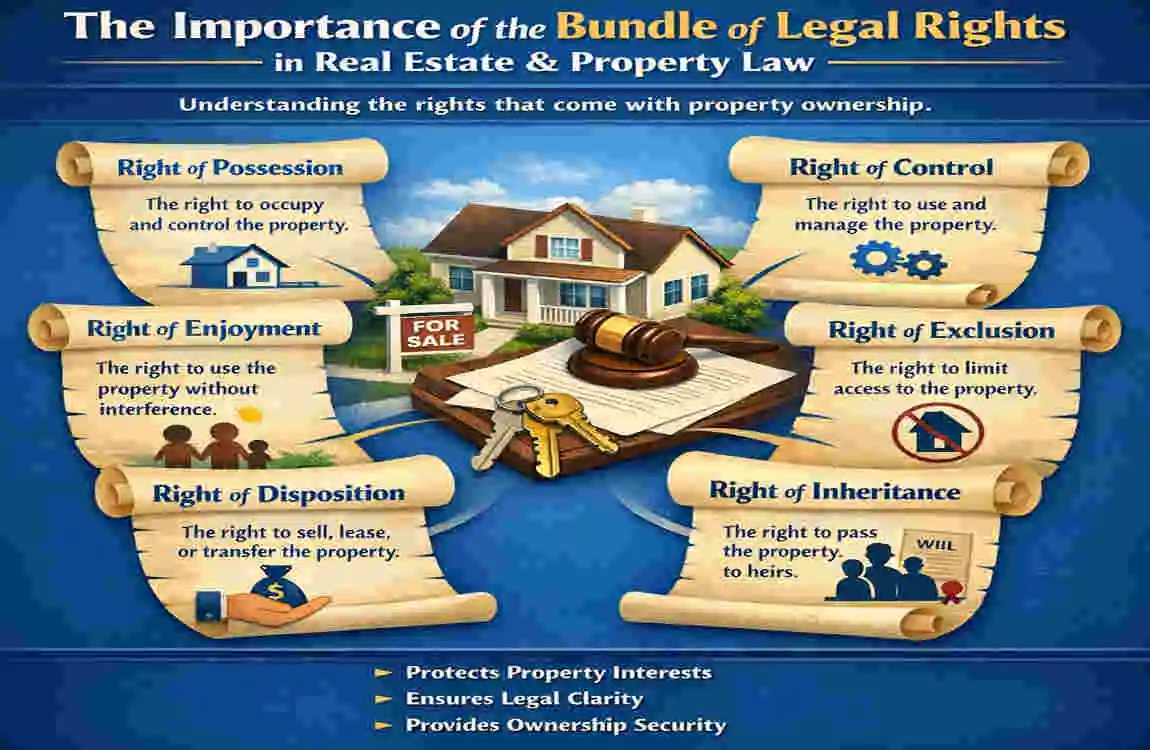
The Five Basic Rights in the Bundle of Legal Rights
Right of Possession
The right of possession means you have the legal right to occupy and hold the property. In simple words, it means the property is yours to use lawfully.
For example, if you buy a house, you have the right to live in it. If you own land, you have the right to keep and use that land within the law.
Right of Control
The right of control lets you decide how to use the property. You can paint your home, make repairs, or improve the layout, as long as you follow the rules.
This right gives owners freedom, but not complete freedom. Local laws, permits, and community rules may still apply.
Right of Enjoyment
The right of enjoyment means you can use the property peacefully without unnecessary interference. You should be able to enjoy your home, yard, or building without others disturbing you.
This right supports privacy and peaceful use. It is one reason ownership feels valuable and secure.
Right of Exclusion
The right of exclusion means you can keep others out of your property unless they have a legal reason to enter. This is one of the most important rights in real estate.
If someone enters without permission, it may count as trespassing. Of course, some people may still have legal access, such as utility workers with an easement.
Right of Disposition
The right of disposition means you can transfer the property to someone else. You may sell it, lease it, gift it, or pass it on through inheritance.
This right is what makes real estate a valuable asset. It allows owners to decide what happens to the property in the future.
Quick View of the Five Rights
Right What It MeansSimple Example
Possession Right to hold and use the property Living in your house
Control Right to manage and improve it Renovating a kitchen
Enjoyment Right to peaceful use Enjoying privacy at home
Exclusion Right to keep others out Preventing trespassing
Disposition Right to transfer ownership Selling or inheriting property
How the Bundle of Legal Rights Works
Real-Life Example
Think about a homeowner. They can live in the house, decorate it, and decide whether to sell it. They can also keep strangers out of the backyard. All of that comes from the bundle of rights.
Now think about a rental property. The landlord may own the building, but the tenant has some rights too. The tenant can live there and enjoy the space for the duration of the lease. So, the rights are shared in certain ways.
Ownership Types
Different ownership types affect how the bundle of legal rights works.
- Sole ownership — one person holds all the main rights
- Joint tenancy — two or more people share ownership equally
- Tenancy in common — people share ownership, but not always equally
- Trust ownership — property is owned through a trust for legal or estate planning reasons
Each type changes how the rights are used and transferred.
Limitations on Property Rights
Even though property ownership gives you many rights, those rights are not absolute. Some limits always apply.
Government Restrictions
Local and state governments can limit property use through:
- Zoning laws
- Building codes
- Taxes
For example, you may not be allowed to build a commercial store in a residential neighborhood. That is a zoning issue.
Easements
An easement gives another person or company limited use of your property.
Common examples include:
- Utility easements
- Shared driveways
You still own the property, but someone else may legally access part of it.
HOA Rules
If your home is in a homeowners association, the HOA may set rules about:
- Exterior colors
- Fence height
- Landscaping
- Parking
These rules can affect your control over the property.
Eminent Domain
The government can take private property for public use under a rule called eminent domain. This usually happens for roads, utilities, or public projects.
However, the owner must usually receive fair compensation.
Bundle of Legal Rights vs Property Ownership
Many people confuse property rights with full freedom. But ownership can come in different forms.
Full Ownership
With full ownership, you control most of the bundle of rights. You can live in the property, use it, and transfer it.
Still, laws and easements may apply.
Partial Ownership
In some cases, you only own part of the rights. This happens in shared ownership or legal agreements.
You may not be able to make decisions alone.
Leasehold Rights
If you rent, you do not own the property. Instead, you have a leasehold right, which permits you to use the space for a set time.
You can enjoy the property, but the landlord keeps the ownership rights.
Life Estate
A life estate gives one person the right to use the property for life, after which it passes to another person.
This is often used in estate planning.
Common Examples of Property Rights in Everyday Life
The bundle of legal rights appears in many common situations.
- Buying a home — you gain possession, control, and disposition rights
- Renting a house — you gain use rights, but not full ownership
- Selling land — you use your right of disposition
- Commercial property ownership — you may control use, leasing, and improvements
- Vacation homes — you may limit access and decide how the property is used
- Agricultural land — water, zoning, or farm use rules may limit rights
These examples show that real estate rights are part of daily life, not just legal theory.
Why the Bundle of Legal Rights Is Important
For Homebuyers
If you are buying a home, you should know exactly what rights come with it. This helps you avoid surprises after closing.
For Sellers
Sellers must understand what they are transferring. If there are easements, liens, or HOA rules, they should be clear before the sale.
For Real Estate Investors
Investors need to know how much control they really have. This affects rental income, property improvements, and resale value.
For Landlords
Landlords use their rights to set lease terms, maintain the property, and protect their investment. At the same time, they must respect tenant rights.
Common Misconceptions About Property Rights
A few myths come up often in real estate.
- Owning land means unlimited freedom — not true; laws and restrictions still apply.
- Property owners can never lose rights — not true; rights can be limited by law, contract, or government action.
- HOAs cannot limit ownership — not true; HOA rules can affect property use.
- Easements eliminate ownership — not true; you still own the property.
- Renting provides full ownership rights — not true; renters only have lease rights.
Understanding these points helps you make smarter property decisions.
Tips for Protecting Your Property Rights
If you want to protect your interests, keep these simple steps in mind:
- Read the property deed carefully.
- Review title reports.
- Understand local zoning laws.
- Check HOA regulations.
- Purchase title insurance.
- Consult a real estate attorney when needed.
These steps can help you avoid legal problems and protect your investment.
Frequently Asked Questions
What is the bundle of legal rights in real estate?
It is the set of legal rights that accompany property ownership, including possession, control, enjoyment, exclusion, and disposition.
What are the five rights included in the bundle of legal rights?
They are possession, control, enjoyment, exclusion, and disposition.
Can property rights be limited?
Yes. Zoning laws, easements, HOA rules, taxes, and eminent domain can all limit property rights.
Does owning property mean you can do anything you want?
No. Property owners must still follow laws, codes, and local rules.
What is the difference between possession and ownership?
Possession means holding or using the property. Ownership means having legal title and broader rights.
Can the government take private property?
Yes, through eminent domain, but the owner is usually entitled to compensation.
| Aspect | Details |
|---|---|
| Term | Bundle of Legal Rights in Real Estate |
| Definition | A collection of legal rights that come with property ownership, allowing the owner to use, control, transfer, and benefit from the property. |
| Purpose | Defines what a property owner can legally do with their real estate. |
| Right of Possession | Gives the owner the legal right to occupy and possess the property. |
| Right of Control | Allows the owner to manage, improve, lease, or decide how the property is used, subject to local laws. |
| Right of Enjoyment | Lets the owner use the property without unreasonable interference from others. |
| Right of Exclusion | Gives the owner the authority to prevent unauthorized people from entering or using the property. |
