
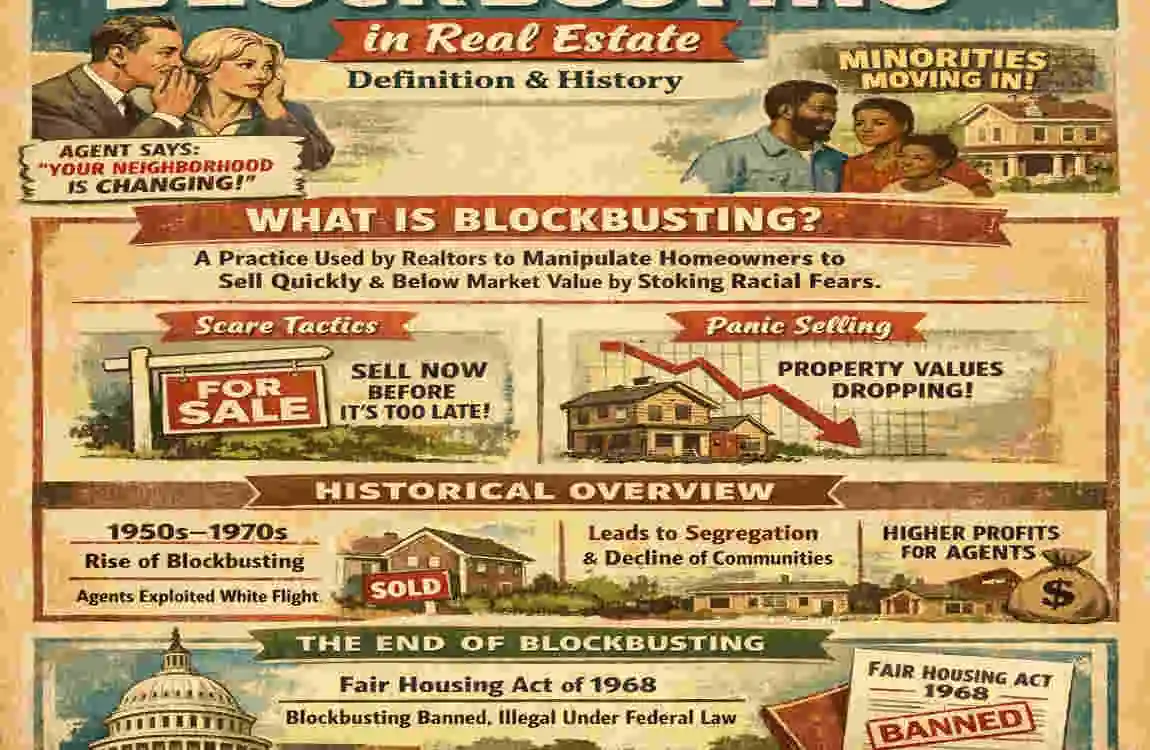
Have you ever wondered how entire neighborhoods can change almost overnight? Sometimes it happens naturally, but other times it was pushed along by shady business tactics. One of the most damaging of these tactics is something called blockbusting. If you’re curious about the meaning of blockbusting in real estate, you’ve come to the right place.
In simple terms, blockbusting was a scheme in which real estate agents scared homeowners into selling their houses cheaply. They did this by playing on people’s fears, and then they resold those homes for a big profit. It sounds unfair because it was. This practice harmed families, split communities, and left scars that some areas still feel today.
Understanding old real estate practices like this one really matters. When you know how the housing market was manipulated in the past, you can spot warning signs today. You also learn to appreciate the laws that now protect buyers and sellers from being tricked.
What Is Blockbusting in Real Estate?
Let’s start with the basics. Before we explore the history and the effects, you should have a clear picture of what this term actually means.
Simple Definition
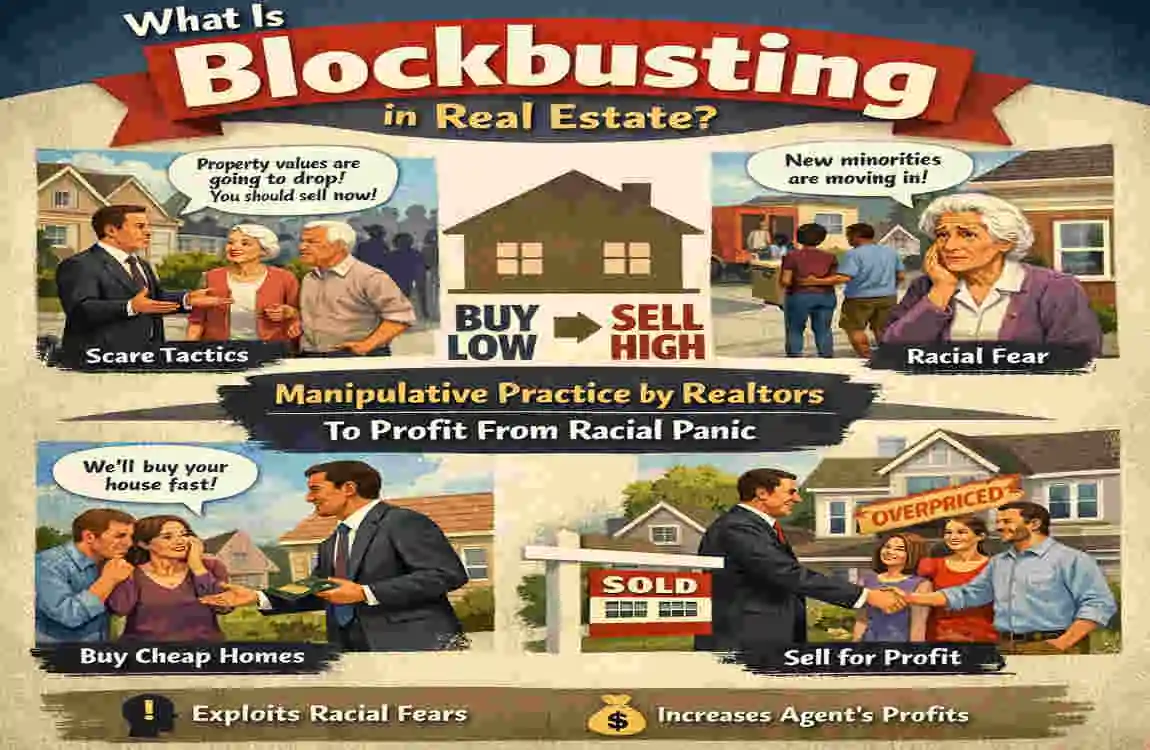
Blockbusting is an unethical practice in which real estate agents convince homeowners to sell their properties quickly, often out of fear. The agents then flipped these homes and pocketed the difference.
Think of it like this. Imagine someone knocking on your door and telling you that your neighborhood is about to fall apart, so you’d better sell now before you lose everything. That scary message was often false, but it worked. Homeowners panicked and sold their houses for far less than they were worth.
How Blockbusting Worked
The whole scheme relied on a few sneaky steps.
First, agents would create fear among homeowners. They spread rumors that certain groups of people were moving into the area, hinting that property values would crash. This fear was often tied to race, which made the tactic even more harmful.
Second, they encouraged quick home sales. Once homeowners were nervous, agents offered to buy their houses fast and cheap. Frightened families often accepted these low offers to escape what they believed was coming.
Third, agents made their money by profiting from the resale. They turned around and sold those same homes to other buyers, often at much higher prices. The gap between the cheap purchase and the expensive sale was pure profit.
Why It Was Unethical
You might already see why this practice was so wrong. Let’s break down the biggest problems.
- Manipulation: Agents lied and used fear to control people’s decisions.
- Discrimination: The scheme relied heavily on racial prejudice to work.
- Community harm: Neighborhoods were torn apart, and trust between neighbors disappeared.
Simply put, blockbusting treated people’s homes and lives like game pieces. It put profit above honesty and fairness, which is why it eventually earned such a bad reputation.
The History of Blockbusting
Now that you understand the basics, let’s travel back in time. Blockbusting didn’t appear out of nowhere. It grew out of a specific era in American history when housing and cities were changing fast.
Origins in the United States
The roots of blockbusting stretch back to the years after World War II. During this time, millions of soldiers returned home and wanted to start families. This created a huge demand for housing across the country.
At the same time, cities were expanding rapidly. New suburbs popped up, and people moved around in search of better opportunities. This mix of high demand and shifting populations gave sneaky agents the perfect chance to profit.
Urban expansion also meant that neighborhoods were constantly in flux. As people moved in and out, real estate professionals saw an opportunity to accelerate these changes for their own gain. They realized that fear could be a powerful tool.
Growth During the 1950s and 1960s
Blockbusting truly took off during the 1950s and 1960s. This period was marked by deep racial segregation in the United States. Many white families lived in areas that were kept separate from Black families through both formal and informal rules.
Agents used this segregation to their advantage. They would introduce a Black family into a mostly white block, then warn the other homeowners that the whole area was about to change. Playing on racial fears, they convinced white families to sell in a hurry.
As these families fled, the neighborhoods changed quickly. Agents bought low from panicked sellers and sold high to families who had few other housing options. This cycle repeated block after block, which is exactly where the name “blockbusting” comes from.
Famous Historical Examples
Blockbusting affected many major cities across the country. Places like Chicago, Baltimore, and Detroit saw large-scale versions of this practice. Entire communities were transformed in just a few years.
The lasting consequences were serious. Many neighborhoods that experienced blockbusting fell into decline. Property values dropped, public services suffered, and racial divisions deepened. Some of these areas struggled for decades to recover.
These historical examples remind us that housing is about more than just buildings. It’s about people, families, and communities. When those are manipulated for profit, the damage can last generations.
Why Was Blockbusting Used?
You might be asking yourself why anyone would do something so harmful. The answer usually comes down to money, fear, and control over the market.
Financial Motivation
The number one reason for blockbusting was profit. Agents saw a chance to make a lot of money by buying low and selling high.
When they scared homeowners into selling cheaply, they gained properties at bargain prices. Then they sold those same homes at much higher rates. The bigger the fear, the bigger the profit, so agents had every reason to keep the scheme going.
Fear-Based Sales Tactics
Fear was the engine that drove the whole operation. Agents knew that scared people make quick decisions, and quick decisions often lead to low prices.
They used many tricks to spread this fear. Some made phone calls warning of falling values. Others hired people to walk through neighborhoods to make homeowners nervous. Every trick was designed to push families toward a fast, panicked sale.
Impact on Housing Prices
Blockbusting had a strange double effect on housing prices. On the one hand, prices dropped as frightened homeowners sold cheaply. On the other side, prices rose when agents resold to buyers with limited choices.
This gap between the low buying price and the high selling price was where the money lived. It also created chaos in the market, since prices no longer reflected the real value of the homes. Instead, they reflected fear and manipulation.
Effects of Blockbusting on Communities
The damage from blockbusting went far beyond individual sales. It reshaped entire communities, often in painful ways. Let’s look at the biggest effects.
Neighborhood Instability
One of the clearest results was instability. When many homes change hands quickly, a neighborhood loses its sense of stability. Familiar faces disappear, and new families arrive faster than anyone can settle in.
This constant turnover made it hard for communities to build strong bonds. Schools, churches, and local businesses all struggled to keep up with the rapid changes. Instead of steady growth, these areas experienced constant upheaval.
Declining Property Values
Blockbusting often led to declining property values over time. Even though agents made money in the short term, the long-term effect on the area was usually negative.
As homes were sold in panic and resold at inflated prices, the true market value became confused. Many buyers ended up owing more than their homes were worth. Over the years, this instability dragged down property values and made it harder for families to build wealth.
Racial Segregation
Perhaps the most harmful effect was deepened racial segregation. Blockbusting relied on racial fear, and it left behind neighborhoods that were more divided than before.
White families fled to suburbs, while Black families were often steered into specific areas. This created sharp lines between communities that still exist in many cities today. The practice didn’t just reflect segregation; it actively made it worse.
Economic and Social Consequences
The economic and social consequences of blockbusting were long-lasting. Families who sold cheaply lost out on wealth they could have passed down. Meanwhile, families who bought at inflated prices often faced financial strain.
Socially, the practice bred distrust and division. Neighbors who might have gotten along were pitted against each other by fear. The ripple effects touched schools, jobs, and local economies for years to come.
Is Blockbusting Illegal Today?
Here’s some good news. Blockbusting is no longer legal. Over time, lawmakers recognized the harm it caused and put strong protections in place. Let’s look at how the law handles it now.
Fair Housing Laws
The most important protection comes from fair housing laws. The Fair Housing Act of 1968 made it illegal to discriminate in the sale or rental of housing based on race, color, religion, and other protected characteristics.
This law directly targets blockbusting. It bans the use of fear or false claims about changing neighborhoods to push homeowners into selling. Because of this, the classic blockbusting scheme is clearly against the law.
Federal Regulations
Federal regulations back up these laws with real enforcement. Agencies like the Department of Housing and Urban Development, often called HUD, oversee fair housing rules.
These agencies investigate complaints and take action against those who break the rules. They work to make sure that housing decisions are based on fairness, not fear or prejudice. This oversight helps keep the market honest.
Penalties for Violations
Breaking fair housing laws comes with serious penalties. Violators can face large fines, lawsuits, and damage to their professional reputations.
Real estate agents who engage in blockbusting can lose their licenses. In serious cases, they may face legal action from both the government and the people they harmed. These consequences make it clear that the practice is no longer tolerated.
Blockbusting vs. Other Real Estate Practices
Blockbusting is often confused with other unfair housing practices. While they share some similarities, each works differently. The table below breaks down the key differences.
Practice Purpose Legal Status
Blockbusting Fear-based selling Illegal
Redlining Loan discrimination Illegal
Steering Directing buyers by race Illegal
Ethical Marketing Fair promotion Legal
As you can see, blockbusting used fear to make people sell. Redlining, on the other hand, involved banks refusing loans in certain neighborhoods. Steering happened when agents guided buyers toward or away from areas based on race.
The only legal practice on this list is ethical marketing. This means promoting homes honestly and fairly, without lies or discrimination. Understanding these differences helps you recognize what constitutes fair and unfair behavior.
How Buyers and Sellers Can Protect Themselves
You don’t have to feel powerless in the housing market. There are smart steps you can take to protect yourself from unfair tactics. Let’s go through a few of them.
Research the Market
Knowledge is your best defense. Before you buy or sell, take time to research the market in your area. Look at recent sale prices, trends, and neighborhood data.
When you understand the true value of dream homes, you’re much harder to fool. If someone tries to scare you with false claims, your research will help you see through the lies.
Work with Licensed Professionals
Always work with licensed professionals. Reputable agents follow strict ethical rules and fair housing laws. They have a lot to lose if they break the rules, which keeps them honest.
Check an agent’s credentials before you trust them with your home. A licensed, respected professional will guide you fairly and protect your interests.
Know Your Fair Housing Rights
It’s important to know your rights. Fair housing laws exist to protect you, but they only help if you understand them.
Learn what agents and sellers can and cannot do. If someone pressures you with fear or discrimination, you’ll know your rights are being violated and can take action.
Verify Local Market Data
Finally, always verify local market data from trusted sources. Don’t just take one person’s word about what’s happening in a neighborhood.
Check public records, official reports, and multiple listings. When you double-check the facts, you protect yourself from manipulation and make smarter decisions.
Common Myths About Blockbusting

There’s a lot of confusion out there about blockbusting. Let’s clear up some of the most common myths so you have the right information.
- Myth: It still happens legally. This is false. Blockbusting is illegal under fair housing laws, and violators face real penalties.
- Myth: It only affected one community. Not true. Blockbusting harmed many cities and communities across the entire country.
- Myth: It was good for property values. This is a big misunderstanding. While a few agents profited, the practice often hurt property values and stability in the long run.
- Myth: It is the same as normal marketing. Definitely false. Ethical marketing is honest and fair, while blockbusting relied on fear and lies.
Knowing the truth behind these myths helps you understand the real impact of this practice. It also helps you appreciate why fair housing laws are so important today.
Frequently Asked Questions (FAQs)
What is the meaning of blockbusting in real estate?
Blockbusting is an unethical and illegal practice where agents use fear to persuade homeowners to sell their properties quickly for profit.
Why is blockbusting illegal?
It violates fair housing laws because it relies on discrimination and deceptive sales tactics.
When was blockbusting common?
It became widespread during the 1950s and 1960s in many U.S. cities.
How is blockbusting different from redlining?
Blockbusting pressured homeowners to sell, while redlining denied loans or insurance based on neighborhood demographics.
Does blockbusting still happen today?
The practice is illegal, though regulators continue to monitor and enforce fair housing laws against similar discriminatory behavior.
How can homeowners avoid blockbusting tactics?
Work with licensed real estate professionals, research local market conditions, and understand your rights under fair housing laws.
| Topic | Information |
|---|---|
| Term | Blockbusting in Real Estate |
| Definition | A discriminatory real estate practice where agents encouraged homeowners to sell by creating fear that minority groups moving into the neighborhood would lower property values. |
| Purpose | To convince homeowners to sell quickly, allowing agents to profit from increased property sales. |
| How It Worked | Agents spread rumors or used scare tactics, bought homes at lower prices, and resold them at higher prices. |
| Time Period | Most common in the United States during the 1950s–1970s. |
| Who Was Affected | Homeowners, minority families, and entire neighborhoods. |
| Legal Status | Illegal under the Fair Housing Act of 1968, which prohibits housing discrimination. |
| Historical Impact | Contributed to racial segregation, unequal housing opportunities, and long-term economic disparities in many communities. |
| Modern Relevance | Considered an unethical and illegal practice; fair housing laws protect buyers and sellers from discrimination. |
| Key Takeaway | Blockbusting is a historical example of housing discrimination and highlights the importance of fair and equal treatment in real estate transactions. |
