

The real estate market value of the home is the price a buyer would reasonably pay in today’s market. It is not always the same as the asking price, the tax value, or the appraised value.
What Does Real Estate Market Value Mean?
Market value is the likely selling price of a home in normal market conditions. It is shaped by what buyers are willing to pay and what similar Property are selling for nearby.
Market Value vs. Market Price
These two ideas sound similar, but they are not always the same.
- Market value is the estimated worth of the home.
- Market price is the actual amount a buyer agrees to pay.
A home may be listed for one price but sell for a different one depending on demand, timing, and negotiation.
Why Home Value Can Change
Home value is not fixed. It can go up or down because of:
- Local demand
- Interest rates
- Home improvements
- Neighborhood changes
- Housing supply
- The overall economy
Why Should You Know Your Home’s Market Value?
Knowing your home’s value can help you before:
- Selling your home
- Refinancing a mortgage
- Applying for a home equity loan
- Buying another property
- Reviewing insurance coverage
It also helps you avoid overpricing or undervaluing your home. That makes your financial planning more realistic.
What Factors Determine the Real Estate Market Value of a Home?
Several things affect the real estate market value of the home. Some matter more than others, but all of them play a part.
Location
Location is one of the biggest factors. Buyers often pay more for homes in areas with:
- Good schools
- Safe streets
- Nearby shops and services
- Parks and transit
- Strong job access
A great house in a weak location may still sell for less than a smaller home in a highly desirable area.
Size and Layout
Buyers look at:
- Total square footage
- Number of bedrooms
- Number of bathrooms
- Floor plan
- Lot size
A home that feels open, functional, and well-designed often has stronger value.
Property Condition
A home in good shape usually attracts more buyers. People notice:
- Roof condition
- Foundation health
- Plumbing and electrical systems
- HVAC quality
- Windows and doors
- Kitchen and bathroom condition
Small repairs can matter more than many homeowners expect.
Renovations and Upgrades
Some updates may increase value, especially if they improve function and appearance. Common examples include:
- Kitchen upgrades
- Bathroom remodels
- New flooring
- Energy-efficient windows
- Better landscaping
Still, not every project returns its full cost, so it is smart to think carefully before spending.
Local Market Conditions
If there are more buyers than homes for sale, prices often rise. If there are too many homes on the market, prices may slow down.
This is why two similar homes can have different values at different times.
How to Calculate the Real Estate Market Value of Your Home
There is no single perfect method, but there are several useful ways to estimate value.
Compare Similar Homes
Look at comparable homes, often called comps. These are nearby homes that recently sold and are similar in:
- Size
- Location
- Bedrooms
- Bathrooms
- Condition
- Property type
This is one of the best ways to understand what buyers are paying right now.
Use Price Per Square Foot
A simple formula is:
home sale price ÷ total square footage = price per square foot
This is not perfect, but it helps you compare homes more easily.
Check Online Home Value Tools
Online estimates can give you a fast starting point. They are helpful for quick research, but they may miss upgrades, damage, or local market changes.
Ask a Real Estate Professional
A local agent knows the neighborhood and can give helpful insight based on recent sales and buyer demand.
Consider a Professional Appraisal
An appraisal is more formal and usually more detailed. It can be useful if you need a precise number for lending or refinancing.
Market Value vs. Appraised Value vs. Assessed Value
These terms are often confused, but they mean different things.
Value Type What It Means Common Purpose
Market Value Estimated current worth in the open market Selling or buying
Market Price Actual agreed sale price Property transaction
Appraised Value Professional valuation Lending and financing
Assessed Value Value used for taxes Property tax calculation
Online Estimate Computer-generated estimate Quick research
These numbers can differ because they are based on different methods and goals.
How the Local Real Estate Market Affects Home Value
The market around your home has a big impact on its value.
Buyer Demand
When many buyers want homes in your area, prices usually go up.
Housing Inventory
- Low inventory: prices may rise
- Balanced market: prices stay steadier
- High inventory: buyers have more choices so that prices may soften
Mortgage Interest Rates
When rates go up, buyers may be able to afford less. That can affect home prices.
Economic Conditions
Jobs, inflation, and consumer confidence all matter. Strong local economies usually support stronger home values.
Home Improvements That May Increase Market Value
Some upgrades can make your home more attractive to buyers.
Kitchen Improvements
Simple updates like new cabinets, lighting, countertops, or appliances can improve appeal.
Bathroom Improvements
Updated fixtures, better storage, and fresh flooring can make a strong impression.
Exterior Improvements
Curb appeal matters. Fresh paint, landscaping, a clean entry door, and roof care can help a lot.
Energy-Efficient Improvements
Better insulation, energy-efficient windows, and updated HVAC systems can attract buyers seeking lower utility costs.
Common Mistakes When Estimating Home Value
Many homeowners make avoidable errors.
- Using old sales data
- Comparing very different homes
- Overvaluing emotional attachment
- Thinking renovation cost equals added value
- Relying on just one online estimate
A better approach is to compare several sources and look at the market as a whole.
Real Estate Market Value Example
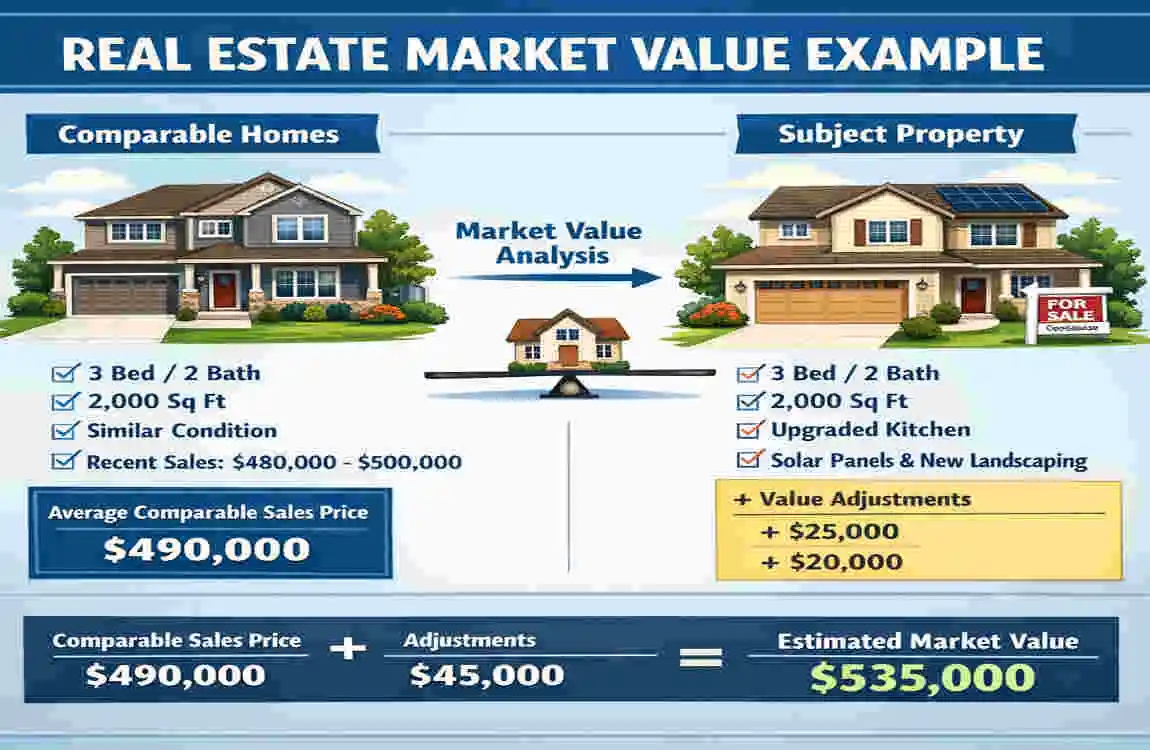
Here is a simple process you can follow:
- Gather your home details
- Look at recent nearby sales
- Check current listings
- Compare price per square foot
- Review your home’s condition
- Factor in improvements
- Study local market trends
- Talk to a local real estate professional
- Get an appraisal if needed
Frequently Asked Questions About Real Estate Market Value
What is the real estate market value of the home?
Explain that it is the estimated amount a property could reasonably sell for under current market conditions, based on factors such as location, condition, size, comparable sales, and buyer demand.
How can I find out how much my house is worth?
Explain that homeowners can research comparable sales, use online valuation tools, consult a real estate professional, or obtain a professional appraisal.
What is the biggest factor affecting home value?
Location is often one of the most important factors, but property condition, size, comparable sales, market demand, and local economic conditions also matter.
Does renovating a house increase its market value?
Renovations can increase appeal and potentially increase market value, but the return depends on the improvement, quality, cost, and local buyer preferences.
Is assessed value the same as market value?
No. Assessed value is generally used for property-tax purposes, while market value reflects what a property may reasonably command in the current market.
Are online home-value estimates accurate?
They can provide a useful starting point, but they may not account for the home’s exact condition, improvements, unique features, or very recent local market changes.
| Factor | How It Affects Home Value |
|---|---|
| Location | Desirable neighborhoods, schools, transport, and amenities can increase value. |
| Home Size | Larger living areas and useful spaces generally add value. |
| Property Condition | Well-maintained homes usually attract higher offers. |
| Recent Upgrades | Renovated kitchens, bathrooms, flooring, and energy-efficient features can improve value. |
| Comparable Sales | Recent sales of similar nearby homes help determine current market value. |
| Market Demand | Strong buyer demand can push home prices higher. |
| Curb Appeal | Landscaping, exterior condition, and appearance can influence buyer interest. |
| Professional Appraisal | An appraiser can provide an independent estimate based on market evidence. |
