

The New York real estate market is one of the most watched property markets in the country. It attracts buyers, sellers, renters, and investors because it offers a wide range of housing choices, strong demand in many areas, and long-term value in many neighbourhoods.
When people talk about real estate in New York, they may mean very different things. New York City has a fast-moving, high-priced market with apartments, condos, and co-ops. At the same time, other parts of New York State offer single-family homes, multifamily buildings, and more affordable options.
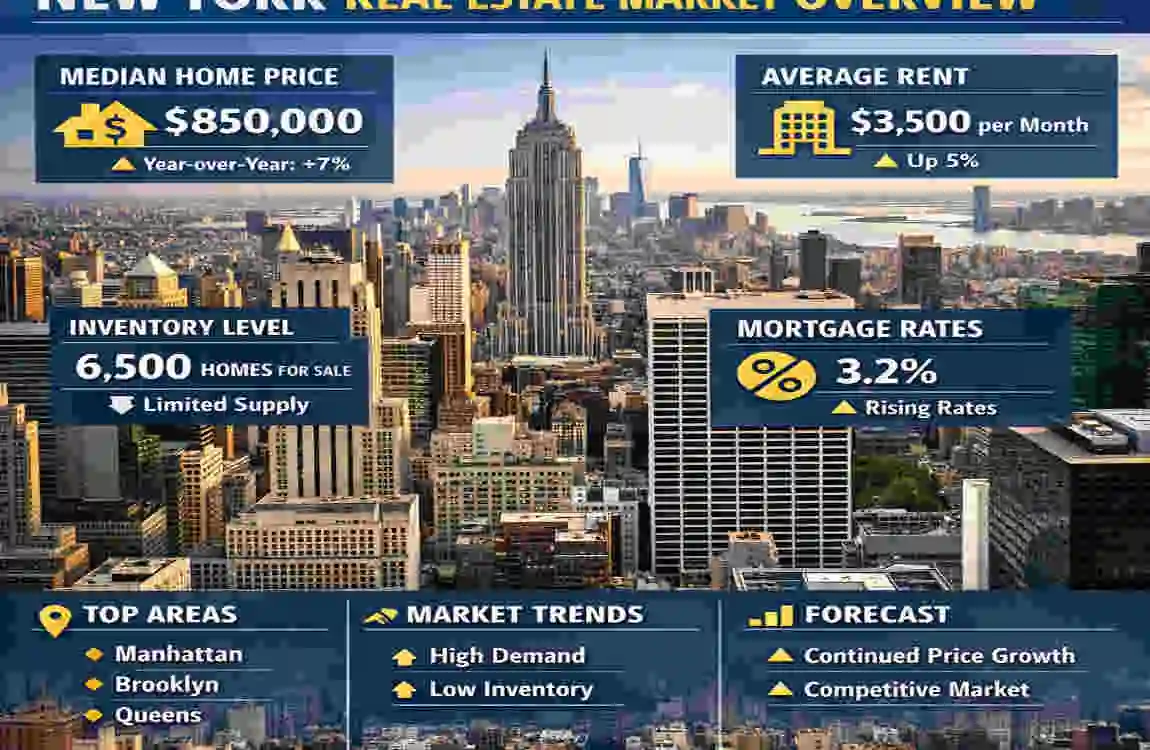
New York Real Estate Market Overview
Current Market Trends
The New York market often changes based on the economy, mortgage rates, and housing supply. In many areas, limited inventory keeps competition strong. When fewer homes are for sale, buyers may have fewer options and may need to move quickly.
Rental demand also stays important in many parts of the state, especially in cities and job centres. When buying becomes more expensive, more people rent instead.
Interest rates can also change the pace of the market. When rates rise, monthly mortgage payments increase, and some buyers step back. When rates are lower, more people may feel ready to buy.
New York City vs. Upstate New York
New York City and upstate markets are very different. NYC usually has higher prices, denser housing, and more apartments, condos, and co-ops. Upstate areas like Buffalo, Rochester, and Albany often offer more space and lower prices.
This difference matters because the same budget can buy very different homes in different parts of the state. A buyer looking for affordability may find more value outside the city, while someone who wants urban living may focus on NYC.
Popular Property Types
New York offers a wide mix of property types. Some of the most common include:
- Apartments and condos
- Co-ops
- Single-family homes
- Multifamily properties
- Luxury properties
Each type comes with different costs, rules, and ownership responsibilities. For example, co-ops often require board approval, while multifamily homes can appeal to investors seeking rental income.
What Affects Real Estate Prices in New York?
Location and Neighbourhood Demand
Location is one of the biggest drivers of property value. Homes near transportation, schools, shopping, parks, and job centres often cost more because they are more convenient.
A neighbourhood with strong demand usually holds value better over time. That is why buyers often study the area as carefully as the house itself.
Interest Rates and Financing
Mortgage rates have a direct effect on affordability. Even if the home price stays the same, a higher rate can raise the monthly payment enough to change a buyer’s decision.
That is why buyers should compare loan terms and understand the full monthly cost, not just the listing price. A small difference in rate can create a big difference in long-term cost.
Supply and Demand
When few homes are available, buyers may compete more aggressively. That can push prices up. On the other hand, if more homes are listed or new construction enters the area, the market may feel less tight.
Supply and demand can vary from one part of New York to another. A neighbourhood with limited housing and strong demand often behaves very differently from a growing suburban area.
Economic and Population Trends
Jobs, business growth, and migration patterns matter a lot. If people move into an area for work or lifestyle reasons, demand usually rises.
Household growth also matters. When more families and individuals need housing, prices and rents may increase if supply does not keep up.
Buying Property in the New York Real Estate Market

Set a Realistic Budget
Before you start looking, decide what you can truly afford. Do not look only at the purchase price. You should also think about:
- Mortgage payments
- Property taxes
- Insurance
- Maintenance
- Closing costs
- HOA or building fees, if any
This helps you avoid surprises later. A home that looks affordable at first may become expensive once all monthly and one-time costs are added.
Choose the Right Location
Location should match your lifestyle and your long-term goals. Think about commute time, nearby services, school access, and neighbourhood feel.
If you plan to stay for years, future resale value should also matter. A good location is often one of the safest parts of a purchase.
Get Financing Ready
Mortgage preapproval can make a big difference. It shows sellers that you are serious and financially prepared.
It also helps you stay focused on properties that fit your budget. That saves time and keeps your search realistic.
Inspect and Research the Property
A property may look good online, but the real condition matters more. A professional inspection can help you find hidden issues before you buy.
You should also review property records, building details, and neighbourhood information. If you are buying in a condo or co-op building, understand the rules and fees too.
Understand Closing Costs
Closing costs are easy to overlook, but they matter. These are the final expenses you pay to complete the purchase.
They may include lender fees, title work, attorney costs, taxes, and other charges. Always include them in your early budget planning.
Investing in Real Estate New York
Rental Property Opportunities
Many investors look at apartments, multifamily homes, and other income-producing properties. These can create monthly cash flow if the numbers make sense.
New York can offer strong rental demand in many areas, but the right property type matters. What works in one city may not work in another.
Long-Term vs. Short-Term Investment
Some investors focus on long-term appreciation. Others care more about rental income. In many cases, the best choice depends on your personal goals and risk level.
Long-term investors may look for stable neighbourhoods and steady growth. Income-focused investors may look for places with strong tenant demand and manageable costs.
Important Investment Factors
Before you buy, review these key points:
- Location
- Rental demand
- Property taxes
- Maintenance costs
- Vacancy risk
- Financing costs
- Potential return on investment
Each one affects profit and risk. A property can look attractive but still perform poorly if taxes, repairs, or vacancies are too high.
Risks to Consider
Real estate is not risk-free. Markets can change, repairs can be expensive, and local rules can shift over time.
Higher financing costs can also reduce profit. That is why investors should run careful numbers before buying.
Selling Property in New York
Prepare the Property
A clean, well-kept home usually sells better. Before listing, take care of small repairs, deep cleaning, and decluttering.
Presentation matters. Buyers often form an opinion quickly, so the first impression should feel inviting and cared for.
Determine a Competitive Asking Price
Pricing too high can slow down a sale. Pricing too low can leave money on the table. The best approach is usually to compare similar properties and study current market conditions.
Try not to price based only on what you hope to get. Market reality should guide the decision.
Marketing the Property
Good marketing helps your home stand out. That often includes:
- Professional photography
- Strong online listings
- Clear property descriptions
- Open houses
- Targeted marketing to likely buyers
The better the presentation, the more likely you are to attract serious interest.
Work With a Real Estate Professional
An experienced agent can help with pricing, negotiations, paperwork, and closing steps. That support can make the process smoother and reduce mistakes.
If you are unsure about the process, professional guidance can save both time and stress.
New York Real Estate Market: Tips for Buyers and Investors

Smart Tips to Keep in Mind
Here are a few practical habits that can help:
- Research the neighbourhood before making an offer.
- Look at traffic, services, schools, and future development.
- Compare several properties.
- Do not focus on just one listing too early.
- Calculate full ownership costs.
- Include taxes, fees, insurance, and maintenance.
- Avoid short-term hype.
- Make decisions based on your own needs, not market noise.
- Review future resale or rental potential.
- Think beyond the first year of ownership.
FAQ About Real Estate New York
Is New York real estate a good investment?
It can be, but it depends on location, property type, purchase price, financing, and rental demand. The best fit depends on your goals.
Is real estate expensive in New York?
It varies a lot. New York City is usually much more expensive than many suburban or upstate areas.
What should I consider before buying property in New York?
Focus on budget, location, financing, property condition, taxes, closing costs, and long-term plans.
Is New York City real estate different from upstate New York?
Yes, very different. NYC has higher prices, denser housing, and more apartments, while upstate areas often offer more space and lower costs.
Should I buy or rent in New York?
That depends on your budget, how long you plan to stay, and your financial goals. Renting can offer flexibility, while buying may help build equity over time.
What are the highest costs of owning property in New York?
The major costs usually include mortgage payments, property taxes, insurance, maintenance, utilities, and building or association fees.
| Key Area | Quick Information |
|---|---|
| Market Overview | New York has a diverse and competitive real estate market. |
| Property Types | Apartments, condos, townhouses, single-family homes, and luxury properties are common. |
| Popular Areas | Manhattan, Brooklyn, Queens, the Bronx, and Staten Island offer different housing options. |
| Prices | Property prices vary widely by location, size, condition, and neighborhood. |
| Investment Potential | Strong demand and limited space can make New York attractive for long-term investors. |
