
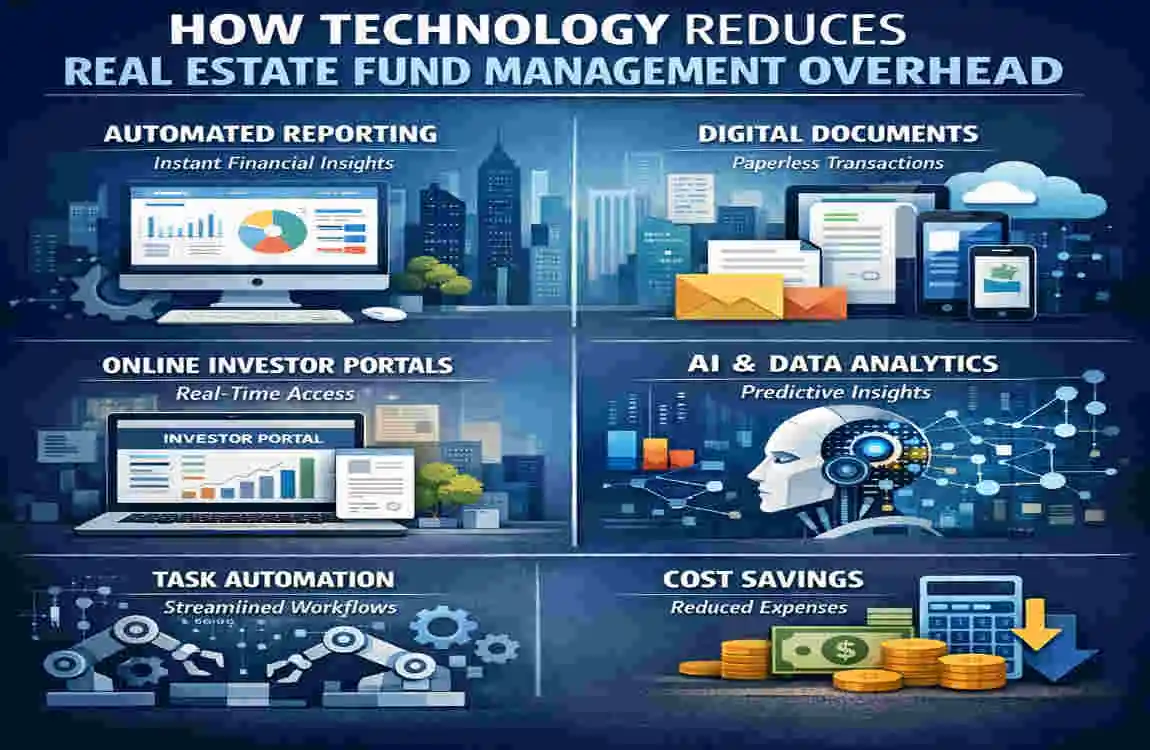
Real estate fund management can become busy very quickly. As a fund grows, so do the number of properties, investors, reports, payments, and compliance tasks. What starts as a simple operation can turn into a system full of spreadsheets, manual checks, and long hours of admin work.
That is where solutions for reducing overhead in real estate fund management become so important. Technology helps teams work faster, stay organized, and reduce mistakes. It also gives fund managers more time to focus on decisions that actually grow the business.
Real Estate Fund Management Tasks That Create High Overhead
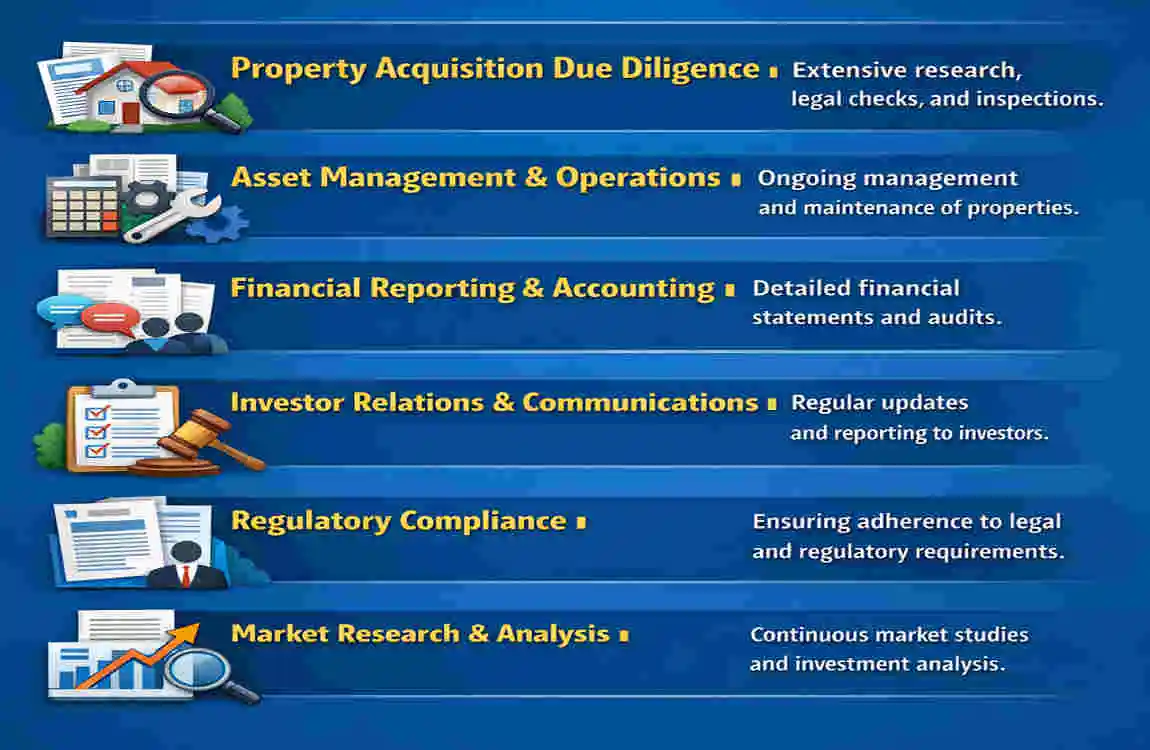
Administrative and Operational Work
Much overhead starts with simple daily tasks. Teams often manage investor files, property documents, lease records, and internal approvals. When done manually, it takes time and increases the risk of missed information.
Investor communication also adds to the workload. Sending updates, responding to questions, and preparing routine notices can easily take up a large part of the team’s day.
Property-level and fund-level data collection is another major task. Managers may need to gather details from different systems, people, or locations before they can even start reporting.
Accounting and Financial Management
Accounting is one of the biggest areas where overhead builds up. Fund teams must carefully track income, expenses, distributions, contributions, and capital balances.
When teams handle this through spreadsheets or disconnected tools, reconciliation slows down and becomes stressful. Manual financial reporting also takes a lot of time, especially when a fund owns multiple properties or uses several entities and accounts.
Even small errors can create extra work later. A wrong figure or missing entry can lead to corrections, delays, and confusion across the team.
Compliance and Reporting Challenges
Compliance work adds another layer of pressure. Funds must keep records organized, accurate, and ready for review. They also need to meet investor reporting requirements and maintain audit-ready documentation.
This becomes harder when files are stored in different places or updated by different people. During audits, teams may spend days or weeks gathering the right documents.
That is one of the biggest reasons firms look for solutions to reduce overhead in real estate fund management. Better systems can reduce the burden of compliance before it becomes a problem.
Why Manual Processes Become Expensive
Manual processes are expensive because they consume staff time. They also create repeated work. If someone builds one report by hand every month, the hours add up quickly.
Human error is another cost. Data entry mistakes, missed updates, and duplicate records all require correction. These fixes slow down the team and can affect reporting quality.
Manual work also limits growth. As a fund grows, it shouldn’t have to double its administrative burden. Without technology, scaling becomes harder and more expensive than it should be.
Technology Solutions for Reducing Overhead in Real Estate Fund Management
Real Estate Fund Management Software
Fund management software brings key information into one place. It can connect fund data, property data, financial records, and investor details in a central system.
This reduces the need for scattered spreadsheets and disconnected files. It also makes it easier to automate tasks like report generation, workflow approvals, and data updates.
For many firms, this is one of the most effective ways to reduce overhead in real estate fund management because it touches several departments at once.
Cloud-Based Data Management
Cloud systems help teams store documents and data in a shared digital space. This improves access, whether staff members are in the office or working remotely.
It also reduces physical paperwork and makes collaboration easier. Instead of asking someone to email a file or search through folders, the team can find what they need in one place.
Cloud storage also supports better version control. That means fewer errors caused by outdated documents or conflicting file copies.
Automated Accounting and Reconciliation
Automation can make accounting much easier. It can record transactions, match account entries, and support reconciliation with far less manual work.
This helps fund teams save time and reduce errors in financial records. It also gives managers cleaner data for reporting and decision-making.
When accounting tools link to bank accounts and fund systems, teams get a more complete and accurate view of the numbers.
Investor Management Platforms
Investor management platforms help handle onboarding, communication, reporting, and record-keeping. They make it easier to track investor details and send timely updates.
These platforms also support capital calls and distributions. That means less manual processing and fewer chances for mistakes.
For investor relations teams, this is a major step toward smoother operations and lower overhead.
A Simple Comparison of Common Technology Solutions
TechnologyMain UseOverhead Reduced
Fund management software Centralizes fund operations Manual tracking, disconnected systems.
Cloud data management Stores and shares documents Paperwork, file searching, version confusion
Automated accounting Handles transactions and reconciliation Repetitive bookkeeping, errors
Investor platforms Manages investor records and updates Manual communication, reporting delays.
Workflow tools Moves tasks through approval steps Follow-up work, missed approvals.
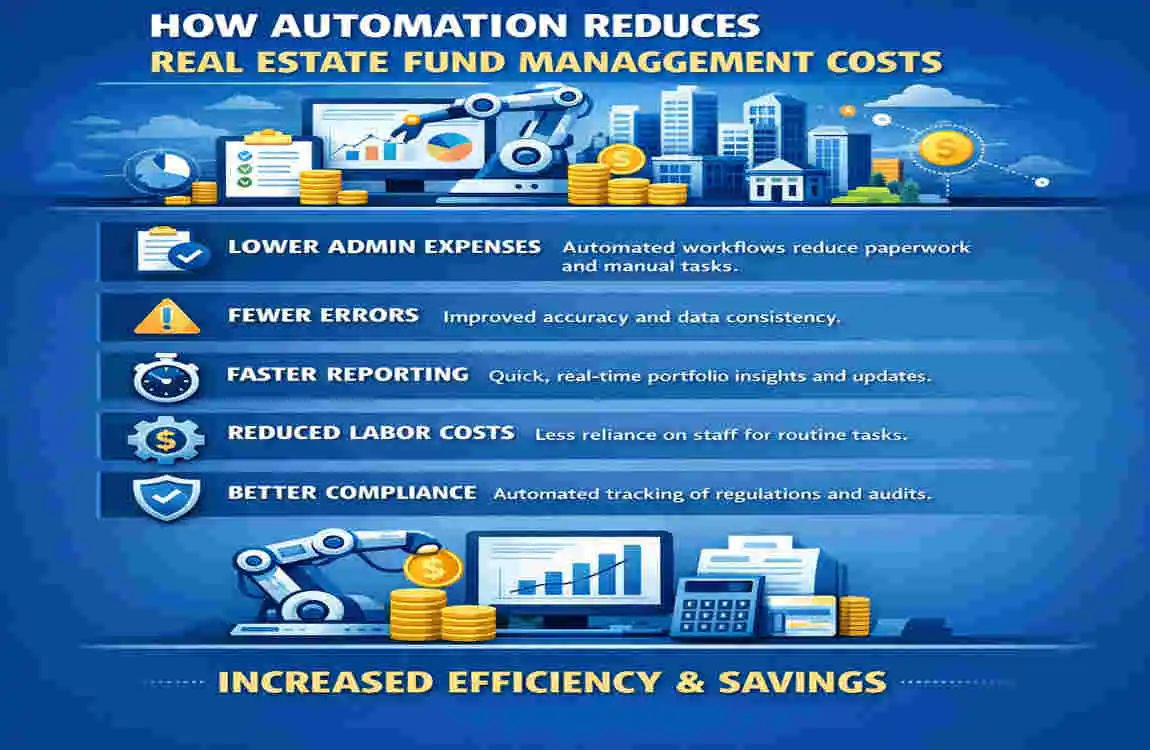
How Automation Reduces Real Estate Fund Management Costs
Automating Repetitive Tasks
Automation removes the need to repeat the same work repeatedly. It can handle data entry, document creation, report scheduling, and notification sending.
This saves time every week and reduces pressure on staff. Instead of spending the day on routine work, employees can focus on higher-value tasks.
For example, a report that once took hours may now be created each month automatically, with only a quick review.
Reducing Human Errors
Automation also improves accuracy. When workflows are standardized, there is less room for confusion or missing steps.
Built-in checks can catch duplicate records, wrong numbers, or incomplete forms before they move further into the process. This lowers correction costs and helps maintain trust in the data.
That is a major reason many firms adopt solutions for reducing overhead in real estate fund management early in their growth journey.
Improving Employee Productivity
When routine work is reduced, teams have more time for analysis and planning. Accounting staff can focus on review and insight instead of chasing details. Investor relations teams can spend more time on relationships instead of copying information into multiple systems.
It also improves collaboration. Everyone works from the same data, which makes communication clearer and faster.
Supporting Scalable Fund Operations
Scaling becomes easier when systems are repeatable. Technology helps teams manage more properties and investors without adding the same level of extra staff.
This matters because growth should create opportunity, not overload. A strong system allows the fund to expand while keeping operations under control.
Key Technologies That Improve Fund Management Efficiency
Artificial Intelligence and Machine Learning
AI and machine learning can analyze large datasets and identify useful patterns. In real estate fund management, they can help identify unusual transactions, forecast trends, and support better decisions.
They also reduce time spent manually reviewing large amounts of information. That makes the team faster and more informed.
Application Programming Interfaces and Integrations
APIs and integrations connect different systems. They allow accounting tools, banking platforms, property systems, CRM tools, and reporting systems to share data.
This reduces duplicate entry and improves consistency. When systems talk to each other, the team spends less time moving information from one place to another.
Robotic Process Automation
Robotic process automation, or RPA, is useful for repetitive tasks that follow the same steps every time. It can process documents, move data, and complete routine actions with little human input.
This is especially helpful for back-office work. It saves time and keeps operations moving even when workloads are high.
Data Analytics and Dashboards
Dashboards give managers a quick view of fund performance, expenses, and operating trends. Instead of waiting for a manual report, they can check key numbers in real time.
This improves visibility and helps leaders respond more quickly to issues. It also supports better long-term planning.
Digital Document and Workflow Management
Digital document systems help organize contracts, statements, invoices, and investor files. Workflow tools make it easier to route documents for approval and keep tasks moving.
This makes audits easier and reduces the chance of losing important records. It also helps teams stay consistent in how they handle information.
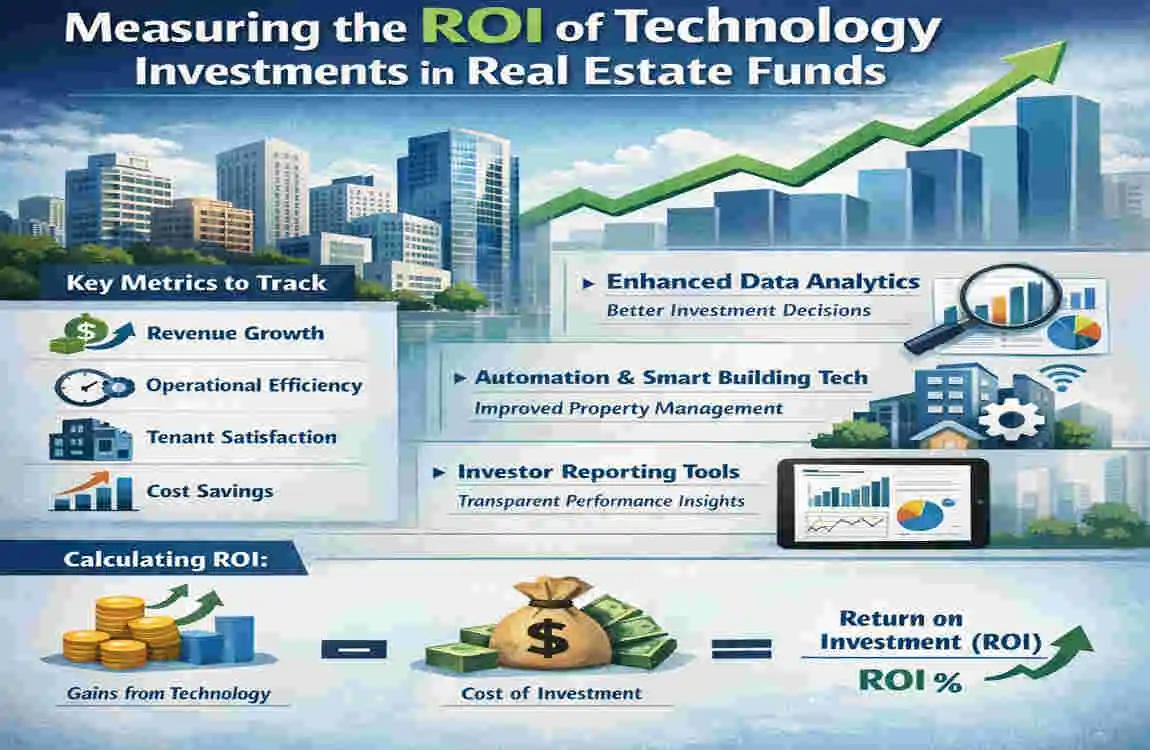
Measuring the ROI of Technology Investments in Real Estate Funds
Cost Savings
The first thing to measure is cost savings. Compare what the firm spends on technology with what it saves in labor, correction work, and manual processing.
If a platform reduces the need for repeated tasks, those hours translate into real savings.
Time and Productivity Metrics
Time is another important measure. Track how long it takes to prepare reports, process transactions, or complete approvals before and after introducing technology.
If the team finishes work faster, that is a strong sign the investment is working.
Accuracy and Risk Reduction
Better systems should reduce errors. Look at correction rates, reporting mistakes, and audit issues.
If technology helps the team produce cleaner records and prepare for audits more efficiently, the value goes beyond simple time savings.
Choosing the Right Technology
Not every tool is right for every fund. Before investing, consider portfolio size, reporting complexity, and the systems already in use.
You should also check for:
- Integration support
- Security and data protection
- Ease of use
- Scalability
- Vendor support
These factors help ensure the technology works well now and supports growth later.
FAQ: Solutions for Reducing Overhead in Real Estate Fund Management
What are the best solutions for reducing overhead in real estate fund management?
The best solutions usually include fund management software, automation, cloud storage, integrations, and digital workflows. These tools reduce manual work and improve accuracy.
How does automation reduce real estate fund management costs?
Automation lowers costs by reducing repetitive work, cutting errors, and speeding up reporting and document handling.
Can technology replace spreadsheets in real estate fund management?
Yes, in many cases. Spreadsheets may still be useful for small tasks. Still, dedicated software is usually better for larger funds because it improves control, accuracy, and collaboration.
How does AI help real estate fund managers?
AI helps by analyzing data, spotting unusual activity, supporting forecasts, and reducing time spent on manual review.
What technology should a small real estate fund use first?
A small fund should usually start with accounting automation, centralized data storage, and investor management tools. These create the biggest early improvements.
How can technology improve investor reporting?
It can automate statements, organize communications, and make reports easier to deliver on schedule. This creates a more professional and consistent investor experience.
Is real estate fund management software worth the investment?
For many funds, yes. The long-term savings in time, accuracy, and scalability often outweigh the upfront cost.
| Technology | How It Reduces Overhead | Main Benefit |
|---|---|---|
| Cloud Software | Centralizes fund data and documents | Less manual administration |
| Automation | Automates repetitive tasks and workflows | Saves time and labor |
| AI Analytics | Analyzes investments and financial data quickly | Faster decision-making |
| Digital Reporting | Generates reports automatically | Reduces reporting workload |
| Investor Portals | Gives investors secure access to updates and documents | Fewer support requests |
| Accounting Software | Automates transactions, reconciliations, and records | Improves financial efficiency |
| Data Integration | Connects property, accounting, and investment systems | Reduces duplicate data entry |
