

If you are looking at commercial real estate in Sydney, you are looking at one of Australia’s most important property markets. Sydney has a strong business base, active investor interest, and a wide mix of property types. That includes offices, retail spaces, industrial buildings, warehouses, and specialist commercial sites.
This market matters because different areas of Sydney can perform very differently. A premium office in the CBD may attract strong tenant demand, while an industrial property in Western Sydney may benefit from logistics growth and transport access. Retail properties also behave differently depending on foot traffic, consumer spending, and location.
What Is Commercial Real Estate Sydney?
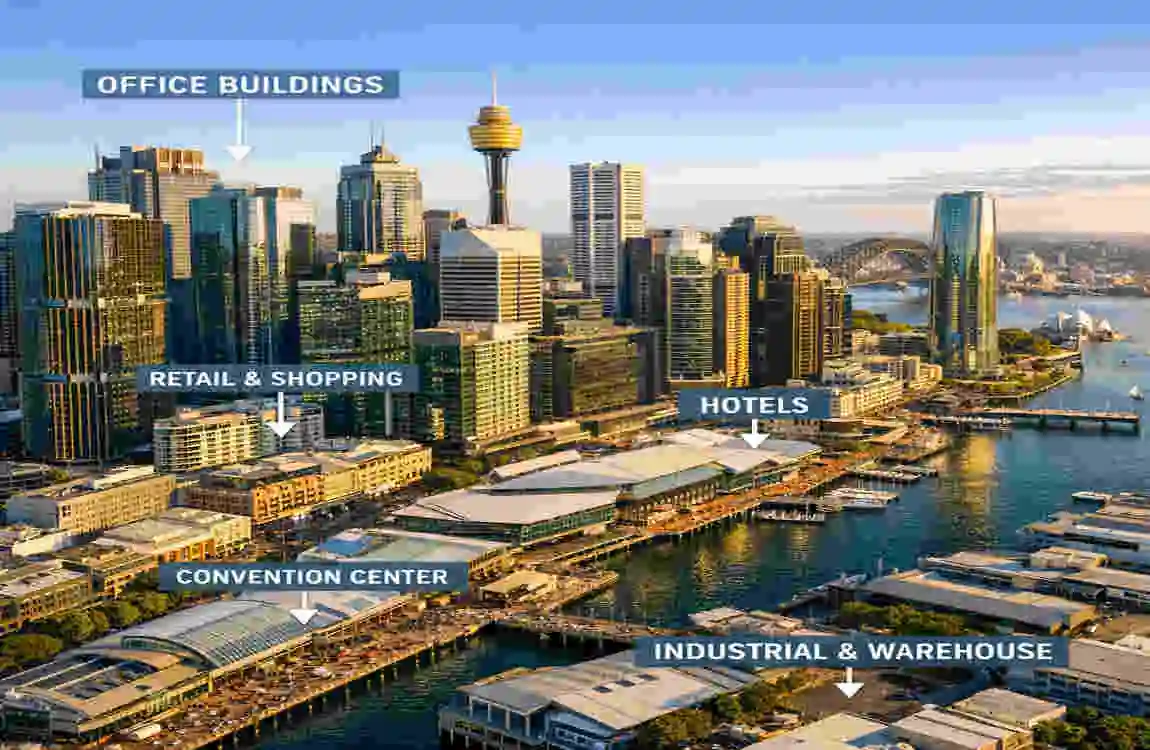
Main types of commercial properties
Commercial real estate Sydney covers property used for business, not for living. These properties are designed to help companies operate, serve customers, store goods, or provide services.
The main types include:
- Office buildings
- Retail shops and centers
- Industrial and warehouse properties
- Medical and specialized commercial spaces
- Mixed-use developments
Each type serves a different purpose. An office building might suit a law firm or finance company. A warehouse might suit a logistics business. A retail shop might suit a café, pharmacy, or service business.
Who uses commercial property?
Different groups use commercial property, and each looks at value differently.
- Business owners want a location that supports daily operations.
- Property investors want rental income and capital growth.
- Developers look for future potential and land value.
- Landlords and tenants care about lease terms, fit-out, and ongoing costs.
So when people talk about commercial real estate in Sydney, they are not talking about a single market. They are talking about a group of markets that work in different ways.
Sydney Commercial Property Market Overview
Current market conditions
Sydney remains a major business center, so demand for good commercial space stays important. But conditions change by sector.
In 2026, Sydney CBD office vacancy has been improving, and premium buildings are drawing stronger interest. That tells us that quality still matters a lot in the office market.
At the same time, industrial and logistics property remains active. Occupier demand and investment interest continue, especially in areas that support transport, warehousing, and distribution.
Retail is also showing movement. Some retail subsectors have seen rent growth in 2026, although vacancy and performance still vary by center type and location.
Key factors driving the market
Several things shape the Sydney market:
Business and population growth
Sydney has a large and growing population. More people usually means more demand for workplaces, shops, storage, and services.
Interest rates and financing
Borrowing costs affect both buyers and investors. When finance is expensive, many buyers become more cautious.
Infrastructure development
Transport projects, road upgrades, and new business precincts can change property values over time.
Remote and hybrid work
Office demand is still adjusting. Some tenants want less space, while others want better-quality space in better locations.
E-commerce and logistics
Online shopping continues to support demand for industrial and warehouse space. Businesses need places to store and move goods quickly.
Best Areas for Commercial Real Estate in Sydney
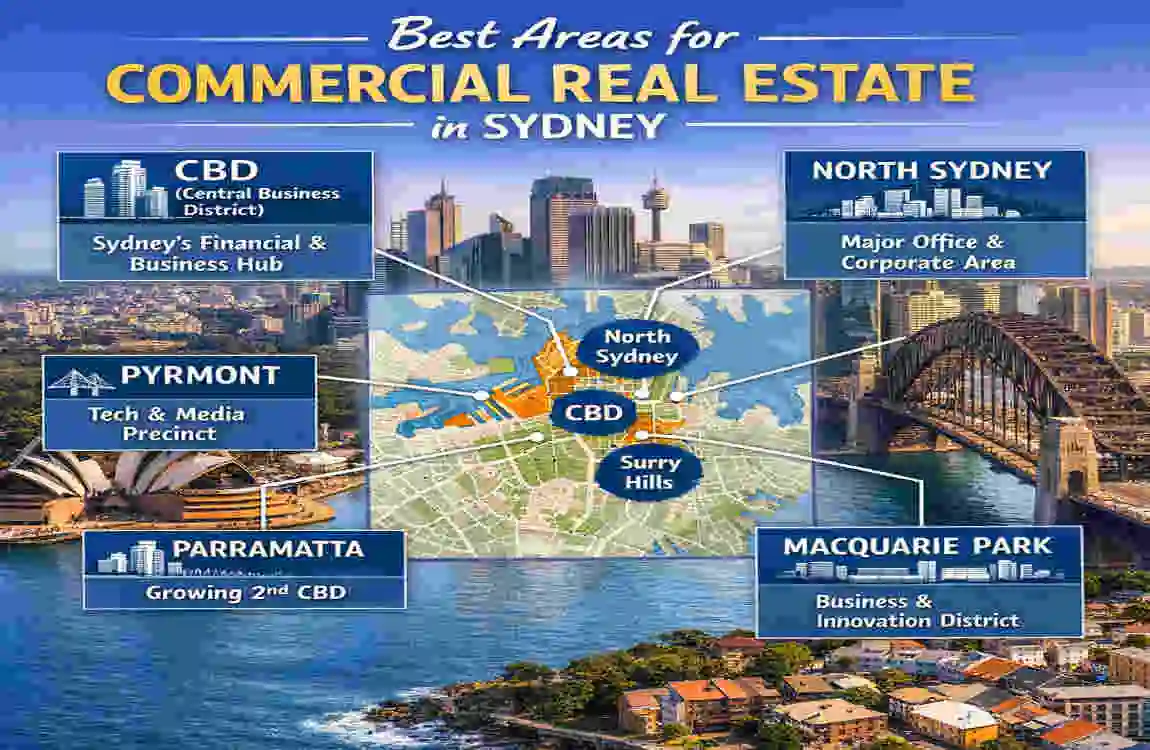
Sydney CBD
The Sydney CBD is usually the best-known commercial area in the city. It suits corporate offices, financial services, law firms, and high-profile tenants.
Why it stands out
It offers prestige, access to transport, and strong visibility. For many businesses, a CBD address helps build trust and brand image.
What to keep in mind
Prices are often higher, and competition can be strong. Still, quality buildings in good positions can attract serious tenant demand.
Western Sydney
Western Sydney is a major growth area for commercial property, especially industrial and logistics sites.
Why investors look here
This area benefits from population growth, major roads, airports, and expanding business precincts. It is a strong fit for warehouses, distribution centers, and trade businesses.
What to keep in mind
Some locations are still developing, so future value may depend on infrastructure, access, and tenant demand.
North and South Sydney
These areas have long been established commercial zones with a mix of office, retail, and light-industrial properties.
Why they matter
They often offer good access to customers, workers, major roads, and transport links. This can support rental demand and practical business use.
What to keep in mind
Each pocket of Sydney is different. A property near a busy transport route may perform very differently from one in a quieter street.
How to choose the right submarket
When comparing areas, look at:
- Location
- Tenant demand
- Vacancy levels
- Rental income
- Accessibility
- Future development plans
A strong suburb today may not always be the best choice tomorrow. That is why local research matters so much.
Office, Retail, and Industrial Property Compared
Different property types serve different goals. The best one for you depends on income needs, risk level, and the kind of tenant you want.
Property TypeMain AdvantageKey Consideration
Office Strong business demand in quality locations Vacancy and tenant preferences
Retail Potential for established customer traffic Location and consumer spending
Industrial Logistics and warehouse demand Land, transport access, and supply
Office property
Office space can offer steady income in strong locations. But the market is more selective now, so quality, layout, and location matter more than ever.
Retail property
Retail can work well where there is real foot traffic or a loyal customer base. But consumer spending and center quality play a big role.
Industrial property
Industrial assets often benefit from logistics demand, transport access, and limited land supply. Many investors like this sector because it can be simpler to manage.
What Affects Commercial Property Prices in Sydney?
Location and accessibility
Location is often the biggest price driver. A property near transport, major roads, parking, and busy business zones usually has more appeal.
If tenants can easily reach the site, the property becomes more useful. That often supports value.
Property quality
A modern, well-kept building usually performs better than an older one that needs work.
Think about:
- Building condition
- Floor area
- Energy efficiency
- Facilities
- Technology and services
Better quality often means better tenants.
Rental income and tenant quality
A property is only as strong as the lease behind it. Long leases, reliable tenants, and healthy rent growth can support value.
On the other hand, a weak lease or unstable tenant can increase risk.
Supply and demand
If supply is limited in a strong location, rents may remain firm. If too much space enters the market, prices can soften.
That is why you should never rely on city-wide averages alone. Two properties in different streets can tell two very different stories.
Tips for Buying or Investing in Commercial Real Estate Sydney

Set a clear goal
Before you buy, ask yourself what you want from the property.
- Rental income
- Long-term capital growth
- Owner-occupied business premises
- Portfolio diversification
Your goal will shape the type of property you should target.
Research the property carefully.
Do not focus only on the asking price. Look deeper.
Check the:
- Lease
- Outgoings
- Zoning
- Building condition
- Maintenance needs
- Future use options
A cheap property can become expensive if the hidden costs are high.
Calculate the numbers
You should always work through the full cost picture.
Consider:
- Purchase price
- Deposit
- Finance costs
- Stamp duty and transaction costs
- Rental income
- Vacancy allowance
- Maintenance
- Management fees
- Possible capital growth
The numbers should make sense before you move forward.
Work with professionals
Commercial property is not a decision made alone for most buyers. It helps to work with:
- Commercial property agents
- Property lawyers
- Accountants
- Building inspectors
- Finance professionals
Good advice can help you avoid expensive mistakes.
Frequently Asked Questions
Is commercial real estate in Sydney a good investment?
It can be, but it depends on the property, location, lease, and finance terms. Strong assets can offer good income and growth, but there is always risk.
What is the most popular type of commercial property in Sydney?
Offices, retail, and industrial properties are all important. The best one depends on your goal and budget.
Is Sydney CBD good for commercial property?
Yes, especially for businesses that value prestige, access to transportation, and strong tenant demand. Premium buildings in the CBD remain important.
What should I check before buying commercial property in Sydney?
Look at the lease, zoning, location, building condition, tenant quality, outgoings, financing, and future supply.
How much money do I need to buy commercial property in Sydney?
It varies a lot. The required amount depends on the property’s value, deposit, financing structure, taxes, and transaction costs.
Should I buy or lease commercial property?
Buying gives you control and possible long-term equity. Leasing gives you more flexibility and lower upfront commitment.
| Key Area | Short Information |
|---|---|
| Market Overview | Sydney has a diverse commercial property market covering offices, retail, industrial, and mixed-use properties. |
| Popular Locations | Sydney CBD, North Sydney, Parramatta, Macquarie Park, and Western Sydney are important commercial hubs. |
| Property Types | Office buildings, retail spaces, warehouses, industrial units, and development sites are common options. |
| Main Demand Drivers | Business growth, infrastructure investment, population growth, transport access, and employment influence demand. |
| Investment Factors | Investors should consider location, rental income, vacancy rates, tenant quality, property condition, and future development potential. |
