
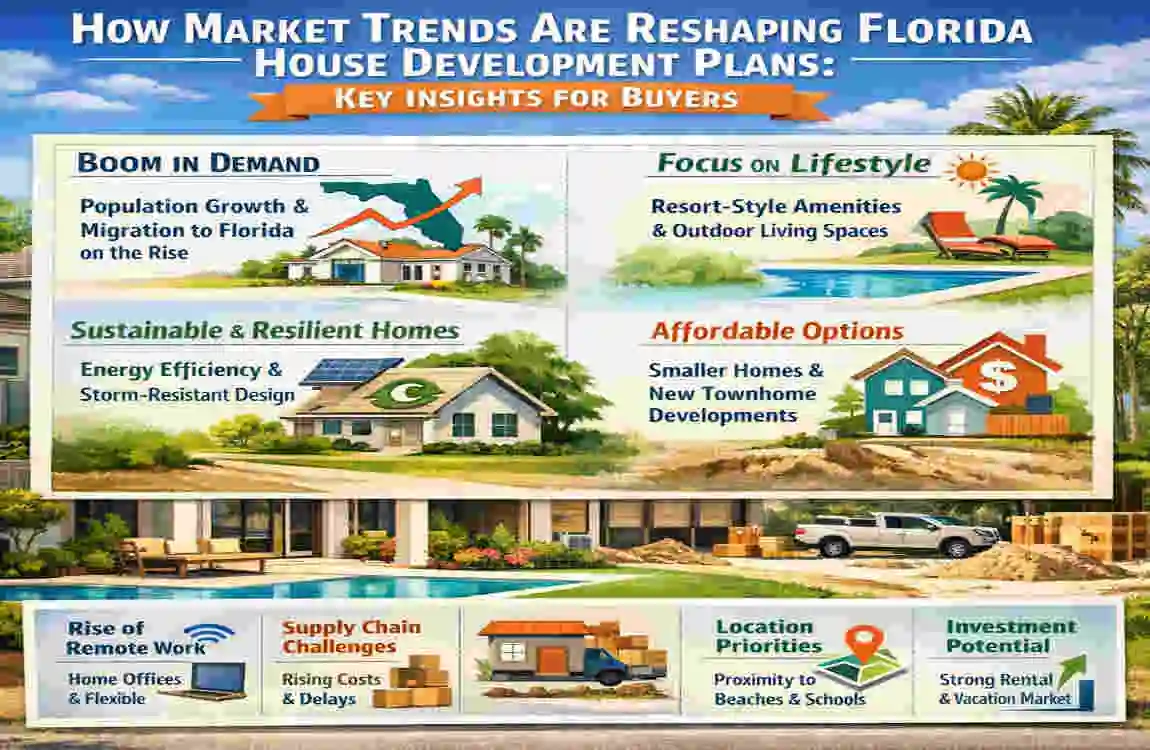
Florida has always been one of the most-watched real estate markets in the country. In 2025 alone, the state saw more than $500 billion in real estate sales, and a large share of that activity came from people moving in from other states, retirees seeking warmer weather, and buyers seeking strong long-term value. That momentum has carried straight into 2026, but the way homes are being planned and built is changing fast.
That is why the homes being designed in 2026 look different from those built just a few years ago. Builders are adding more office space, stronger storm protection, smarter energy systems, and in many places, more affordable unit types like townhomes and modular homes. At the same time, luxury buyers are pushing demand for wellness spaces, net-zero features, and resort-style amenities.
For buyers, this creates both opportunity and pressure. The good news is that if you understand the shifts early, you can position yourself ahead of the crowd. You can buy in a neighbourhood that still has room to grow. You can choose a home design that will hold its value. And you can avoid common mistakes that happen when people buy without understanding the market.
| Market Trend | Key Influence on Florida House Developments | Buyer Implications | Example Regions |
|---|---|---|---|
| Easing Mortgage Rates (6-6.5%) | Developers prioritize affordable single-family homes and townhomes to unlock pent-up demand; inventory rises as sales improve. | More negotiating power; expect 10-14% sales growth, stable prices around $420K median. | Orlando, Tampa (6K+ new buyers/month). |
| Population Migration Boom | Shifts focus to suburban expansions and larger homes for 1K+ daily newcomers (27% from out-of-state). | Higher demand for remote-work features like offices/EV chargers; inland growth surges. | Jacksonville, St. Petersburg suburbs. |
| Stabilizing Inventory & Sales | Slows luxury condo overbuilds, boosts modular/prefab single-family to balance supply (time on market leveling). | First-time buyers (21% of sales) gain options; moderate price growth in select areas. | Miami-Fort Lauderdale (balanced phase). |
| Economic & Job Growth | Favors sustainable, resilient designs (e.g., flood-proofing) amid no-income-tax appeal and Fortune 500 influx. | ROI potential in eco-homes; tourism drives vacation-style builds. | Palm Beach, Naples (luxury sustainable). |
| Affordability Pressures | Pushes ADUs, multi-family hybrids, and cost-cutting (20% via modular) despite high insurance risks. | Hesitation eases with rates; watch for 3-8% price rises but better first-buyer access. | Statewide, esp. coastal vs. inland. |
Florida’s Real Estate Boom: A Quick Market Snapshot
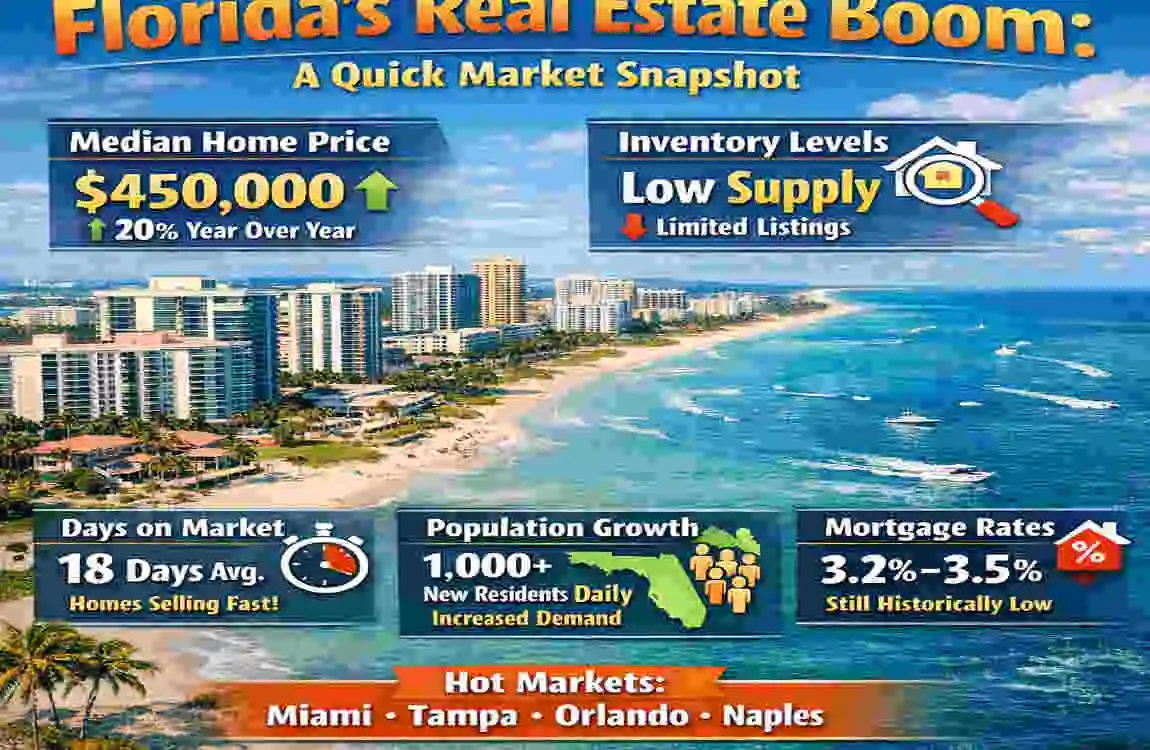
Florida’s market has been moving at a strong pace for several years, but 2025 and 2026 brought a new level of pressure and change. Population growth, migration from high-cost states, and investor interest have all made the state a national hotspot.
A Market Built on Migration
One of the biggest drivers of Florida housing demand is simple: people keep moving there.
More than 1 million new residents have entered Florida over the past few years, driven by both domestic migration and international interest. Many are coming from real states like New York, California, Illinois, and New Jersey, where taxes and housing costs are much higher. Others are retirees who want warmer weather, lower taxes, and a better quality of life.
That wave of new residents does not just affect home sales. It also changes what kinds of homes get built. Builders look at where people are moving, what they can afford, and what kind of lifestyle they want. That is a major reason why market trends influence real estate development plans in Florida is such a powerful topic right now.
Prices Keep Rising, But Not Everywhere the Same Way
The median home price in Florida rose to around $420,000 in 2026, which is about 8% higher than last year. But that number hides a wide range of local conditions.
In some coastal cities, prices are soaring because land is limited and demand is intense. In inland suburbs, builders still have a little more room to work, so pricing remains more flexible. In fast-growing metro areas like Tampa, Orlando, Jacksonville, and parts of South Florida, competition has become sharper as buyers seek access to jobs, schools, airports, and lifestyle amenities.
Developers watch these numbers very carefully. When prices rise too quickly, they may shift toward smaller footprints, more townhomes, or attached units. When a region still has land and buyer demand is strong, they may build larger family homes with modern features. Either way, the market tells them what to do.
What Makes Florida Different
Florida is not just another housing market. It is a mix of a retirement destination, a business growth hub, a vacation market, and a coastal living centre. That mix creates unusual demand patterns.
Some buyers want a second home. Some want a permanent move. Some want a rental property. Others are relocating for remote work and need a house with more flexible space. Developers have to consider all of those groups at once.
That is why Florida housing trends move quickly and why development plans often change midstream. A design that worked two years ago may no longer work if buyer priorities have shifted.
Remote Work and Suburban House Expansions
Remote and hybrid work changed the entire home-buying conversation. Before, many buyers focused mainly on commute time. Now they focus on whether the home supports daily living, work, and family routines all in one place.
Why It Is Happening
A large share of workers in 2026 still use hybrid or fully remote schedules. That means they no longer need to live directly next to an office tower. As a result, they can move farther out, buy a bigger house, and prioritise comfort over commute convenience.
That shift is one of the clearest examples of how market trends influence real estate development plans in Florida. Developers now know that a home is not just a place to sleep. It is often a workplace, gym, study area, and relaxation zone all at once.
How Developers Are Responding
This trend has driven a shift away from small urban condos toward single-family homes in suburban areas. Orlando suburbs like Lake Nona have continued to expand because they offer newer homes, well-planned communities, and plenty of space for modern layouts.
Builders are now designing homes with:
- Dedicated home offices
- Bonus rooms
- Larger kitchens with islands
- Home gyms
- Strong Wi-Fi infrastructure
- EV charging stations
- Smart thermostats and lighting
These features are no longer “extras.” For many buyers, they are part of the basic checklist.
What Buyers Want Most
Remote-friendly buyers are usually looking for luxury homes that support long daily use. They want comfort, quiet, and flexibility. That is why floor plans with extra bedrooms, lofts, and multi-use spaces continue to sell well.
Here are some of the top suburban Florida markets attracting remote workers in 2026:
- St. Petersburg – Strong lifestyle appeal, active downtown, and expanding suburban inventory.
- Lake Nona – Popular with professionals, medical workers, and tech buyers.
- Ocala – More affordable land and growing family demand.
- Winter Garden – Attractive schools, newer communities, and strong resale potential.
- Sarasota outskirts – Buyers want space without giving up access to the coast.
Buyer Tip: Pre-Construction Can Offer Value
If you want to buy into one of these growing areas, pre-construction can sometimes deliver 10% to 15% savings compared with finished inventory. You also get newer layouts that already match current demand.
The catch is patience. Pre-construction takes time, and you need to understand the builder’s timeline and upgrade costs before you commit.
Why This Trend Matters
Remote work has made buyers more selective. They are willing to move farther out if the house better fits daily life. That means developers are expanding suburban communities faster than before and adding the kinds of spaces buyers now expect.
Climate-Resilient Housing Takes Centre Stage
Florida’s climate has always been part of the real estate conversation. But in 2026, it is no longer a side issue. It is central to planning.
Rising Risks and Tougher Rules
The 2025 hurricane season caused around $200 billion in damage across affected regions, changing how everyone thinks about building. Insurance costs jumped. Flood concerns grew. Buyers became more cautious.
Developers now know that resilience sells. If a home cannot handle storms, water, heat, and wind, buyers may pass on it or demand a lower price.
This is another big reason why market trends influence real estate development plans in Florida so much. The market is pushing builders to design for Survival, not just appearance.
What Climate-Resilient Homes Look Like
In areas like Miami and Fort Lauderdale, developers are increasingly using:
- Elevated foundations
- Impact-resistant windows
- Reinforced roofing systems
- Better drainage planning
- Green roofs or reflective roof materials
- Water-resistant materials in lower levels
- Backup power systems
These features help homes stand up better during storms and also reduce long-term insurance headaches.
Insurance Is Driving Design Decisions
Insurance companies are playing a major role in development planning. If a house is built with poor protection, the cost to insure it can become painful. Buyers may love the design but walk away because the monthly insurance Premium is too high.
That means developers now have a strong reason to build safer homes from the start. A resilient home may cost more up front, but it often saves money over time. Buyers know this, and they are beginning to ask more questions about build quality before they buy.
Buyer Insights: Questions You Should Ask
If you are looking at coastal property, do not stop at price and location. Ask about risk and protection.
Use this checklist before you commit:
- Is the home elevated above flood-prone levels?
- Are the windows impact-rated?
- What is the roof design and wind rating?
- How old is the drainage system?
- What are the estimated insurance premiums?
- Is the property in a flood zone?
- Has the builder included storm-resistant materials?
Cost Comparison: Resilient vs Standard Homes
FeatureStandard HomeResilient HomeBuyer Benefit
Foundation Basic slab Elevated or reinforced Better flood protection
Windows Standard glass Impact-rated windows Lower storm risk
Roofing Standard shingles , Wind-rated roof system, Improved durability
Insurance Premiums : Higher risk-based premiums , often lower over time around $2,000/year savings possible
Maintenance Normal wear Lower storm repair frequency Fewer surprises
Why Buyers Should Care
Climate resilience is not just a builder issue. It affects your monthly costs, insurance, comfort, and long-term resale value. In Florida, a beautiful house that cannot handle weather conditions can become expensive very quickly.
Interest Rates and the Affordable Housing Push
While climate and lifestyle shape the type of homes being built, interest rates shape what people can afford. In 2026, rates have stabilised around 4.5%, but affordability remains a serious challenge.
The Economic Pressure Point
Even with rates more stable than in previous years, buyers still feel stretched. In many areas of Florida, the cost of a home is still around 7 times the median local income, which makes affordability a real concern.
That pressure changes development strategies. Builders cannot only focus on luxury homes or oversized plans. They also need to create more affordable options that work for middle-income buyers.
What Developers Are Building Now
To respond to affordability pressure, developers are building:
- Townhomes
- Smaller detached homes
- ADUs, or accessory dwelling units
- Modular and prefab homes
- Mixed-price communities
Jacksonville has become a strong example of this trend. Developers there are using simpler layouts and efficient construction methods to keep prices more manageable.
Why Modular Housing Is Growing
Modular housing has become more attractive because it can reduce costs by around 20% compared with some traditional builds. That is a major advantage in a market where every dollar matters.
It also speeds up construction, which helps developers deliver homes faster during supply shortages. For buyers, that can mean quicker move-in times and a lower entry price.
What This Means for Buyers
If you are hoping to buy in Florida in 2026, you need to think carefully about your borrowing power. Mortgage costs remain a major factor in the decision. A slightly lower rate or a smaller home can make a huge difference in your monthly payment.
Even a small rate change can affect affordability. That is why many buyers are looking at smaller, smarter homes instead of stretching into properties that feel too expensive to maintain.
Practical Buyer Advice
If you are watching interest rates, think about these three things:
- Can I comfortably afford the payment if rates stay where they are?
- Would a townhome or a smaller house give me more flexibility?
- Should I lock in now instead of waiting for a possible rate drop?
The answer is not the same for every buyer. But in a market like Florida, flexibility often helps.
Luxury and Sustainability in High-Demand Areas
Florida continues to attract affluent buyers, especially in places like Palm Beach, Naples, Sarasota, and parts of Miami. But luxury in 2026 does not look exactly like it did before.
Who Is Buying Luxury Homes Now
Two major groups are shaping the luxury market. First, ultra-wealthy buyers are looking for prestige, privacy, and high-end amenities. Second, there are younger, wealthier buyers who care more about sustainability, wellness, and smart design.
That shift is changing development plans in high-demand areas. Builders no longer add bigger rooms. They add smarter and greener systems.
Luxury Has Become More Sustainable
Luxury developments are now more likely to include:
- Solar panels
- Battery storage systems
- Energy-efficient glass
- Water-saving systems
- Smart lighting and climate controls
- Net-zero design goals
In Naples, for example, more developments are combining luxury finishes with environmentally conscious planning. Buyers want homes that feel high-end, but they also want lower running costs and a cleaner footprint.
Wellness Features Are a Big Sell
Florida housing trends now strongly favour wellness-focused features. Pools, spas, steam rooms, outdoor lounges, and indoor-outdoor living spaces are all in high demand.
This is especially true among buyers who moved to Florida for a better lifestyle. They want their home to feel like a retreat, not just a place to live.
Buyer Insight: Luxury vs Mid-Tier
Category: Luxury Development, Mid-Tier Development, Buyer Takeaway
Location: Prime coastal or gated areas; suburban or growing inland zones. Pay more for exclusivity
Materials: Premium stone, smart glass, custom finishes. Durable standard materials. Better value per dollar
Energy Features Solar, battery storage, automation , Basic efficiency systems , Lower utility costs in luxury homes
Amenities: pools, spas, wellness rooms. Practical family layouts. Lifestyle matters more at higher price points
ROI Potential Strong in elite areas Stronger in growth corridors Depends on demand and location
Why Sustainability Helps Value
Sustainable luxury homes often retain their value well because they address two buyer needs at once: comfort and efficiency. A buyer who can afford a Premium home often expects both.
For developers, that means sustainability is no longer a niche feature. It is becoming part of the standard luxury package.
Tech-Driven Smart Homes and Inventory Crunch
Technology is changing how homes are designed, marketed, and sold. It is also helping developers move faster in a tight inventory environment.
Smart Homes Are Now Expected
Buyers now expect more than a basic lock and thermostat. They want homes ready for the digital life. That includes:
- Smart locks
- App-controlled lights
- Smart thermostats
- Energy monitoring
- Security cameras
- Voice-controlled systems
These features save time and energy, and they make a home feel more current.
Technology Helps Developments Move Faster
Developers are also using AI-based pricing tools, virtual tours, and faster digital approval systems. That helps them understand buyer interest sooner and adjust plans before a project goes too far.
Prefab homes are also becoming more useful in areas with short supply, like Tampa, where speed matters and demand remains high.
Buyer Insight: Smart Home Pros and Cons
Pros
- Lower energy use
- Better convenience
- Easier security monitoring
- Higher appeal to younger buyers
Cons
- Can increase upfront costs
- May require updates over time
- Some systems need technical maintenance
Why It Matters for Florida
In Florida, smart home features pair well with climate needs. Buyers can more easily monitor temperature, humidity, and storm-related systems. That gives homeowners more control and more peace of mind.
Challenges and Risks for Buyers

Florida remains full of opportunity, but buyers should still proceed with caution. Strong demand does not remove risk.
Common Risks to Watch
The biggest risks include:
- Overbuilding in the wrong area
- Supply chain delays
- Higher insurance and maintenance costs
- Buying too close to flood-prone or overdeveloped zones
A luxury home can look great on paper and still become a poor choice if the local market shifts or the area becomes oversupplied.
How to Reduce Risk
The smartest buyers spread their options. Do not focus only on the coast. Inland communities often offer better value, lower insurance pressure, and more room for future growth.
It also helps to compare multiple neighbourhoods rather than locking in too early. Florida moves quickly, and the best purchase is usually the one that fits both your lifestyle and your long-term budget.
FAQs
How do market trends influence real estate development plans in Florida?
Market trends shape what builders design, where they build, and which features they include. In Florida, that means more remote-work homes, climate-safe construction, affordable housing formats, and luxury wellness features.
What Florida housing trends matter most in 2026?
The biggest trends are remote work demand, climate resilience, interest rates, affordable housing pressure, and smart home adoption.
Are developers building more affordable homes in Florida?
Yes. Many are building townhomes, modular homes, and smaller single-family units because affordability remains a major concern.
Why are climate-resilient homes important in Florida?
Because storms, flooding, and insurance costs have become major concerns for buyers. Homes built to handle weather risk are more attractive and often easier to insure.
Is it better to buy coastal or inland?
It depends on your budget, risk tolerance, and lifestyle. Coastal homes offer prestige and access, while inland homes often offer lower costs and better long-term flexibility.
