
South Korea residential real estate includes homes and living spaces where people live full-time or for long stays. This market covers apartments, villas, detached houses, and officetels used as homes.
It is a very important part of the country’s economy because housing affects daily life, family planning, saving, renting, and investing.
In South Korea, the housing market is shaped by city life, high population density, and strong demand in major areas. Many people want homes close to work, schools, and public transportation.
As a result, location often matters as much as the home itself. In busy cities, space is valuable, and buyers often compare buildings by age, size, and neighborhood.
Residential property is more than a place to live. For many people, it is also a major financial decision.
Major Residential Property Types in South Korea
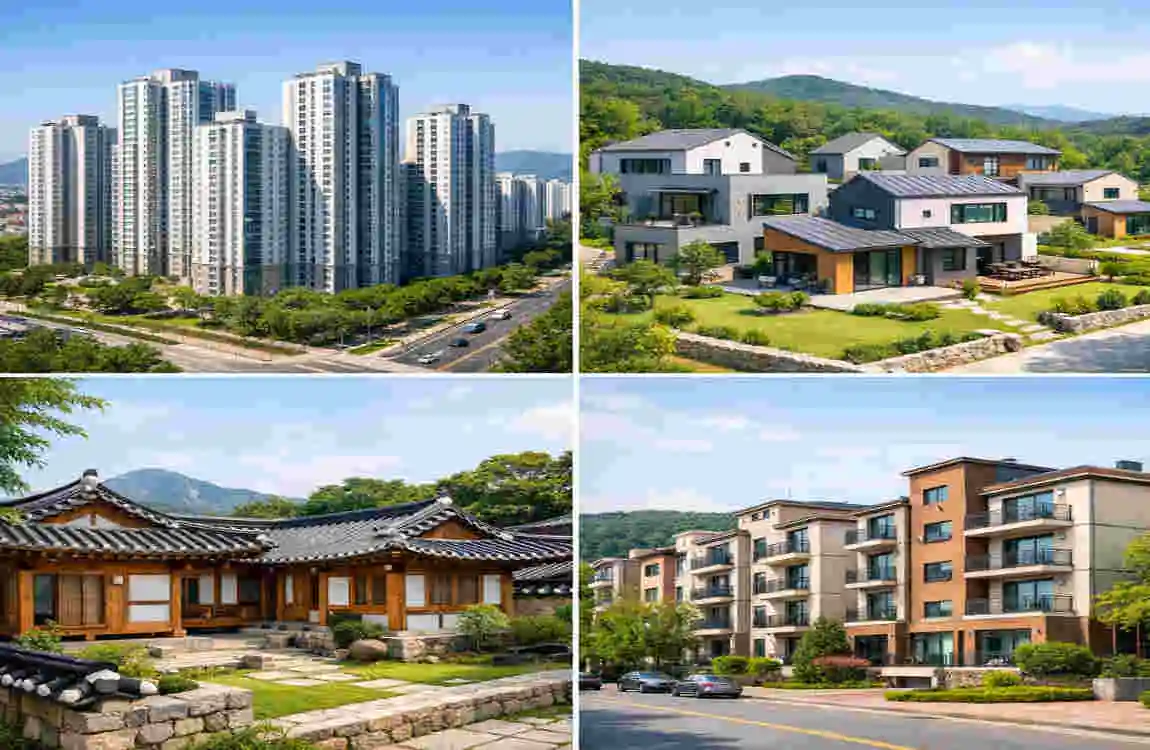
Apartments
Apartments are the most common home type in many Korean cities. They usually offer better facilities, security, and convenience.
They are popular because they fit modern urban life well. Many are close to transit, shops, and schools.
Villas and multi-family homes
Villas are usually smaller, low-rise buildings with several units. They often cost less than apartments, making them attractive to buyers looking for more affordable options.
They may offer more privacy than large apartment complexes. Still, building quality can vary, so it’s important to check the property carefully.
Detached houses
Detached houses are less common in crowded urban areas. You are more likely to find them in suburban or regional locations.
They can offer more space and privacy, but they may also require more maintenance and take longer to reach.
Officetels
Officetels are mixed-use buildings often used by singles, couples, and office workers. Many people choose them because they are compact and easy to manage.
They are often found in city centers, which makes them useful for short commutes and simple living.
South Korea Residential Real Estate Market Trends
Seoul compared with other cities
Seoul is the most talked-about market, but it is not the only important one. Cities like Busan, Incheon, Daejeon, Daegu, and Gwangju also have active housing markets.
Seoul often has the highest prices because demand is very strong. Other cities may offer better value depending on your budget and goals.
Demand, prices, and rental conditions
Housing demand stays strong in areas with good transportation, jobs, and schools. That can mean prices rise faster in those neighborhoods.
Rental conditions also shift with supply. In some areas, renters may find many choices, while in others, finding a good place can be harder.
Interest rates and policy changes
Interest rates can affect both buyers and investors. When rates rise, borrowing becomes more expensive, which can slow demand.
Government housing policies also play a big role. Rules on loans, taxes, and property ownership can quickly shift the market.
What buyers and investors watch now
People usually pay close attention to:
- Transport access
- School zones
- Neighborhood quality
- Building age
- Future development plans
These factors can shape both value and long-term comfort.
Buying Residential Property in South Korea
Basic steps to buying a home
Buying a home in South Korea usually starts with searching for the right property and comparing prices. After that, you review the contract, check legal details, and arrange payment.
This process can feel simple on the surface, but careful checking matters at every stage.
Contracts and deposits
A property deal often involves a deposit and a signed contract. The exact amount and schedule depend on the agreement.
Before you pay anything, make sure you understand the terms clearly. If something feels unclear, ask questions first.
Due diligence and property records
Always check the property record before buying. This helps you confirm ownership, possible debts, and other legal issues.
You should also review the building’s condition, the neighborhood, and any repair concerns.
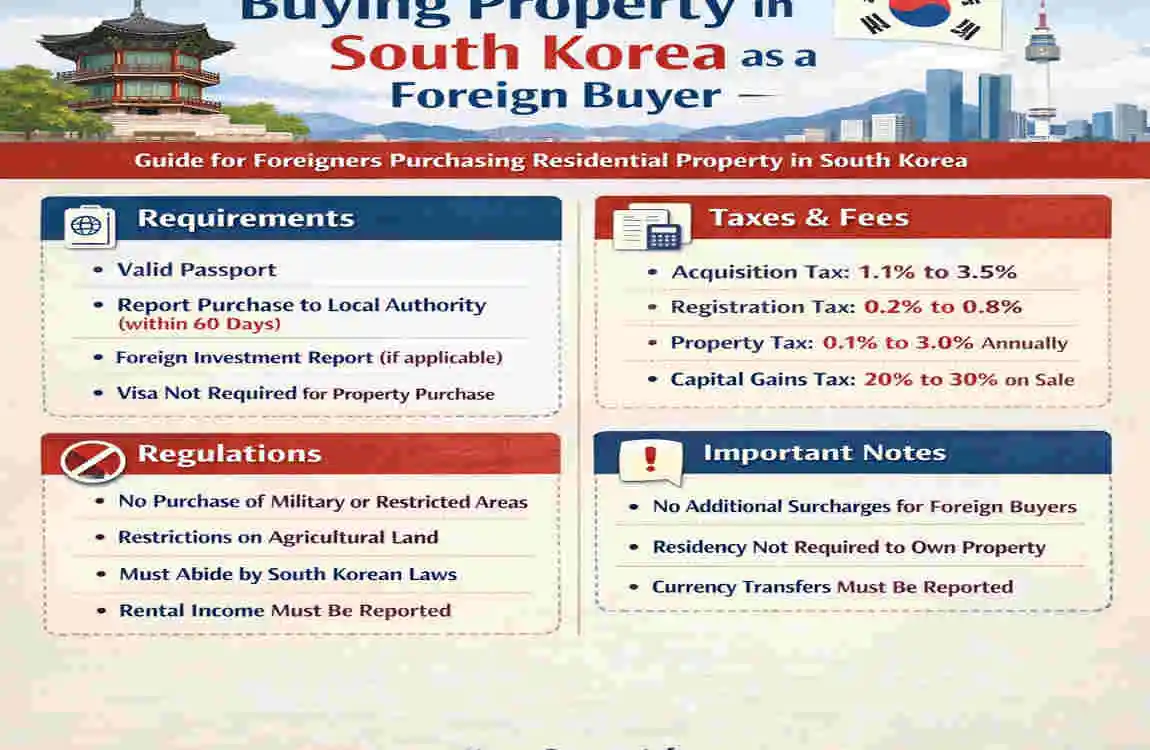
Taxes and transaction costs
The home price is not the only cost. You may also need to pay:
- Acquisition tax
- Registration fees
- Agent fees
- Legal or administrative costs
- Moving and repair expenses
These extra costs can affect your total budget more than you expect.
Foreign buyer considerations
Foreign buyers can often purchase property in South Korea, but reporting rules and legal steps may apply. Understand local requirements before signing anything.
If you are a foreign buyer, extra care with documents and financing is a smart move.
Renting a Home in South Korea
Jeonse and how it works
Jeonse is a well-known Korean rental system that uses a large deposit instead of monthly rent. The tenant gives a large lump sum, and the owner returns it at the end of the contract.
This system can help people who want to avoid monthly rent payments. Still, it requires a large upfront payment.
Wolse monthly rent
Wolse is the more familiar monthly-rent system. In this setup, the renter pays a deposit plus monthly rent.
This is often easier for people who don’t want to put down a very large deposit.
What renters should check
Before renting, make sure to review:
- Deposit amount
- Contract length
- Maintenance responsibilities
- Utility costs
- Move-out rules
A careful review can help you avoid confusion later.
Buying vs. renting
Buying may make sense if you want long-term stability. Renting can be better if you need flexibility or want to avoid a large financial commitment.
The best choice depends on your budget, plans, and how long you expect to stay.
Investment, Costs, and Risks in South Korea Residential Real Estate
Why people invest
Many people invest in residential property for long-term value growth, rental income, or future family use. In strong locations, property can become a useful asset over time.
Still, real estate is not a quick decision. It needs patience and planning.
Main costs and risks
Investment costs can include taxes, upkeep, repairs, and management fees. If you rent the property out, you also need to think about vacancy and tenant turnover.
Some common risks are:
- Price drops
- Policy changes
- Higher loan costs
- Repair expenses
- Weak rental demand in certain areas
Why location matters
Location is one of the biggest value drivers. A home near transit, jobs, and good schools often holds value better than one in a less convenient area.
If you are thinking about investment, location should always be part of your decision.
How to Choose the Right Residential Property in South Korea
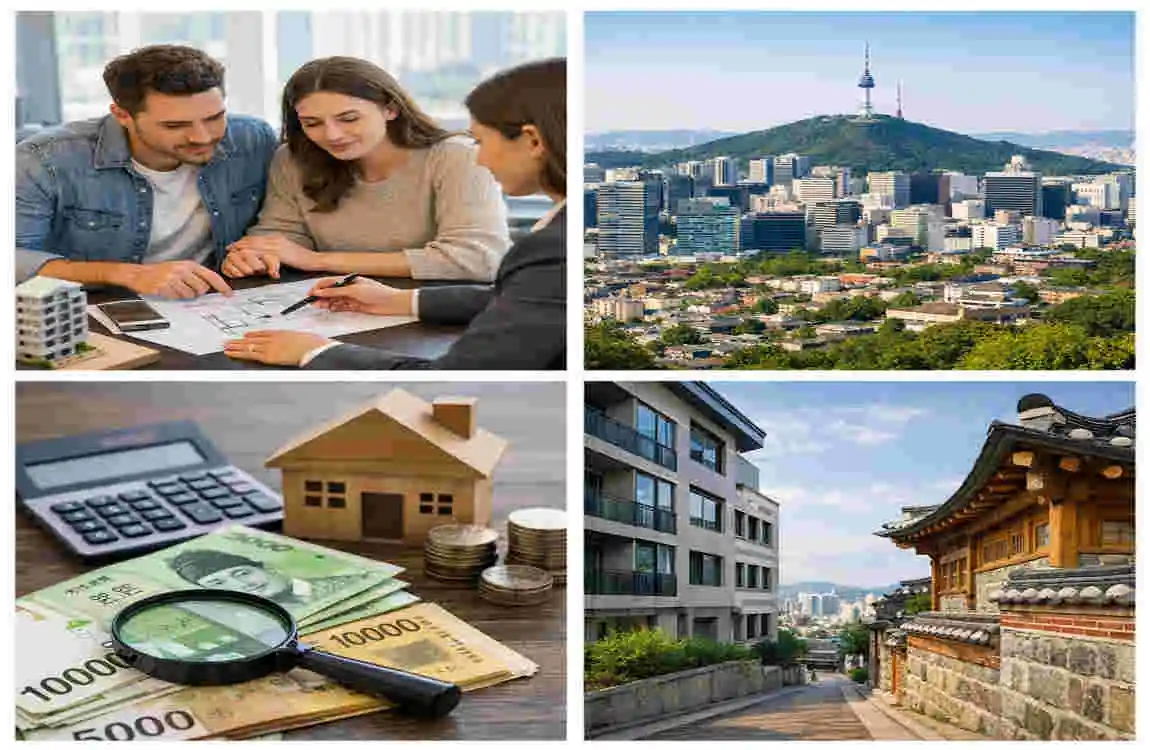
Seoul or regional cities?
Seoul offers strong demand and convenience, but prices are usually higher. Regional cities may offer more space and lower entry costs.
Your choice should depend on budget, lifestyle, and long-term goals.
What to compare before buying
Before you decide, compare:
- Distance to transport
- Nearby schools and stores
- Building age and condition
- Monthly costs
- Future resale value
Key takeaway for buyers and investors
The best property isn’t always the biggest or newest. It is the one that fits your needs, budget, and daily life.
If you focus on location, legal safety, cost, and long-term value, you can make a much better choice.
FAQ: South Korea Residential Real Estate
What is South Korea residential real estate?
It is the market for homes and living spaces in South Korea, including apartments, villas, detached houses, and officetels.
Can foreigners buy residential property in South Korea?
Yes, in many cases, but they may need to follow reporting rules and local legal steps.
What are the most common types of homes in South Korea?
The most common types are apartments, villas, detached houses, and officetels.
What is Jeonse in South Korea?
Jeonse is a rental system that uses a large deposit instead of monthly rent.
Is Seoul the only important residential real estate market?
No. Seoul is the biggest market, but other cities like Busan, Incheon, and Daejeon also matter.
What costs should buyers consider besides the property price?
You should also plan for taxes, fees, maintenance, and other transaction costs.
What should I check before buying property?
Check the location, building condition, ownership records, contract terms, financing, and taxes.
| Topic | Short Information |
|---|---|
| Property Types | Apartments, villas, officetels, detached homes, and multi-family housing |
| Most Popular | Apartments are especially common in major cities |
| Key Market | Seoul and the wider Seoul Capital Area are major residential markets |
| Buying Factors | Location, price, transport, schools, building age, and amenities |
| Rental System | Jeonse and Wolse are the two major rental arrangements |
| Jeonse | Large refundable deposit with little or no monthly rent |
| Wolse | Smaller deposit combined with regular monthly rent |
| Foreign Buyers | Foreigners can generally purchase property, subject to applicable Korean laws and restrictions |
| Major Costs | Purchase price, acquisition tax, registration costs, brokerage fees, and maintenance |
