
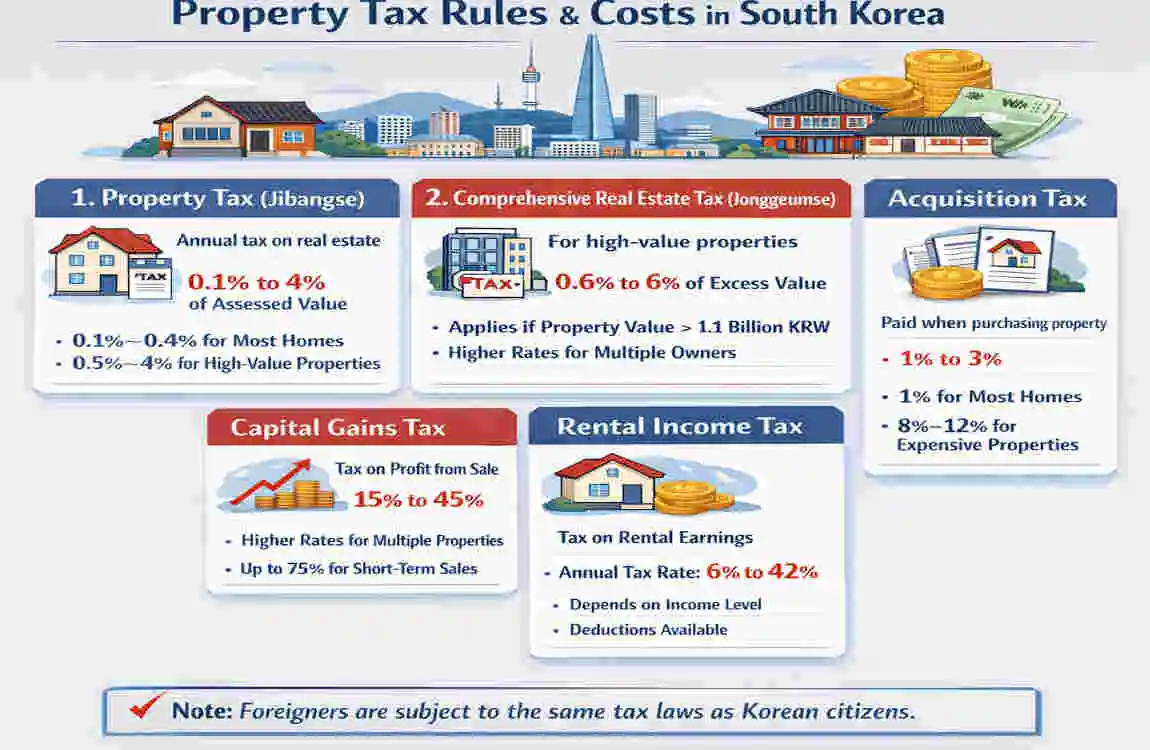
Korea Real Estate Property Tax Rules & Costs. If you buy, own, or plan to invest in property in Korea, you should understand Korea real estate property tax before you make a move. The tax system isn’t too hard to follow once you break it into parts. Still, it includes several different taxes that apply at different times.
In simple terms, Korea taxes real estate in a few ways. You may pay a tax when you buy the property, another tax every year as long as you own it, and in some cases an additional national tax if the property value is high enough. If you know the rules early, you can plan better and avoid surprises.
What Is Korea Real Estate Property Tax?
Basic Meaning
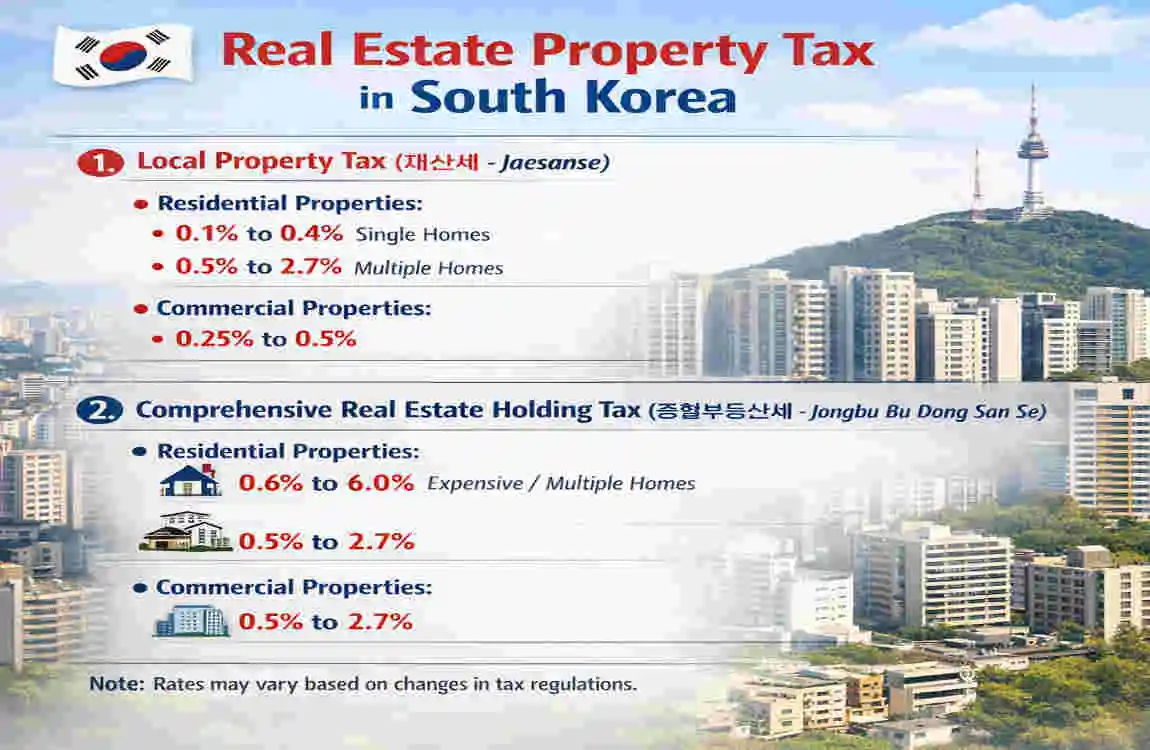
Korea real estate property tax is a group of taxes related to owning property in Korea. It is not just one single tax. It can include annual property tax, acquisition tax when you buy, and, in some cases, comprehensive real estate tax.
This means ownership itself can create tax duties. So even if you don’t sell the property, you may still owe taxes because you own it.
Who Pays It?
The property owner is usually responsible for paying the tax. That can be an individual, a couple, a family member, or a company depending on how the property is registered.
If you buy a home in Korea, the buyer typically pays the acquisition tax. After that, the owner pays the annual property tax.
Local vs National Taxes
Some real estate taxes are local, and others are national. That difference matters because the rules, rates, and payment process differ.
In general:
- Property tax is usually a local tax
- Acquisition tax is paid when buying
- Comprehensive real estate tax is a national tax for higher-value ownership cases
Key Terms to Know
Before going deeper, it helps to know a few simple terms:
- Assessment value: the value used for tax, not always the market price
- Tax base: the amount used to calculate tax
- Ownership date: the date that decides who pays
- Progressive tax rate: a higher value can mean a higher tax rate
How Property Tax Is Calculated in Korea
Property Tax Assessment Value
Property tax in Korea does not always use the full market price. Instead, the government uses an officially assessed, or taxable, value.
That means the tax is often lower than what you might expect if you only look at the sale price. But the exact amount still depends on the property type, its value, and how it is classified.
For example, a residential apartment and a commercial building may not be taxed the same way. Land value also plays a role.
Korea Property Tax Rates
The rate depends on what kind of property you own. Residential property, land, and commercial property can all be taxed differently.
The system may also use progressive brackets, which means the tax rate can rise as the taxable value rises. This is important for higher-value homes and large property holdings.
In plain language, the more expensive the taxable property, the more tax you may pay.
The June 1 Ownership Rule
One of the most important rules in Korea is the June 1 ownership date. This date helps decide who is responsible for certain property taxes for that year.
If you own the property on June 1, you may be responsible for paying that year’s annual tax. This can matter a lot if you buy or sell near that date.
So if you are planning a property deal, pay close attention to timing. A transfer just before or after June 1 can change who pays.
Acquisition Tax When Buying Property in Korea
What Is Acquisition Tax?
Acquisition tax is the tax you pay when you buy property. It is a one-time tax tied to the purchase itself.
This is different from annual property tax. Many buyers confuse the two, so it helps to separate them clearly. One happens at purchase, and the other happens every year you own the property.
Who Pays It?
Usually, the buyer pays acquisition tax. The amount is based on the property’s value or the taxable base the authorities use.
This tax can apply to residential homes, commercial space, and land, depending on the transaction type.
Residential Property Acquisition Tax
Residential acquisition tax in Korea may vary by price range and buyer situation. In some cases, the tax rate changes depending on whether the home is low-value, mid-value, or high-value.
A simple way to think about it is this:
- Lower-priced homes often face lower rates
- Mid-range homes may have moderate rates
- High-value homes can face higher rates
Special rules may also apply for certain buyers or circumstances, so it is smart to check the current tax rules before signing a contract.
Other Buying Costs
When you buy property in Korea, acquisition tax is not the only cost. You may also need to pay:
- Registration-related costs
- Legal or administrative fees
- Additional local charges
- Transaction-related expenses
This is why buyers should calculate the full closing cost, not just the purchase price. A property that looks affordable at first may cost more once you add taxes and fees.
Korea Real Estate Property Tax for Foreign Buyers
Can Foreign Buyers Pay These Taxes?
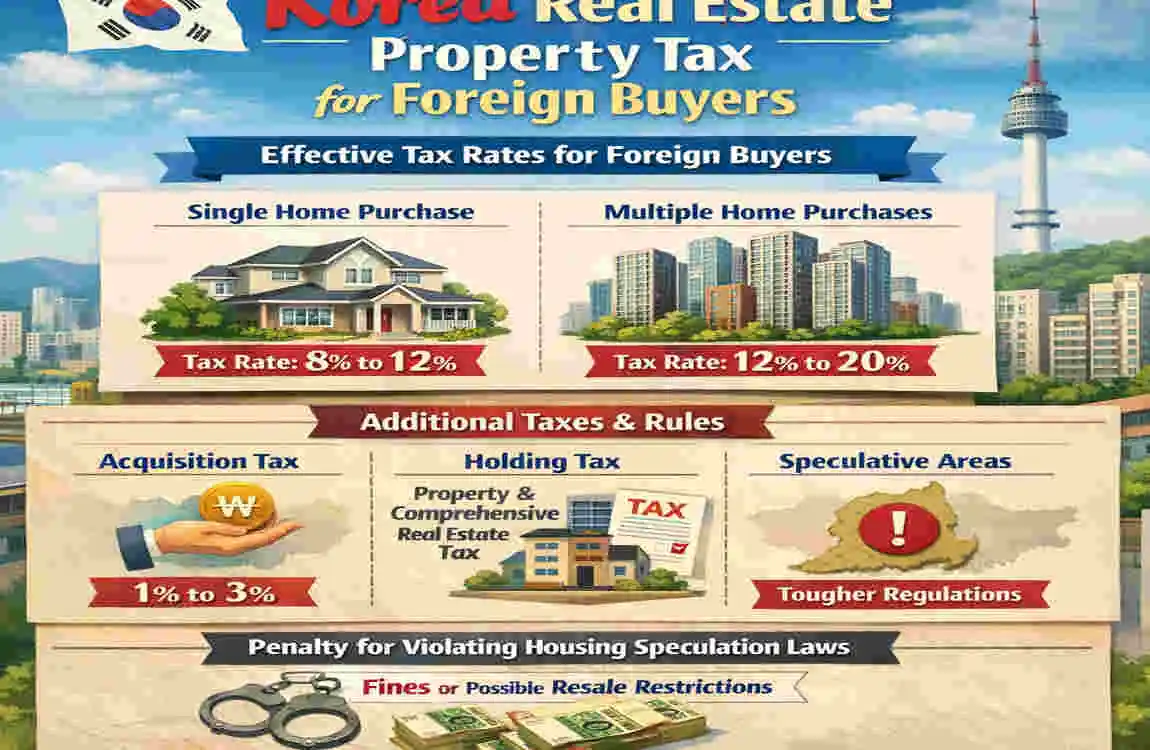
Yes. Foreign property owners can also be subject to Korean real estate taxes. Ownership does not remove the tax obligation just because the buyer is not a Korean citizen.
If a foreign buyer purchases property in Korea, the same general ideas still apply:
- Acquisition tax at purchase
- Annual property tax during ownership
- Possible comprehensive real estate tax if the value is high enough
Residential vs Commercial Property
Foreign buyers may face different rules depending on whether the property is for living or business use. Residential homes and commercial property may be taxed differently, especially in terms of rates and assessment method.
That is why buyers should not assume one rule applies to all property types.
Documentation and Reporting
Foreign buyers should also pay attention to paperwork. Keep tax reporting, ownership registration, and transaction records accurate.
Missing documents or incorrect reporting can lead to delays or tax problems later. If you are buying as a foreign investor, it is wise to check the current rules before you purchase.
Why Foreign Buyers Should Be Careful
The biggest risk for foreign buyers is assuming the system is the same as in their home country. Korea’s tax rules have their own dates, thresholds, and categories.
For a smooth purchase, plan and confirm your tax obligations early.
How Much Does Real Estate Tax Cost in Korea?
Example: Apartment Owner
Let’s say you own one apartment in Korea. Your annual property tax may be based on the assessed value, not just the market value.
If the apartment is not high-value and you do not own multiple homes, your tax may stay relatively manageable. But you still need to check the official assessment value and the June 1 ownership rule.
Example: Multiple-Property Owner
Now imagine you own more than one property. Your tax exposure can rise because multiple holdings may trigger stronger tax treatment.
This is where the comprehensive real estate tax matters more. The more property you own, the more likely you are to cross a threshold.
Example: Land or Commercial Property
Land and commercial property often use different tax rules from standard homes. The tax may depend on how the property is classified and whether it is used for business or residential purposes.
So if you own land or a commercial building, don’t use the same assumption you would for a small apartment.
What Changes the Cost?
Several things affect the final amount:
- Property value
- Property type
- Number of properties owned
- Buyer status
- Applicable deductions
- Taxable assessment rules
If any of these change, the tax amount can change too.
Korea Real Estate Property Tax: Payment, Exemptions
When Are Property Taxes Paid?
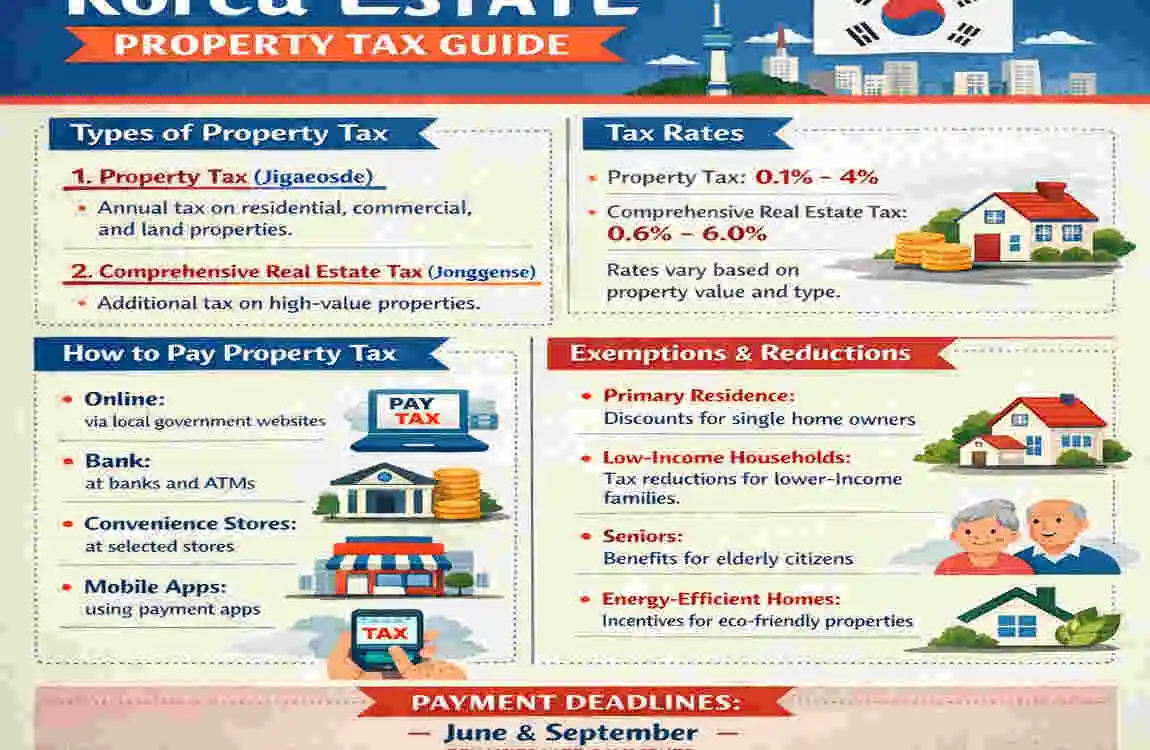
Property taxes are usually paid during set government periods. The tax authority sends notices to owners, and you can often pay through standard methods it provides.
If you do not pay on time, late penalties or collection issues may follow. So it is important to keep track of payment notices.
Common Exemptions and Special Rules
Some owners may qualify for reduced tax treatment or special rules. These may apply to:
- One-home owners
- Certain housing types
- Specific land categories
- Property situations with special reporting requirements
But exemptions are not automatic. You usually need to meet the rule exactly and sometimes provide supporting information.
Common Mistakes to Avoid
Many tax problems happen because people misunderstand the basics. Watch out for these common mistakes:
- Confusing acquisition tax with annual property tax
- Ignoring the June 1 ownership date
- Using market price instead of taxable value
- Forgetting extra closing costs
- Assuming foreign ownership changes the rules
If you avoid these mistakes, you can plan your property budget much more accurately.
Frequently Asked Questions
What is Korea real estate property tax?
It is the group of taxes related to owning property in Korea. It can include acquisition tax, annual property tax, and in some cases comprehensive real estate tax.
How much property tax do homeowners pay in Korea?
It depends on the property’s taxable value, type, location, and ownership structure. The official assessment matters more than the simple market price.
Do foreigners pay property tax in Korea?
Yes. Foreign property owners can also owe acquisition tax, annual property tax, and possibly comprehensive real estate tax.
What is the June 1 property tax rule?
June 1 is an important ownership date used to decide who is liable for certain annual property taxes.
What is Korea’s Comprehensive Real Estate Tax?
It is a national tax for owners of higher-value or multiple properties that pass certain thresholds.
Is acquisition tax different from property tax?
Yes. You pay acquisition tax when you buy property. Property tax is usually paid each year while you own it.
How is Korean real estate tax calculated?
It is based on taxable value, property type, ownership structure, and applicable tax rates or thresholds.
When must Korean property taxes be paid?
Payment timing depends on the tax type and the notice period sent by the tax authority. Owners should watch for official due dates each year.
| Tax / Cost | Basic Rule | Typical Rate / Cost |
|---|---|---|
| Property Acquisition Tax | Paid when buying real estate | Usually 1–4%, depending on property and buyer |
| Property Tax | Annual tax on land and buildings | Generally 0.1–0.4% depending on property type |
| Comprehensive Real Estate Tax | Applies to qualifying high-value property holdings | Progressive rates depending on taxable value |
| Capital Gains Tax | Charged when selling property at a profit | Varies by property type, holding period, and taxpayer |
| Registration Tax | Related to registering ownership | Usually included with acquisition-related taxes |
| Local Education Tax | Additional local tax connected to certain property taxes | Calculated as a percentage of applicable tax |
| Brokerage Fee | Paid to a licensed real-estate agent | Rate varies by property value and transaction type |
