

Franklin County real estate taxes at home can feel confusing at first, but the idea is actually simple. If you own a home, the county uses your property’s value to help decide how much tax you owe each year.
These taxes fund local services that support your community. They also change from home to home, which is why your bill may look different from your neighbour’s.
What Are Franklin County Real Estate Taxes?
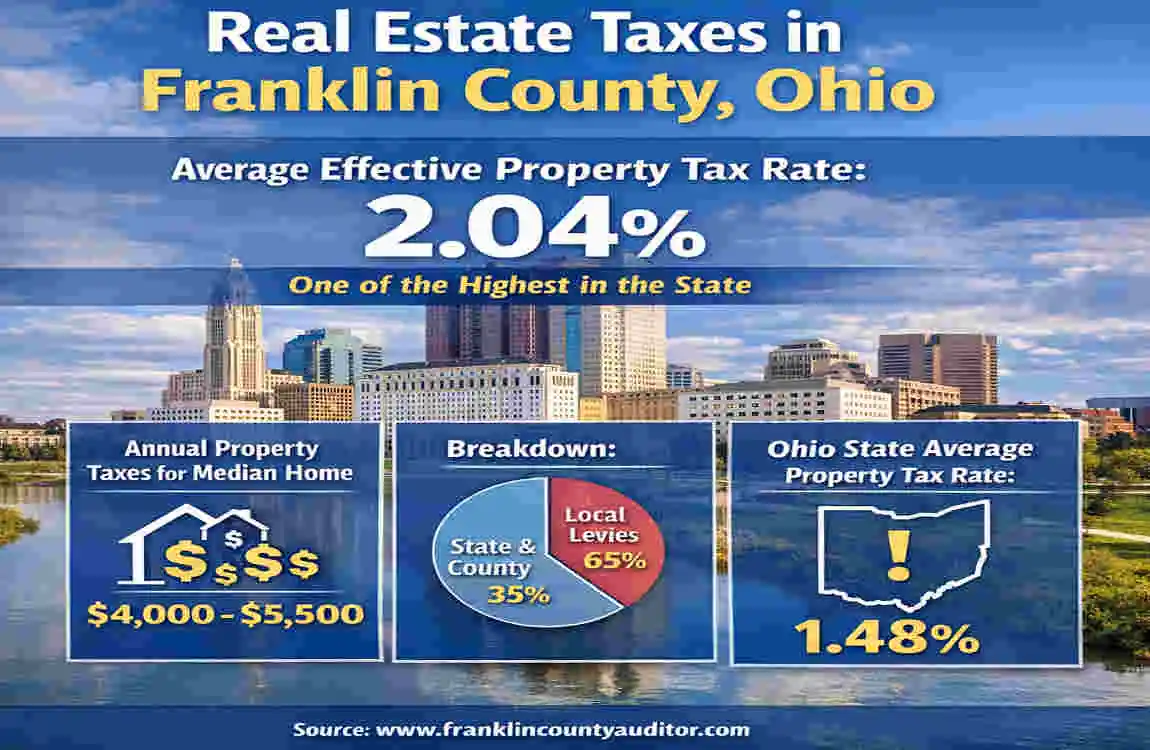
How property taxes work
Real estate taxes are taxes on property you own. If you own a house, townhouse, condo, or land, you may owe property tax each year.
The county or local tax office usually decides the amount based on your home’s assessed value. In simple terms, the higher the home’s value, the higher the tax bill may be.
These taxes are not a one-time payment. They are part of the ongoing cost of owning a home.
Why homeowners pay real estate taxes
You pay property taxes because local governments need money to provide public services. Your tax dollars often help support things like:
- Schools
- Roads and bridges
- Police and fire services
- Snow removal
- Parks and public buildings
So when you pay real estate taxes, you are helping support your local community.
Property taxes vs other home costs
It is easy to mix up property taxes with other housing costs, but they are not the same.
- Property taxes go to the local government.
- Homeowners insurance protects your home from damage or loss.
- Mortgage payments pay back the loan on your home.
- HOA fees cover shared community expenses if you live in a managed neighbourhood.
Each of these costs has a different purpose, so it helps to keep them separate in your budget.
How Franklin County Determines Your Home’s Property Tax
Understanding property assessment
Before your tax bill is calculated, Franklin County usually assesses your home. A property assessment estimates your home’s value for tax purposes.
This value may not match the price someone would pay for your home on the open market. It is simply the number the county uses to help figure out your tax bill.
What can affect your home’s taxable value?
Several things can change your home’s assessed value:
- The size of your home
- The condition of the property
- Your location
- Home improvements or additions
- Changes in the local housing market
For example, adding a new bathroom or finishing a basement may increase your property value. On the other hand, damage or a drop in market value may affect the number in the other direction.
Understanding the tax rate
The tax rate is the other major part of the calculation. Once the county knows the assessed value, it applies the local tax rate to determine the bill.
This means two homes with similar values may still have different tax bills if they are in different areas or subject to different local rates. That is one reason Franklin County real estate taxes at home can vary so much.
How to Calculate Franklin County Real Estate Taxes at Home
A simple property tax formula
The basic idea is easy:
Assessed value × tax rate = property tax
That is the simple version. In real life, the county may also apply exemptions, credits, or special rules before setting the final amount.
A simple example
Let’s say your home is assessed at $250,000 and the local tax rate is 1%.
Here is the basic calculation:
- $250,000 × 0.01 = $2,500
That would be your yearly property tax before any exemptions or special adjustments.
If you qualify for a tax break, your final bill could be lower.
Why your final tax bill may be different
Your actual tax bill may not match a simple estimate because of a few common reasons:
- Exemptions or credits
- Special assessments
- Recent changes in property value
- Local rules and county-specific tax policies
This is why it is always smart to review the official tax notice instead of relying on a rough guess.
Franklin County Property Tax Bills, Due Dates, and Payments
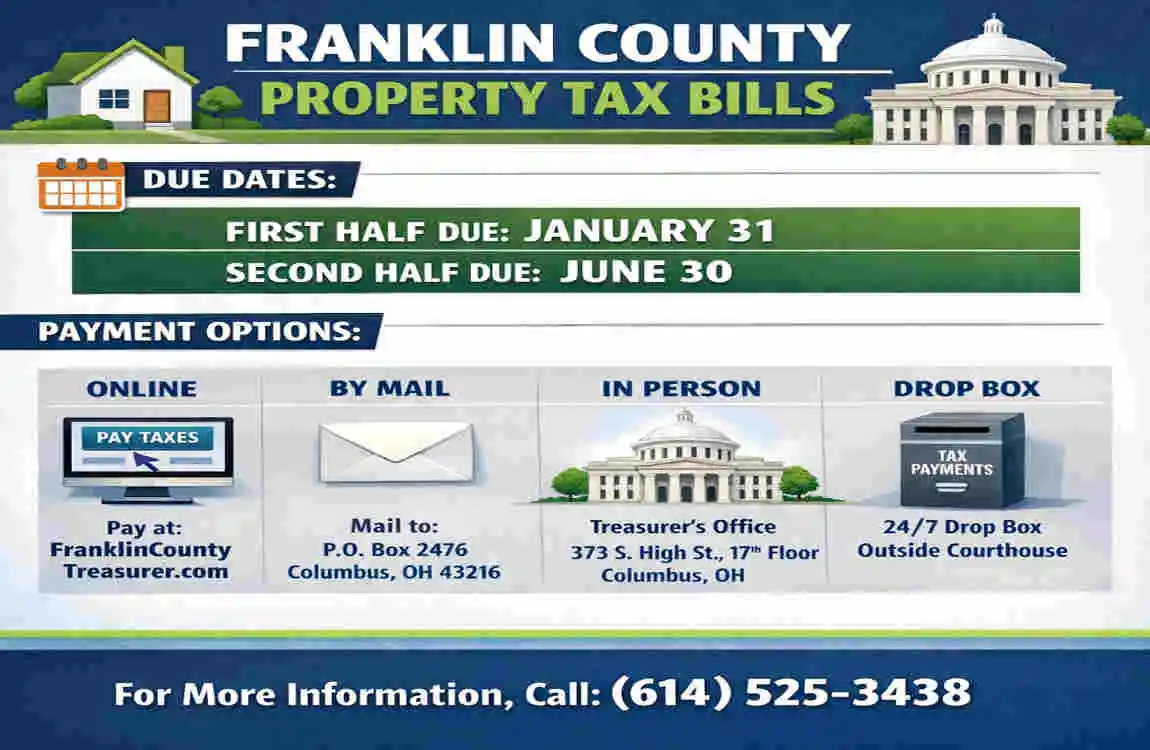
When tax bills are issued
Property tax bills are usually sent out on a regular schedule. The exact timing depends on the county, so watch for your notice and read it carefully.
A tax bill usually includes:
- Your property details
- Assessed value
- Tax rate
- Amount due
- Payment deadline
- Instructions for payment
If any part of the bill looks wrong, you should contact the county office quickly.
Property tax payment options
Many homeowners pay property taxes in one of these ways:
- Online payment
- In person
- Through mortgage escrow
If you pay through escrow, your mortgage lender collects part of the tax each month and pays the bill for you later. This makes budgeting easier for many homeowners.
What happens if taxes are not paid
If you miss a property tax payment, the county may charge:
- Late fees
- Interest
- Penalties
- Collection actions
Don’t ignore a missed payment. If you are having trouble paying, contact the county office as soon as possible. They may explain your options.
Property Tax Exemptions, Credits, and Ways to Lower Your Bill
Common tax relief options
Some homeowners may qualify for tax relief programs. These may include:
- Homestead-related exemptions
- Senior tax relief
- Disability-related credits
- Veteran-related programs
- Other local or state property tax relief options
Not every homeowner qualifies, and the rules can vary depending on which Franklin County you live in.
How to check eligibility
To see whether you qualify, review the county’s current rules. Also, check:
- Application deadlines
- Income requirements
- Age or disability rules
- Required documents
It helps to keep copies of your records ready before applying.
Things to know before you apply
Tax relief programs can change over time. That is why you should always confirm the latest rules with the official county office.
Also, remember that tax relief is not automatic in many cases. You may need to apply.
What to Do If You Disagree With Your Home’s Assessment
Review your property record.
If your property tax bill feels too high, start by checking your property record. Look for mistakes such as:
- Wrong square footage
- Missing or incorrect rooms
- Incorrect lot size
- Wrong condition rating
- Outdated property details
Even small errors can affect your assessed value.
Understanding the appeal process
If you think the assessment is wrong, you may be able to appeal it. The appeal process usually begins with the local assessment office or tax authority.
You may need to submit:
- Your property details
- Photos
- Comparable home values
- Supporting documents
- A written explanation
Deadlines matter, so don’t wait too long.
Common mistakes to avoid
A few simple mistakes can weaken an appeal:
- Missing the deadline
- Sending incomplete documents
- Using the wrong property information
- Assuming market value and assessed value are always the same
- Not keeping copies of your records
Organising your documents early makes the process much easier.
Tips for Managing Franklin County Real Estate Taxes at Home
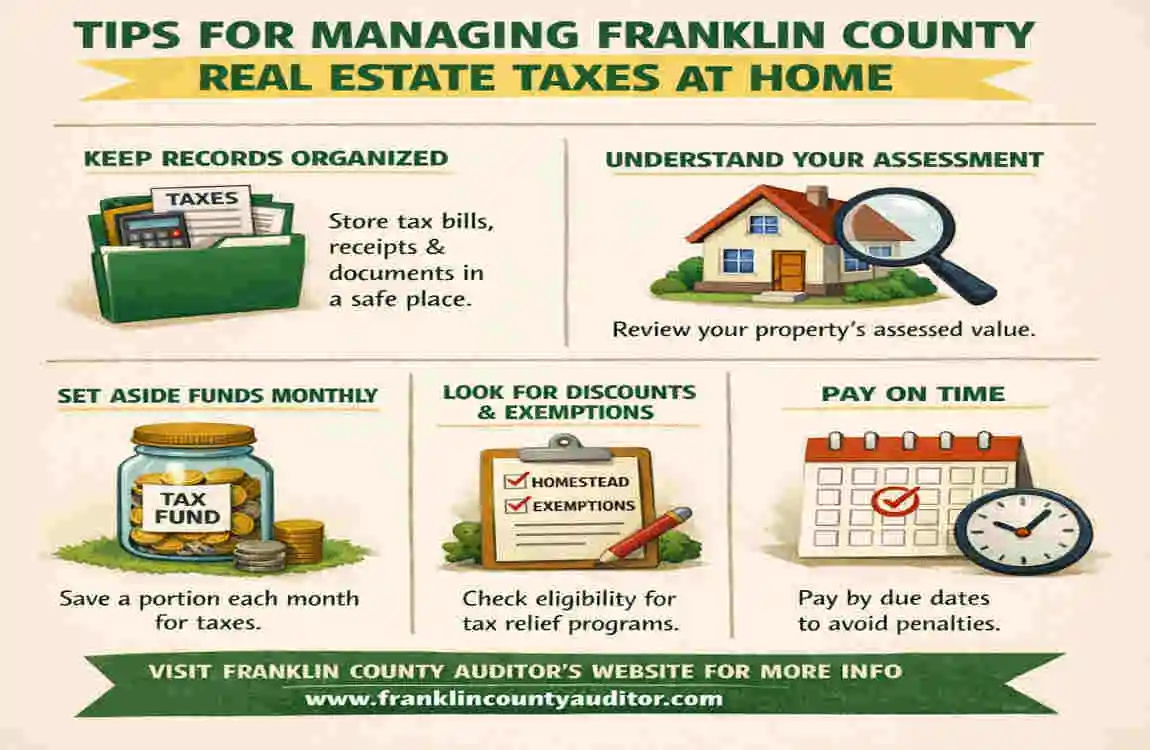
Keep track of your annual tax bill.
Make it a habit to review every tax notice. Compare the new bill with last year’s bill and look for any large changes.
If something seems unusual, ask questions early.
Budget for property taxes
Include property taxes in your yearly home budget. If your taxes are paid through escrow, your monthly mortgage payment may go up or down depending on the tax amount.
A simple budget plan can help you avoid surprises.
Keep your property information updated.
If you make major changes to your home, keep your records current. Updated information helps reduce confusion later.
Also check that the county has the correct ownership and property details on file.
Frequently Asked Questions About Franklin County Real Estate Taxes at Home
What are Franklin County real estate taxes at home?
They are yearly taxes on your home or property that help fund local public services.
How are Franklin County property taxes calculated?
They are usually based on your home’s assessed value multiplied by the local tax rate, with possible exemptions or credits.
How can I find my home’s property tax bill?
You can usually find it through the county tax office, your mailed notice, or your mortgage escrow records.
When are Franklin County real estate taxes due?
Due dates depend on the county, so always check your official tax notice.
Can homeowners qualify for property tax exemptions?
Yes, some homeowners may qualify for exemptions or credits depending on local and state rules.
Can I appeal my home’s property assessment?
Yes, if you believe the assessment is wrong, you may be able to file an appeal.
Why did my property tax bill increase?
Your bill may increase because of a higher assessment, a tax rate change, or the loss of a credit or exemption.
Are property taxes included in a mortgage payment?
Often, yes. Many lenders collect property taxes through an escrow account.
| Topic | Short Information |
|---|---|
| What Are Real Estate Taxes? | Property taxes charged by the county and other local authorities. |
| Who Pays? | Usually the property owner is responsible for paying the tax. |
| Tax Based On | The property’s assessed or taxable value. |
| Main Tax Factors | Location, property value, local tax rates, and applicable exemptions. |
| Tax Bill | Typically shows the assessed value, tax rate, exemptions, and total amount due. |
| Homestead Exemption | Some homeowners may qualify for a reduction in taxable value, depending on local rules. |
| When to Pay | Due dates vary by the specific Franklin County and local taxing authority. |
