
When people talk about the cost of houses for sale, they usually mean the purchase price and the extra money needed to close the deal and move in. That number is not always as simple as the listing price you see online.
A house can cost more or less depending on location, size, condition, and market demand. A small home in a popular neighborhood may cost more than a larger home in a quieter area. That is why it helps to look at the full picture, not just the asking price.
What Determines the Cost of Houses for Sale?
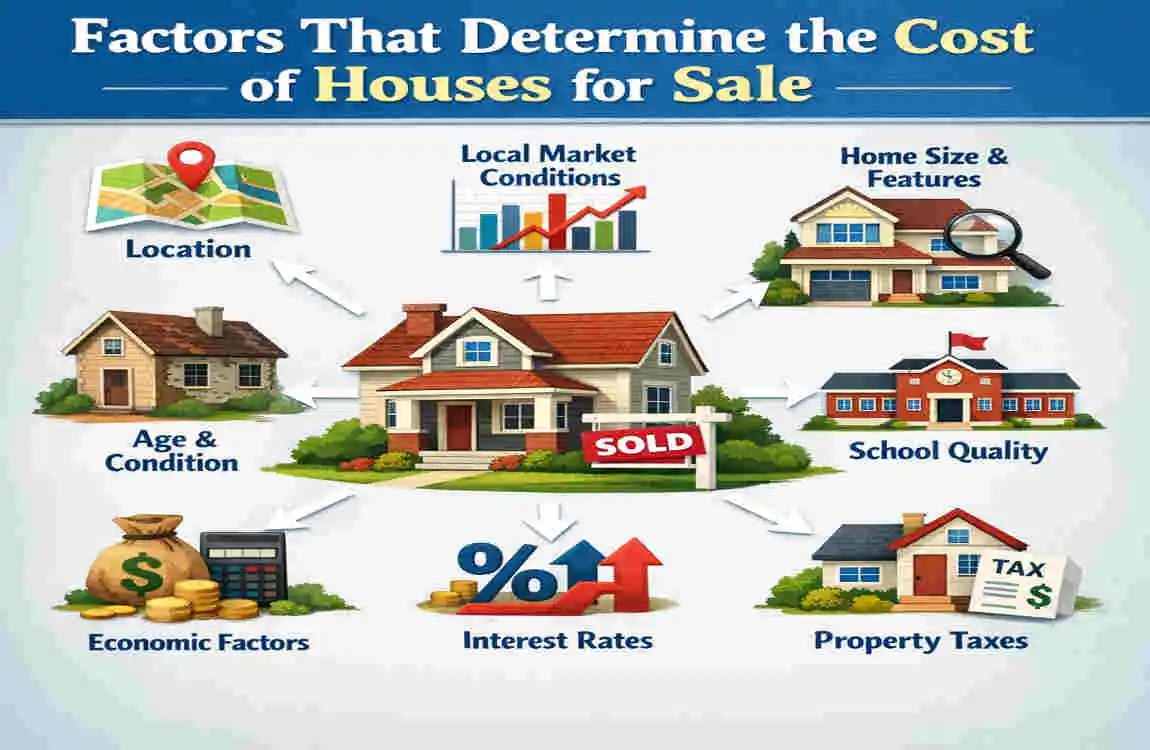
Location and Neighborhood
Location is one of the biggest price factors. Homes in large cities, growing suburbs, or desirable neighborhoods often cost more than homes in less active markets.
Things like schools, transportation, shopping, parks, and nearby services also matter. If a home sits in a convenient, well-liked area, buyers often pay more for it.
House Size and Layout
The size of the home directly affects the price. Bigger houses usually cost more because they offer more living space.
The layout also matters. A home with three bedrooms and two bathrooms may cost more than a similar-sized house with a less practical layout. Usable outdoor space, such as a yard or patio, can also add value.
Property Condition and Age
A newer home often costs more because it may need less immediate work. Older homes may be cheaper upfront, but they can come with repair costs.
The quality of the materials, flooring, kitchen finishes, and bathrooms also affects the price. A well-kept home usually sells for more than one that needs major updates.
Average Real Estate Houses for Sale Cost
There is no single average price that fits every home. Property values vary from place to place so the same house can cost very different amounts in different areas.
Entry-Level Homes
These are usually smaller homes, starter homes, or properties in more affordable areas. They often attract first-time buyers and people looking for lower monthly payments.
A home may be more budget-friendly if it has fewer upgrades, a smaller lot, or a simpler layout.
Mid-Range Family Homes
These homes often have three to four bedrooms, more living space, and family-friendly layouts. They are common in suburban neighborhoods and tend to match the needs of many buyers.
The price can rise quickly if the home is close to schools, jobs, shopping, or popular community features.
Luxury and High-End Properties
Luxury homes usually come with larger lots, premium finishes, custom features, and highly desirable locations. These homes may also include extra rooms, designer kitchens, or high-end outdoor spaces.
Because of those features, the cost can be much higher than the average home. Buyers should also expect higher maintenance, insurance, and tax costs.
Simple price comparison
Home TypeTypical FeaturesCost Level
Entry-Level Home Smaller size, basic finishes Lower
Mid-Range Family Home Good layout, more space, decent neighborhood Medium
Luxury Home Premium materials, larger lot, top location Higher
Additional Costs Beyond the Listing Price
The listing price is only part of the story. When you buy a home, you usually incur several other expenses.
Closing Costs
Closing costs are the fees you pay to finish the purchase. These can include loan fees, title fees, legal fees, recording charges, and administrative costs.
They may seem small at first, but they can add up quickly. That is why buyers should always plan for them before making an offer.
Inspection and Appraisal Costs
A home inspection helps you understand the condition of the house before you buy it. It can reveal issues with the roof, plumbing, electrical system, or structure.
Lenders often need an appraisal to confirm the home’s value. This helps the bank determine whether the loan amount is appropriate for the property.
Taxes, Insurance, and Maintenance
Once you buy the home, the costs do not stop there. You may need to pay property taxes, homeowners insurance, and regular maintenance costs.
You also need to consider utilities, repairs, lawn care, and minor replacements over time. These ongoing expenses are part of the real cost of ownership.
How to Calculate Your Total Home-Buying Budget
Start With the Purchase Price
Begin by looking at homes that fit your actual budget, not just the largest amount a lender may approve. It is easy to focus only on the loan number, but that can leave you stretched too thin later.
Think about what you can comfortably afford now and in the future.
Include Your Down Payment
Your down payment affects how much you need to borrow. A larger down payment may reduce your monthly mortgage payment, but you should still set aside cash for other costs.
It is important not to use all your savings on the down payment alone.
Estimate Monthly Housing Costs
Your monthly home costs are usually higher than your mortgage payment. You should also include:
- Property taxes
- Homeowners insurance
- Maintenance
- Utilities
- Possible HOA fees
When you add these together, you get a better idea of the real monthly cost of owning the home.
Quick formula:
Total home-buying budget = purchase price + upfront costs + expected immediate repairs and improvements
How to Compare Houses for Sale and Their Prices
Compare Similar Properties
Try to compare homes that are similar in size, age, condition, and location. A small updated home should not be compared directly to a large older home in a premium area.
This makes your price comparison much more useful and realistic.
Research Recent Comparable Sales
Look at what similar homes have sold for recently in the same area. This helps you judge whether the asking price is fair.
If the asking price is much higher than comparable sales, it may be worth asking questions or negotiating.
Look Beyond the Asking Price
A low-priced house is not always the best deal. If it needs major repairs, updated systems, or expensive maintenance, the true cost may be much higher.
Also check taxes, HOA fees, and future improvement needs before you decide.
Tips to Reduce the Cost of Buying a House

Set a Realistic Budget
Do not buy based only on the top mortgage amount you qualify for. Leave room for closing costs, repairs, and daily living expenses.
A safer budget gives you more comfort after the purchase.
Negotiate When Appropriate
In some markets, you may have room to negotiate. If the home inspection reveals problems, that can sometimes support a lower offer or repair request.
Market conditions matter, so always look at local demand before making a move.
Consider Different Property Options
You may save money by considering:
- Older homes
- Smaller homes
- Homes outside premium neighborhoods
- Houses that need cosmetic updates instead of major repairs
These options can help you find more value without overspending.
Frequently Asked Questions About Real Estate Houses for Sale Cost
What does real estate houses for sale cost mean?
It refers to the price of buying a home and the extra expenses that come with the purchase.
What is included in the cost of buying a house?
The cost usually includes the purchase price, closing costs, taxes, insurance, inspections, financing fees, and possible repairs.
Why do house prices vary so much?
Prices vary by location, size, condition, amenities, and local demand.
How can I estimate the total cost of a house?
Add the purchase price, upfront costs, and expected repair or improvement costs. That gives you a better total budget.
Is the cheapest house always the best option?
Not always. A cheaper house may need more repairs or have a less desirable location, which can make it more expensive in the long run.
| Cost Factor | What It Includes | Quick Tip |
|---|---|---|
| House Price | The listed or negotiated purchase price | Compare similar homes nearby |
| Down Payment | Upfront amount paid toward the home | A larger down payment may reduce monthly costs |
| Mortgage Costs | Interest, loan fees, and monthly payments | Compare different lenders |
| Closing Costs | Legal, appraisal, inspection, and administrative fees | Budget extra beyond the sale price |
| Property Taxes | Local taxes charged on the property | Check the current annual tax bill |
| Home Insurance | Coverage for the house and belongings | Get quotes before buying |
| Inspection Cost | Professional review of the home’s condition | Helps identify costly repairs |
