
Your website is often the first place people meet your real estate business. If it looks modern, loads fast, and feels easy to use, visitors are more likely to trust you. If it feels slow, confusing, or outdated, they may leave in seconds.
That is why a strong website matters so much for real estate lead generation. It works like a 24/7 sales tool. It can attract buyers, sellers, renters, and investors even when your office is closed.
But many real estate websites lose leads because of common problems. These issues can include slow loading times, weak mobile design, poor SEO, broken forms, and outdated listings. In this article, we will examine the main website issues that affect real estate lead generation and explain how they hurt your results.
The good news is that most of these problems can be fixed. Once you improve your website, you can create a smoother user experience, drive more traffic, and convert more visitors into leads.
Why Your Website Matters for Real Estate Lead Generation

A real estate website does much more than show properties. It helps people decide whether they want to contact you, schedule a showing, or ask for more details.
First Impressions Build Trust
People judge a website very quickly. If your site looks clean and professional, it creates confidence. If it looks messy or outdated, visitors may assume your service is unreliable as well.
That first impression matters because real estate is a trust-based industry. Buyers and sellers want to feel safe before they share their contact details.
It Works All Day and Night
Your website never sleeps. It can collect leads at any hour, from any device, and from any location. That makes it one of the most valuable tools in your marketing system.
Unlike phone calls or office visits, your site keeps working even when you are busy. It can answer common questions, show properties, and guide visitors toward a contact form.
It Supports SEO and Local Visibility
A strong website also helps search engines understand what you offer. If your pages are well-structured and use local keywords, they can rank better in search results.
That means more people in your area can find you when they search for homes, agents, or property help.
It Converts Visitors into Leads
At the end of the day, your website should help people take action. That may mean filling out a form, calling your office, booking a tour, or asking about a listing.
If your website does not guide people toward that action, you may get traffic but still lose leads.
Top Website Issues Affecting Real Estate Lead Generation
Slow Website Loading Speed
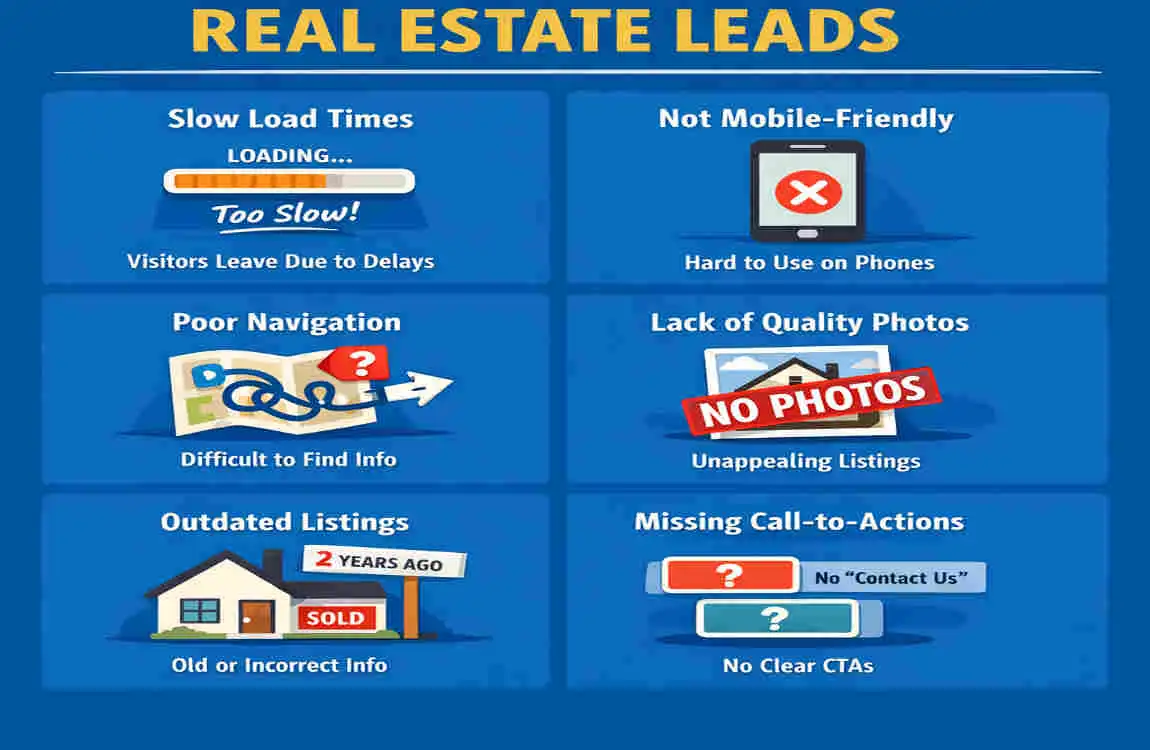
A slow website is one of the biggest problems for real estate businesses. People want fast answers. If a page takes too long to load, many visitors will leave before they even see your listings.
This can increase your bounce rate and lower your chances of getting contact form submissions. Slow pages also create a poor user experience, especially for mobile visitors.
To improve speed, compress large images, remove extra scripts, and choose reliable hosting. Even small improvements can make a big difference in lead generation.
Poor Mobile Responsiveness
Most property searches now happen on mobile devices. People browse homes while commuting, during lunch breaks, or while talking with family. If your site does not work well on a phone, you lose those visitors fast.
Buttons may be too small. Text may be hard to read. Images may not fit the screen. These issues make your site frustrating to use.
A responsive design adjusts automatically to different screen sizes. That helps visitors move through your site smoothly and increases the chance they will contact you.
Weak SEO Optimisation
If your website is not optimised for search engines, it becomes harder for people to find you. This is a major problem because search traffic is often high-quality and locally targeted.
Common SEO issues include missing keywords, weak page titles, thin content, and duplicate pages. Search engines may not know which pages to rank if your content is unclear.
You should use location-based keywords, write clear meta titles and descriptions, and create useful content for buyers and sellers. Strong SEO helps you attract the right audience.
Difficult Website Navigation
If visitors cannot find what they need, they leave. Confusing menus, broken links, and poor page structure can quickly damage lead generation.
A real estate website should be easy to browse. People should be able to find listings, contact details, neighbourhood pages, and agent information without effort.
Think of navigation like a roadmap. When the path is clear, visitors keep moving. When it is messy, they stop.
Outdated Property Listings
Nothing hurts trust faster than outdated listings. If a property is already sold or no longer available, but still appears active on your site, visitors may feel misled.
This creates a poor user experience and makes your business appear less organised. It may also cause people to question whether they should work with you.
Keep listings updated in real time whenever possible. Fresh content shows that your website is active and dependable.
Missing Clear Calls-to-Action (CTAs)
A website should always guide the visitor to take the next step. If your pages lack clear CTAs, people may browse and leave without contacting you.
Examples include Call Now, Schedule a Tour, Request Property Details, and Get a Free Valuation. These should be easy to see and placed in the right spots.
A good CTA removes confusion and makes the next step feel simple.
Poor Lead Capture Forms
Lead forms are very important, but many websites ask for too much information. Long forms can scare people away, especially when they are just starting their search.
Ask only for what you really need at first. Name, email, and phone number may be enough for early contact.
Keep the form short, clear, and mobile-friendly. The easier it is to fill out, the more leads you are likely to get.
Lack of Trust Signals
People want proof before they trust a real estate business. If your website has no testimonials, reviews, certifications, or security badges, it may feel less credible.
Trust signals help visitors feel safe. They show that others have worked with you and had a positive experience.
You can build trust by displaying client reviews, agent credentials, awards, and secure contact options. These small details can make a big impact.
Broken Images and Videos
Real estate is highly visual. Buyers want to see luxury homes clearly before they reach out. If images are broken, blurry, or missing, they may lose interest right away.
The same goes for videos. A broken virtual tour or property walkthrough can make the site feel unfinished.
Always check your media files. Good visuals create interest and support faster decisions.
Weak Local SEO
Local SEO helps your website appear when people search for your services in your area. Without it, you may miss out on nearby buyers and sellers who are ready to act.
Use local keywords, create location pages, and keep your business profile information consistent. This helps search engines connect your business with the right location.
Local SEO is especially important for real estate because most leads come from a specific city, neighbourhood, or region.
How to Identify Website Problems
You do not need to guess what is wrong with your website. There are simple ways to check.
- Use Google Search Console to spot ranking issues, broken pages, and indexing problems.
- Review Google Analytics to see which pages people leave quickly and where conversions happen.
- Check Core Web Vitals to measure speed, visual stability, and responsiveness.
- Test mobile usability to make sure the site works well on smaller screens.
- Run a website audit to find broken links, outdated content, and technical issues.
These tools help you see what is working and what needs attention.
Best Practices to Improve Real Estate Website Performance

Here is a simple table of improvements you can make.
Website Issue What to Check Quick Fix
Slow speed Large images, heavy scripts Compress files and improve hosting
Poor mobile use Buttons, text size, layout Use responsive design
Weak SEO Titles, keywords, content Rewrite pages with local terms
Outdated listings Old property data Update listings regularly
Low conversions Forms and CTAs Add clear action buttons
Focus on the Basics
A few simple home improvements can help a lot. Start with speed, mobile design, and listing updates. These three areas often have the biggest impact on leads.
Add Clear Contact Paths
Make sure people can reach you easily. Put phone numbers, forms, and buttons in visible places on every important page.
Improve Internal Linking
Help visitors move from one page to another. For example, a link from a neighbourhood page to active listings, or from a blog post to a contact page.
Publish Helpful Content
Blog content can bring in traffic and build trust. Write about local market trends, buying tips, selling tips, and neighbourhood insights.
Keep Local SEO Strong
Use your city or area name naturally in page titles, headings, and descriptions. This helps search engines understand your focus.
Common Mistakes Real Estate Businesses Should Avoid
Some mistakes keep hurting websites again and again.
- Ignoring website maintenance
- Using outdated themes
- Poor image optimisation
- No contact information
- No lead tracking
These problems can quietly reduce leads over time. Regular maintenance is not optional if you want your website to perform well.
FAQs
What are the most common website issues affecting real estate lead generation?
The most common issues include slow loading speed, poor mobile responsiveness, weak SEO, outdated listings, broken links, and weak lead forms.
How does website speed affect real estate leads?
A slow website can frustrate visitors, increase bounce rates, and reduce search visibility. That usually means fewer leads.
Why is mobile optimisation important for real estate websites?
Most people search for homes on their phones. A mobile-friendly website makes browsing easier and helps increase conversions.
How often should a real estate website be updated?
Listings should be updated right away when availability changes. Other content and technical checks should be reviewed regularly.
| Website Issue | How It Impacts Real Estate Leads | Quick Fix |
|---|---|---|
| Slow Loading Speed | Visitors leave before pages load, reducing inquiries. | Compress images and improve hosting. |
| Poor Mobile Experience | Mobile users struggle to browse listings or contact agents. | Use a responsive, mobile-friendly design. |
| Confusing Navigation | Buyers can’t find listings or services easily. | Simplify menus and page structure. |
| Weak Call-to-Action (CTA) | Visitors don’t know how to contact or request a showing. | Add clear “Contact Agent” and “Schedule a Tour” buttons. |
| Outdated Property Listings | Users lose trust when homes are no longer available. | Update listings regularly with accurate details. |
| Missing Lead Capture Forms | Potential clients leave without sharing their information. | Place short contact forms on key pages. |
| Poor SEO Optimization | Website ranks lower in search engines, reducing traffic. | Optimize keywords, titles, and meta descriptions. |
| Low-Quality Photos | Listings appear less attractive to buyers. | Use professional, high-resolution property images. |
| Lack of Trust Signals | Visitors hesitate to contact unfamiliar agents. | Display reviews, testimonials, and certifications. |
| Broken Links or Errors | Creates a poor user experience and hurts credibility. | Regularly test and fix broken pages and links. |
