
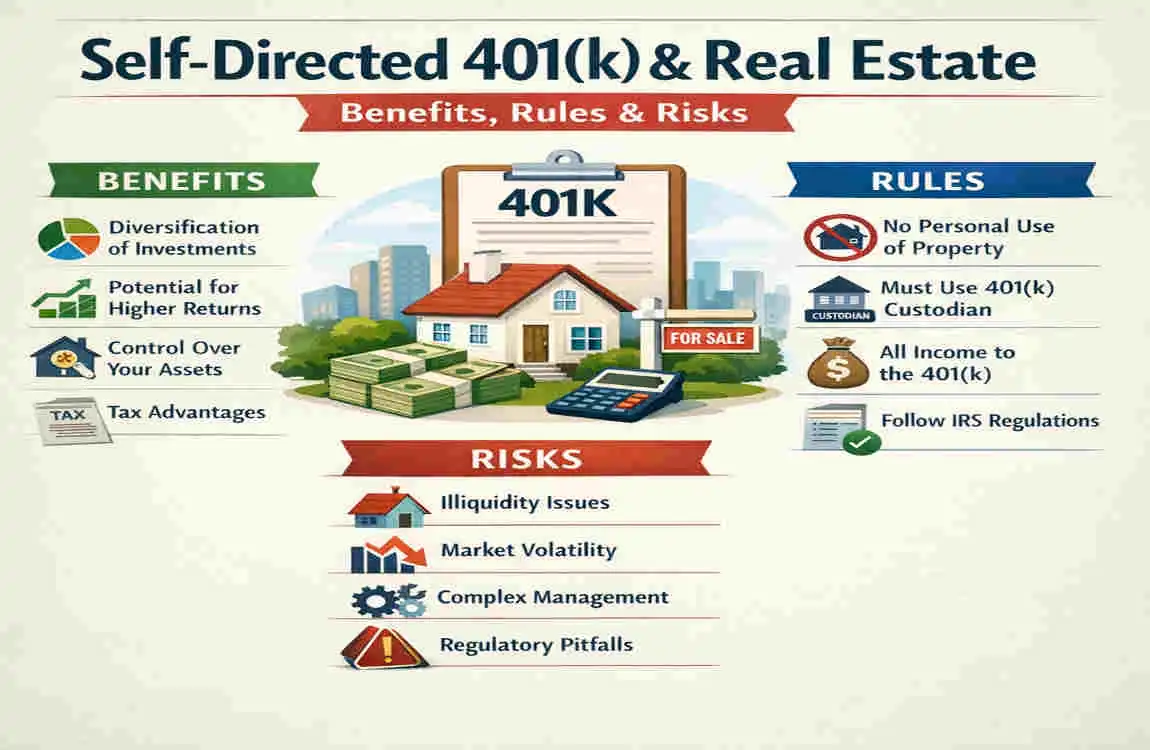
Using retirement money to buy property can sound exciting. Real estate feels tangible, familiar, and sometimes more stable than stocks. That is why many investors start looking into using a self-directed 401(k) to buy real estate to grow their retirement savings.
A self-directed 401(k) gives you more control than a standard retirement plan. But with that control comes more responsibility. You must follow IRS rules carefully, or you could create tax problems you do not want.
What Is a Self-Directed 401(k)?
Definition
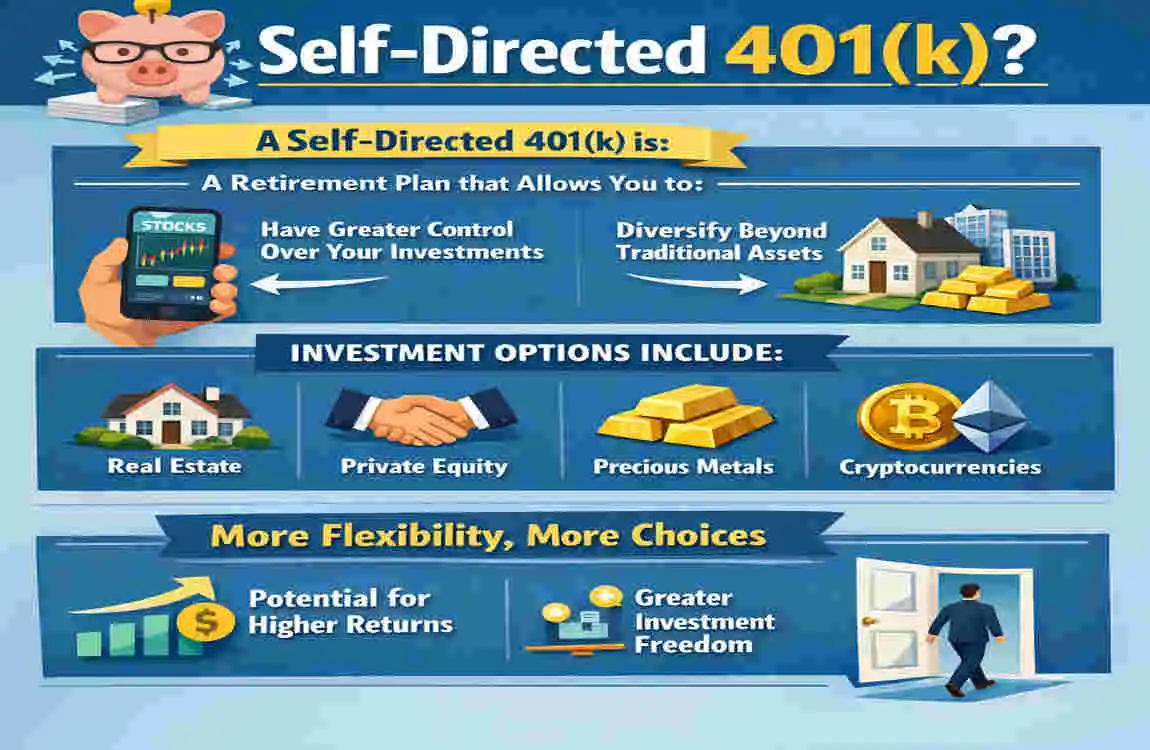
A self-directed 401(k) is a retirement account that lets you invest in alternative assets, not just stocks, bonds, and mutual funds.
That is the biggest difference from a regular 401(k). A traditional plan is usually controlled by an employer or a plan provider with limited choices. A self-directed version gives you a wider investment menu.
Eligible Investments
With this type of plan, you may be able to invest in:
- Real estate
- Private equity
- Tax liens
- Precious metals
- Notes and other alternative assets
This flexibility is why many investors like it. They want more than Wall Street products. They want direct control over where their money goes.
Who Can Open One?
A self-directed 401(k) is usually best for:
- Self-employed individuals
- Business owners
- Solo entrepreneurs
In many cases, this setup works best for people who do not have full-time employees, other than a spouse. That is because some retirement plans have special rules based on the business structure.
Can You Use a Self-Directed 401(k) to Buy Real Estate?
How the Process Works
Yes, in many cases you can. The basic idea is simple: the retirement account buys the property, not you personally.
Here is the usual flow:
- Fund the account
- Choose a custodian or plan provider
- Find an investment property
- Buy the property through the retirement plan
The property must stay inside the plan. That means all income and expenses usually flow through the account, not your personal bank account.
Types of Real Estate Allowed
Many investors use their self-directed 401(k) for:
- Rental homes
- Commercial properties
- Vacant land
- Multifamily properties
These are typically held for investment, not personal use. That distinction matters a lot.
Investments That Are Not Allowed
You generally cannot buy:
- A personal residence
- A vacation home you want to use
- Property used by disqualified persons
This is where many people get into trouble. The IRS cares about whether the property benefits your retirement plan, not your personal life.
Benefits of Using Self-Directed 401k to Buy Real Estate
Tax Advantages
One of the biggest benefits is tax treatment.
Depending on the plan type, your investment growth may be tax-deferred or tax-free in the future. That can help your money grow faster over time.
Portfolio Diversification
Real estate gives your retirement savings a different kind of exposure.
Instead of depending only on the stock market, you can spread your money across more than one asset type. That can help lower risk over the long run.
Potential Rental Income
A rental property can produce monthly cash flow.
If the property is managed well, the rent can go back into your retirement account and keep building the balance. That is one reason investors like income-producing real estate.
Long-Term Appreciation
Property values can rise over time.
If you buy smart and hold for the long term, the home or building may become more valuable. That growth can strengthen your retirement position.
Greater Investment Control
You choose the property, the location, and the strategy.
For investors who like hands-on control, that can feel much better than leaving everything to a fund manager.
IRS Rules You Must Follow
This is the part you should take seriously. Real estate inside a self-directed 401(k) can work well, but only if you follow the rules.
Prohibited Transactions
You cannot use the property in a way that the IRS considers a personal benefit.
That means no moving into it, no vacation use, and no side deals that benefit you directly.
Disqualified Persons
The IRS limits who can be involved.
Disqualified persons usually include:
- You
- Your spouse
- Your parents
- Your children
- Certain related businesses
This rule helps prevent self-dealing.
No Personal Benefit
You cannot treat the property like it belongs to you personally.
Even small actions, like using the home for a family gathering or working on it without proper care, can cause trouble.
Income and Expenses Must Flow Through the Plan
This is very important.
Rent should go into the retirement account. Repairs, taxes, insurance, and other property costs should usually be paid from the account as well.
Recordkeeping Requirements
Keep clean records.
You should save purchase documents, rent records, repair bills, and account statements. Good records help you stay compliant and make tax reporting easier.
Risks of Investing Retirement Funds in Real Estate
Lack of Liquidity
Real estate is not easy to sell quickly.
If you need money fast, property can be hard to convert to cash. That is a big issue for retirement funds, where flexibility matters.
Property Market Fluctuations
Prices go up and down.
If the market weakens, your property value may fall. That can hurt your retirement balance.
Management Challenges
A property is not passive by nature.
You may have to deal with tenants, repairs, vacancies, and maintenance. That can take time and energy.
Unexpected Repair Costs
Houses and buildings break down.
Roof leaks, plumbing issues, and structural problems can become expensive fast. If the retirement account does not have enough cash, that can create pressure.
Regulatory Compliance Risks
This is one of the biggest concerns.
If you make a mistake with IRS rules, the tax consequences can be serious. That is why many investors work with professionals before they buy anything.
Step-by-Step Guide to Buying Real Estate with a Self-Directed 401(k)
Confirm Eligibility
First, make sure your plan allows real estate investing.
Not every 401(k) can do this. You need the right plan structure.
Open a Self-Directed Account
Next, set up the self-directed 401(k) with the proper provider.
Choose someone familiar with alternative assets and real estate transactions.
Transfer Existing Retirement Funds
If permitted, transfer funds from qualifying retirement accounts into the new plan.
This step should be done carefully so you do not trigger taxes or penalties.
Find an Investment Property
Look for a property that makes sense as an investment.
Focus on rental potential, location, condition, and long-term value.
Perform Due Diligence
Do your homework.
Check the title, taxes, property condition, rental demand, and expected costs. Do not rush.
Common Mistakes to Avoid
Some mistakes can create serious problems fast.
- Buying property for personal use
- Paying expenses personally
- Mixing personal and retirement funds
- Ignoring IRS regulations
- Choosing investments without research
If you avoid these errors, you improve your chances of success.
Self-Directed 401(k) vs Self-Directed IRA
FeatureSelf-Directed 401(k)Self-Directed IRA
Contribution Limits Higher Lower
Loan Option Often Available Not Allowed
Investment Choices Broad Broad
Tax Benefits Yes Yes
Best For Self-employed Individual Investors
Is Using a Self-Directed 401 (k) to Buy Real Estate Right for You?
Consider It If:
- You have long-term investment goals
- You understand real estate investing
- You want portfolio diversification
Avoid It If:
- You need quick access to funds
- You prefer passive investments
- You cannot manage compliance requirements
This strategy can work very well, but it is not for everyone.
Expert Tips for Successful Real Estate Investing

A few smart habits can make a big difference.
- Work with experienced professionals
- Research local markets
- Keep adequate cash reserves
- Diversify property types
- Review IRS rules regularly
- Maintain accurate documentation
If you stay organized and patient, you reduce risk and improve your odds of success.
Frequently Asked Questions (FAQ)
Can I use a self-directed 401(k) to buy rental property?
Yes. Rental properties are generally allowed if they are held solely for investment and comply with IRS rules.
Can I live in a property purchased by my self-directed 401(k)?
No. Personal use is not allowed.
Who pays property expenses?
The self-directed 401(k) should pay them directly.
Can I collect rental income personally?
No. Rental income must be returned to the retirement account.
What are prohibited transactions?
These include personal use, selling to yourself or certain family members, and any personal benefit from the property.
Is financing allowed when buying real estate?
Sometimes yes, but it can create extra tax and compliance issues.
| Category | Information |
|---|---|
| What Is It? | A Self-Directed 401(k) is a retirement plan that allows investors to buy alternative assets, including real estate. |
| Main Benefit | Greater investment control and potential for tax-advantaged real estate growth. |
| Eligible Real Estate | Rental homes, commercial buildings, raw land, multifamily properties, and certain private real estate investments. |
| Tax Advantages | Investments grow tax-deferred (Traditional) or tax-free if qualified (Roth Self-Directed 401(k)). |
| Key Rules | The property must be purchased for investment purposes—not for personal use. |
| Prohibited Transactions | You cannot live in, vacation in, or personally benefit from the property, nor buy from or sell to certain family members (disqualified persons). |
| Financing Rules | Some plans allow non-recourse loans, where the lender’s claim is limited to the property itself. |
| Potential Risks | Complex IRS rules, higher administrative costs, limited liquidity, market fluctuations, and penalties for prohibited transactions. |
| Who Should Consider It? | Experienced investors seeking portfolio diversification and long-term retirement growth. |
| Bottom Line | A Self-Directed 401(k) can be a powerful tool for real estate investing, but success depends on understanding IRS rules, avoiding prohibited transactions, and managing investment risks carefully. |
