
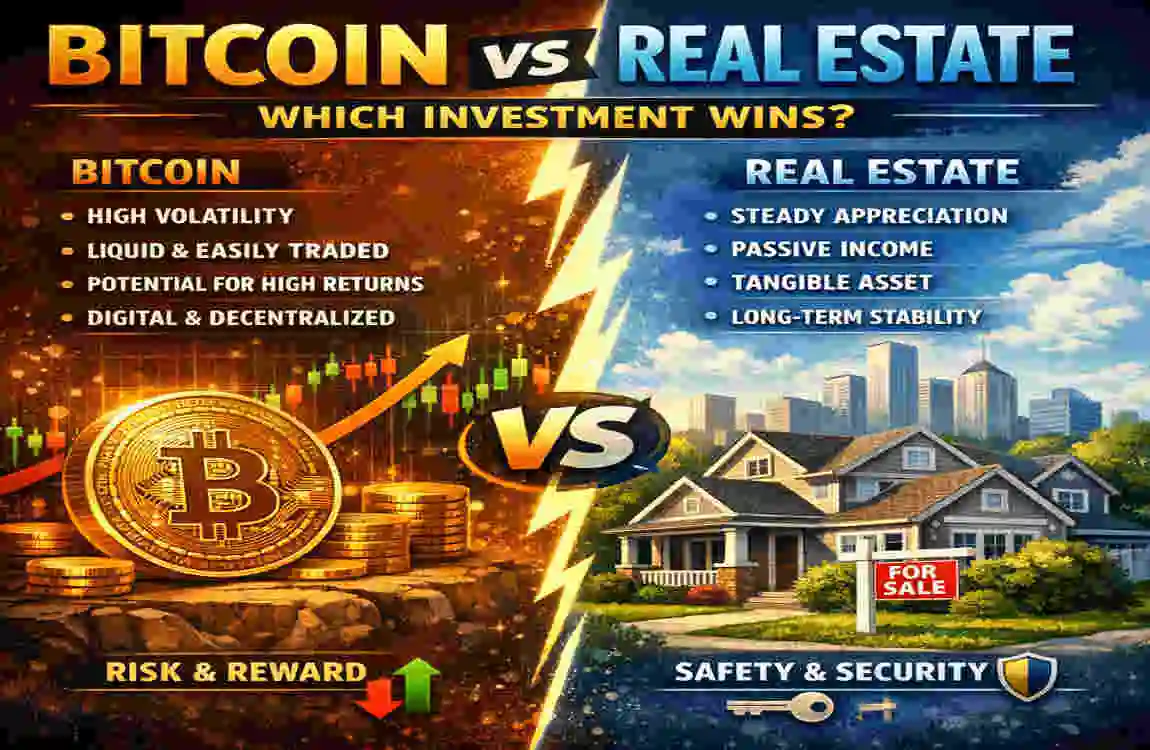
If you are trying to build wealth, you have probably compared bitcoin and real estate and wondered which makes more sense. Both have strong supporters. Both can grow your money. But they work in very different ways.
Bitcoin is a digital asset that can rise and fall quickly and attract investors seeking big growth. Real estate is a physical asset that often feels more stable and can bring steady income over time. One is built for speed. The other is built for patience.
Understanding Bitcoin as an Investment
What Is Bitcoin?
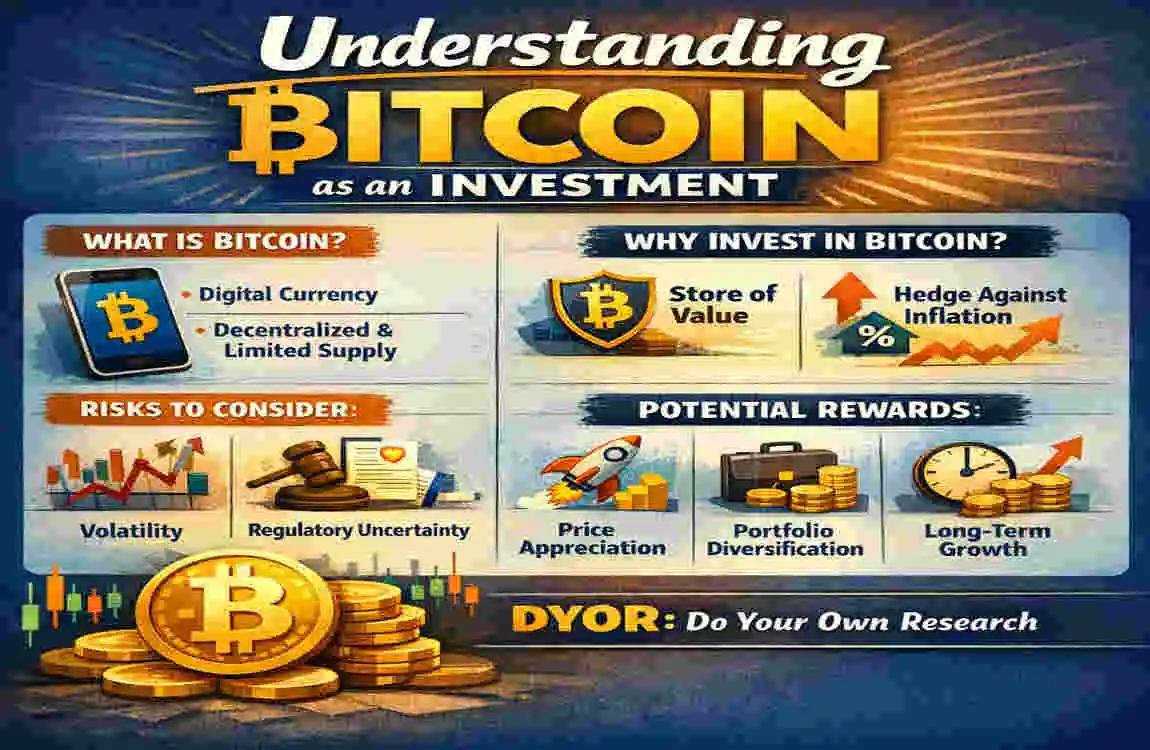
Bitcoin is a digital currency created in 2009. It does not exist as paper money or coins you keep in a wallet at luxury home. Instead, it lives online and uses blockchain technology to record transactions.
In simple words, blockchain is a public digital record that tracks every Bitcoin transaction. This makes the system transparent and hard to change.
Many investors like Bitcoin because it has limited supply. Only 21 million coins will ever exist. That scarcity is one reason people see it as a store of value.
Why Investors Buy Bitcoin
People buy Bitcoin for different reasons. Some want fast growth. Others want to protect their money from inflation. Some want a small piece of a modern digital asset.
Bitcoin also appeals to people who like simple access. You can buy a small amount, even if you do not have much money to start with.
Advantages of Investing in Bitcoin
Bitcoin has several clear advantages:
- Low entry point compared with property
- High growth potential in strong market cycles
- Very easy to buy and sell
- Global access from almost anywhere
- No physical maintenance
For many investors, this makes Bitcoin exciting and flexible.
Risks of Bitcoin Investment
Bitcoin is not a calm investment. It can rise sharply, but it can also drop just as fast.
The biggest risks include:
- High volatility
- Regulatory changes
- Security problems
- Market hype and speculation
If you invest in Bitcoin, you need patience and a strong stomach. It is not the kind of investment that feels steady every day.
Understanding Real Estate as an Investment
What Is Real Estate Investing?
Real estate investing means buying property to earn money or build value. This can include homes, apartments, office spaces, rental houses, or even REITs, which are funds that invest in property.
Unlike Bitcoin, real estate is a physical asset. You can see it, touch it, rent it, and improve it.
Benefits of Real Estate Investment
Real estate is popular because it can offer both income and growth.
Some of the biggest benefits are:
- Steady rental income
- Long-term value growth
- A real, tangible asset
- Tax benefits in many cases
Many investors also like the fact that property often feels more stable than digital assets.
Risks of Real Estate
Real estate also has downsides. It usually requires more upfront money and can entail ongoing costs.
Common risks include:
- Repairs and maintenance
- Property taxes
- Vacancy periods
- Market slowdowns
- Low liquidity
If you need quick cash, selling property is usually slower than selling Bitcoin.
Bitcoin vs Real Estate: Side-by-Side Comparison
Feature Bitcoin Real Estate
Initial Investment Low High
Liquidity Very High Low
Volatility High Moderate
Passive Income No Yes
Maintenance None Required
Appreciation Potential Very High Moderate
Inflation Protection Possible Strong
Accessibility Global Location-based
This table shows the basic truth: Bitcoin is easier to enter, but harder to predict. Real estate requires more capital, but it often offers greater stability.
Bitcoin vs Real Estate: Which Offers Better Returns?
Historical Bitcoin Performance
Bitcoin has delivered huge gains over the years, especially for early investors. In some market cycles, prices have risen very quickly.
But those gains came with major drops too. Bitcoin is known for strong booms and deep pullbacks. So while the upside is big, the ride is rough.
Historical Real Estate Performance
Real estate usually grows more slowly than Bitcoin, but it has one major strength: consistency. Property values often rise over time, and rental income can add another layer of return.
That means you may not get the same explosive growth, but you may get a steadier path to wealth.
Comparing Long-Term Wealth Creation
Bitcoin can create wealth through capital growth. Real estate can create wealth through cash flow and appreciation.
If you want fast upside and can handle risk, Bitcoin may look attractive. If you want a slower, income-based path, real estate may be the better fit.
Risk Comparison
Market Risk
Bitcoin reacts strongly to investor mood, news, and speculation. Real estate also reacts to markets, but usually in a slower and more controlled way.
Economic Risk
Both investments are affected by the economy. If interest rates rise or the economy weakens, property and digital assets can both feel pressure.
Government Regulations
Bitcoin faces more uncertainty because rules around crypto can change quickly. Real estate is also regulated, but the rules are generally more established.
Liquidity Risk
Bitcoin wins here. You can usually sell it fast. Real estate can take weeks or months to sell.
Security Risks
Bitcoin requires strong digital security. If you lose access to your wallet or fall for fraud, recovery can be difficult. Real estate has fewer digital risks, but it still needs good legal protection and insurance.
Which Investment Is Better During Inflation?
Real estate has long been seen as a strong inflation hedge. Why? Because property values and rental income often rise as prices go up.
Bitcoin is sometimes called digital gold. Some investors believe it can protect against inflation because supply is limited. Still, its behaviour is less well-proven and more unpredictable than that of real estate.
So if your main goal is inflation protection, real estate usually feels safer. Bitcoin may help too, but it is still the more speculative option.
Cash Flow Comparison
Bitcoin Income Opportunities
Bitcoin does not naturally produce income as property does. You do not collect rent from it.
Some people try lending or yield platforms, but these carry additional risk. For most people, Bitcoin is mainly a buy-and-hold asset.
Real Estate Cash Flow
Real estate can generate ongoing income in several ways:
- Monthly rental income
- Short-term rental earnings
- Commercial lease payments
This makes real estate attractive if you want your investment to pay you while you hold it.
Tax Considerations
Bitcoin Taxes
Bitcoin is usually taxed as a capital asset. That means you may owe tax when you sell it at a profit.
You also need to keep records of your purchases, sales, and transfers. Good tracking matters because tax reporting can get complicated.
Real Estate Taxes
Real estate comes with property taxes, but it may also offer useful tax benefits. These can include depreciation, mortgage interest deductions, and sometimes capital gains exclusions.
This is one reason many investors like property for long-term planning.
Who Should Invest in Bitcoin?
Bitcoin may be a better fit if you are:
- Comfortable with high risk
- Interested in technology
- Looking for fast growth potential
- Able to handle price swings
- Starting with a smaller budget
Bitcoin often appeals to younger investors and those seeking greater exposure to digital assets.
Who Should Invest in Real Estate?
Real estate may be better if you are:
- More conservative with money
- Looking for steady income
- Planning for retirement
- Interested in long-term stability
- Able to handle higher upfront costs
It is often a better match for people who want a more predictable investment journey.
Can You Invest in Both?
Yes, and for many people, that is the smartest move.
Using both Bitcoin and real estate can help you spread risk. Bitcoin gives you growth potential. Real estate gives you income and stability. Together, they can make a portfolio more balanced.
A simple approach might be:
- Keep most of your money in stable assets
- Use a smaller amount for Bitcoin exposure
- Review your mix regularly
- Adjust based on your goals and risk level
This way, you do not have to choose only one side.
Common Mistakes to Avoid
Before you invest, try to avoid these errors:
- Buying without research
- Following hype
- Putting all your money in one asset
- Borrowing too much
- Selling out of fear
- Ignoring long-term planning
These mistakes can hurt both Bitcoin and real estate investors.
Expert Tips Before Investing
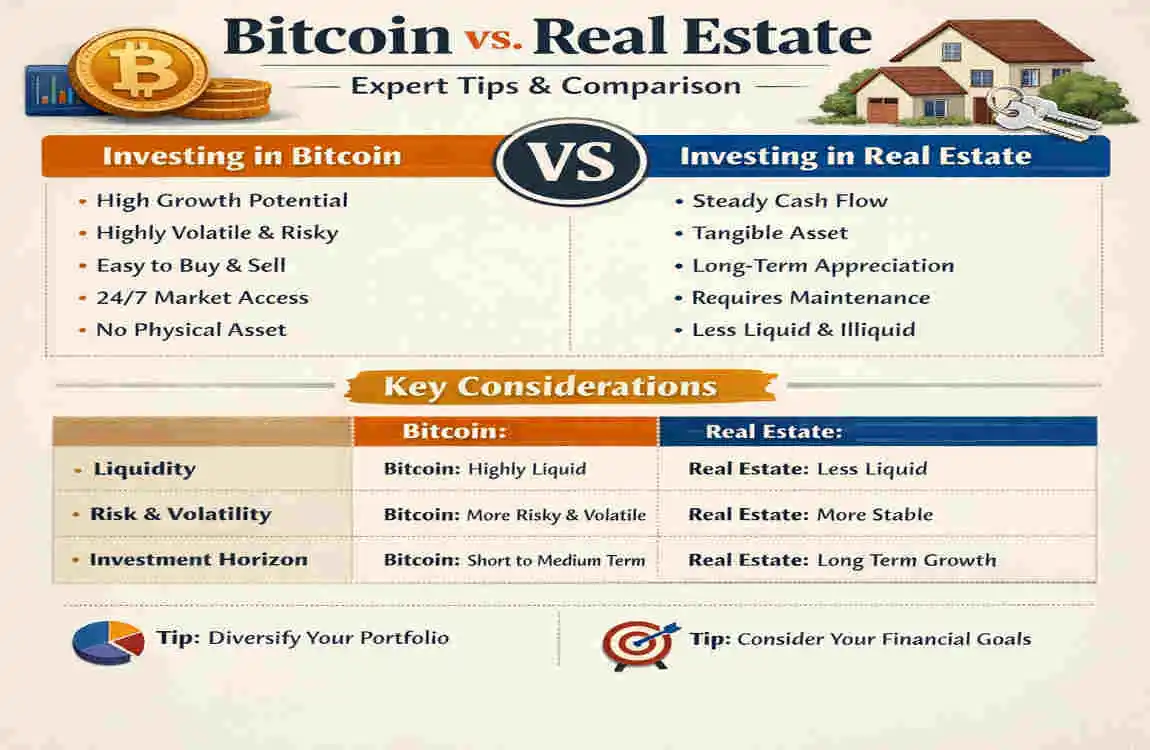
Here are a few simple steps that can help:
- Set clear goals for growth, income, or stability.
- Know your risk tolerance before you buy anything.
- Keep an emergency fund so you are not forced to sell early.
- Diversify rather than depend on a single investment.
- Review your portfolio regularly.
A calm plan usually works better than emotional decisions.
Frequently Asked Questions
Is Bitcoin better than real estate for long-term investment?
Bitcoin can offer higher growth, but it also carries more volatility. Real estate is usually more stable and can provide income.
Which investment is safer: Bitcoin or real estate?
Real estate is generally considered safer because it is less volatile and more predictable.
Can I invest in both Bitcoin and real estate?
Yes. Many investors use both to balance growth and stability.
Does Bitcoin generate passive income?
Not directly. Some lending platforms offer yield, but they also add risk.
Is real estate a better hedge against inflation than Bitcoin?
Usually yes. Real estate has a longer history of helping investors protect against inflation.
| Factor | Bitcoin | Real Estate |
|---|---|---|
| Investment Type | Digital cryptocurrency | Physical property asset |
| Potential Returns | Very high but unpredictable | Steady long-term appreciation |
| Risk Level | High volatility | Moderate risk |
| Income Potential | No regular income unless staking/trading | Rental income and cash flow |
| Liquidity | Can be bought or sold 24/7 | Takes weeks or months to sell |
| Initial Investment | Start with a small amount | Usually requires significant capital |
| Market Volatility | Extremely volatile | More stable over time |
| Inflation Protection | Viewed by some as a hedge | Historically a strong inflation hedge |
| Maintenance Costs | None | Property taxes, repairs, insurance |
| Leverage Options | Limited | Mortgage financing available |
| Tax Considerations | Capital gains taxes may apply | Property taxes and capital gains rules apply |
| Best For | High-risk, growth-focused investors | Long-term, income-focused investors |
| Time Horizon | Short to long term | Primarily long term |
| Overall Winner | Best for high-growth potential and liquidity | Best for stability, passive income, and long-term wealth building |
