
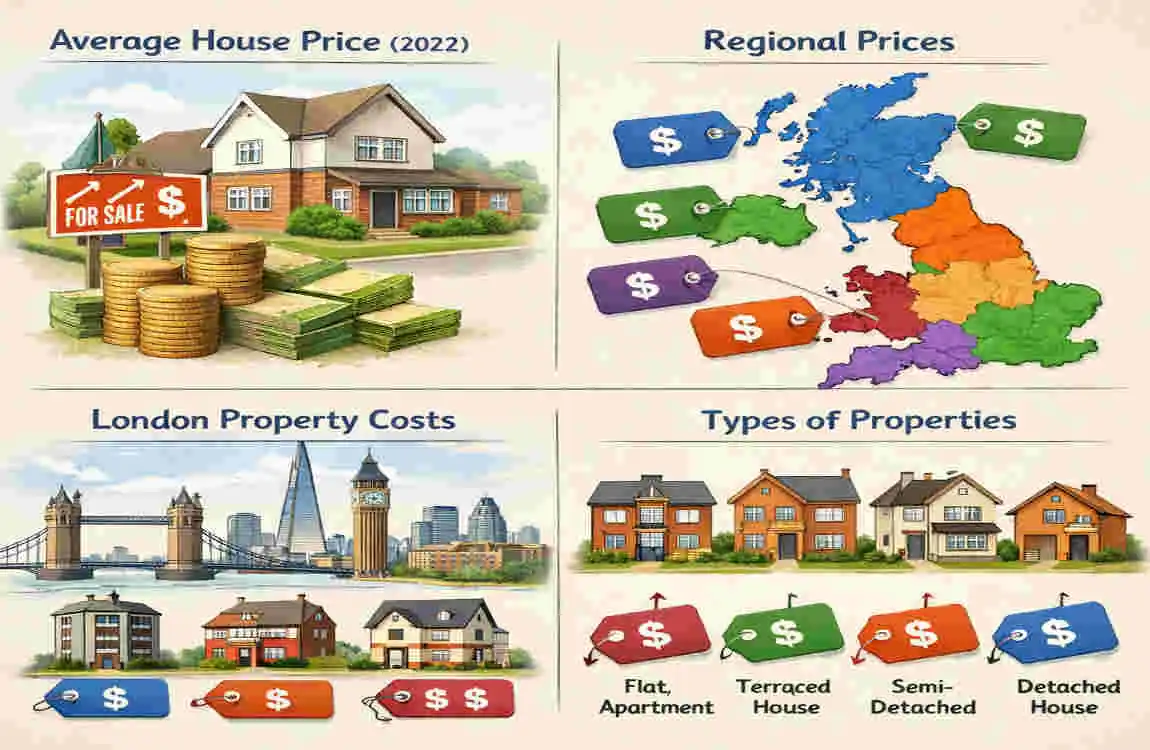
The cost of real estate in UK housing markets can feel confusing at first because prices vary widely by location, property type, and market demand. A flat in one part of the country may cost far less than a small house in a major city. Even within the same town, one street can be much more expensive than another.
Average Cost of Real Estate in UK Homes

What Is the Average UK House Price?
The average UK house price is best used as a general guide, not a fixed number. Property values change over time due to interest rates, local demand, housing supply, and broader economic conditions.
In recent years, the national average has sat in the hundreds of thousands of pounds, but that figure does not tell the full story. A house in London may cost several times more than a similar home in a smaller town in Wales or Scotland.
How Property Type Affects Home Cost
The type of home matters a lot. A flat is often cheaper than a house, while detached homes usually sit at the higher end of the market.
Property Type Typical Price Level Notes
Flat / Apartment Lower to moderate Often cheaper, but may include service charges.
Terraced House Moderate Popular with first-time buyers
Semi-Detached House Moderate to high Usually more space than a terrace
Detached House High Often the most expensive because of size and privacy
Age, condition, garden space, parking, and nearby transport also affect price. A new-build home may cost more upfront, while an older home may need repairs or renovation.
Regional Differences in UK Property Prices
UK property prices are not the same everywhere. London and parts of the South East usually have the highest prices because demand is strong and land is limited.
In other parts of the UK, prices can be much lower. This is why many buyers look beyond the most expensive areas to find better value. Still, low prices do not always mean the best deal, especially if the area has weak transport, fewer jobs, or lower demand.
UK House Prices by Region and City
London Property Prices
London remains one of the most expensive property markets in the UK. Central areas are usually the priciest, while outer London and suburban locations can be more affordable.
Transport links matter a lot. A property near a good Tube, rail, or bus route often costs more because buyers value convenience.
England Outside London
Cities like Manchester, Birmingham, Leeds, Bristol, and Liverpool often offer more affordable choices than London, but prices still vary by neighborhood.
Areas with strong employment, good universities, new transport projects, or regeneration plans often attract more buyers. That extra demand can push prices up over time.
Scotland, Wales, and Northern Ireland
In general, many parts of Scotland, Wales, and Northern Ireland are more affordable than London and the South East. However, some popular cities and desirable coastal or commuter areas can still be expensive.
This is why local research matters. A UK-wide average can hide big differences between areas.
Cheapest and Most Expensive Areas
If you want lower prices, you may look at smaller towns or regions with lower demand. But remember, affordability is not the same as value.
A cheap home is not always the best choice if it comes with poor transport, limited services, or weak long-term growth prospects. Always think about the full picture.
What Affects the Cost of Real Estate in UK Homes?
Location and Accessibility
Location is usually the biggest price driver. Buyers pay more for homes near:
- Good schools
- Public transport
- Shops and healthcare
- Main roads and city centres
- Employment hubs
The easier it is to live and travel from an area, the more likely prices are to rise.
Property Size and Condition
Bigger homes usually cost more, but size is not the only factor. The number of bedrooms, bathrooms, garden space, storage, and parking all matter too.
Condition is just as important. A home that needs major repairs may look cheaper at first, but the total cost can rise quickly once you add renovation work.
Mortgage Rates and Buyer Demand
Mortgage rates directly impact what buyers can afford. When interest rates rise, monthly payments increase, and some buyers reduce their budgets.
When demand is strong and supply is limited, prices often climb. When demand slows, prices may level off or move more slowly.
New-Build vs. Existing Homes
New-build homes often come with modern layouts, energy efficiency, and warranties. They may also need less immediate repair work.
Older homes can offer more character and may be cheaper in some areas, but they can also bring extra costs for repairs, insulation upgrades, or maintenance.
Local Housing Supply
If there are not enough homes available in an area, prices often go up. This is why local planning, new developments, and housing supply can shape property values over time.
Additional Costs of Buying a Home in the UK
Stamp Duty
Many buyers need to pay Stamp Duty, depending on the property’s price and their circumstances. The rules can change, so it is important to check the latest guidance before you buy.
Solicitor and Conveyancing Fees
You will usually need legal help to handle the purchase. This can include title checks, searches, contracts, and property registration. These fees vary, but they are a normal part of buying a home.
Mortgage and Survey Costs
You may also pay mortgage arrangement fees, valuation fees, or broker fees. A survey can cost extra too, but it can save you money by spotting hidden problems early.
Moving and Setup Costs
Do not forget the smaller costs that still add up. These may include:
- Removal services
- Insurance
- Furniture
- Utility setup
- Small repairs
- Cleaning and decorating
These costs matter because they affect your real budget, not just the house price.
How to Budget for a UK Home Purchase
Calculate Your Total Budget
Do not focus only on the listing price. Your real budget should include the deposit, mortgage payments, taxes, legal fees, survey costs, and moving expenses.
Deposit Requirements
Your deposit affects how much you need to borrow. In many cases, a larger deposit can lead to better mortgage options and lower monthly payments.
It is also wise to set aside an emergency fund for unexpected costs after you move in.
Affordability and Monthly Payments
Ask yourself whether the monthly payment will still feel manageable if rates rise or your expenses increase. A home should fit your life, not stretch your budget too tightly.
First-Time Buyer Considerations
First-time buyers often face the biggest learning curve. It helps to understand any government support or home-buying schemes that may be available when you buy a home.
Is Buying UK Real Estate a Good Investment?

Property as a Long-Term Investment
Many people see property as a long-term investment because it can offer stability and possible growth over time. But future returns are never guaranteed.
Rental Property Costs
If you buy to let, remember that landlord costs can be high. You may need to cover repairs, insurance, tenant gaps, compliance, and management fees.
Risks to Consider
House prices can fall as well as rise. Mortgage rates, local demand, and repair costs can all affect your return.
How to Research a Property Market
Try to look at recent sold prices, not just asking prices. Also check local jobs, transport, development plans, schools, and rental demand before you decide.
FAQ About the Cost of Real Estate in the UK
What is the average cost of a home in the UK?
The average changes over time and varies by region and property type. It is best to check current market data before making a decision.
Is property cheaper outside London?
Yes, many areas outside London are cheaper, though some cities and desirable locations can still be expensive.
How much deposit do I need to buy a home in the UK?
It depends on the mortgage and your circumstances. A larger deposit can sometimes improve your borrowing options.
What extra costs should I budget for when buying a house?
You should budget for taxes, legal fees, surveys, mortgage costs, insurance, moving, and any immediate repairs.
Is buying a flat cheaper than buying a house?
Usually yes, but flats may come with service charges and other ongoing costs.
| Factor | Typical UK Cost / Range |
|---|---|
| Average house price | Around £270,000–£300,000 |
| London average | Around £500,000–£550,000+ |
| Northern England | Often £150,000–£220,000 |
| Scotland | Often £180,000–£250,000 |
| Wales | Often £200,000–£250,000 |
| First-time buyer budget | Commonly £200,000–£300,000 |
| Luxury properties | £1 million+ |
| Additional buying costs | Solicitor, survey, mortgage fees, and potentially Stamp Duty |
