
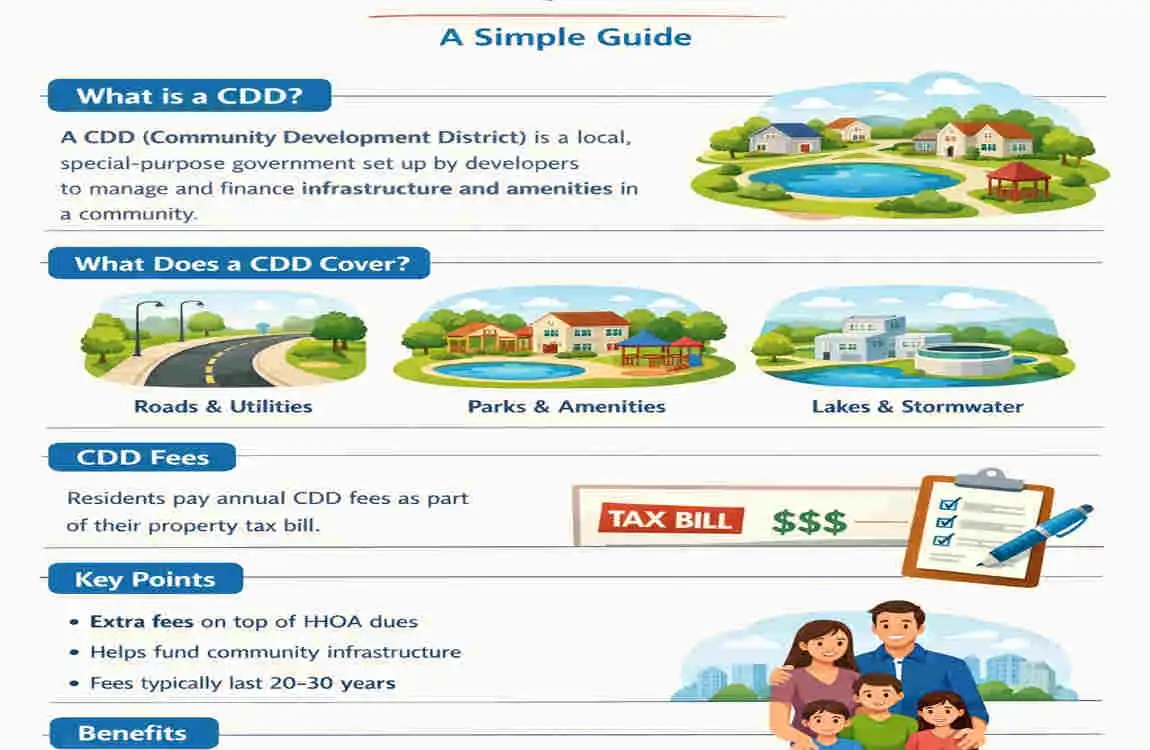
CDD in real estate usually refers to a Community Development District. It is a special district used to help pay for and maintain the infrastructure and shared features in some new neighborhoods and planned communities.
If you are buying a home in one of these communities, you may notice a CDD fee listed along with property taxes or HOA costs. That can feel confusing at first. This guide explains what a CDD is, how it works, how much it costs, and what to check before you buy.
What Is CDD in Real Estate?
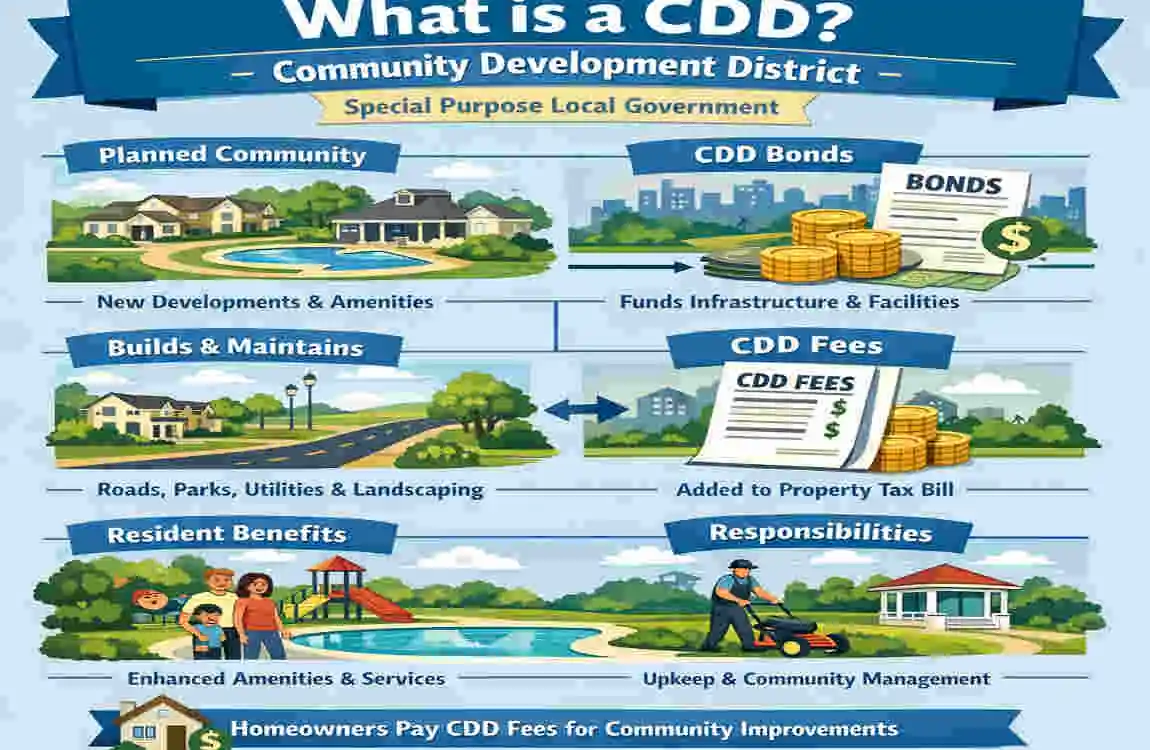
A Community Development District is a local, special-purpose district that helps fund community infrastructure. It is often used in new residential developments where roads, drainage, landscaping, and amenities need to be built and maintained.
In simple terms, a CDD helps cover the cost of making a neighborhood work well.
How a Community Development District Works
A CDD may help pay for things like:
- Roads and sidewalks
- Stormwater systems
- Landscaping
- Parks and recreation spaces
- Water and drainage improvements
- Community amenities
These features help create a more complete and attractive neighborhood. Instead of making the developer pay for everything upfront, the district helps spread the cost over time.
Why Are CDDs Created?
Developers and local governments may use CDDs to support growth in new communities. This can make it easier to build large neighborhoods with shared roads, drainage, and amenities.
For buyers, this often means a home in a newer community with planned features. But it also means extra costs to understand before you buy.
CDD vs. HOA
A CDD fee is not the same as an HOA fee. They may both appear in your housing costs, but they serve different purposes.
- CDD fees usually support infrastructure and district improvements
- HOA fees usually support neighborhood rules, management, and shared amenities
Some homes have both. That is why it is important to review every fee carefully before making a purchase.
How CDD Fees Work for Homeowners
If you own a home in a CDD community, you may be required to pay annual assessments. These are often collected through your property tax bill or billed separately, depending on the district.
CDD Bond Payments
Many CDDs use bonds to help finance construction costs. These bonds may cover roads, drainage systems, and other major improvements.
Homeowners then help repay that cost through assessments. So even if you did not build the community yourself, you may still share in the cost of repayment as part of living there.
CDD Operations and Maintenance Fees
Some CDD charges do not go toward debt. Instead, they help pay for the ongoing upkeep of district property and facilities.
This can include:
- Landscaping
- Common-area cleaning
- Repairs
- Maintenance of district amenities
These costs may continue year after year, so they should always be part of your budget.
Are CDD Fees Part of Property Taxes?
CDD assessments may appear on a property tax bill, but they are not the same as ordinary property taxes. They are separate charges.
That means your yearly housing cost can include:
- Mortgage payment
- Property taxes
- CDD assessments
- HOA fees
- Insurance
- Maintenance
This is why looking at the listing price alone is not enough.
How Much Does a CDD Cost?
CDD costs can vary a lot. Some are modest, while others are much higher depending on the community and how much debt remains.
What Determines CDD Costs?
Several factors affect the amount you pay:
- Property location
- Size of the home or lot
- Community infrastructure
- Remaining bond debt
- Operating expenses
- Shared amenities in the district
A larger, amenity-rich community may have higher assessments than a smaller one with fewer features.
Can CDD Fees Increase?
Yes, they can. This is especially true for operations and maintenance assessments.
That is why you should never assume the cost will stay the same forever. Always ask for the most recent district information before you buy.
Advantages and Disadvantages of Buying a CDD Property
A CDD home is not automatically better or worse than a non-CDD home. It depends on what you value and what you can afford.
Benefits of CDD Communities
CDD communities often offer newer infrastructure and attractive shared spaces.
Some common benefits include:
- Well-planned roads and drainage
- Parks and recreation areas
- Better landscaping
- Community amenities
- A more polished neighborhood look
For some buyers, these features make the extra cost feel worthwhile.
Potential Drawbacks of CDDs
The main drawback is cost. A CDD adds another layer of payment on top of your mortgage and property taxes.
Other concerns may include:
- Long-term bond obligations
- Annual assessment changes
- Higher total housing costs
- Less flexibility in the monthly budget
So while the community may look great, you still need to check the numbers carefully.
What Buyers Should Check Before Purchasing a CDD Home
Before you buy, take time to understand the full cost of the property. This step can save you from surprises later.
Ask for the Current CDD Assessment
Find out the exact amount you will pay each year. Ask whether it includes debt service, maintenance, or both.
Check the Remaining Bond Balance
If the bond is not fully paid off, you may still have years of future payments ahead. That matters when you are planning long-term affordability.
Review the CDD’s Financial Information
Ask to see any available district budget, assessment details, or financial documents. These can help you understand how the district operates and where your money goes.
Calculate the Total Housing Cost
Do not just focus on the mortgage. Add everything together so you get a real picture of what the home will cost you.
Cost TypeMain PurposeUsually Paid By
CDD Assessment Infrastructure and district services Property owner
HOA Fee Neighborhood management and amenities Homeowner
Property Tax Local government services Property owner
Special Assessment Specific community expense Property owner
Mortgage Payment Home loan repayment Borrower
Is Buying a Home With a CDD a Good Idea?
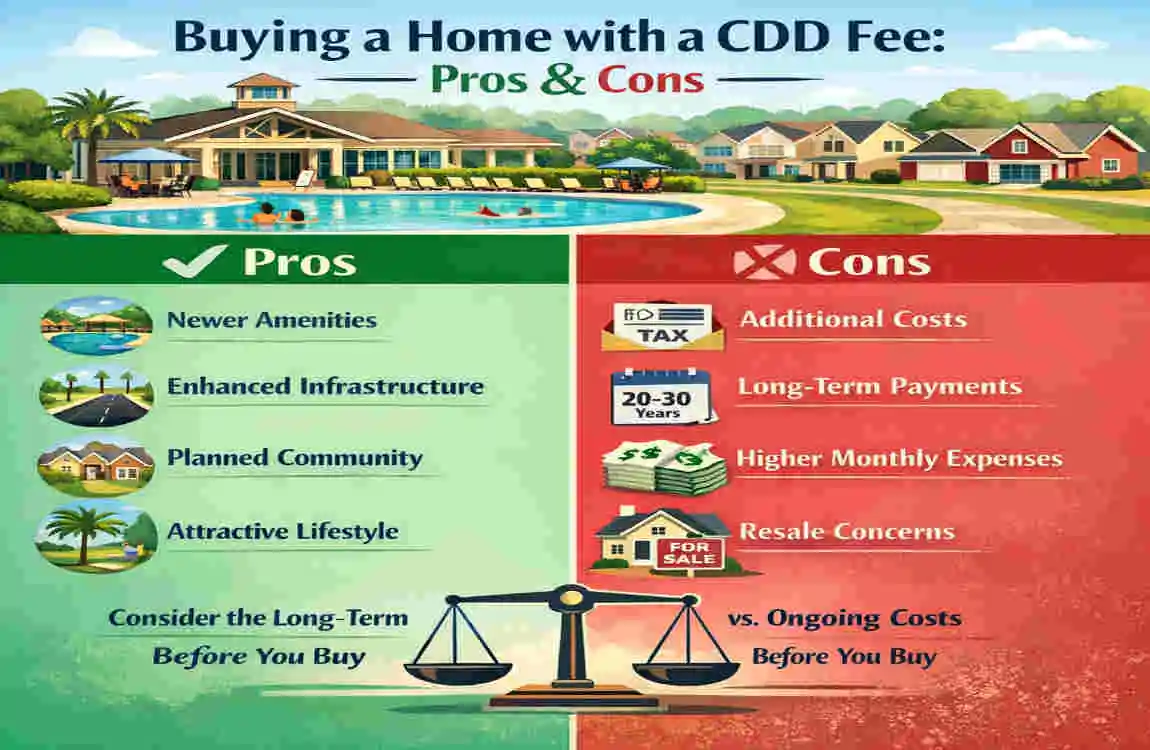
It can be a good idea if the community, price, and amenities fit your needs. But it can also be a poor choice if the assessments stretch your budget too far.
When a CDD Home May Make Sense
A CDD home may be a good fit if you want:
- A newer neighborhood
- Shared amenities
- Well-maintained streets and common areas
- A home in a planned development
Sometimes the added Assessment is worth it for the lifestyle and location.
When Buyers Should Be Careful
Be cautious if the assessments are high or if the remaining debt is large. A home can look affordable at first and still become expensive once all fees are included.
Ask yourself whether the full monthly and yearly cost still works for your budget.
Frequently Asked Questions About CDD in Real Estate
What does CDD mean in real estate?
CDD stands for Community Development District. It is a special district that helps fund and maintain community infrastructure.
Is a CDD fee the same as an HOA fee?
No. A CDD fee and HOA fee are different. A home may have both.
Do all homes have CDD fees?
No. Only homes in a district with a CDD assessment will have that charge.
Can CDD fees increase?
Yes. Some fees, especially maintenance-related ones, can change over time.
How long do CDD fees last?
Bond-related fees usually continue until the debt is paid off. Maintenance fees may continue as long as the district provides services.
Can you avoid paying a CDD assessment?
Usually no, if the property is subject to a valid CDD. That is why you should confirm the fee before buying.
| Term | Simple Explanation |
|---|---|
| CDD | Community Development District |
| Purpose | Helps fund and maintain community infrastructure and amenities |
| CDD Fees | Additional charges paid by property owners, often through property taxes |
| What It May Cover | Roads, landscaping, parks, pools, streetlights, and other community facilities |
| Who Pays? | Usually homeowners within the CDD |
| Why It Matters | CDD fees can increase the total cost of owning a home |
| Before Buying | Check the current CDD fees, remaining debt, and what services they cover |
