
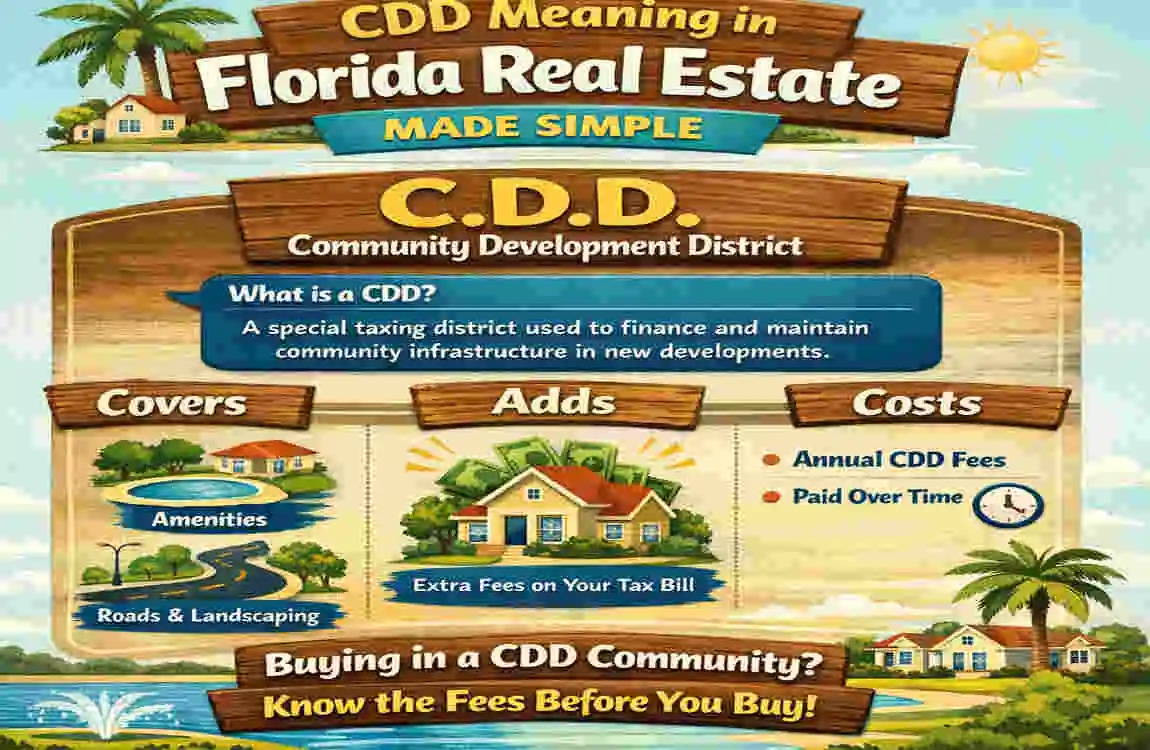
If you are buying a home in Florida, you may see the term CDD in a listing, tax record, or closing paper. Many buyers stop and ask, what does CDD mean in Florida real estate?
CDD stands for Community Development District. It is a special local district that helps pay for and manage certain community improvements.
This matters because a CDD can affect your yearly housing costs. So, before you buy, it is smart to understand what it is, how it works, and what you may have to pay.
What Does CDD Mean in Florida Real Estate?
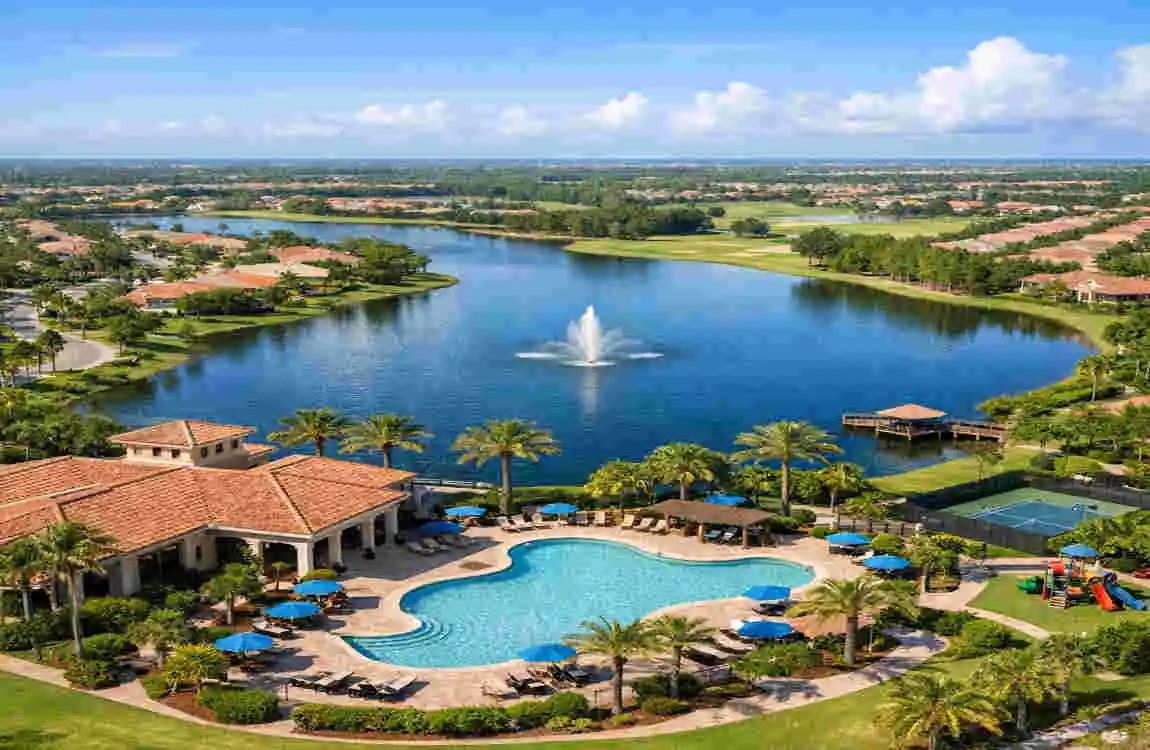
A Community Development District is a special type of district created for a planned community. It helps pay for things the neighborhood needs to function well.
What CDD Money Can Help Pay For
CDD funds may support:
- Roads and streets
- Drainage and stormwater systems
- Landscaping
- Parks and walking paths
- Pools and clubhouses
- Other shared community features
Instead of one developer paying for everything upfront, the cost is spread over time through assessments paid by property owners.
Why CDDs Exist
New communities often need extensive infrastructure. That costs money. A CDD helps finance those improvements so the neighborhood can be properly built and maintained.
For buyers, this can mean a well-planned community with nice features. It can also mean extra annual charges.
How Do CDD Fees Work?
CDD costs usually have two parts.
Debt Assessment
This part helps repay money borrowed to build the district improvements. In simple terms, it repays the bond used to finance the neighborhood infrastructure.
This fee may last for many years, depending on how the district was set up.
Operations and Maintenance Fee
This part pays for the ongoing care of district property and services. It may cover things like landscaping, common-area upkeep, and general maintenance.
Unlike a mortgage payment, this amount can change over time if the district budget changes.
Are CDD Fees Included in Property Taxes?
CDD assessments are often collected through the property tax bill, but they are not the same as regular property taxes.
That is an important detail.
A home may look affordable at first, but the annual CDD charge can add to your total cost. So when you compare homes, look beyond the listing price and check the full yearly expense.
How Much Are CDD Fees in Florida?
There is no single standard CDD fee in Florida. The amount depends on the community and the property.
What Can Affect the Cost?
CDD fees may vary based on:
- The neighborhood
- The size of the lot
- The type of home
- The remaining bond balance
- The district budget
- Whether the debt has already been paid off
Some homes may have smaller fees, while others may have much larger ones. That is why you should always check the exact property, not just the city or county.
Who Pays the CDD?
Usually, the property owner pays the CDD assessment.
If you buy a home in a CDD community, you normally take on the ongoing assessment tied to that property. The seller may not keep paying it once the home changes hands.
That is why it is so important to review the district details before you close.
CDD vs. HOA: What’s the Difference?
Many Florida homes have both a CDD and an HOA, and the two are not the same.
CDDHOA
Community Development District Homeowners Association
A government-related district A private community group
Helps finance infrastructure Manages community rules and shared areas
Often appears on tax bills Usually billed separately
May include bond debt Usually covers maintenance and amenities
A home can have both fees, so you should budget for both if needed.
Pros and Cons of Buying a Home With a CDD
Possible Benefits
A CDD community may offer a more organized and attractive neighborhood. You may get access to:
- Better roads and drainage
- Pools and clubhouses
- Parks and open spaces
- Clean, planned surroundings
For many buyers, these features add real value to daily living.
Possible Drawbacks
The biggest concern is cost. A home with a CDD may look affordable at first, but the yearly assessment adds to your total housing expenses.
So, before buying, include these costs in your budget:
- Mortgage
- Property taxes
- Homeowners insurance
- HOA fees
- CDD fees
- Repairs and maintenance
A lower home price does not always mean a lower total cost.
What Should Buyers Check Before Purchasing?
Before you buy a Florida home with a CDD, ask for clear details.
Important Questions to Ask
- What is the current annual CDD fee?
- How much is the debt, and how much is maintenance?
- How many years are left on the bond?
- Can the fee change later?
- Is there also an HOA?
- What community features does the CDD maintain?
- Has the debt been paid off yet?
These answers can help you avoid surprises after closing.
Does a CDD Affect Home Value?
A CDD does not automatically raise or lower value. Its effect depends on the neighborhood, the amenities, the fee amount, and buyer demand.
A community with strong upkeep and good features may still be very attractive. But if the yearly fee is high, some buyers may see the home as less affordable.
That is why you should always look at the full cost of ownership, not just the sale price.
How to Find Out if a Home Has a CDD
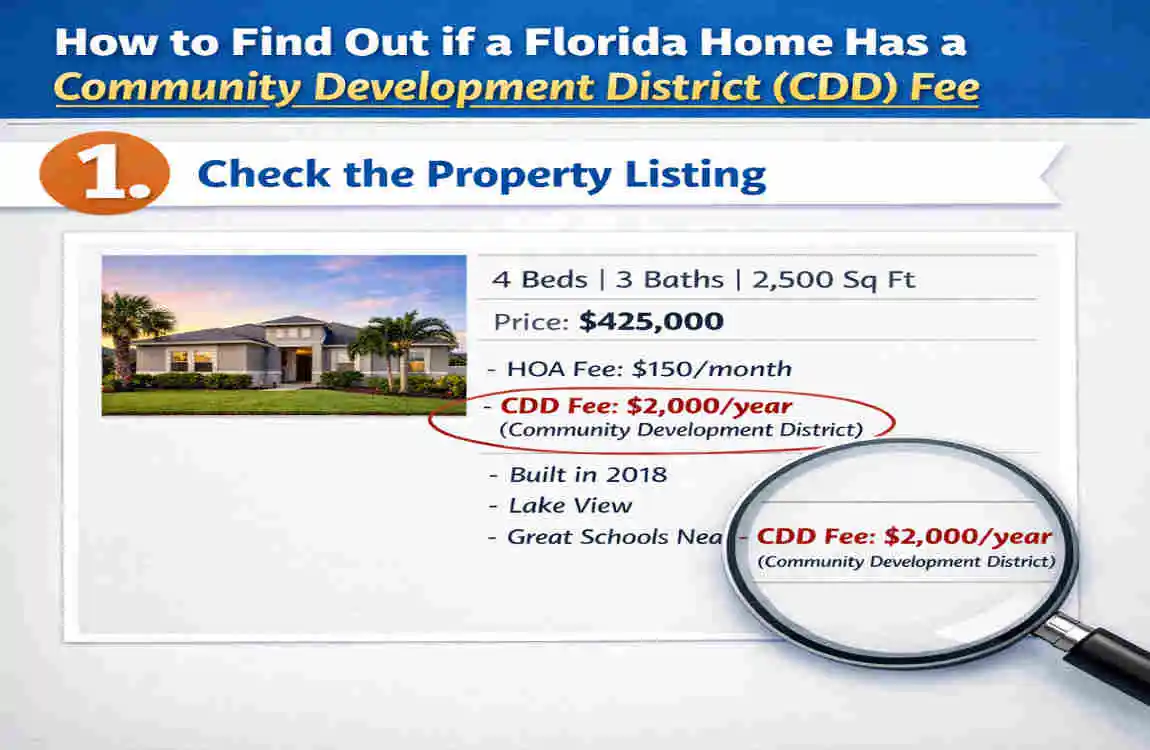
You can usually find CDD information through:
- Seller disclosures
- Property tax records
- District paperwork
- Real estate agent records
Still, it is best to confirm the details directly for the exact home you want to buy. Do not assume nearby homes have the same fee.
Frequently Asked Questions
What does CDD mean in Florida real estate?
CDD means Community Development District. It is a special district that helps pay for community infrastructure and maintenance.
Is CDD the same as an HOA?
No. A CDD is district-related, while an HOA is a private homeowners association.
Are CDD fees mandatory?
Yes, if the property is in a CDD and the assessment applies to that home, the owner usually must pay it.
How long do CDD fees last?
It depends on the district. Debt-related fees may last until the bonds are paid, while maintenance fees may continue for as long as the district operates.
Can CDD fees increase?
Yes, some parts of the fee can change based on the district budget and costs.
Should I avoid buying a house with a CDD?
Not always. A CDD home can still be a good choice if you understand the fees and budget for them.
| Term | Simple Meaning |
|---|---|
| CDD | Community Development District |
| CDD in Florida Real Estate | A special local district created to finance and maintain community infrastructure. |
| What CDD Fees Pay For | Roads, landscaping, parks, streetlights, drainage, and other community improvements. |
| How You Pay | CDD charges are typically included on the annual property tax bill. |
| Who Pays | Usually, the property owner pays the CDD assessment. |
| Why It Matters | A home with a CDD may have lower upfront costs but higher annual expenses. |
| Before Buying | Check the current CDD amount, remaining payment period, and what services it covers. |
