
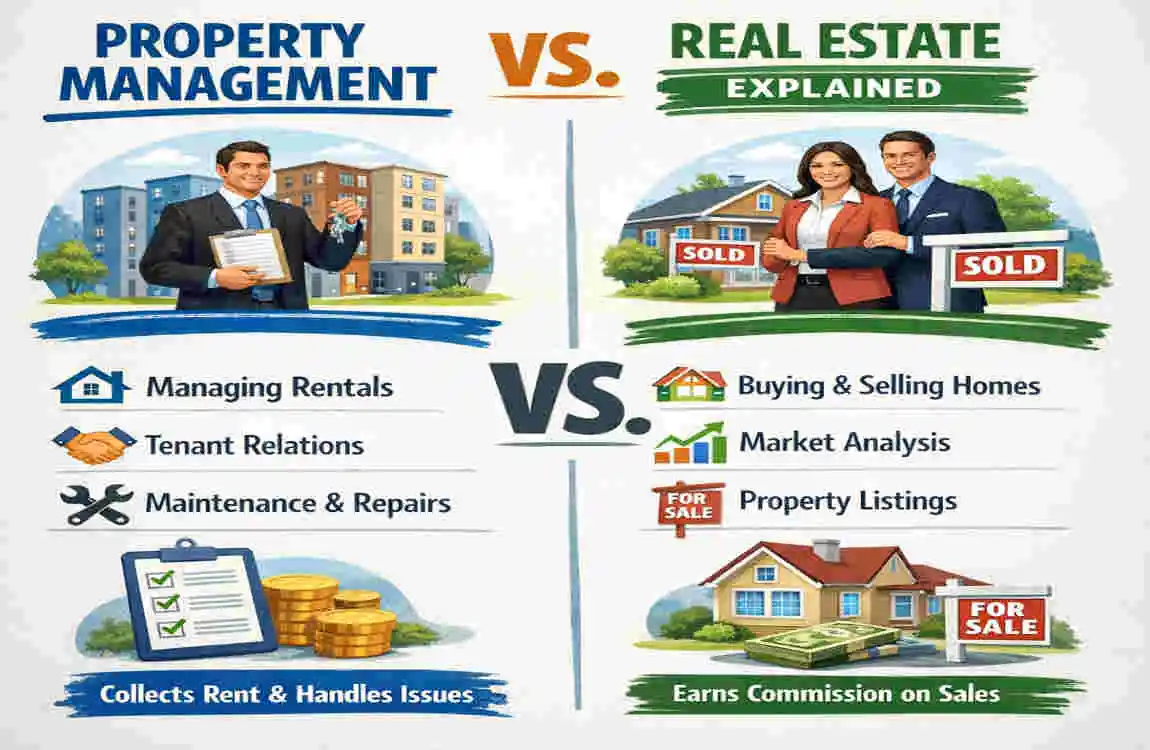
If you are asking whether property management is part of real estate, the short answer is yes. Property management is generally considered a specialized service within the real estate industry.
It is not the same thing as buying, selling, or investing in property. Instead, it focuses on the day-to-day operation and care of property on behalf of an owner. That can include rent collection, tenant communication, repairs, inspections, and more.
What Is Property Management?

Definition of Property Management
Property management involves the day-to-day work required to keep a property running smoothly.
A property manager acts on behalf of the owner and handles many practical tasks. The property may be a single-family rental, an apartment building, a commercial space, a multifamily complex, or a vacation rental.
In simple terms, the property manager helps ensure the building is occupied, maintained, and financially managed.
Common Property Management Responsibilities
Property management involves many moving parts. The exact duties depend on the property type, but common tasks usually include:
- Finding and communicating with tenants
- Collecting rent
- Coordinating repairs and maintenance
- Managing lease agreements
- Handling property inspections
- Responding to tenant concerns
- Watching operating expenses
- Helping protect the property’s value
These tasks may sound basic, but they take time and consistent attention. That is why many owners choose to hire a professional.
Who Uses Property Management Services?
Property management services are useful for many kinds of owners, including:
- Individual landlords
- Real estate investors
- Apartment owners
- Commercial building owners
- Real estate companies
- Owners with multiple rental units
If an owner does not want to handle the daily workload alone, property management can be a practical solution.
Is Property Management Part of Real Estate?
How Property Management Fits Into Real Estate
Real estate is a broad field. It includes buying, selling, leasing, financing, developing, owning, and managing property.
Property management fits into that larger system because it helps owners operate real estate after they acquire it. In other words, real estate often begins with ownership or investment, but it continues with management.
A property is not just something you buy. It also requires regular care to produce income and remain in good condition.
Property Management vs. Real Estate Sales
Real estate agents and property managers may work in the same industry, but they do different things.
A real estate agent usually helps clients:
- Buy property
- Sell property
- Lease property
A property manager usually helps owners:
- Run the property
- Manage tenants
- Handle maintenance
- Keep the property operating well
So yes, the fields are connected, but the daily responsibilities are very different.
Property Management as a Real Estate Service
You can think of property management as a service layer inside real estate. It supports the owner after the transaction is done.
A property manager may handle an asset without owning it. That is a very important distinction. The manager works on the property, but the owner still holds the financial interest.
Property Management vs. Real Estate Investing
What Is Real Estate Investing?
Real estate investing means putting money into property to earn a return.
That return may come from:
- Rental income
- Property appreciation
- Long-term ownership
- Commercial leasing income
Investors usually focus on financial growth. They may buy homes, apartment buildings, offices, or other properties as assets.
What Does a Property Manager Do for an Investor?
A property manager helps the investor by handling daily operations.
That usually includes:
- Talking to tenants
- Collecting rent
- Arranging repairs
- Scheduling inspections
- Managing property issues
- Reporting on operations
This makes the property easier to run and can reduce the owner’s workload.
Key Difference
Here is a simple way to see the difference.
Property Management Real Estate Investing
Focuses on managing property Focuses on owning or investing in property
Provides operational services Provides capital and takes investment risk
May manage property for another owner Usually involves ownership or financial interest
Handles tenants and maintenance Focuses on returns, appreciation, and income
Earns management fees May earn rental income and investment returns
The two are related, but they are not the same role.
Types of Property Management in Real Estate
Residential Property Management
Residential property management covers homes where people live.
This includes:
- Single-family rentals
- Condos
- Townhomes
- Apartment buildings
- Student housing
- Vacation rentals
Residential managers often deal directly with tenants and handle everyday living issues.
Commercial Property Management
Commercial property management focuses on business properties.
This may include:
- Office buildings
- Retail spaces
- Warehouses
- Industrial properties
- Mixed-use buildings
These properties often need more detailed maintenance planning and lease oversight.
Multifamily Property Management
Multifamily buildings often need professional management because they have many tenants and many moving parts.
The manager may handle:
- Rent collection
- Tenant turnover
- Maintenance requests
- Building systems
- Shared spaces
- Operating schedules
The larger the building, the more important organized management becomes.
Specialized Property Management
Some properties need very specific expertise.
Examples include:
- Senior housing
- Student properties
- Short-term rentals
- Homeowners associations
- Special commercial properties
These often involve rules, systems, or tenant needs that require more attention.
Benefits of Professional Property Management
Saves Property Owners Time
One of the biggest benefits is time savings. Property ownership can involve many small but important tasks.
A manager handles those tasks so the owner does not have to do everything personally.
Helps With Tenant Management
Tenants need communication, support, and clear lease administration.
A property manager can help with:
- Tenant questions
- Lease paperwork
- Rent collection
- Maintenance requests
This keeps the relationship more organized and professional.
Supports Property Maintenance
A well-managed property usually stays in better condition.
Managers often help with:
- Inspections
- Preventive maintenance
- Repair coordination
- Vendor scheduling
That can help catch small problems before they grow larger.
Can Improve Rental Operations
Good management can make rental operations more consistent.
That does not guarantee success, but it can improve organization, communication, and follow-through. Results still depend on the property, the market, and the management agreement.
Useful for Remote Property Owners
If an owner lives far from the property, management becomes even more useful.
A local manager can handle issues in person, which saves the owner time and travel.
How Property Managers Make Money
Property Management Fees
Property managers usually charge fees for their services. The exact structure can vary.
Some common models include:
- Percentage-based fees
- Flat monthly fees
- Service-based pricing
The main idea is that the manager is paid for ongoing work.
Leasing and Tenant Placement Fees
Some companies charge separate fees for finding and placing new tenants.
This may cover:
- Advertising the unit
- Showing the property
- Screening applicants
- Preparing lease documents
Maintenance and Other Service Charges
Some agreements may include extra charges for admin or service work.
That is why owners should always read the contract carefully before signing.
What Owners Should Check Before Hiring
Before choosing a manager, look at:
- Management fee
- Included services
- Additional charges
- Contract length
- Cancellation terms
- Maintenance approval limits
- Tenant placement policies
- Reporting and accounting process
A clear agreement helps avoid confusion later.
How to Become a Property Manager
Skills Property Managers Need
Property managers usually need a mix of people skills and practical skills.
Important abilities include:
- Communication
- Organization
- Problem-solving
- Customer service
- Basic financial knowledge
- Property operations understanding
This job often requires balancing people, property, and paperwork simultaneously.
Licensing and Legal Requirements
Requirements vary by location. In some places, property management tasks may require a real estate license or other legal permissions.
Before starting, you should always check local rules and licensing laws.
Career Opportunities
Property management can lead to several career paths, such as:
- Residential property manager
- Commercial property manager
- Community association manager
- Leasing manager
- Assistant property manager
- Property management company owner
It can be a strong career for people who enjoy structure and problem-solving.
Property Management and Real Estate Careers: What’s the Difference?
Real estate has several related roles, but each one focuses on something different.
Common Roles and Their Focus
- Property manager: Handles daily operations of property
- Real estate agent: Helps clients buy, sell, or lease property
- Real estate broker: Oversees agents and may handle more advanced transactions
- Investor: Buys property to earn a return
- Developer: Creates or improves property projects
- Landlord: Owns rental property and may manage it personally
Some people move between these roles over time. Others stay in one area and build a career there.
How Property Management Supports Real Estate Investment

Property management and investing work closely together.
An investor focuses on buying the property and building value. A property manager helps keep the property running after purchase.
How Management Supports the Investment
- Improves tenant retention
- Helps maintain property condition
- Supports rent collection
- Provides financial reports
- Helps manage repairs and expenses
Good management can make an investment easier to operate. Still, it does not guarantee higher profits or appreciation.
How Property Management Helps Real Estate Owners Think Long Term
A property is more than a building. It is also an asset that needs attention over time.
If the property is well managed, owners may find it easier to:
- Protect value
- Reduce stress
- Keep tenants happier
- Avoid major repair surprises
- Stay organized financially
That long-term support is one reason property management matters so much in real estate.
FAQ
Is property management considered real estate?
Yes. Property management is generally considered a specialized service within the broader real estate industry. It focuses on the operation and maintenance of properties on behalf of owners.
Is property management the same as real estate?
No. Real estate is broader and encompasses buying, selling, investing in, developing, leasing, financing, and managing property. Property management is only one part of that industry.
Can a property manager own real estate?
Yes. A property manager can also own investment properties, but managing property and owning property are separate activities.
Is property management a good real estate career?
It can be a good career for people who enjoy organization, communication, customer service, and problem-solving. Licensing rules vary by location.
Do real estate agents manage properties?
Some do, but not all. Real estate agents usually focus on transactions, while property managers focus on ongoing property operations.
What is the main purpose of property management?
The main purpose is to handle the day-to-day operations of a property for its owner, including tenant management, rent collection, maintenance, inspections, and administration.
Is property management part of real estate investing?
Property management supports real estate investing, but it is not the same as real estate investing. Investing focuses on ownership and return, while management focuses on operation.
| Aspect | Property Management | Real Estate |
|---|---|---|
| Meaning | Managing and maintaining properties for owners | Buying, selling, renting, or investing in property |
| Main Focus | Daily property operations | Property transactions and investments |
| Common Tasks | Repairs, tenants, rent collection, maintenance | Buying, selling, leasing, and market analysis |
| Professionals | Property managers | Real estate agents, brokers, and investors |
| Goal | Keep properties profitable and well-maintained | Build wealth or complete successful property deals |
| Example | Managing an apartment building for an owner | Helping a client buy or sell a house |
