
The Toronto real estate market is changing in 2026, and many buyers and sellers are trying to understand what that means. After a slower start to the year, the market has shown some improvement, but prices are still below where they were a year ago.
That creates a very different feeling from the fast-moving market many people remember. Buyers may now have more room to think, compare, and negotiate. Sellers, on the other hand, need to price their homes carefully and present them well.
Toronto Real Estate Market: Current Market Conditions
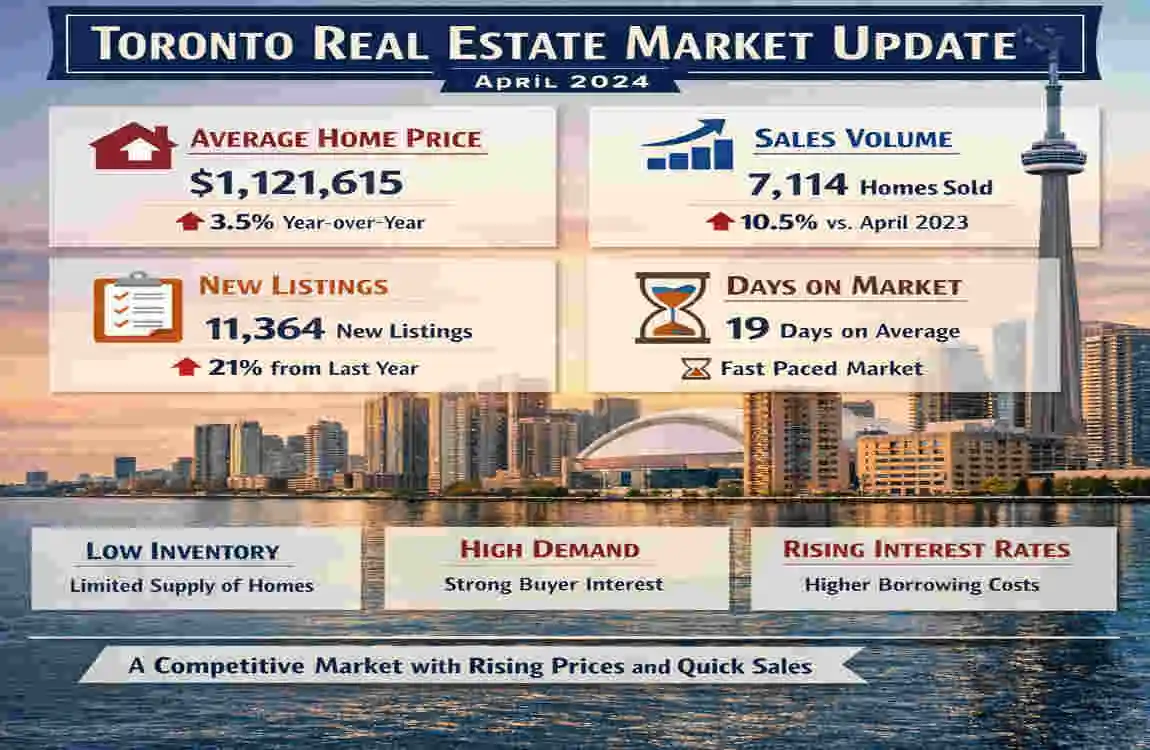
Home Sales Are Moving, But Not Evenly
The market has not followed one straight path in 2026. Some months have been stronger than others.
For example, spring and early summer showed signs of improvement, but July was softer again. That tells us the market is active but not yet fully stable.
This kind of mixed pattern usually means buyers are selective and sellers need to stay realistic.
Home Prices Are Still Under Pressure
Prices in the Toronto real estate market are lower than they were a year earlier. That matters because it changes both buying power and seller expectations.
This does not mean prices are collapsing. It means the market is adjusting. Homes are still valuable, but buyers are less willing to rush or overpay.
Inventory Still Matters
The number of homes available for sale plays a huge role in market direction. When listings are limited, competition can pick up quickly in popular areas.
In 2026, some periods have shown tighter supply, especially when fewer new listings entered the market. That can help support prices in certain neighbourhoods, even if the broader market feels slower.
What Is Driving the Toronto Real Estate Market?
Mortgage Rates and Affordability
One of the biggest forces shaping the market is borrowing costs. Even if a home price looks more manageable, higher mortgage payments can still make buyers cautious.
That is why affordability remains a major issue. Many buyers are not just asking, “Can I buy?” They are also asking, “Can I comfortably carry this mortgage?”
Economic Confidence
People usually make big housing decisions when they feel secure in their jobs and income. If the economy feels uncertain, buyers often wait.
That is why job growth, wage growth, and general confidence all matter so much. When people feel stable, real estate activity usually improves.
Housing Supply
Toronto has long faced a supply problem. In many areas, there are not enough homes for the number of people who want to buy them.
That does not mean every part of the market is hot. But it does mean that well-located homes, especially in desirable neighbourhoods, can still attract strong interest.
Population and Migration Trends
More people usually means more housing demand. Toronto and the GTA have historically seen strong demand from population growth and migration.
When those trends shift, the market feels it. Demand for both ownership and rental housing can change quickly.
Toronto Real Estate Market by Property Type
Detached Homes
Detached homes remain a top choice for many families. They offer more space, more privacy, and often more outdoor room.
Because of that, they are still highly desirable. But affordability is a real challenge, so not every buyer can easily enter this segment.
Semi-Detached Homes and Townhouses
These homes often give buyers a middle ground. They can offer more room than a condo without reaching detached-home prices.
For many households, this is the most realistic path into ownership in Toronto.
Condos
The condo market deserves special attention. Condos are often the entry point for first-time buyers and important to investors.
But buyers need to look beyond the purchase price. Monthly fees, taxes, financing costs, and resale potential all matter.
Is Toronto a Buyer’s Market or Seller’s Market?
It Depends on the Area
The answer is not simple. The Toronto real estate market is not the same everywhere.
Some neighbourhoods are more balanced. Others still see stronger competition because inventory is limited and demand remains steady.
Buyers Have More Room Than Before
Compared with the intense bidding wars of past years, buyers generally have more time today. They can inspect properties more carefully and compare options.
That said, good homes in desirable areas can still move fast.
Sellers Need a Smart Approach
Sellers can still succeed, but they need to be strategic. Overpricing is one of the quickest ways to lose momentum.
The homes that perform best are usually the ones priced well, presented properly, and marketed clearly.
What Does the Toronto Real Estate Market Mean for Buyers?
Buyers May Have More Negotiating Power
This is one of the biggest changes in the current market. Buyers are often in a better position to ask for better terms, especially if a home has been on the market for a while.
That can mean room to negotiate price, closing dates, or minor conditions.
Research Is More Important Than Ever
A smart buyer should not rely only on asking prices. It is better to look at recent comparable sales in the same area.
That helps you understand whether a home is truly well-priced or aggressively listed.
Think About Total Ownership Costs
The purchase price is only one part of the real cost. You also need to budget for:
- Mortgage payments
- Property taxes
- Insurance
- Maintenance
- Utilities
- Condo fees, if applicable
- Closing costs
These expenses can change what feels affordable.
What Does the Toronto Real Estate Market Mean for Sellers?
Pricing Matters More Than Ever
In a slower or more balanced market, price becomes one of the most important tools a seller has.
If the price is too high, buyers may ignore the listing. If it is priced well, interest is more likely to build early.
Presentation Can Make a Difference
A clean, well-kept, and nicely staged home usually stands out more. Buyers want to feel that a property is move-in ready or at least well-cared-for.
Small improvements can create a stronger first impression than many sellers expect.
Flexibility Helps
Sellers may need to be more open to negotiation than in previous strong seller markets. That does not mean giving up value. It means being realistic about current demand.
Toronto Real Estate Market Outlook
What to Expect for the Rest
The outlook for the remainder of 2026 looks mixed, but not weak. Activity is showing signs of life, even if prices are still under pressure.
That suggests the market may continue to adjust rather than swing sharply in one direction.
Broader Housing Trends Matter Too
Toronto does not move alone. National housing trends, borrowing conditions, and economic confidence all affect local real estate.
If mortgage costs ease and confidence improves, the market could become more active. If uncertainty continues, many buyers may remain careful.
Tips for Following the Toronto Real Estate Market

Watch Monthly Sales Data
Monthly sales numbers show whether activity is growing or slowing. That helps you spot trends early.
Track Average and Benchmark Prices
The average price reflects the general level of the market. Benchmark price gives a better sense of what typical homes are doing.
Using both gives you a clearer picture.
Compare New Listings and Active Listings
When new listings slow down, buyers may face more competition. When active listings rise, buyers usually have more options.
Study the Neighbourhood, Not Just the City
Toronto is not one market. Different neighbourhoods can behave very differently.
A condo market downtown may not move the same way as a detached-home market in the suburbs.
FAQ
Is the Toronto real estate market going up or down?
It is mixed. Sales have improved in some periods, but prices are still below year-earlier levels.
Are Toronto home prices dropping?
Yes, compared with 2025, prices were lower in mid-2026. The market has softened from previous highs.
Is 2026 a good time to buy a house in Toronto?
It can be a good time for prepared buyers, as there may be more room for negotiation. But affordability still depends on mortgage rates and income.
Will Toronto home prices rise
They may stabilise or improve if demand strengthens, but that depends on rates, supply, and the economy.
Is Toronto a buyer’s market right now?
In many areas, buyers have more flexibility than during peak bidding-war periods. Still, conditions vary by neighbourhood and property type.
What should sellers do in the current market?
Sellers should price realistically, prepare the property well, and stay open to negotiation.
What is the biggest factor affecting the Toronto real estate market?
Affordability is one of the biggest factors. Mortgage rates, income, and confidence all play a major role.
Toronto Real Estate Market – Quick Overview
| Market Factor | Current Situation |
|---|---|
| Home Sales | 5,995 homes sold in July 2026, down 0.9% year over year. |
| Average Home Price | About $1,003,956, down 4.5% from July 2025. |
| New Listings | 14,484 new listings, down 17.8% year over year. |
| Active Listings | 26,098 homes were actively listed, down 12.1% from last year. |
| Market Direction | The market is becoming tighter, with fewer listings and relatively steady sales. |
| Buyer Position | Buyers still have opportunities, but reduced inventory may mean less negotiating power going forward. |
| Overall Outlook | Prices remain below last year, but declining inventory could help prices stabilize later in 2026. |
