
Salesforce is becoming a strong tool for commercial real estate teams. It helps businesses manage leads, tenants, investors, property data, sales activity, and reporting in one place.
That matters because real estate work moves fast. You may be tracking new deals, tenant communication, property updates, and team performance all at once. A good CRM can make that work easier and more organized.
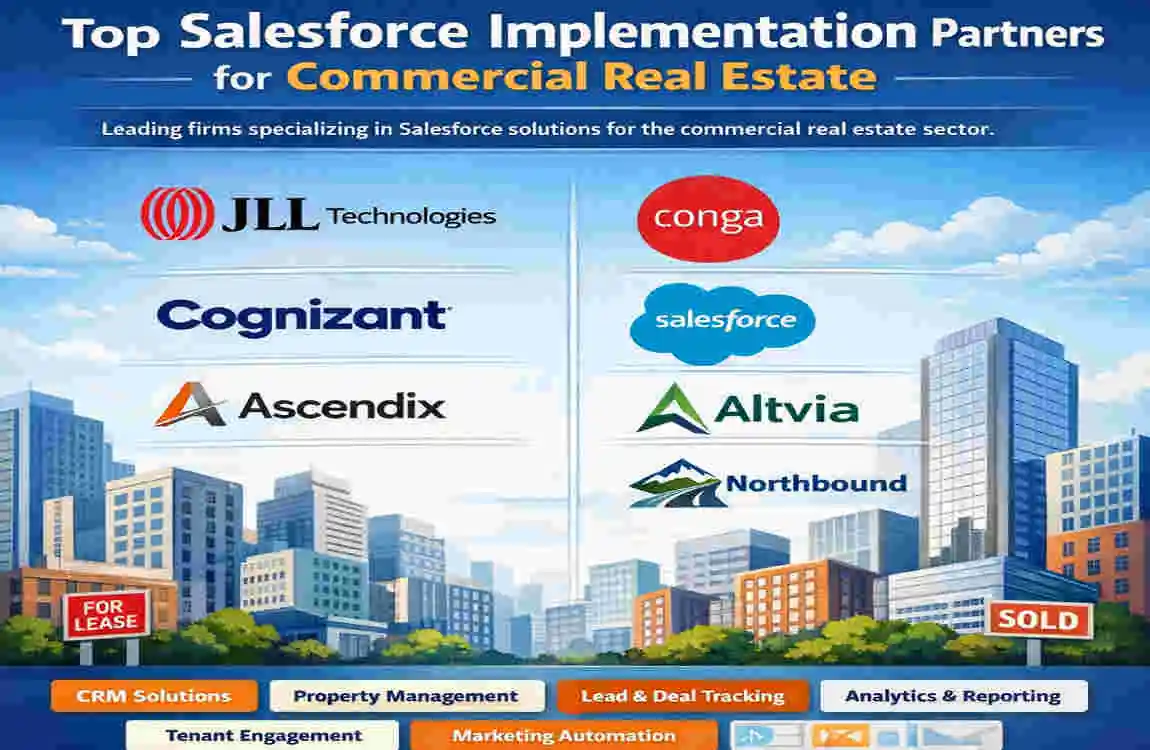
This is where the top Salesforce implementation partners commercial real estate businesses rely on become important. The right partner helps set up Salesforce in a way that fits your workflows, your data, and your goals.
Why Salesforce Matters for Commercial Real Estate
Centralized Data
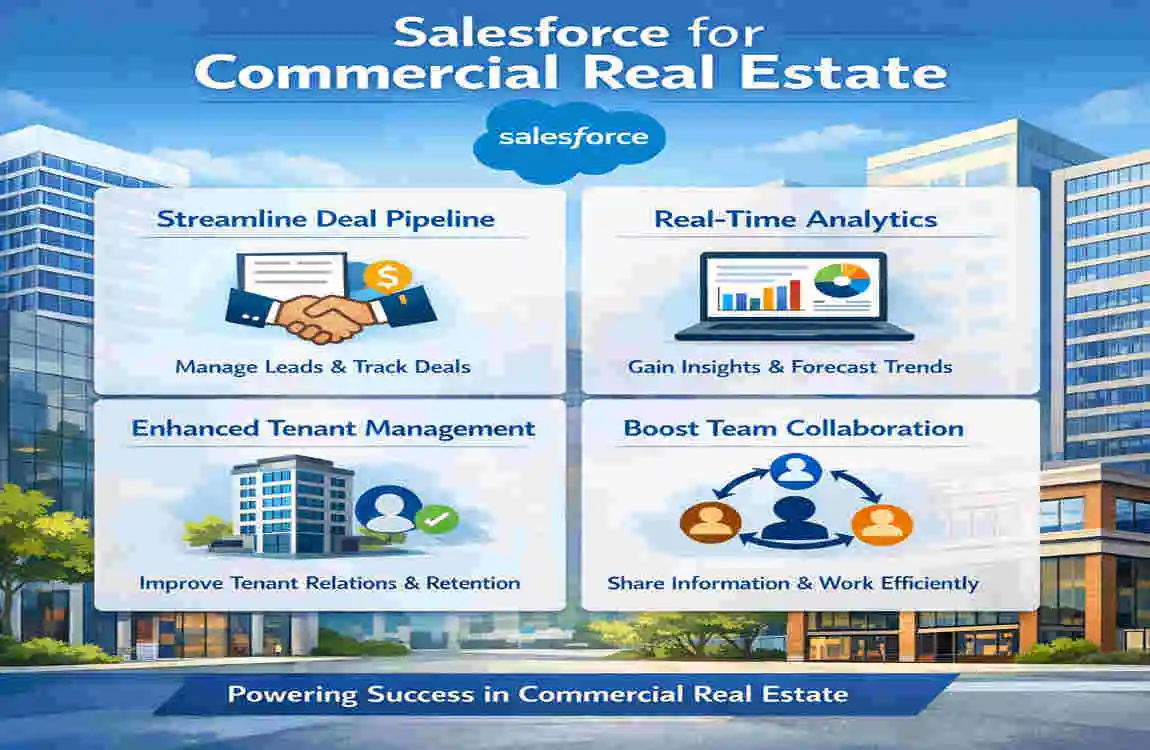
Commercial real estate companies often deal with scattered spreadsheets, emails, and separate systems. Salesforce brings contacts, properties, tenants, investors, and opportunities into one platform.
That creates better visibility and reduces mistakes caused by disconnected information.
Better Lead and Deal Management
With Salesforce, your team can track every stage of a deal. You can follow a prospect from the first inquiry to closing, while also setting reminders, automating follow-ups, and managing pipelines more clearly.
Stronger Client and Tenant Relationships
Salesforce helps teams keep a full history of communication. That means faster replies, more personal service, and better long-term relationships with tenants and clients.
Better Reporting
Dashboards and reports make it easier to see what is working. You can track deals, sales targets, lead sources, and team performance in real time.
What Does a Salesforce Implementation Partner Do?
Salesforce Consulting
A partner first studies your current process. They look at how your team works, what problems you face, and where Salesforce can help.
CRM Setup and Customization
They configure Salesforce to match your business. This may include custom fields, automation, dashboards, user roles, and data structure.
Data Migration
If you already use another system, the partner helps move your data into Salesforce safely. This includes cleaning, mapping, and checking the information before launch.
System Integration
Many real estate teams use accounting tools, marketing software, or property management systems. A strong partner helps connect these tools with Salesforce.
Training and Support
Even the best setup will not work well if your team does not know how to use it. A good partner trains staff and offers support after launch.
What to Look for in a Top Partner
Before choosing a partner, check these points:
- Salesforce certifications
- Commercial real estate experience
- Data migration skills
- Integration ability
- Customization knowledge
- Training support
- Client reviews or case studies
- Clear communication
- Reasonable pricing
- Long-term support options
A partner may be strong technically, but if they do not understand real estate workflows, the project may not fit your needs well.
Types of Salesforce Implementation Partners
Salesforce Specialist Partners
These firms focus mainly on Salesforce. They often have deep technical knowledge and can handle complex CRM setups.
Real Estate Technology Consultants
These partners understand property, leasing, tenant, and investor workflows. That industry knowledge can save time and improve the final setup.
Large Global Consulting Firms
Bigger firms usually have more resources and can support enterprise-level projects. They can be useful for large commercial real estate organizations with complex systems.
Boutique Salesforce Partners
Smaller firms often provide more personal attention. They may be a strong fit for growing companies that want hands-on support.
How to Choose the Right Salesforce Partner
Define Your Needs First
Before speaking with any partner, list your goals. Do you need help with leasing, sales, tenant service, reporting, or automation? The clearer your needs are, the better the setup will be.
Check Real Estate Experience
Ask whether they have worked with commercial real estate clients before. Review case studies if possible. This helps you understand whether they know your world.
Review Technical Skills
Make sure the partner can work with the Salesforce products you need, such as Sales Cloud, Service Cloud, or Experience Cloud.
Compare Costs Carefully
Do not choose only based on the lowest price. Ask what is included in the project, such as customization, migration, training, and support.
Ask About Communication
You want a partner who gives regular updates, explains problems clearly, and keeps the project moving. Good communication matters as much as technical skill.
Think About Long-Term Support
Salesforce should grow with your business. Look for a partner who can help with updates, fixes, and improvements after launch.
Salesforce Features That Help Real Estate Teams
Sales Pipeline Management
You can track opportunities, property deals, and closing stages in one place.
Marketing Automation
Salesforce can help automate email follow-ups and lead nurturing.
Service and Tenant Requests
Your team can manage client or tenant issues more quickly.
Dashboards and Analytics
Reports help leaders see performance, forecast results, and make better decisions.
Workflow Automation
Routine tasks, reminders, and notifications can run automatically.
Mobile Access
Salesforce mobile tools help agents and managers stay connected while working outside the office.
Common Mistakes to Avoid
Choosing a Partner Without Industry Experience
A technical expert may still miss important real estate details.
Poor Data Preparation
Bad data can create problems after migration. Clean your records first.
Too Much Customization
Over-customizing Salesforce can make it harder to manage later.
Skipping Training
If your team does not understand the system, adoption will be low.
No Clear Plan
A project needs timelines, responsibilities, testing, and launch steps.
Focusing Only on Cost
Cheap is not always better. Long-term value matters more than initial price.
Benefits of the Right Partner
Working with the right partner can lead to:
- Better CRM adoption
- Faster sales processes
- Stronger tenant communication
- Cleaner property data
- Less manual work
- Better reporting
- Improved forecasting
- Stronger growth over time
Cost Factors to Keep in Mind
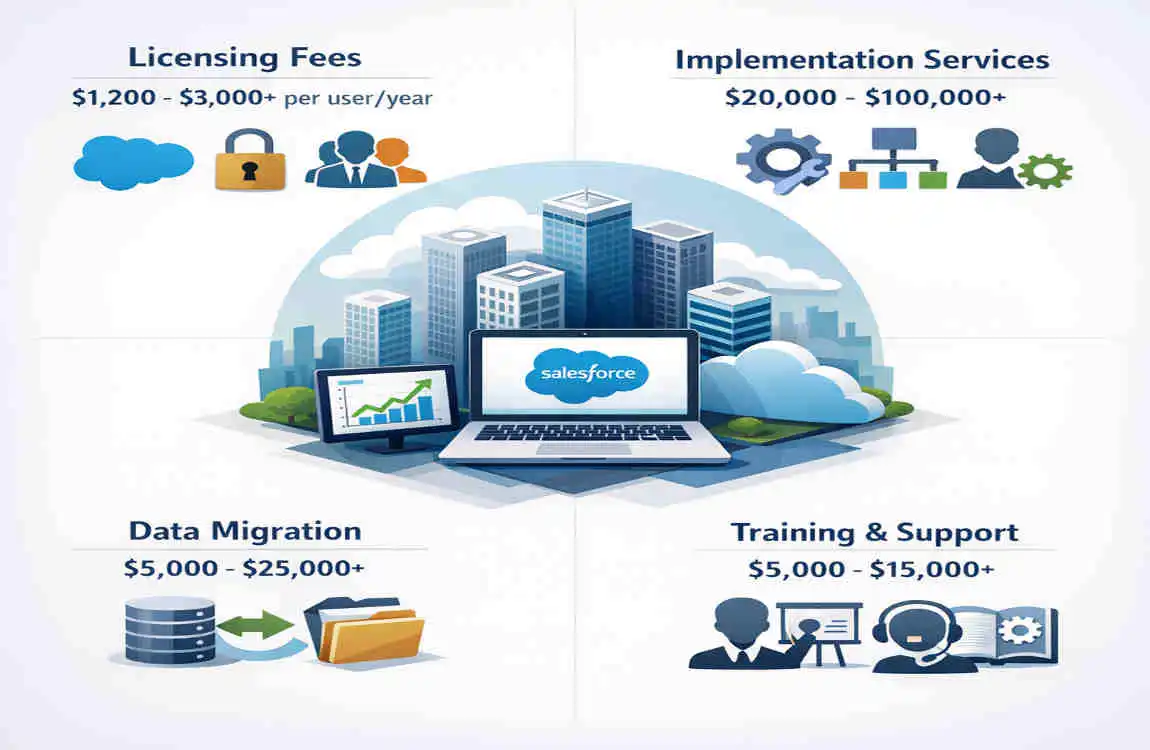
The cost of Salesforce implementation depends on:
- Number of users
- Salesforce products used
- Custom development needs
- Data migration
- Third-party integrations
- Training
- Ongoing support
Every project is different, so it is smart to request multiple proposals before making a decision.
FAQ
What are the top Salesforce implementation partners for commercial real estate?
The best partner depends on your goals, budget, integrations, and business size. Look for Salesforce expertise, real estate experience, and strong support.
Why does commercial real estate need Salesforce?
It helps manage leads, tenants, investors, properties, communications, and reporting on a single platform.
How long does a Salesforce implementation take?
It depends on the project size, data volume, customization, and integrations. Simple projects may take less time than complex enterprise setups.
What should I look for in a partner?
Look for certifications, real estate experience, migration skills, training, and clear communication.
Can Salesforce integrate with real estate software?
Yes. Salesforce can connect with other tools through APIs, connectors, or custom integrations.
| Salesforce Implementation Partner | Best For | Key Strength |
|---|---|---|
| Accenture | Large commercial real estate firms | Enterprise-scale Salesforce transformation |
| Deloitte | Complex real estate operations | Strategy, consulting, and Salesforce integration |
| Slalom | Mid-size and large CRE companies | Customized Salesforce solutions |
| Cognizant | Data-heavy real estate businesses | CRM, analytics, and digital transformation |
| PwC | Enterprise real estate organizations | Business strategy and Salesforce implementation |
| IBM Consulting | Technology-focused CRE firms | AI, automation, data, and Salesforce integration |
| Capgemini | Global property companies | Salesforce modernization and cloud services |
| Publicis Sapient | Customer-focused CRE businesses | Digital experience and CRM transformation |
