
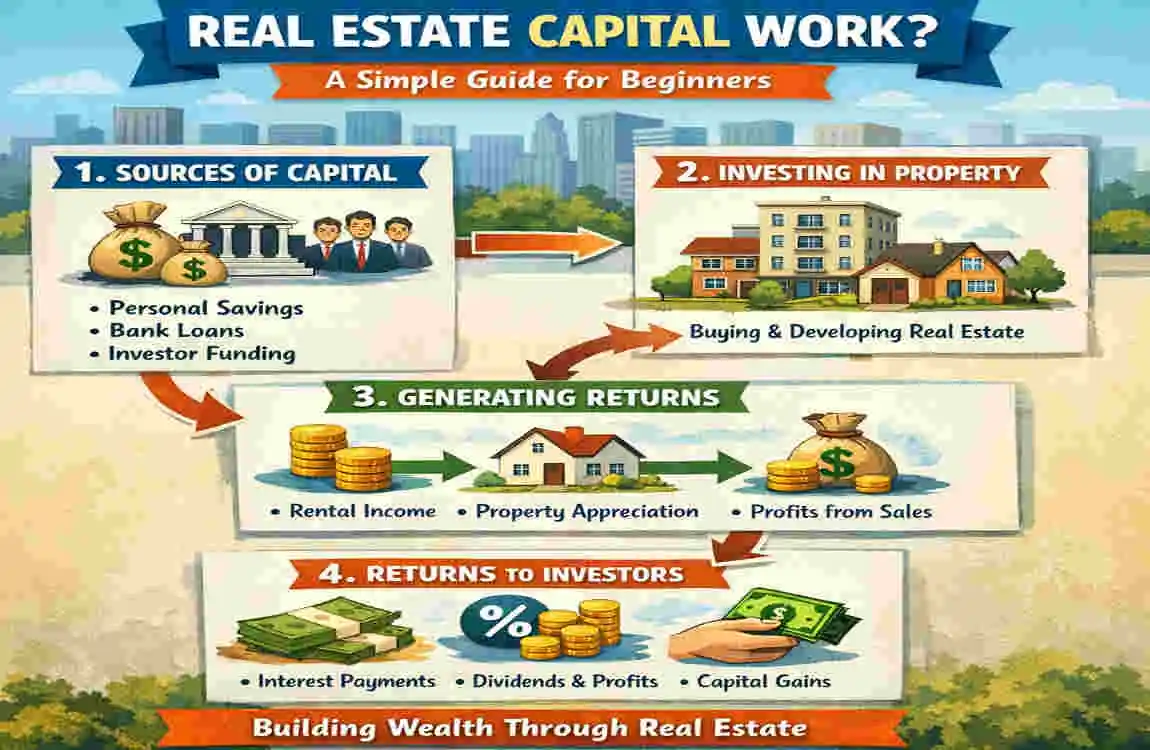
Real estate capital is the money people use to buy, improve, and manage property. If you want to invest in real estate, this is the first thing you need to understand. Without capital, it is hard to purchase a home, fix up a building, or grow a property portfolio.
In simple words, how does real estate capital work? It works by giving investors the funds they need to get started, complete projects, and earn returns over time. That return may come from rent, resale profit, or long-term property growth.
What Is Real Estate Capital?
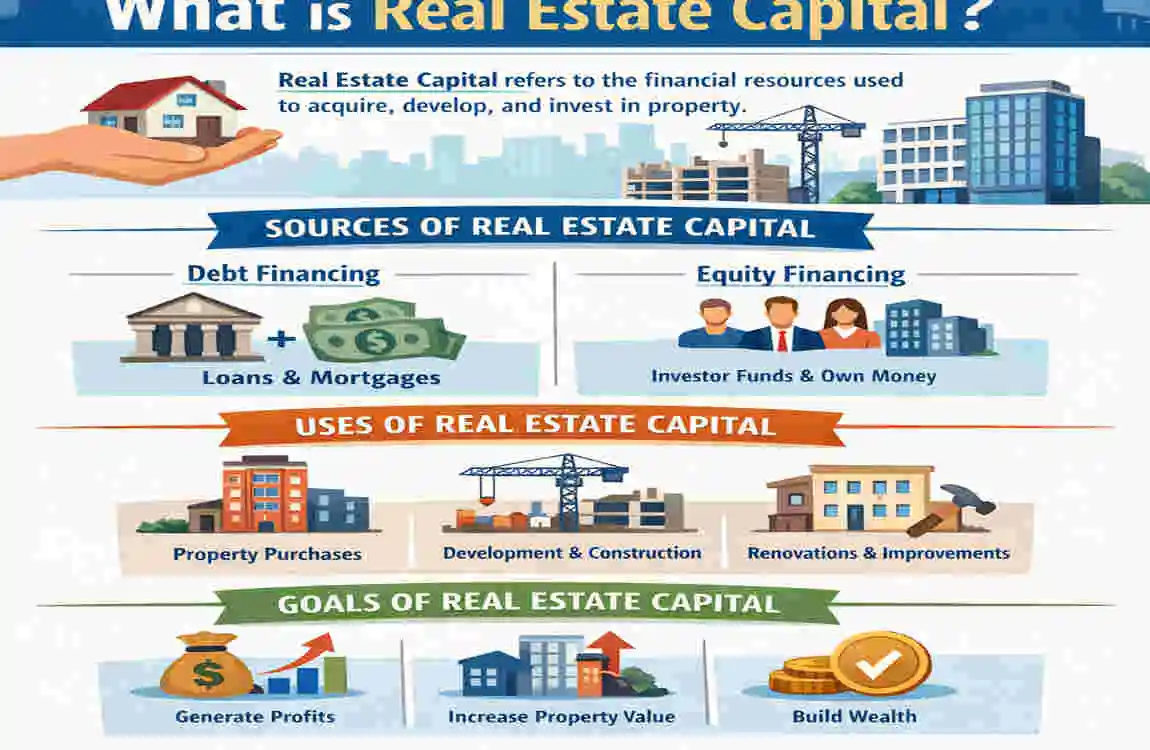
Real estate capital is money used for property investment. That money can come from your own savings, a loan, an investor, or a mix of different sources.
It plays a major role in every stage of real estate. You need capital to buy land, purchase a house, renovate a building, or cover repair costs. In many cases, capital also helps pay for taxes, insurance, and daily property expenses.
Property Value vs. Capital
These two ideas are often confused, but they are not the same.
- Property value is how much a property is worth in the market.
- Capital is the money you use to acquire or improve that property.
A property may be worth a lot, but if you do not have capital, you may not be able to buy it. That is why capital is such an important part of real estate investing.
How Does Real Estate Capital Work?
Real estate capital works by helping investors raise money, buy property, and create profit. The process usually begins with finding a property or project and then deciding how to pay for it.
Some investors use their own money. Others borrow from banks or bring in partners. Many use a mix of both. This is common because real estate often requires a large upfront payment.
How the Money Is Used
Capital can support several parts of a real estate deal:
- Buying a property
- Paying for renovation or repairs
- Covering closing costs
- Maintaining the property
- Financing new construction
Once the property is ready, it can start generating income. For example, a rental property can bring in monthly rent, while a renovated home may be sold for a higher price.
How Capital Creates Returns
Real estate capital is not just money sitting in a deal. It can grow wealth in different ways. A property may increase in value over time, or it may create steady rental income. In some cases, investors also make money by improving a property and selling it later at a profit.
Main Types of Real Estate Capital
There are two main types of real estate capital: equity capital and debt capital. Both are used often, and many investors combine them.
Equity Capital
Equity capital is money you already own, or that is invested directly in the property. You do not have to repay it like a loan. Instead, the investor owns a share of the property.
Common forms of equity capital include:
- Personal savings
- Money from business partners
- Private investor funds
This type of capital is useful because it can reduce debt and lower monthly payments.
Debt Capital
Debt capital is borrowed money that must be paid back, usually with interest. This is the most common way many people finance real estate.
Common debt sources include:
- Mortgages
- Bank loans
- Commercial financing
Debt capital helps buyers purchase property without paying the full amount upfront. However, the borrower must stay on top of repayments.
Equity vs. Debt Capital
TypeWhat It MeansMain BenefitMain Risk
Equity Capital Money invested directly into the property No repayment required You give up ownership share.
Debt Capital Borrowed money that must be repaid Helps you buy property faster Monthly payments and interest.
Sources of Real Estate Capital
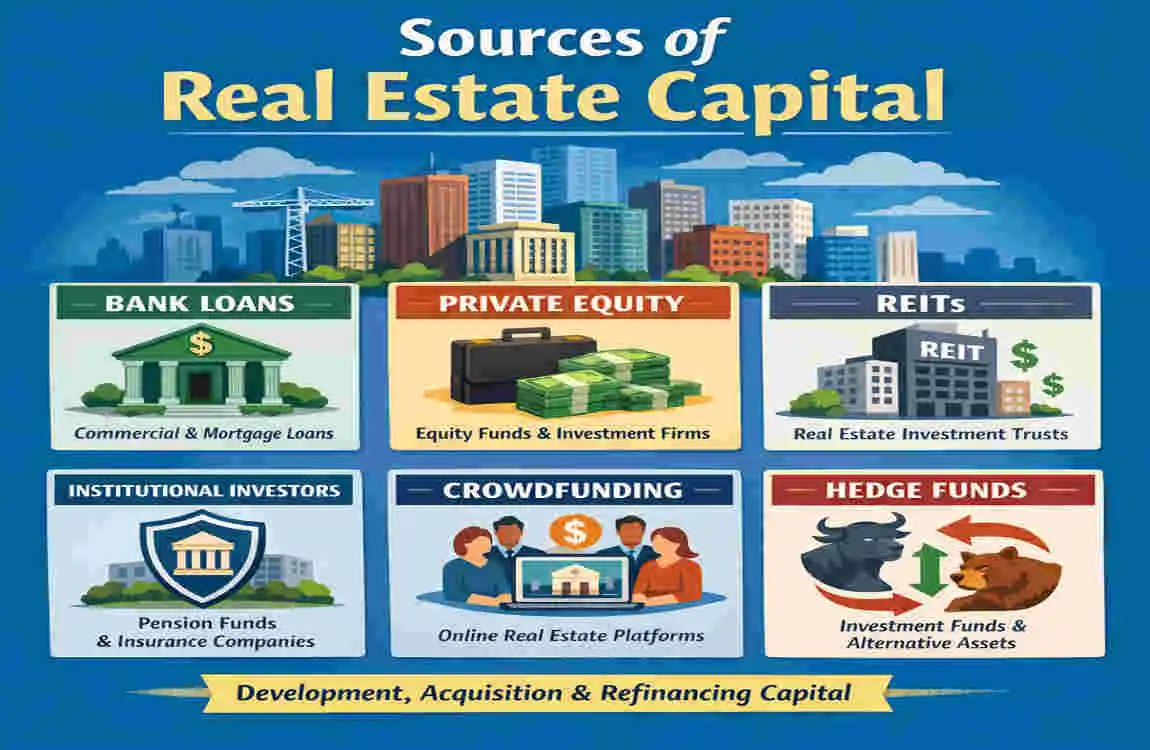
Real estate capital can come from many places. The right source depends on your goals, your credit, and the type of property deal you want to complete.
Traditional Banks
Banks are one of the most common sources of real estate funding. They often offer mortgages and property loans with structured repayment plans. This works well for people with good credit and a stable income.
Private Lenders
Private lenders are individuals or companies that lend money outside the traditional banking system. They may move faster than banks, but they can charge higher interest.
Real Estate Investors
Some investors raise money from others who want a share in the deal. This can help fund larger projects without relying only on one person’s savings.
Real Estate Investment Groups
These groups pool money from multiple people to buy or manage properties. This makes it easier for beginners to participate with less money.
Crowdfunding Platforms
Crowdfunding allows many small investors to contribute to one real estate project. It can be a simple way to start, especially if you do not have enough capital on your own.
How Investors Make Money From Real Estate Capital
Real estate capital can produce income in more than one way. The goal is not only to buy property but also to make it work for you.
Rental Income
This is one of the most common ways investors earn money. If you own a rental property, tenants pay rent each month. That rent can help cover your loan and create extra cash flow.
Property Appreciation
Over time, real estate often increases in value. If you buy a property and hold it long enough, it may be worth much more later. This is called appreciation.
Property Flipping
Some investors buy a property, improve it, and sell it for more. This can bring fast profits, but it also carries more risk.
Refinancing
Refinancing means replacing an old loan with a new one, often with better terms. Some investors use this to free up cash for another property.
Real Estate Investment Trusts
A real estate investment trust, or REIT, lets people invest in property-related assets without owning a building directly. This can be a simpler way to enter the market.
Benefits and Risks of Using Real Estate Capital
Real estate capital can help you build wealth, but it also comes with risk. It is smart to understand both sides before you invest.
Benefits
- Access to valuable properties without paying everything upfront
- Possible passive income through rent
- Portfolio growth over time
- Long-term wealth building through appreciation and smart investing
Risks
- Loan repayments can become stressful
- Market changes may lower property value
- Maintenance and repair costs can add up
- Interest rate changes may increase borrowing costs
- Investment losses can happen if the deal goes badly
The key is to balance reward with risk. A good plan can help protect your money and improve your chances of success.
How Beginners Can Start Building Real Estate Capital

You do not need to be wealthy to begin. Many real estate investors start small and grow slowly over time. What matters most is planning.
Practical Steps to Start
- Make a financial plan and know how much you can invest.
- Save money and improve your credit score.
- Study your local market so you understand prices and demand.
- Look at partnerships if you cannot invest alone.
- Learn about financing options before making a decision.
- Start with smaller deals to reduce risk.
- Ask for help from professionals when needed.
Start Small and Stay Consistent
A small first investment can teach you a lot. Once you understand how deals work, you can look at bigger opportunities with more confidence.
Frequently Asked Questions
What does real estate capital mean?
Real estate capital is the money or financial resources used to buy, develop, renovate, or manage real estate properties.
How does real estate capital work?
It works by funding property purchases and projects through equity, debt, or both. Investors use it to create income and long-term value.
What are the main types of real estate capital?
The two main types are equity capital and debt capital.
Can beginners invest in real estate with limited capital?
Yes. Beginners can start with smaller investments, partnerships, or financing options that fit their budget.
Is real estate capital risky?
Yes. Like any investment, it involves risks such as debt, market shifts, repair costs, and possible losses.
| Aspect | Simple Explanation |
|---|---|
| What Is Real Estate Capital? | Money used to buy, build, improve, or invest in property. |
| Equity Capital | Money provided by investors in exchange for ownership or profits. |
| Debt Capital | Borrowed money, such as a mortgage or real estate loan. |
| How It Works | Investors provide capital, the property generates income, and profits may be shared. |
| Common Sources | Banks, private lenders, investors, REITs, and personal savings. |
| Potential Returns | Rental income, property appreciation, and profits from property sales. |
| Main Risks | Market changes, loan costs, vacancies, and unexpected property expenses. |
