

The commercial real estate wholesale market in California can be a smart place to look for deals if you want to buy below market value. It works best for people who understand how to find motivated sellers, quickly estimate value, and connect the right property with the right buyer.
Understanding California’s Wholesale Real Estate Market
What real estate wholesaling means
Real estate wholesaling is when a person finds a property at a low price, puts it under contract, and then sells that contract to another buyer for a fee. The wholesaler usually does not buy the property themselves.
In simple terms, the wholesaler acts as a middleman. They connect a seller who wants to move fast with an investor who wants a deal.
How commercial wholesaling works
Commercial wholesaling works similarly, but the properties are business-related. That can include office buildings, small retail spaces, warehouses, mixed-use properties, or apartment buildings.
Because commercial properties are often more expensive and more complex than homes, the numbers matter even more. You need to know how the property earns money, what repairs it may need, and what kind of buyer would want it.
Residential vs. commercial wholesaling
Residential wholesaling usually focuses on single-family homes or small duplexes. Commercial wholesaling deals with income-producing or business-use properties.
The big difference is value. With commercial real estate, buyers often care more about income, rent potential, and location than just the building itself.
Why California attracts investors
California has strong population centers, major business activity, and a wide range of property types. That creates steady demand.
At the same time, high prices can make discount opportunities attractive to investors. That is why the California property market continues to attract buyers hunting for wholesale deals.
Basic terms beginners should know.
Here are a few simple terms you will hear often:
- Motivated seller: Someone who wants to sell quickly
- Assignment contract: A contract that lets you sell your purchase rights to another buyer
- End buyer: The investor who actually closes on the property
- Due diligence: Careful checking before the deal closes
How the Commercial Real Estate California Wholesale Market Works

Finding discounted commercial properties
A wholesale deal starts with a property that is priced below what an investor thinks it is worth. That discount may come from distress, vacancy, tired ownership, estate sales, or a seller who needs speed more than top dollar.
You are not just looking for cheap properties. You are looking for good deals with room for another investor to make money.
Identifying motivated sellers
Motivated sellers are often the easiest to work with because they may want a fast sale. Common signs include:
- Property has been vacant for a while
- The owner is behind on taxes or payments
- The building needs major repairs
- The owner lives far away
- The seller has inherited the property and wants to move on
Negotiating a purchase contract
Once you find a deal, you negotiate a contract with the seller. The goal is to get the property under agreement at a price that leaves room for profit.
Keep the terms clear. Make sure you understand the price, closing timeline, inspection period, and any escape clauses.
Using assignment contracts
An assignment contract lets you transfer your rights in the purchase agreement to another buyer. In many wholesale deals, this is how wholesalers earn money.
For example, if you agree to buy a property for $500,000 and assign the contract for $520,000, your gross fee is $20,000 before expenses.
Double closing explained
A double closing means two closings happen close together. You buy the property first, then sell it soon after. Some wholesalers use this when assignment is not the best option.
It can help in certain deals, but it may add costs and require more cash planning.
How wholesalers make money
Most wholesalers make money through one of these methods:
- Assignment fee
- Spread between buy and sell prices
- Transaction or service fee in some deal structures
The size of the profit depends on how much of a discount you negotiate and how strong buyer demand is.
Role of investors and end buyers
End buyers are usually the real estate investors who plan to hold, renovate, lease, or resell the property. They are the people who make the final purchase.
Your job as a wholesaler is to bring them a property that makes sense. If the numbers work, the deal moves forward.
Best California Commercial Properties for Wholesaling
Multifamily properties
Multifamily buildings are often attractive because they produce rental income. Investors like properties with multiple units since they can spread risk across many tenants.
These deals can be especially useful in areas with strong rental demand.
Retail buildings
Small retail properties can also work well when located in busy areas. Think neighborhood storefronts, strip center units, or small commercial spaces with steady foot traffic.
These properties often appeal to buyers seeking reliable rental potential.
Office properties
Office buildings can be more difficult in some markets, but they still create opportunities. A smaller office building with a discount may interest investors who understand local demand.
The key is knowing whether the area still supports office use.
Industrial and warehouse spaces
Industrial properties and warehouses are popular because many businesses need storage, distribution, or light operations space. These properties can be strong wholesale candidates if they are in a practical location.
Mixed-use properties
Mixed-use buildings combine different uses, like retail on the ground floor and apartments above. They can attract buyers who want income from multiple sources.
These deals may take a little more research, but they can be valuable.
Vacant commercial land
Land can also be wholesaled, especially if it has development potential. However, land deals need close review because zoning, access, and utility issues can quickly change value.
How to evaluate a possible deal
Before you move forward, look at:
- Location
- Property condition
- Current or possible income
- Nearby comparable sales
- Repair needs
- Zoning and permitted uses
If the numbers are weak, walk away.
How to Find Wholesale Commercial Real Estate Deals in California
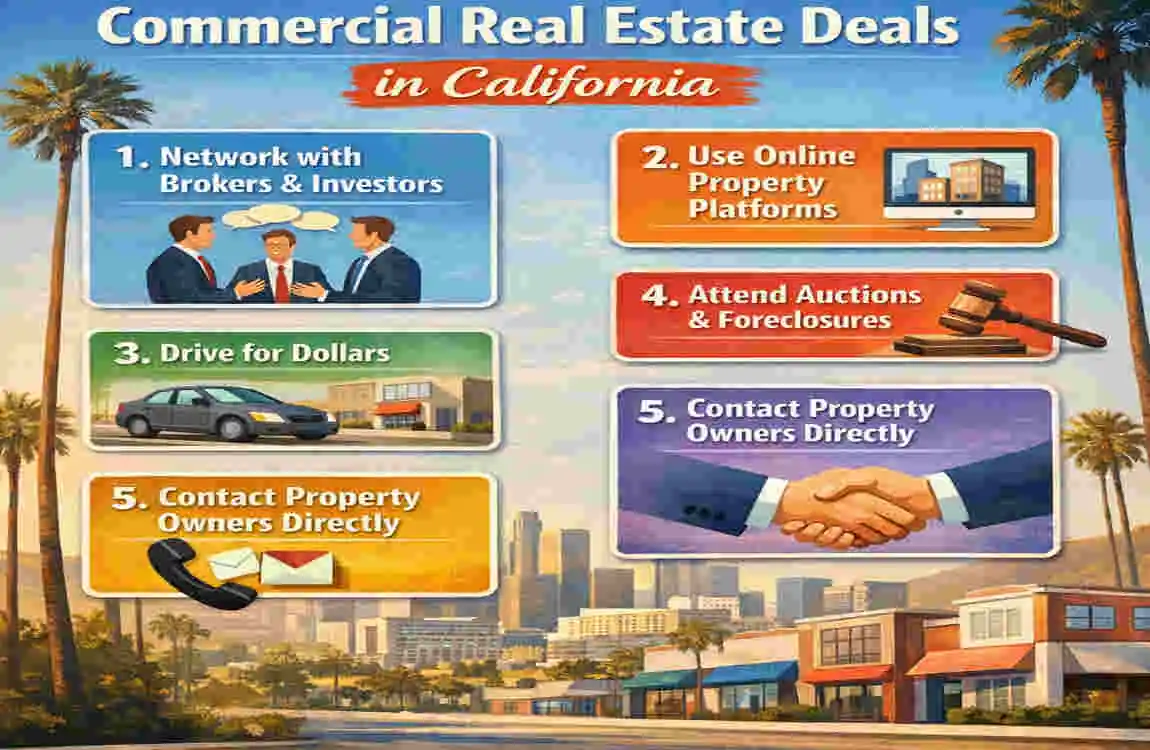
Direct-to-owner marketing
You can reach out to owners directly via mail, phone, email, or local outreach. This method works well because you are contacting people before they list the property.
Public records and property research
Public records can help you find owners, tax issues, recent transfers, and signs of distress. A little research can uncover properties that are not widely advertised.
Online real estate platforms
Online listings can help you spot overpriced or stale commercial properties. Sometimes a property stays on the market too long, and the owner becomes more open to negotiation.
Networking with brokers and investors
Relationships matter a lot in wholesale property deals. Brokers, landlords, investors, and property managers may all be familiar with off-market opportunities.
If people trust you, they are more likely to send deals your way.
Driving for dollars
Driving for dollars means looking for distressed or neglected properties in person. You may spot empty storefronts, poorly maintained buildings, or unused spaces that are not actively marketed.
Auctions and distressed properties
Auctions can offer discounted opportunities, but they move fast. You need to be prepared and careful.
Distressed sales may also create chances, especially when owners want a quick exit.
Building a buyer list
A strong buyer list is one of your best tools. This list should include investors who already want commercial property in California.
A good list helps you move contracts faster and reduce the risk of being stuck with a property nobody wants.
Costs, Risks, and Legal Considerations
Typical wholesaling expenses
Wholesaling is usually lower cost than buying and holding property, but there are still expenses. You may pay for marketing, research, legal help, inspections, and contract work.
Due diligence costs
Due diligence may include property checks, title review, zoning research, and valuation help. These costs protect you from bad deals.
Assignment and closing fees
If you assign a contract, you may pay a fee for document handling or closing support. If you do a double close, you may also face closing costs on both transactions.
California contract considerations
California has its own rules and practices, so contracts must be handled carefully. Terms should be clear, lawful, and properly documented.
Because rules can change, it is wise to get professional guidance when needed.
Disclosure requirements
You should be honest about what you know and what you do not know. Buyers want transparency, and sellers should understand the deal structure.
Main risks to watch
The biggest risks include:
- Overestimating property value
- Underestimating repair costs
- Having no ready buyer
- Missing contract deadlines
- Ignoring legal or disclosure issues
Why professional advice matters
A real estate attorney, broker, or experienced advisor can help you avoid expensive mistakes. This is especially useful when you are new or dealing with larger commercial properties.
How to Evaluate and Close a California Wholesale Deal

Estimating property value
Start by looking at recent sales of similar properties. Compare location, size, condition, and income potential.
For income properties, rent and expenses matter just as much as the building itself.
Calculating potential profit
A simple wholesale deal should leave enough space for:
- Your fee
- Buyer profit
- Repair or upgrade room
If there is no room left after those numbers, the deal may not work.
Checking zoning and property condition
Always confirm how the property can be used legally. A building that looks valuable may not fit the buyer’s plan if zoning is wrong.
You should also check the roof, structure, utilities, and major systems.
Finding and qualifying an end buyer
Not every interested buyer is ready to close. Make sure they have the funds, experience, and interest to complete the deal.
Closing the transaction
Once everything is ready, the title company or closing professional helps finish the transfer. Good communication is key here.
Tips for Success in California’s Wholesale Market
Focus on one niche
Do not try to chase every property type at once. Start with one area, such as small retail, multifamily, or industrial.
Track every deal
Keep notes on leads, calls, expenses, and results. This helps you improve over time.
Avoid overpaying for contracts.
Your first job is to protect the spread. If you pay too much for the deal, there may not be enough profit left.
Common mistakes beginners should avoid
- Skipping due diligence
- Using weak contracts
- Failing to build a buyer list
- Not understanding local market conditions
- Rushing into deals without enough research
Frequently Asked Questions
What is commercial real estate wholesaling in California?
It is the process of finding a commercial property at a discount, putting it under contract, and then selling that contract to another investor for a fee.
Is commercial real estate wholesaling legal in California?
It can be, but you need to understand the contract rules, disclosure duties, and any licensing issues associated with your specific activity. Always verify current California requirements.
How much money can a wholesaler make?
Profit varies a lot. It depends on the property type, market demand, purchase price, and the amount of room you create between your contract price and the end buyer’s price.
What types of properties can be wholesaled?
Multifamily, retail, office, industrial, mixed-use, and vacant land can all be wholesaled if the numbers make sense.
Do I need a real estate license?
That depends on how you structure the deal and what activities you perform. Check current California rules before you start.
| Topic | Quick Information |
|---|---|
| What Is It? | Buying properties below market value and assigning or reselling the purchase contract to another buyer. |
| Main Strategy | Find motivated sellers, negotiate a discounted contract, then connect the deal with an investor. |
| California Market | Competitive, with strong demand in many housing markets but relatively high property prices. |
| Common Properties | Distressed homes, fixer-uppers, inherited properties, and homes needing quick sales. |
| Key Buyers | Real estate investors, landlords, house flippers, and cash buyers. |
| Potential Profit | Wholesalers generally earn an assignment fee or other permitted transaction-related compensation. |
| Important Costs | Marketing, inspections, earnest money, title/escrow services, legal advice, and other transaction expenses. |
