

Commercial real estate sales refer to the buying and selling of properties used for business purposes. These properties are not mainly for living in. Instead, they help people earn income, run companies, or grow investments.
If you are trying to understand what commercial real estate sales are, think of them as the process of selling properties like offices, stores, warehouses, and apartment buildings to buyers seeking business value or rental income. It differs from residential sales in that the focus is usually on profit, leases, and long-term returns.
What Is Commercial Real Estate Sales?

Simple Definition
Commercial real estate sales is the process of transferring ownership of a property that is used for business, income, or investment. The buyer may be a company, investor, or business owner.
The seller may be an owner, developer, or investor who wants to sell for profit, restructure assets, or pursue another opportunity.
Common Examples
Commercial real estate includes:
- Office buildings
- Retail stores
- Warehouses
- Industrial buildings
- Multifamily properties
- Hotels and hospitality properties
These properties can produce income through rent, business use, or future resale value.
How It Differs from Residential Sales
Residential sales usually involve homes where people live. Commercial sales are more complex because they often include income reports, tenant leases, financing terms, and business goals.
The deal size is often bigger, and the paperwork is usually more detailed.
How Do Commercial Real Estate Sales Work?
Finding a Property
The process usually starts with research. Buyers look at location, price, size, income potential, and future demand.
A strong location can make a big difference, especially if the goal is rental income or business growth.
Evaluating the Property
Before making an offer, buyers review important details such as:
- Property condition
- Accessibility
- Current tenants
- Lease terms
- Income and expenses
This helps the buyer understand whether the property is worth the price.
Making an Offer
Once a buyer is interested, they make an offer. This may include the purchase price, financing terms, inspection periods, and closing timeline.
Negotiation is common. Both sides usually work to reach a fair agreement.
Due Diligence and Closing
Due diligence means checking everything carefully before the deal is final. Buyers may review leases, financial records, inspections, and appraisals.
After that, the final contracts are signed, financing is completed, and the sale closes.
Types of Commercial Real Estate Sales
Office Properties
These include traditional offices, medical offices, and business centers. Buyers often look for stable tenants and good locations.
Retail Properties
Retail spaces include shopping centers, stores, and standalone retail buildings. These properties depend heavily on customer traffic and local demand.
Industrial Properties
Industrial properties include warehouses, factories, and distribution centers. They are often used for storage, shipping, or production.
Multifamily Properties
These are apartment buildings and similar income-producing residential properties. Many investors like them because they can generate regular rent.
Hospitality Properties
Hotels and motels fall into this group. These properties can earn high income but may also face more risk during slow travel periods.
How Is Commercial Real Estate Valued?
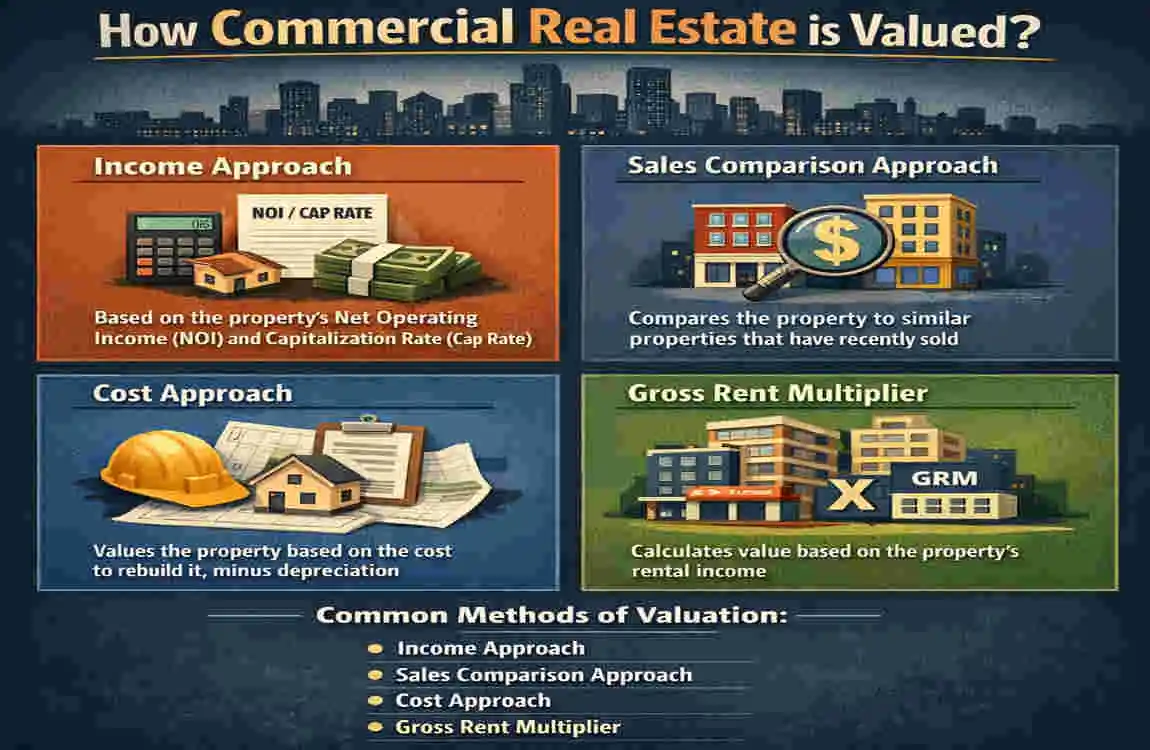
Income Approach
This method assesses how much income the property can generate. A key term here is Net Operating Income, or NOI.
NOI is the money left after normal operating costs are paid, but before loan payments and taxes.
Capitalization Rate
The cap rate helps estimate value based on income. In simple terms, a lower cap rate often means a higher price, while a higher cap rate may mean more risk or lower value.
For example, if a property earns high income and has a low cap rate, buyers may see it as more valuable.
Sales Comparison Approach
This method compares the property with similar properties that recently sold. It works best when there are enough nearby sales to review.
Cost Approach
This method estimates the cost to rebuild the property, then subtracts for wear and age. It is often used for unique buildings or special-use properties.
Who Is Involved in Commercial Real Estate Sales?
Commercial property deals often need more people than residential sales.
Main People in the Process
- Buyers and sellers
- Commercial real estate brokers and agents
- Lenders
- Appraisers
- Property inspectors
- Attorneys
- Accountants or advisors
These professionals help make the deal go more smoothly and reduce mistakes.
Why Professional Help Matters
Commercial sales can involve large amounts of money and detailed contracts. Having expert help can save time, reduce risk, and make the process easier to understand.
Benefits, Costs, and Risks of Commercial Real Estate Sales

Potential Benefits
Commercial real estate can offer:
- Rental income
- Long-term growth
- Portfolio diversification
- Business-use opportunities
- Possible tax advantages, depending on local rules
Common Costs
Buying or selling commercial property may involve:
- Purchase price
- Loan costs
- Inspection fees
- Appraisal fees
- Legal and closing costs
- Taxes and maintenance
Common Risks
There are also risks to understand:
- Empty units
- Tenant issues
- Market changes
- Unexpected repairs
- Financing problems
- Drops in local demand
Knowing these risks helps you make better decisions.
Tips for Buyers and Sellers
Tips for Buyers
If you are buying commercial property, start with a clear budget. Then study the market and review the numbers carefully.
Also, review the leases, understand the current tenants, and consider future demand in the area.
Tips for Sellers
If you are selling, keep your financial records organized. Make sure the property looks well maintained, and set a realistic asking price.
Working with an experienced commercial real estate professional can also help you avoid delays.
FAQ About Commercial Real Estate Sales
What is commercial real estate sales?
It is the process of buying and selling business properties such as offices, stores, warehouses, apartment buildings, and hotels.
What is considered commercial real estate?
Commercial real estate includes office, retail, industrial, multifamily, and hospitality properties.
How do commercial real estate sales differ from residential sales?
Commercial sales are usually more detailed. They focus more on income, leases, valuation, and investment returns.
How do you determine the value of a commercial property?
Common methods include the income approach, the cap rate, the sales comparison approach, and the cost approach.
Is commercial real estate a good investment?
It can be, but it depends on the property type, location, tenants, financing, and market conditions.
Do I need a commercial real estate broker?
A broker can be very helpful, especially if the deal is large or complex.
| Aspect | Simple Explanation |
|---|---|
| Definition | Commercial real estate sales involve buying and selling properties used for business or investment purposes. |
| Property Types | Includes offices, retail stores, warehouses, industrial buildings, hotels, and multifamily properties. |
| Main Buyers | Businesses, investors, developers, and real estate companies. |
| How It Works | The process usually includes property research, valuation, marketing, negotiations, due diligence, and closing. |
| Key Factors | Location, rental income, occupancy, property condition, market demand, and potential return on investment. |
| Financing | Buyers may use commercial mortgages, investment funds, partnerships, or cash. |
