
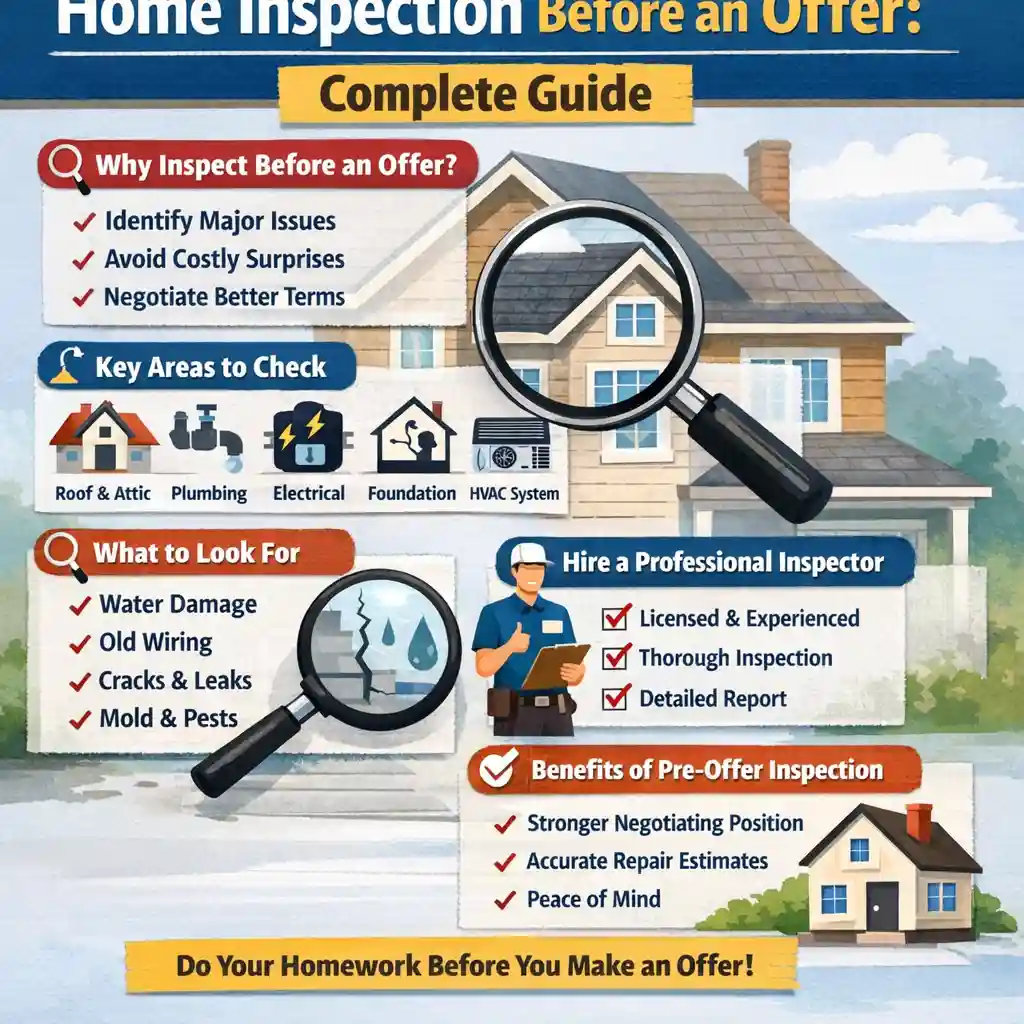
If you are buying a home, you may wonder: can you do a home inspection before making an offer? The short answer is yes, in many cases you can. But it depends on the seller, the local market, and how real estate deals are handled in your area.
A pre-offer home inspection gives you a closer look at the home before you submit your offer. This can help you avoid surprises and make a smarter decision. It is not always required or allowed, but it can be very useful in the right situation.
Can You Do a Home Inspection Before Making an Offer?
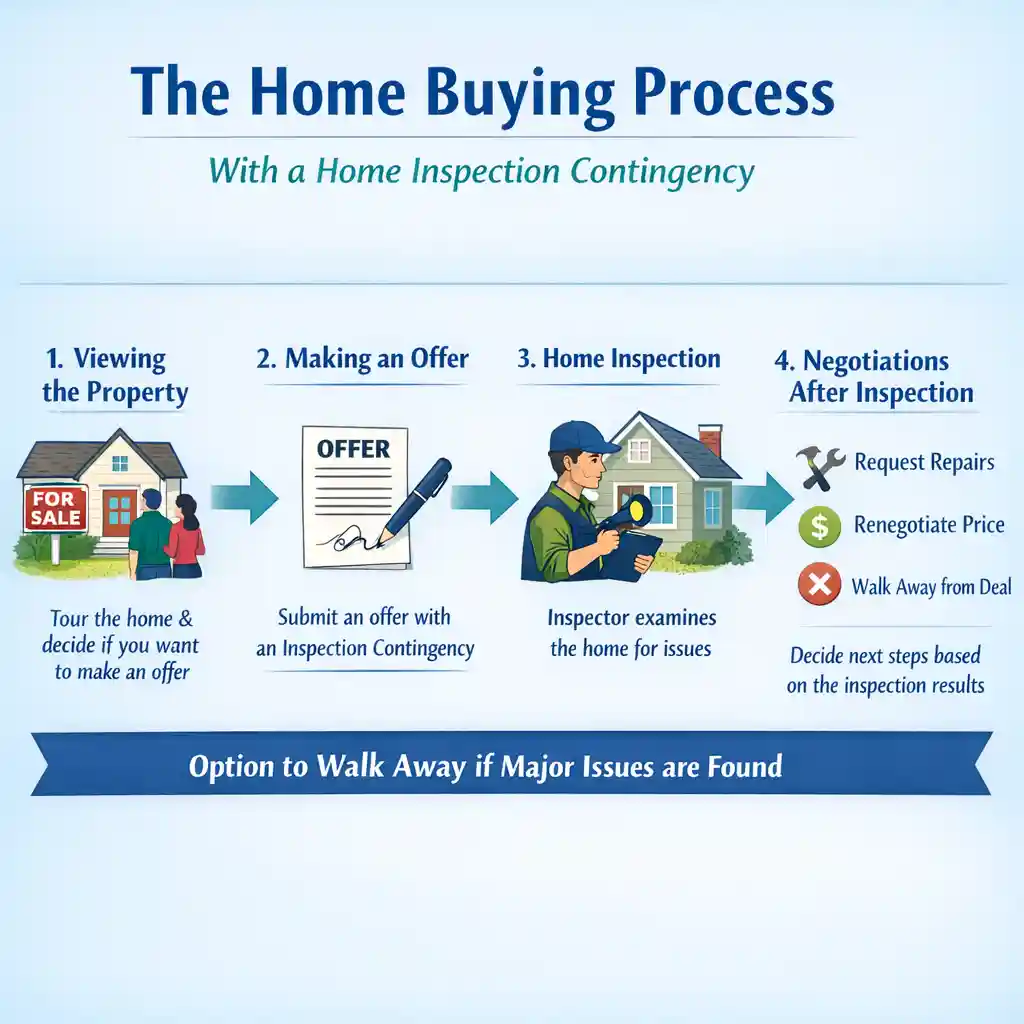
Yes, you can do a home inspection before making an offer if the seller agrees and the local market allows it. A pre-offer inspection means you inspect the home before committing to buy it.
This is different from the more common approach, where the buyer makes an offer first and then does the inspection during the contract period. In some markets, buyers do a pre-offer inspection to avoid wasting time on a property that may have major problems.
Why Buyers Choose Early Inspections
Many buyers like this approach because it gives them more confidence. It helps them understand the home’s condition before they decide how much to offer.
It is especially helpful if the home looks older, has visible damage, or has already had repairs or renovations. In those cases, a closer look can save you from expensive mistakes.
Local Rules and Market Practices Matter
Real estate customs vary by location. In some places, sellers are open to pre-offer inspections. In others, they may refuse access unless an offer is already in place.
That is why you should always understand your inspection rights and review any contract terms carefully.
How Does a Pre-Offer Home Inspection Work?
Finding a Qualified Home Inspector
Start by choosing a qualified and independent home inspector. You want someone with real experience, proper credentials, and a careful eye for hidden problems.
An independent inspector is usually best because they have no personal interest in the sale.
Scheduling the Inspection
Once the seller agrees, you can arrange the inspection. In many cases, it can happen quickly if everyone is available.
The inspector will usually check the major parts of the home, including:
- Roof and attic
- Foundation and structure
- Plumbing
- Electrical systems
- HVAC
- Windows and doors
- Basement or crawl space
- Exterior and interior safety concerns
Reviewing the Inspection Report
After the inspection, you get a written report. This report explains what the inspector found and what may need attention.
Look closely at major defects, not just small cosmetic issues. A chipped wall is very different from a leaking roof or a cracked foundation.
Benefits of Inspecting a Home Before Making an Offer
A pre-offer inspection gives you information before you make a financial commitment. That can be a big advantage.
Benefit | Why It Matters
Find major defects Avoid unexpected repair bills
Estimate repairs Improve budgeting
Set an offer price Make a more informed decision
Reduce uncertainty Understand the property‘s condition
Plan maintenance Prepare for future expenses
Helps You Avoid Surprises
A house can look great at first glance but still have hidden problems. An early inspection helps you spot issues before they become your responsibility.
Helps With Budgeting
If the inspector finds repairs, you can factor those costs into your budget. That makes it easier to decide whether the home is truly affordable.
Helps You Make a Better Offer
If you know the home needs work, you can adjust your offer price more wisely. That way, you are not guessing.
Useful for Older or Distressed Homes
This is especially helpful for older homes, homes with visible wear, or homes that have had major renovations. These properties often deserve extra attention.
Disadvantages and Risks of a Home Inspection Before an Offer
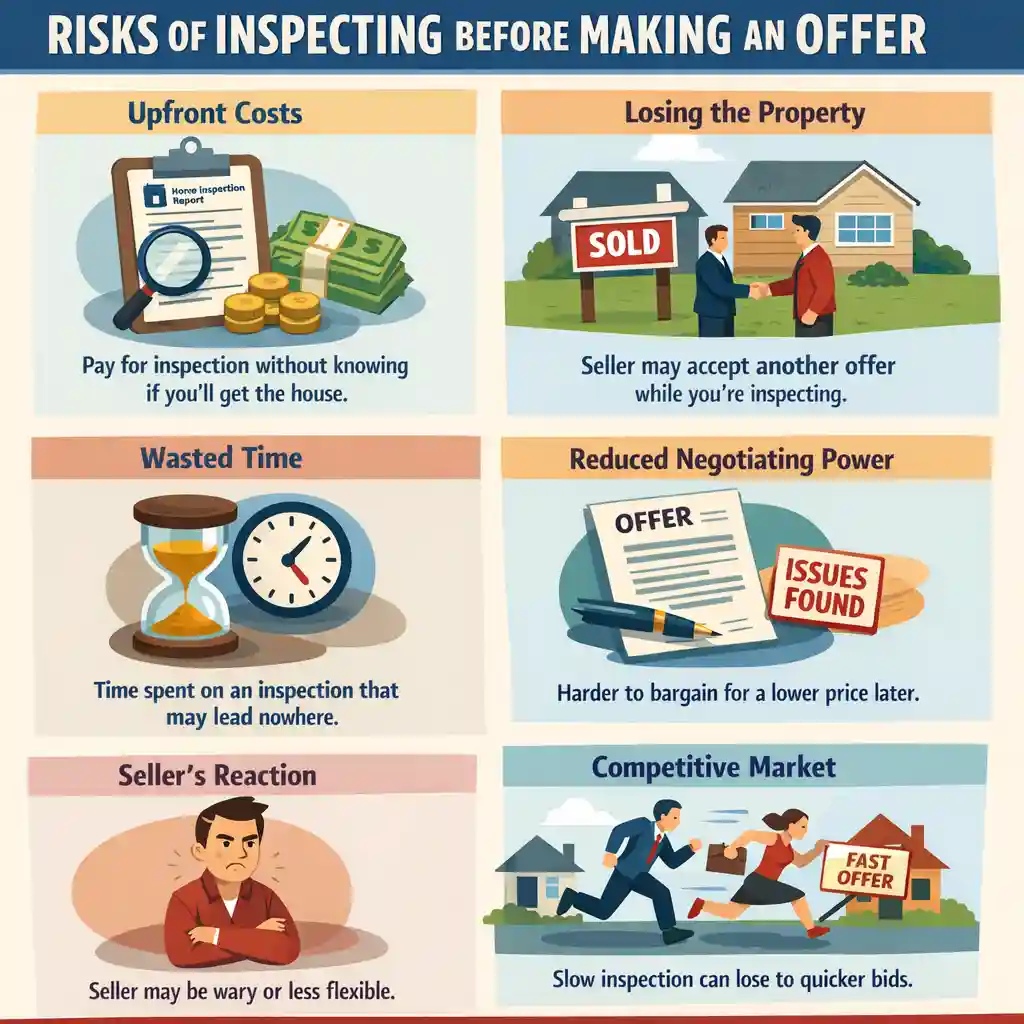
Inspection Costs Money
You usually pay for the inspection yourself. The cost depends on the size of the home, its location, and the level of detail in the inspection.
You May Lose Time in a Competitive Market
If the market is moving fast, another buyer may submit an offer before you finish the inspection. That means you could lose the home while you are still checking it.
Sellers May Refuse Access
Not every seller will agree to a pre-offer inspection. Some want to avoid disruption or do not want multiple buyers and inspectors touring the home.
It Does Not Catch Everything
A home inspector can only report on visible and accessible issues. They cannot predict every future problem, and they may recommend specialist inspections for certain concerns.
Pre-Offer Inspection vs Inspection After an Accepted Offer
FeatureBefore OfferAfter Accepted Offer
Timing Before submitting an offer During the contract period
Seller permission Usually required Typically arranged through the contract
Buyer risk Lower information risk Offer may already be committed
Negotiation Information can guide initial offer May support repair/price negotiations
Competition Can slow the buying process Usually easier to manage
Cost Paid before knowing if offer succeeds Paid after moving forward
Which Option Is Better?
There is no single right answer. A pre-offer inspection works well when you want more confidence before bidding. An after-offer inspection works better when you need to move quickly in a busy market.
Consider the home’s condition, the asking price, and market competitiveness before making a decision.
What Should Buyers Check Before Making an Offer?
Roof and Attic
Ask about the roof’s age, visible leaks, damaged shingles, and attic ventilation. Roof repairs can be expensive, so this area matters a lot.
Foundation and Structure
Look for cracks, uneven floors, and signs of movement or moisture. Structural issues can be costly and serious.
Plumbing
Check for leaks, water pressure, drainage problems, and old pipes. Plumbing issues often hide behind walls and under sinks.
Electrical System
Look at the breaker panel, outlets, wiring, and any signs of unsafe work. Electrical problems should never be ignored.
HVAC System
Heating and cooling systems affect comfort and energy costs. You want to know if they are working well or nearing replacement.
Windows, Doors, Basement, and Exterior
These areas can reveal drafts, water intrusion, poor grading, and damage from weather or age.
Questions to Ask the Inspector
- What are the most expensive problems?
- Which issues need immediate attention?
- What repairs may be needed soon?
- Are there signs of water damage?
- Do any areas need a specialist?
How to Use Inspection Results When Making an Offer

Focus on Big Problems
Do not get distracted by small cosmetic issues. A scratched floor is annoying, but a failing roof or mould problem is much more important.
Compare the Home to the Price
Ask yourself whether the home is priced fairly for its condition. If major repairs are needed, your offer may need to reflect that.
Think Long Term
Some problems may not be urgent today, but they may still affect future costs. A home with hidden repair needs can become expensive over time.
Use the Report Wisely
The inspection report should guide your decision, not scare you into rushing. It is there to help you buy with more confidence.
When Should You Consider a Pre-Offer Inspection?
A pre-offer inspection makes the most sense when:
- The home is older
- The property shows visible maintenance issues
- The home has been heavily renovated
- The seller shares limited information
- You want more confidence before submitting an offer
If the house seems risky or the price seems high, an early inspection can be very helpful.
Frequently Asked Questions
Can you do a home inspection before making an offer?
Yes, in many cases you can, but it depends on seller permission and local market practices.
Is a pre-offer home inspection worth the cost?
It can be worth it if you want more confidence before buying, especially for older or questionable homes.
Who pays for a home inspection before an offer?
Usually the buyer pays for it.
Can a seller refuse a pre-offer inspection?
Yes, a seller can refuse access unless they agree to the inspection.
How much does a pre-offer home inspection cost?
The cost varies by home size, location, and inspection scope.
What does a home inspector look for?
Inspectors check major systems such as the roof, structure, plumbing, electrical, and HVAC, as well as visible safety issues.
Can you negotiate the price based on a pre-offer inspection?
Yes, the inspection can help you decide whether to offer less or walk away.
Should I inspect a home before or after making an offer?
If you want more certainty before bidding, inspect first. If the market is very competitive, inspection after the offer may be more practical.
Can a home inspection find every problem with a house?
No. Inspectors find visible issues, but some problems require specialist review.
What should I do if the inspection reveals major defects?
You can lower your offer, ask for repairs, or decide not to move forward.
| Inspection Point | What to Check | Why It Matters |
|---|---|---|
| Roof | Age, leaks, shingles, flashing | Helps estimate future repair costs |
| Foundation | Cracks, settling, moisture | Can reveal expensive structural problems |
| Plumbing | Pipes, drains, water pressure | Identifies leaks and potential water damage |
| Electrical | Wiring, outlets, panel | Helps spot safety and code concerns |
| HVAC System | Heating, cooling, age, operation | Shows likely maintenance or replacement needs |
| Windows & Doors | Seals, frames, operation | Affects energy efficiency and security |
| Attic & Insulation | Ventilation, insulation, moisture | Helps prevent energy loss and mold |
| Basement/Crawl Space | Dampness, pests, cracks | Can uncover hidden property issues |
