
Many investors start with housing because it feels familiar and easier to understand. A house, condo, or apartment is something most people already know. Commercial property feels bigger and more complex, but it can also be more rewarding.
The reason people compare the two is simple: they want to know where the better returns are. Commercial real estate may offer more cash flow, while residential property often feels safer and easier to manage.
Commercial Real Estate vs. Housing: What Is the Difference?
What Is Commercial Real Estate?
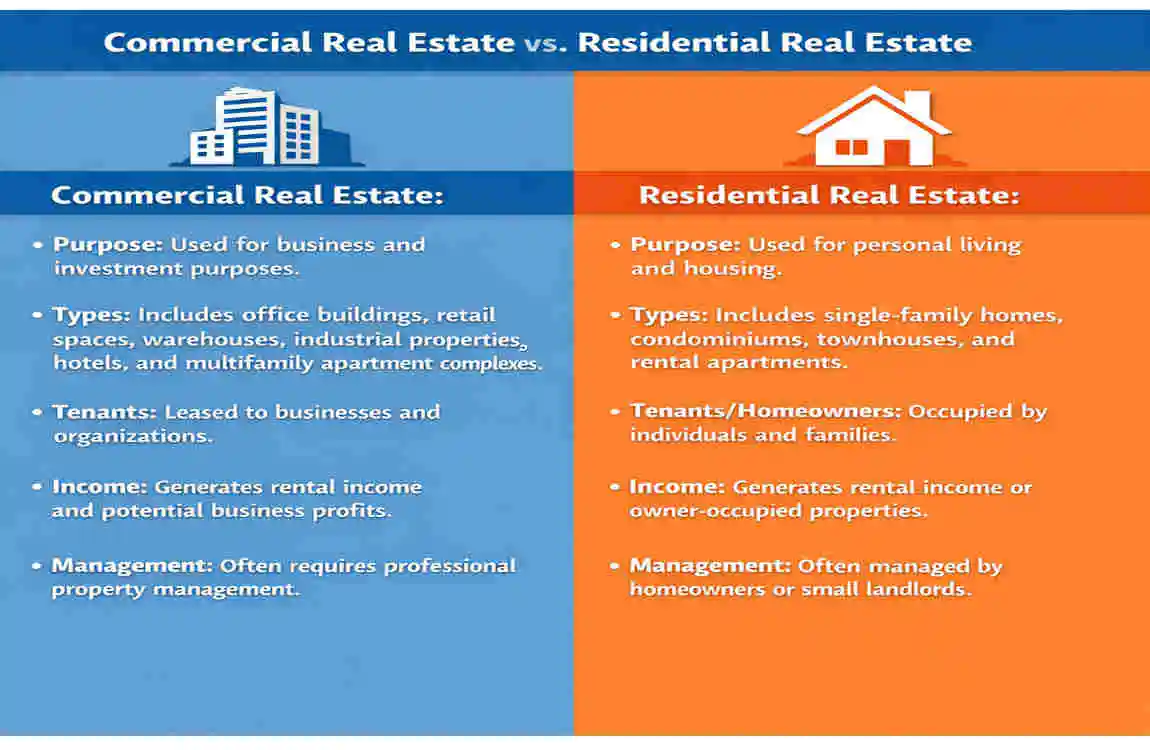
Commercial real estate includes properties used for business. These can be:
- Office buildings
- Retail shops
- Warehouses
- Industrial spaces
- Multifamily buildings with several rental units
The main idea is that the property is used to help a business operate or generate income.
What Is Residential Housing?
Residential housing includes places where people live, such as:
- Single-family homes
- Apartments
- Condos
- Townhouses
With residential property, the tenant is usually an individual or family. Rent is often more stable, but the income per property is usually lower than commercial real estate.
Key Differences for Investors
Factor Commercial Real Estate Residential Housing
Tenant type Businesses Individuals/families
Lease length Often longer Usually shorter
Income potential Often higher per property Generally more predictable
Operating costs Can be higher Often simpler
Management More specialized Usually easier
Risk Can be higher Often more accessible
Why Commercial Real Estate Can Generate Higher Returns
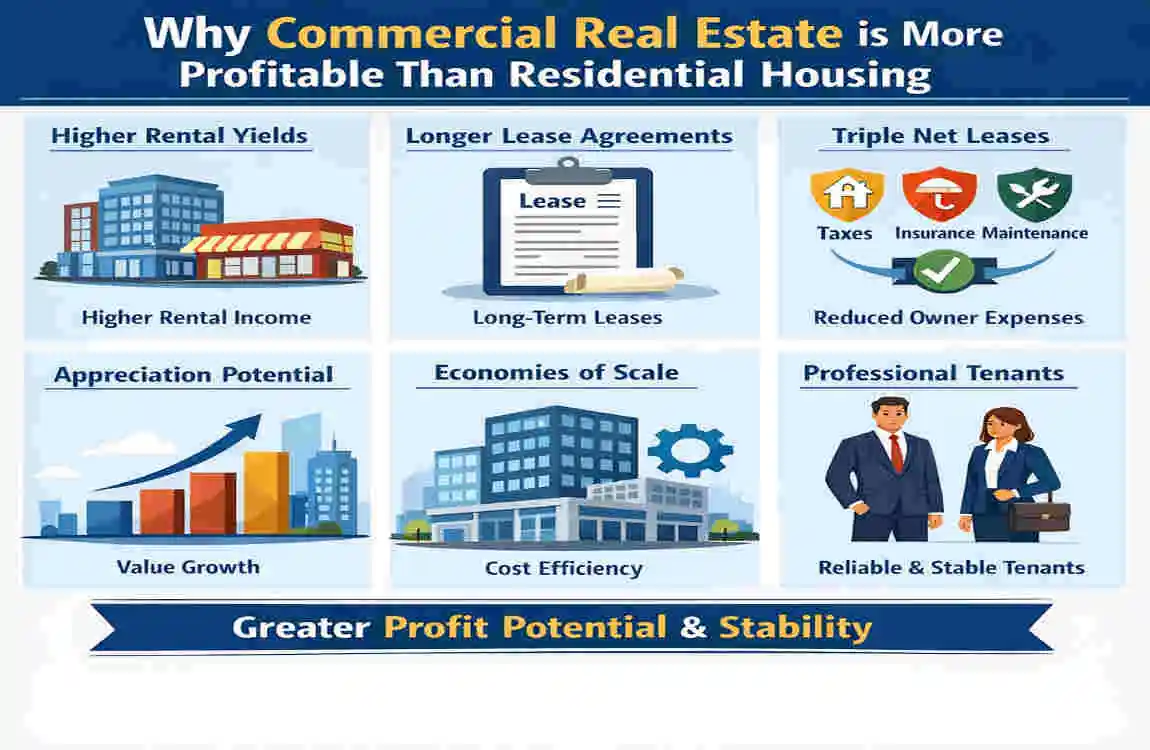
Higher Rental Income Potential
Commercial properties often command higher rents because businesses can afford to pay more for a good location. A store on a busy road or an office in a strong business area may generate much more income than a single house.
This does not mean every commercial property is profitable. The location, tenant quality, and property type matter a lot. But when the right tenant is in the right place, the rent can be very attractive.
Longer Lease Agreements
One major reason commercial properties can be more profitable is that leases are often longer. A business may sign a lease for several years, which provides greater income stability.
Longer leases also mean fewer tenant changes. That can reduce empty periods, lower turnover costs, and make your income easier to predict.
Multiple Income-Producing Spaces
Some commercial buildings have several tenants on the same property. For example, a retail building may have different shops, or a larger office space may be split into smaller units.
This can spread risk. If one tenant leaves, you still have income from the others. That makes the property less dependent on just one renter.
Value Based on Income
Commercial property value often depends on net operating income, or NOI. In simple terms, this means the more income the building produces after operating costs, the more valuable it may become.
That is a big reason commercial property can be powerful. If you improve rent, reduce waste, or lower costs, you may raise both income and property value.
How Commercial Properties Can Increase Profitability
Tenant-Paid Operating Expenses
Many commercial leases are structured so tenants pay some of the building’s running costs. This can include parts of maintenance, taxes, or insurance, depending on the lease type.
That can improve your cash flow because you are not covering every expense yourself. In residential property, landlords often carry more of that burden.
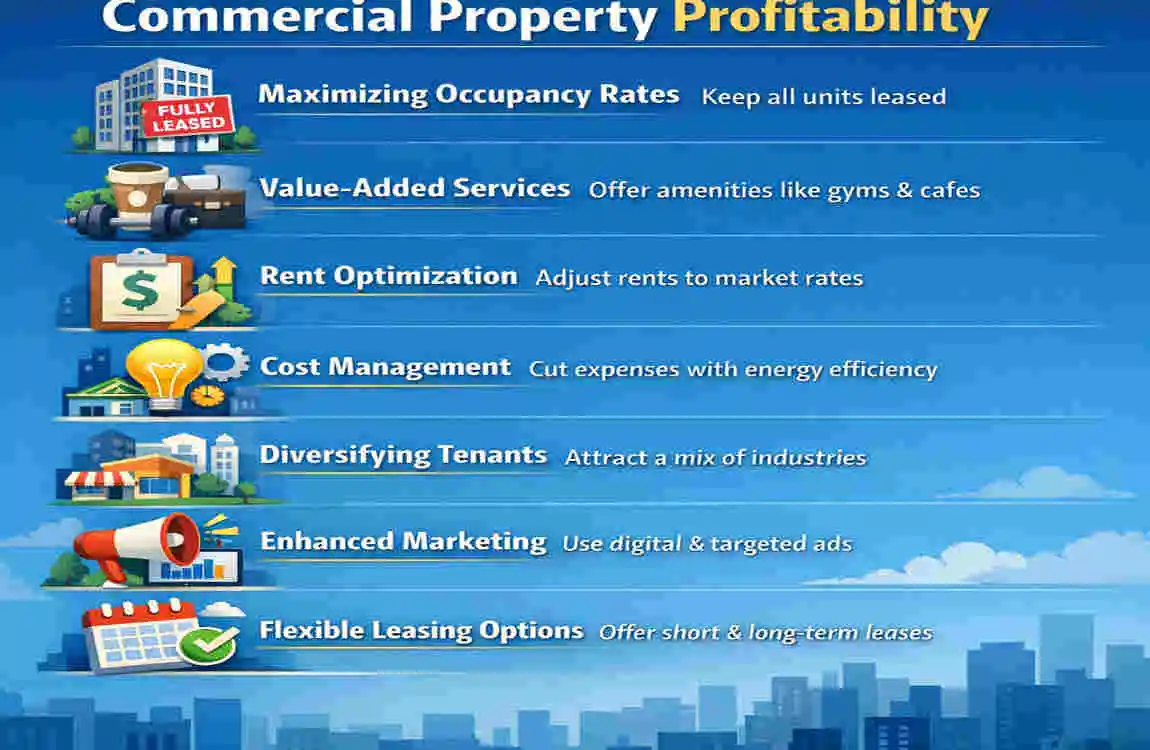
Professional Property Management
Commercial property often benefits from professional management. A good manager can help with:
- Rent collection
- Tenant communication
- Repairs and upkeep
- Lease renewals
- Property inspections
This can save time and keep the building running smoothly, especially if you own more than one property.
Property Improvements
Simple upgrades can also increase profitability. Better lighting, modern finishes, improved parking, and energy-saving features can make the property more appealing to tenants.
When a building feels more useful and professional, tenants are often willing to pay more rent.
Strategic Location
Location matters in both residential and commercial property, but commercial investors feel it very strongly. Good visibility, easy access, nearby transport, and growing business activity can all increase demand.
A strong location can support both rent growth and long-term appreciation.
Risks and Challenges of Commercial Real Estate
Higher Initial Investment
Commercial property usually costs more to buy than a house. You may need a larger down payment, higher closing costs, and more money for repairs or upgrades.
That means you need stronger financial planning before you buy.
Vacancy Risk
If a residential tenant leaves, you may lose one rental stream. If a major commercial tenant leaves, the effect can be much larger.
That is why tenant quality and diversification matter so much. One empty unit in a business property can hurt cash flow fast.
Economic Sensitivity
Businesses can be affected by recessions, changing customer habits, and rising costs. When business activity slows, commercial demand can drop too.
This makes commercial property more sensitive to the economy than many people expect.
Management and Financing Risks
Commercial loans are often different from residential mortgages. They may have different rates, terms, and refinancing rules.
You also may face more specialized maintenance and higher insurance or tax costs. So you should read the numbers carefully before you commit.
How to Decide Between Commercial Real Estate and Housing
Consider Your Budget
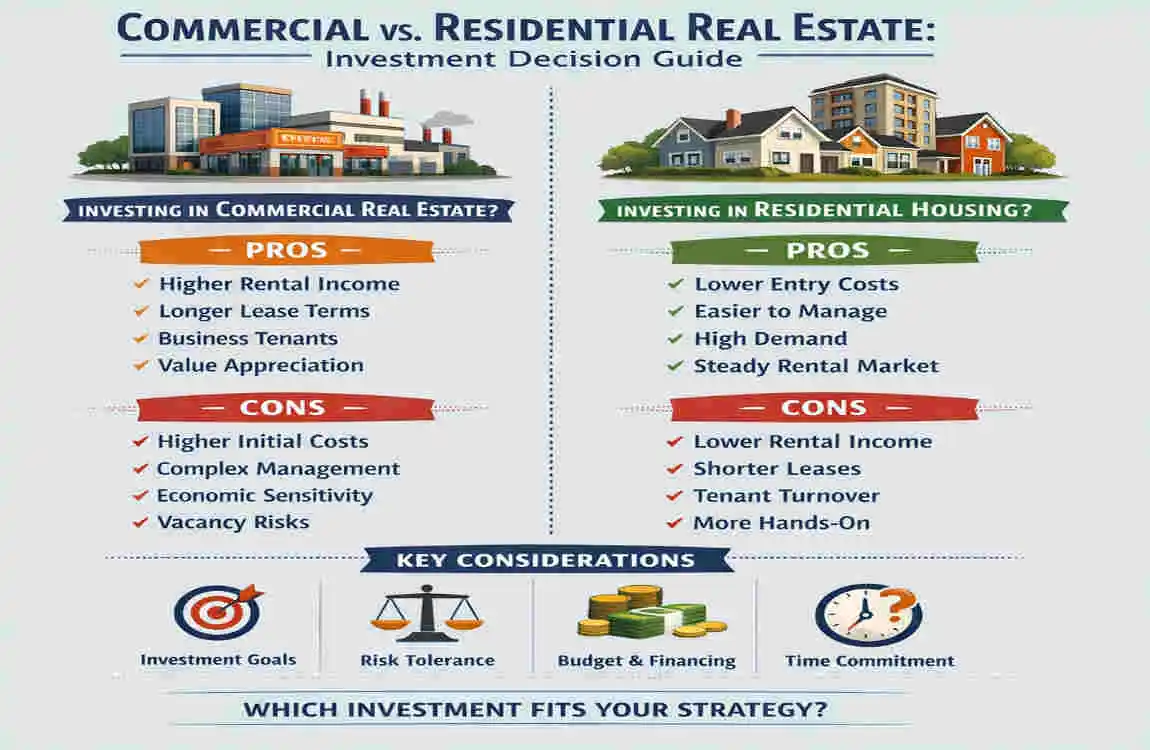
If you are starting with less capital, residential property may be easier to enter. Commercial property usually requires more upfront capital.
Evaluate Your Risk Tolerance
If you want something more familiar and easier to manage, housing may suit you better. If you want higher income and are comfortable with more complexity, commercial property may be worth a closer look.
Study Local Market Demand
Look at job growth, population trends, business activity, and rental demand in your area. A strong local market can make either type of property perform better.
Calculate the Numbers Before Buying
Before you buy, review:
- Purchase price
- Expected rent
- Operating expenses
- NOI
- Vacancy assumptions
- Financing costs
- Potential appreciation
- Cash-on-cash return
If the numbers do not make sense on paper, the deal is probably not right.
Who Should Consider Commercial Real Estate?
Commercial real estate may be a better fit if you are:
- An experienced investor
- Looking for higher cash flow
- Able to invest more capital
- Comfortable with longer holding periods
- Willing to manage more complex deals
If you are new to property investing, residential real estate may feel simpler at first.
FAQ: Why Commercial Real Estate Can Be More Profitable Than Housing
Is commercial real estate more profitable than residential real estate?
It can be, but not always. Profit depends on location, tenant quality, costs, financing, and market conditions.
Why does commercial real estate often have higher income potential?
Because commercial properties can have higher rents, longer leases, multiple tenants, and income-based value growth.
Is commercial real estate riskier than buying a house?
Often, yes. It can be more sensitive to vacancy, financing terms, and the economy.
Can beginners invest in commercial real estate?
Yes, but beginners usually need more research, more capital, and stronger due diligence.
Which is better for long-term investment: commercial or residential?
There is no single best answer. The right choice depends on your goals, budget, and risk comfort.
Many investors start with housing because it feels familiar and easier to understand. A house, condo, or apartment is something most people already know. Commercial property feels bigger and more complex, but it can also be more rewarding.
The reason people compare the two is simple: they want to know where the better returns are. Commercial real estate may offer more cash flow, while residential property often feels safer and easier to manage.
Commercial Real Estate vs. Housing: What Is the Difference?
What Is Commercial Real Estate?
Commercial real estate includes properties used for business. These can be:
- Office buildings
- Retail shops
- Warehouses
- Industrial spaces
- Multifamily buildings with several rental units
The main idea is that the property is used to help a business operate or generate income.
What Is Residential Housing?
Residential housing includes places where people live, such as:
- Single-family homes
- Apartments
- Condos
- Townhouses
With residential property, the tenant is usually an individual or family. Rent is often more stable, but the income per property is usually lower than commercial real estate.
Key Differences for Investors
Factor Commercial Real Estate Residential Housing
Tenant type Businesses Individuals/families
Lease length Often longer Usually shorter
Income potential Often higher per property Generally more predictable
Operating costs Can be higher Often simpler
Management More specialized Usually easier
Risk Can be higher Often more accessible
Why Commercial Real Estate Can Generate Higher Returns
Higher Rental Income Potential
Commercial properties often command higher rents because businesses can afford to pay more for a good location. A store on a busy road or an office in a strong business area may generate much more income than a single house.
This does not mean every commercial property is profitable. The location, tenant quality, and property type matter a lot. But when the right tenant is in the right place, the rent can be very attractive.
Longer Lease Agreements
One major reason commercial properties can be more profitable is that leases are often longer. A business may sign a lease for several years, which provides greater income stability.
Longer leases also mean fewer tenant changes. That can reduce empty periods, lower turnover costs, and make your income easier to predict.
Multiple Income-Producing Spaces
Some commercial buildings have several tenants on the same property. For example, a retail building may have different shops, or a larger office space may be split into smaller units.
This can spread risk. If one tenant leaves, you still have income from the others. That makes the property less dependent on just one renter.
Value Based on Income
Commercial property value often depends on net operating income, or NOI. In simple terms, this means the more income the building produces after operating costs, the more valuable it may become.
That is a big reason commercial property can be powerful. If you improve rent, reduce waste, or lower costs, you may raise both income and property value.
How Commercial Properties Can Increase Profitability
Tenant-Paid Operating Expenses
Many commercial leases are structured so tenants pay some of the building’s running costs. This can include parts of maintenance, taxes, or insurance, depending on the lease type.
That can improve your cash flow because you are not covering every expense yourself. In residential property, landlords often carry more of that burden.
Professional Property Management
Commercial property often benefits from professional management. A good manager can help with:
- Rent collection
- Tenant communication
- Repairs and upkeep
- Lease renewals
- Property inspections
This can save time and keep the building running smoothly, especially if you own more than one property.
Property Improvements
Simple upgrades can also increase profitability. Better lighting, modern finishes, improved parking, and energy-saving features can make the property more appealing to tenants.
When a building feels more useful and professional, tenants are often willing to pay more rent.
Strategic Location
Location matters in both residential and commercial property, but commercial investors feel it very strongly. Good visibility, easy access, nearby transport, and growing business activity can all increase demand.
A strong location can support both rent growth and long-term appreciation.
Risks and Challenges of Commercial Real Estate
Higher Initial Investment
Commercial property usually costs more to buy than a house. You may need a larger down payment, higher closing costs, and more money for repairs or upgrades.
That means you need stronger financial planning before you buy.
Vacancy Risk
If a residential tenant leaves, you may lose one rental stream. If a major commercial tenant leaves, the effect can be much larger.
That is why tenant quality and diversification matter so much. One empty unit in a business property can hurt cash flow fast.
Economic Sensitivity
Businesses can be affected by recessions, changing customer habits, and rising costs. When business activity slows, commercial demand can drop too.
This makes commercial property more sensitive to the economy than many people expect.
Management and Financing Risks
Commercial loans are often different from residential mortgages. They may have different rates, terms, and refinancing rules.
You also may face more specialized maintenance and higher insurance or tax costs. So you should read the numbers carefully before you commit.
How to Decide Between Commercial Real Estate and Housing
Consider Your Budget
If you are starting with less capital, residential property may be easier to enter. Commercial property usually requires more upfront capital.
Evaluate Your Risk Tolerance
If you want something more familiar and easier to manage, housing may suit you better. If you want higher income and are comfortable with more complexity, commercial property may be worth a closer look.
Study Local Market Demand
Look at job growth, population trends, business activity, and rental demand in your area. A strong local market can make either type of property perform better.
Calculate the Numbers Before Buying
Before you buy, review:
- Purchase price
- Expected rent
- Operating expenses
- NOI
- Vacancy assumptions
- Financing costs
- Potential appreciation
- Cash-on-cash return
If the numbers do not make sense on paper, the deal is probably not right.
Who Should Consider Commercial Real Estate?
Commercial real estate may be a better fit if you are:
- An experienced investor
- Looking for higher cash flow
- Able to invest more capital
- Comfortable with longer holding periods
- Willing to manage more complex deals
If you are new to property investing, residential real estate may feel simpler at first.
FAQ: Why Commercial Real Estate Can Be More Profitable Than Housing
Is commercial real estate more profitable than residential real estate?
It can be, but not always. Profit depends on location, tenant quality, costs, financing, and market conditions.
Why does commercial real estate often have higher income potential?
Because commercial properties can have higher rents, longer leases, multiple tenants, and income-based value growth.
Is commercial real estate riskier than buying a house?
Often, yes. It can be more sensitive to vacancy, financing terms, and the economy.
Can beginners invest in commercial real estate?
Yes, but beginners usually need more research, more capital, and stronger due diligence.
Which is better for long-term investment: commercial or residential?
There is no single best answer. The right choice depends on your goals, budget, and risk comfort.
| Factor | Commercial Real Estate | Residential Housing |
|---|---|---|
| Rental Income | Often generates higher rental income | Usually lower monthly rent |
| Lease Length | Longer leases can provide stable income | Leases are often shorter |
| Operating Costs | Some costs can be passed to tenants | Owner often covers more expenses |
| Appreciation | Strong potential in high-demand locations | Depends heavily on local housing demand |
| Tenant Stability | Businesses may stay for several years | Tenants may move more frequently |
| Income Potential | Multiple units or tenants can increase cash flow | Usually fewer income sources per property |
| Risk | Higher vacancy and investment risk | Generally easier to find residential tenants |
