
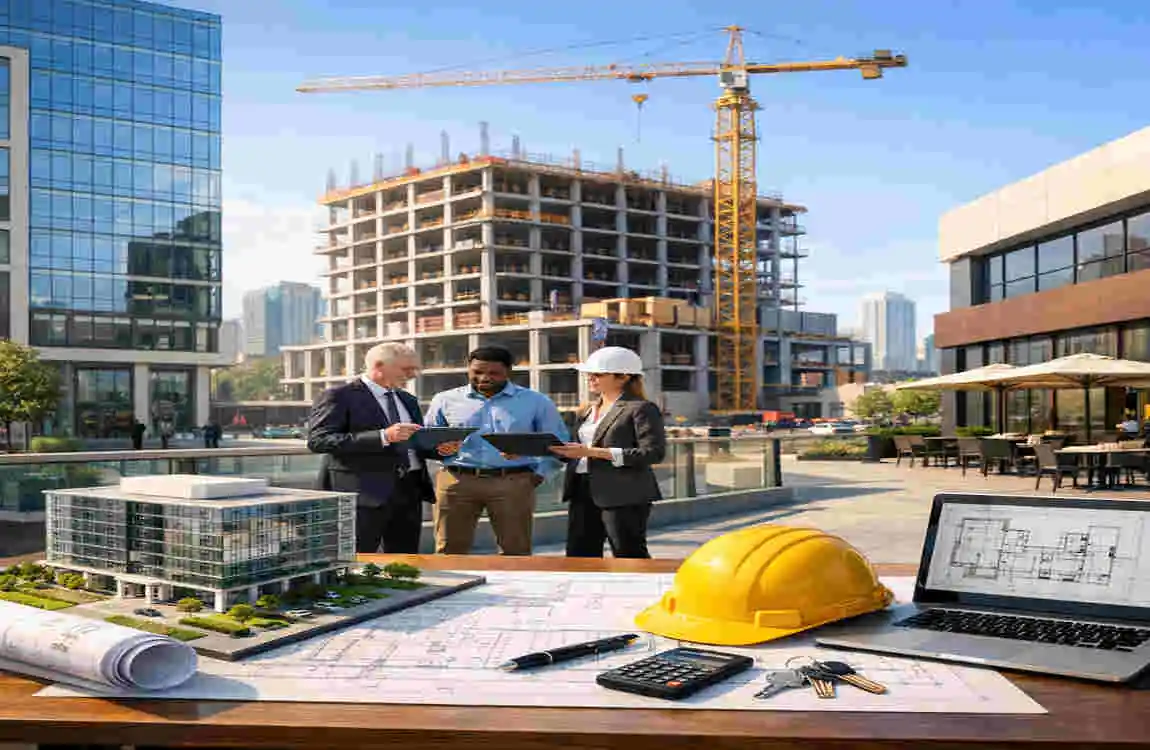
A commercial real estate project is a property development built for business use, not for people to live in as their main home. It can include offices, stores, warehouses, hotels, or mixed-use buildings. These projects matter because they help businesses grow and give investors a chance to earn income and long-term value.
If you are new to this topic, do not worry. In simple terms, a commercial property project is about planning, funding, building, and managing space that supports business activity. The process can feel big, but when you break it down, it becomes much easier to understand.
What Is a Commercial Real Estate Project?
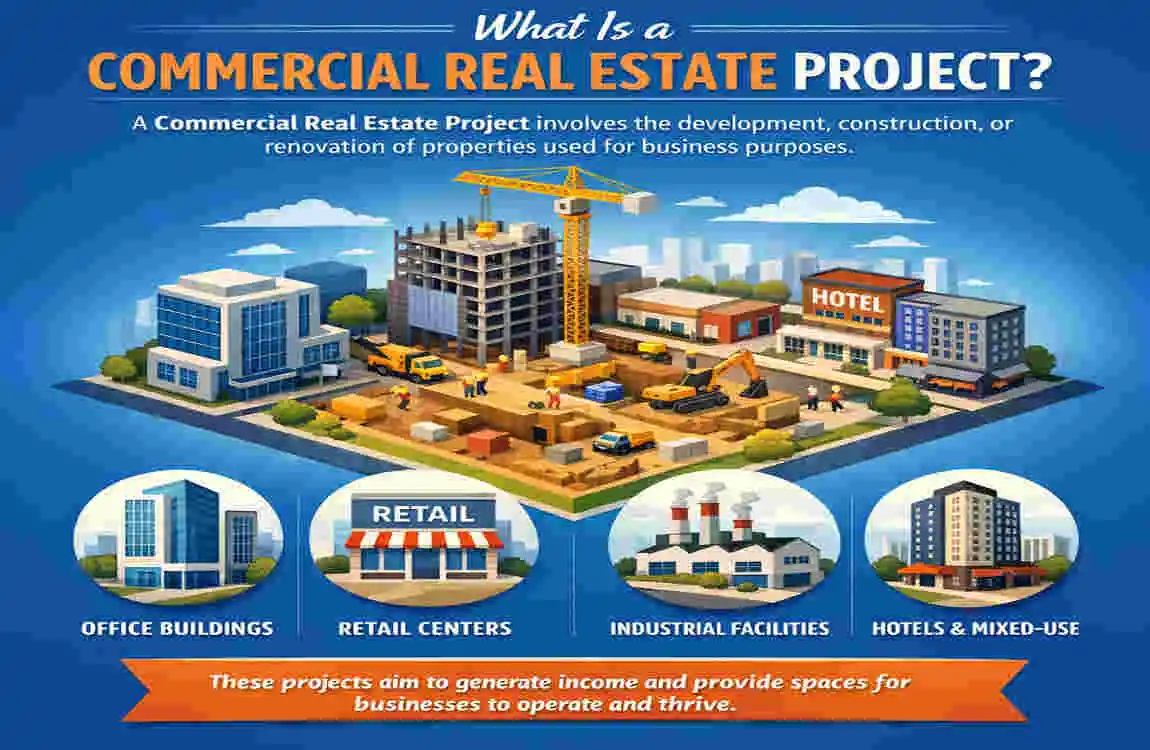
A commercial real estate project is any property development meant for business operations. That may mean people work there, shop there, stay there, store goods there, or use it for mixed purposes.
How it differs from residential property
Residential property is built for living. Commercial property is built for earning money through business use. That is the main difference.
A house may focus on comfort and family life. A commercial building focuses more on location, traffic, income, usability, and return on investment.
Common examples
Commercial projects often include:
- Office buildings
- Retail centers
- Warehouses
- Hotels
- Mixed-use developments
Each type serves a different purpose, but all are designed to support business activity.
Why it matters
These projects matter because they can create jobs, support local growth, and generate income for owners and investors. A well-planned project can also raise property value over time.
Types of Commercial Real Estate Projects
There are several major types of commercial projects. Each one has its own goals, users, and design needs.
Office Buildings
Office projects include small business offices, corporate towers, and business centres. They are designed for work, meetings, and daily operations.
The layout usually focuses on workstations, conference rooms, reception areas, and support spaces. Good access, parking, and modern facilities are often important.
Retail Properties
Retail properties are built for stores, malls, shopping centres, and plazas. Their main goal is to attract customers and support sales.
These projects need strong visibility, easy parking, and simple entry points. A retail project should feel welcoming and easy to move through.
Industrial and Warehouse Projects
Industrial properties include factories, distribution centres, and storage spaces. They are built for production, shipping, or large-scale storage.
These projects often need wide loading areas, strong floors, high ceilings, and good transport access. They may not focus on appearance as much as function, but design still matters.
Mixed-Use Developments
A mixed-use project combines different property types in one location. For example, it may include retail on the ground floor, offices above, and apartments nearby.
This type of project can be very attractive because it brings together work, shopping, and living in one place. It also helps create active, walkable spaces.
Key Stages of a Commercial Real Estate Project
A successful project moves through several stages. Each step builds on the one before it.
Market Research and Feasibility
This is where you study the market. You look at demand, competition, pricing, and possible income.
You also ask simple but important questions: Who will use this property? Is the area growing? Will the project make financial sense?
This stage helps you avoid guesswork. It tells you whether the project is worth moving forward with.
Site Selection and Due Diligence
The site matters a lot in any commercial real estate project. You need a location with good access, proper zoning, useful utilities, and a strong market around it.
Due diligence means checking the land carefully before buying or building. This includes title records, soil condition, flood risk, road access, and surrounding development.
A good site can support success. A weak site can create problems that are expensive to fix later.
Planning and Design
Once the site looks promising, the planning stage begins. This is where the project concept, building layout, and design direction take shape.
Architects and planners decide how the building should look and work. They think about size, flow, safety, convenience, and future use.
This step is important because good design can save money, improve usability, and make the project more attractive to tenants or buyers.
Approvals and Financing
Before construction begins, the project usually needs permits, approvals, and funding. Local rules may control building height, land use, parking, and safety standards.
At the same time, you need to secure financing. That may come from loans, investors, partnerships, or your own capital.
This stage can take time, so careful preparation helps avoid delays.
Construction and Development
This is the phase where the project becomes real. Contractors, workers, suppliers, and managers all play a role.
During construction, you must watch the schedule, cost, quality, and safety. Unexpected issues can happen, so good communication is very important.
If the project is managed well, construction can move smoothly. If not, delays and extra costs can grow fast.
How Much Does a Commercial Real Estate Project Cost?
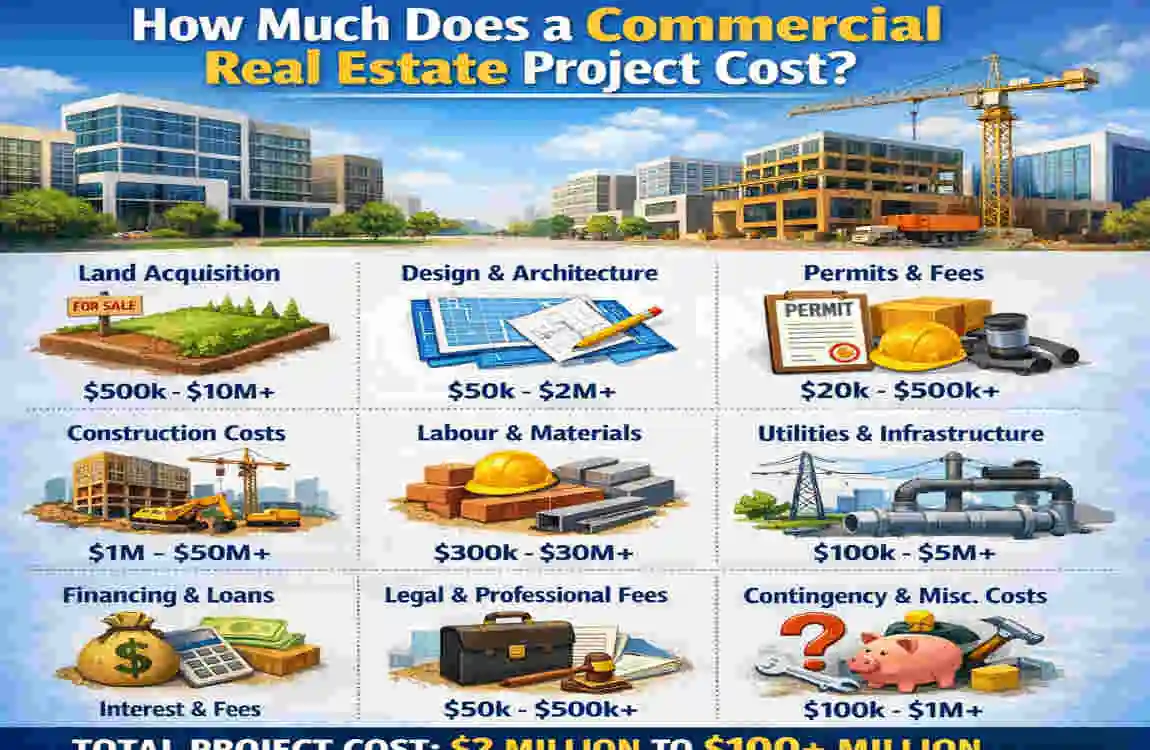
Costs can vary widely depending on the size, location, and type of project. A small office project will cost less than a large shopping centre or hotel.
Major cost categories
The main expenses usually include:
- Land acquisition
- Design and architectural services
- Construction and labour
- Permits and legal fees
- Financing and insurance
- Marketing and operations
- Contingency funds
The contingency fund is especially important. It gives you extra room if costs rise during the project.
What affects total cost
Several factors can raise or lower the budget:
- Location
- Building size
- Material quality
- Labor rates
- Market conditions
- Project complexity
A project in a prime city location will usually cost more than one in a smaller market. Also, a complex design with speciality materials will cost more than a simple structure.
Simple cost example
Property Type Typical Cost Drivers Cost Level
Small office building Land, design, labour, finishes Moderate
Retail centre Parking, visibility, tenant fit-out Moderate to high
Warehouse Land, structure, utility setup Moderate
Hotel Design, systems, furnishing, services High
Mixed-use development Multiple building uses, approvals, infrastructure High
The exact numbers depend on the market, but this table shows how project type affects budget pressure.
How to Finance a Commercial Real Estate Project
Funding is one of the most important parts of development. Even a great project cannot move forward without money in place.
Commercial real estate loans
These loans are common for property development and purchase. Lenders often want strong financial records, a solid business plan, and proof that the project can repay the debt.
Private investors and partnerships
Some developers work with private investors or business partners. This can reduce personal financial pressure and bring in people who share the risk.
Equity financing
Equity means using ownership money instead of borrowed money. In this case, investors put money into the project in exchange for a share of the return.
Construction financing
This type of funding is used while the property is being built. It is often short-term and tied to project progress.
Joint ventures
A joint venture is a shared project between two or more parties. It can combine land, capital, expertise, and market knowledge in one deal.
What to consider before borrowing
Before taking any financing, look at:
- Interest rates
- Repayment terms
- Risk level
- Expected rental income or sale value
- Exit strategy
A realistic plan is always safer than a hopeful one.
Risks, Challenges, and How to Manage Them
Every commercial project has risk. The goal is not to remove every risk, but to manage it wisely.
Market and vacancy risk
If demand is weak, it may be hard to lease or sell the property. Empty space means less income, so market research is essential.
Construction delays and cost overruns
Delays can happen because of weather, supply shortages, labour issues, or design changes. Costs may also rise during the process.
A strong budget and careful project management help reduce these problems.
Zoning and regulatory issues
Sometimes a site looks perfect but has zoning limits or permit problems. That can stop or slow the project.
Checking rules early helps avoid major trouble later.
Financing and interest-rate risks
Loan costs can rise if interest rates change. This can affect your profit and repayment plan.
Tenant and operational risks
For income-producing properties, tenant quality matters. Vacancies, late payments, or poor operations can hurt results.
Risk management tips
- Do detailed research before buying land.
- Work with experienced professionals.
- Build a budget with a contingency buffer.
- Review legal and zoning issues early.
- Track progress during construction.
How to Plan a Successful Commercial Real Estate Project
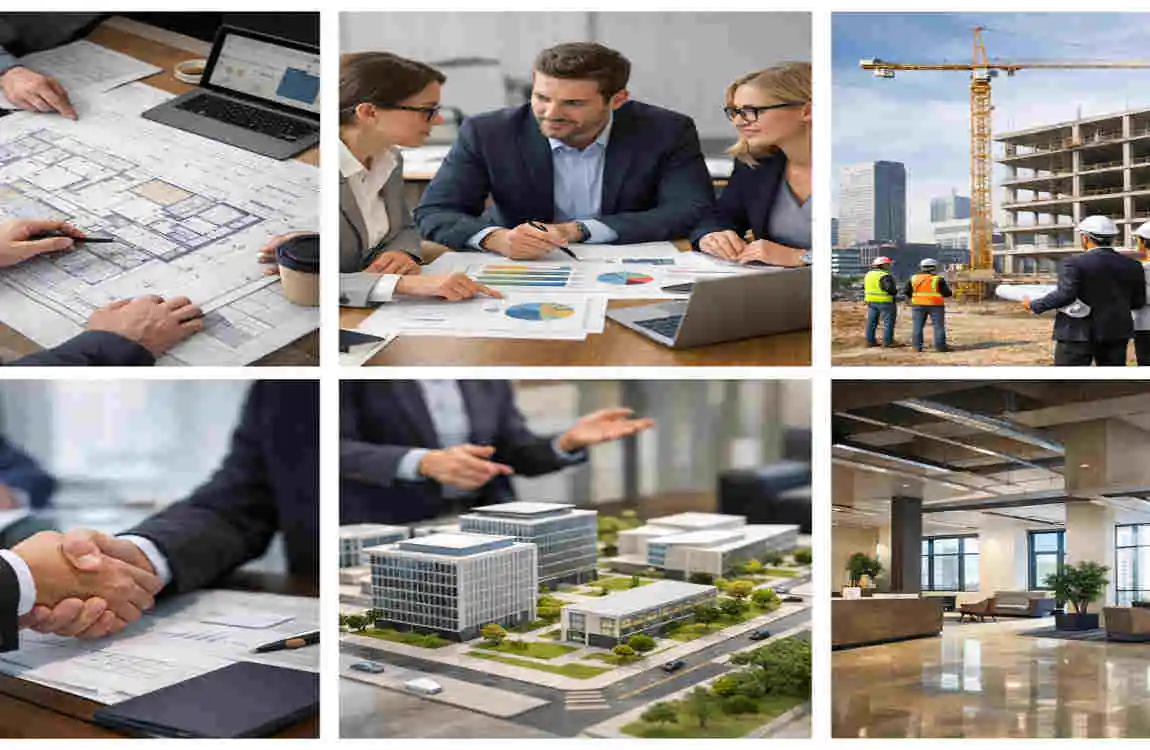
A strong project begins with clear thinking. The best developers do not rush. They plan carefully and check the numbers.
Start with clear goals.
Ask yourself what you want from the project. Do you want rental income, resale profit, long-term ownership, or business space for your own company?
Clear goals guide every other decision.
Choose a strong location.
Location can make or break a commercial real estate project. Look for accessibility, growth potential, nearby businesses, and customer demand.
Build a realistic budget and timeline.
Do not assume everything will go perfectly. Add time and money for surprises. This keeps the project more stable.
Work with the right team.
A good project usually needs:
- Architects
- Contractors
- Lawyers
- Financial advisors
- Property managers
The right people can save you time, money, and stress.
Watch performance closely
During construction and after completion, keep checking the numbers. Look at cost, progress, rental demand, and return on investment.
A project stays healthier when you monitor it regularly.
Frequently Asked Questions
What is a commercial real estate project?
A commercial real estate project is a property development used for business purposes, such as offices, shops, warehouses, hotels, or mixed-use buildings.
What are the most common types of commercial real estate projects?
The most common types are office buildings, retail properties, industrial and warehouse spaces, hotels, and mixed-use developments.
How long does a commercial real estate project take?
The timeline depends on planning, permits, financing, and construction. Some projects take months, while larger ones can take years.
What is the highest cost in a commercial real estate project?
Land and construction are usually the highest costs, but financing, design, and location can also have a big impact.
How do investors finance commercial real estate projects?
They often use commercial loans, private investors, equity, partnerships, construction financing, or joint ventures.
What are the major risks of commercial real estate development?
The biggest risks include weak demand, delays, cost overruns, zoning problems, financing pressure, and tenant issues.
Is a commercial real estate project a good investment?
It can be a strong investment if the location is good, the demand is solid, the budget is realistic, and the project is well managed.
| Aspect | Short Information |
|---|---|
| Project Meaning | Development or investment in properties used for business purposes. |
| Common Types | Office buildings, retail centers, warehouses, hotels, and mixed-use properties. |
| Main Goal | Generate rental income, business value, or long-term investment returns. |
| Planning | Includes market research, location selection, budgeting, design, and feasibility studies. |
| Financing | Projects may use bank loans, private investors, partnerships, or commercial mortgages. |
| Development Costs | Land, construction, permits, professional fees, utilities, and ongoing expenses. |
