

Understanding disposition in real estate matters if you invest in property. In simple terms, disposition is the process of selling, transferring, or exiting an investment property. It is the last major step in the real estate investment cycle, and it can significantly affect your final return.
If you buy property as an investment, you also need a plan for how and when you will exit that investment. That is where disposition comes in. A smart exit can help you lock in profit, reduce risk, and move your money into a better opportunity.
Real Estate Disposition: What Does It Mean?
What Is Real Estate Disposition?
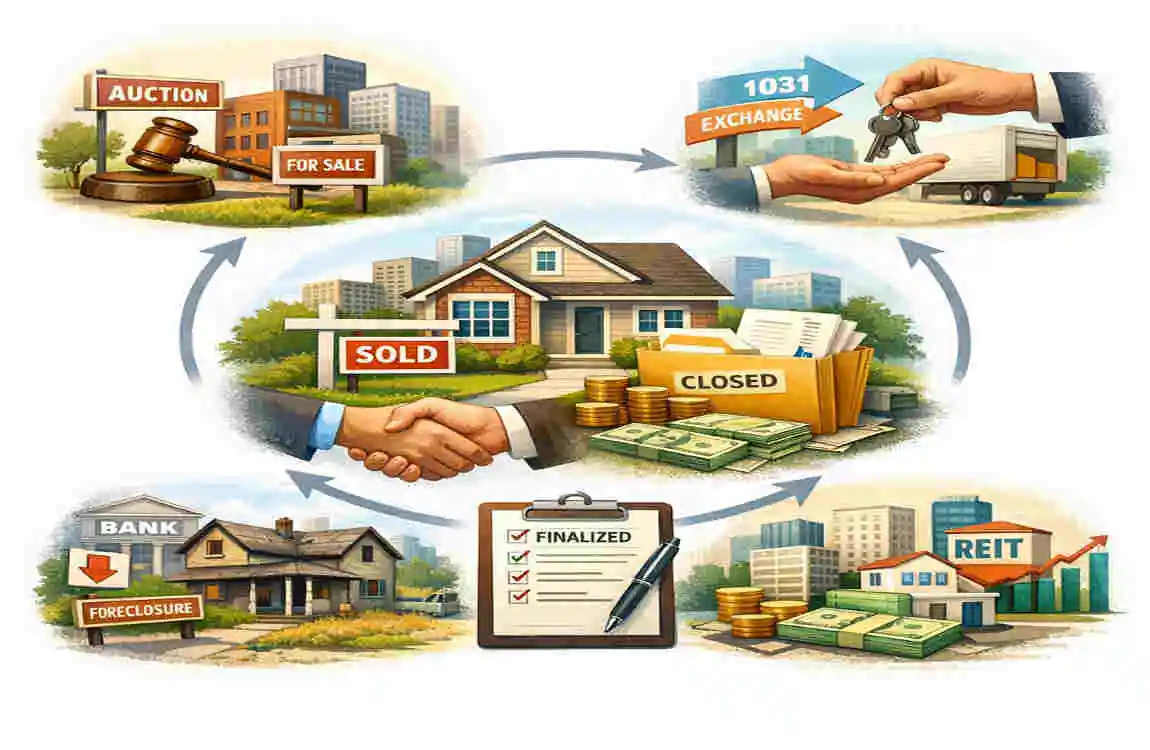
Real estate disposition means removing a property from an investment portfolio. Most often, this happens through a sale. But it can also include other transfer methods depending on the deal.
For example, an investor may sell a single-family rental, a commercial building, or a multifamily property. In each case, the goal is the same: to exit the property in a way that supports the investor’s financial plan.
Why It Matters to Investors
Disposition is not just the end of a deal. It is a key part of the full investment journey.
It helps investors:
- Take profits
- Unlock equity
- Reduce risk
- Reinvest in new properties
- Respond to market changes
In other words, disposition turns paper value into real results.
Acquisition vs. Disposition
Acquisition means buying a property. Disposition means exiting that property.
These two parts work together. You buy with a plan, hold while the property performs, and then sell when the timing makes sense. A strong investor thinks about both from the start.
How the Real Estate Disposition Process Works
Review the Property and Market
Before selling, investors should look at how the property is performing. They should also check the market, local demand, and pricing trends.
This helps answer a simple question: Is this the right time to sell?
Value the Property
A property is usually valued using several factors, such as:
- Comparable property sales
- Rental income
- Condition of the property
- Location
- Current demand
- Return expectations
This gives the investor a realistic idea of what the property may sell for.
Prepare the Property for Sale
A clean, organised property usually attracts more interest. Preparation may include repairs, minor upgrades, inspections, and collecting all key documents.
That can include:
- Lease records
- Income statements
- Expense reports
- Ownership documents
- Maintenance history
Market to Buyers
Once the property is ready, you must market it well. Investors may use brokers, direct buyer outreach, or private investor networks.
Some sales are public. Others are kept confidential, especially in larger deals.
Review Offers and Close
After offers come in, the investor compares price, terms, timing, and buyer strength. Then due diligence begins, followed by closing.
At this stage, the goal is not just to accept the highest number. The goal is to choose the best net result.
Common Real Estate Disposition Strategies
Traditional Property Sale
This is the most common strategy. The property is sold to another investor or an end buyer.
It is simple and familiar, but the final result depends on market timing, condition, and pricing.
Portfolio Sale
A portfolio sale means selling multiple properties together. Larger investors often use this to exit several assets at once.
It can save time and simplify the process, but it may also limit buyer interest if the package is too large or mixed.
Selling to Another Investor
Many investment properties are sold directly to other investors. This is common with rental homes, apartment buildings, and commercial properties.
In these deals, buyers care a lot about cash flow, occupancy, and operating numbers.
Refinancing vs. Disposition
Sometimes investors refinance instead of selling. This lets them keep the property while pulling out some equity.
Refinancing may work when the property still performs well. Disposition may be better when the investor wants to move on completely.
1031 Exchange Considerations
A 1031 exchange may allow an investor to reinvest proceeds into another qualifying property while deferring certain taxes. Because the rules are specific, professional tax advice is important.
This option can influence when and how an investor chooses to sell.
Key Factors That Influence a Disposition Decision
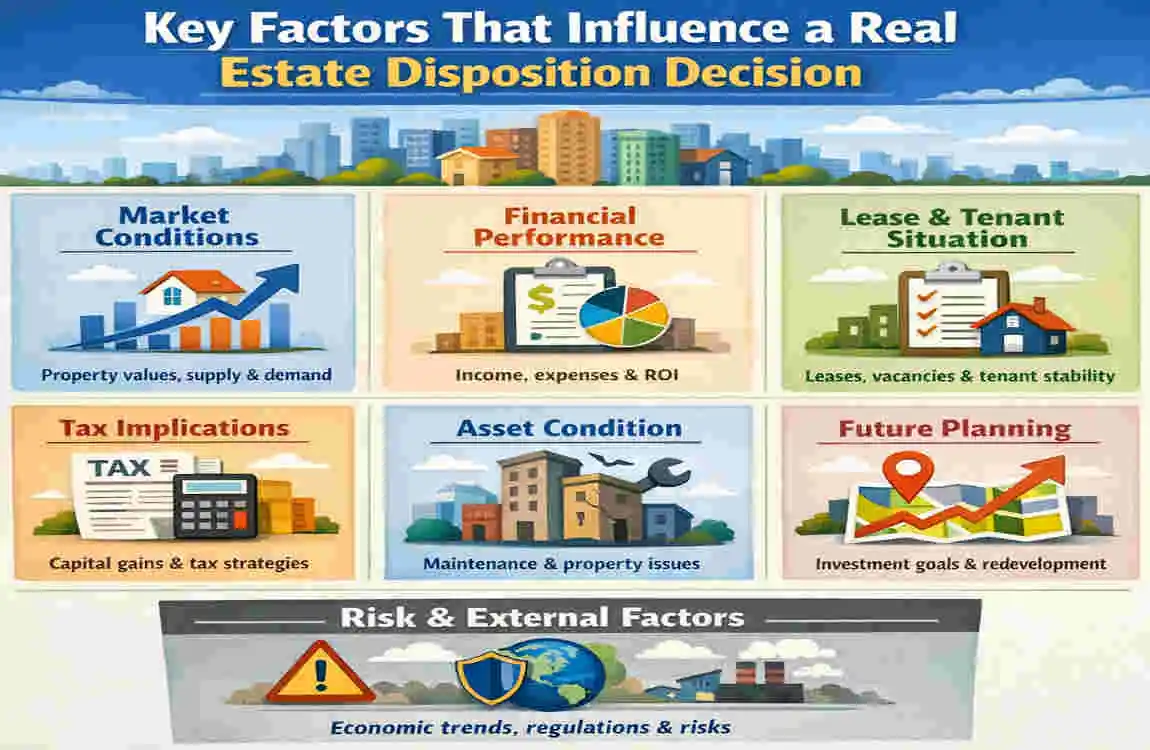
Market Conditions
Strong demand can support a better sale price. Weak demand can make it harder to get the return you want.
Property Performance
If the property is producing steady income, that strengthens its value. If vacancies, repairs, or expenses rise, the sellinay stfor selling renggetInvestor Goals
Some investors want long-term income. Others want growth and quick exits. Your own goals matter just as much as the market.
Financing and Interest Rates
Higher borrowing costs can affect buyer demand. They can also change whether refinancing or selling makes more sense.
Taxes and Expenses
Selling a property is not free. You must account for commissions, closing costs, repairs, and possible taxes.
Timing
A property may look attractive today but weaker six months later. That is why timing matters so much in disposition.
Real Estate Disposition Costs and Financial Considerations
Gross Sale Price vs Net Proceeds
The sale price is not the same as your final profit. After costs, your net proceeds may be much lower.
For example, if a property sells for a high price, that doesn’t mean the full amount goes into your pocket.
Common Costs to Expect
Here are some common costs involved in disposition:
Cost Type What It Covers
Broker commission Payment to the real estate agent or broker
Closing costs Legal, title, and transaction-related fees
Repairs Fixes made before sale
Prep costs Cleaning, staging, and updates
Loan payoff Remaining mortgage balance
Taxes Capital gains or depreciation recapture where applicable
Tax Considerations
Taxes can significantly change the outcome. Depending on your situation, you may owe capital gains tax or face depreciation recapture.
That is why investors should always speak with a qualified tax professional before selling.
Metrics Investors Should Review
Before disposition, it helps to look at:
- ROI
- Cash-on-cash return
- Cap rate
- Net operating income
- Equity multiple
- IRR
These numbers help you compare the sale against other investment choices.
Common Mistakes Investors Should Avoid
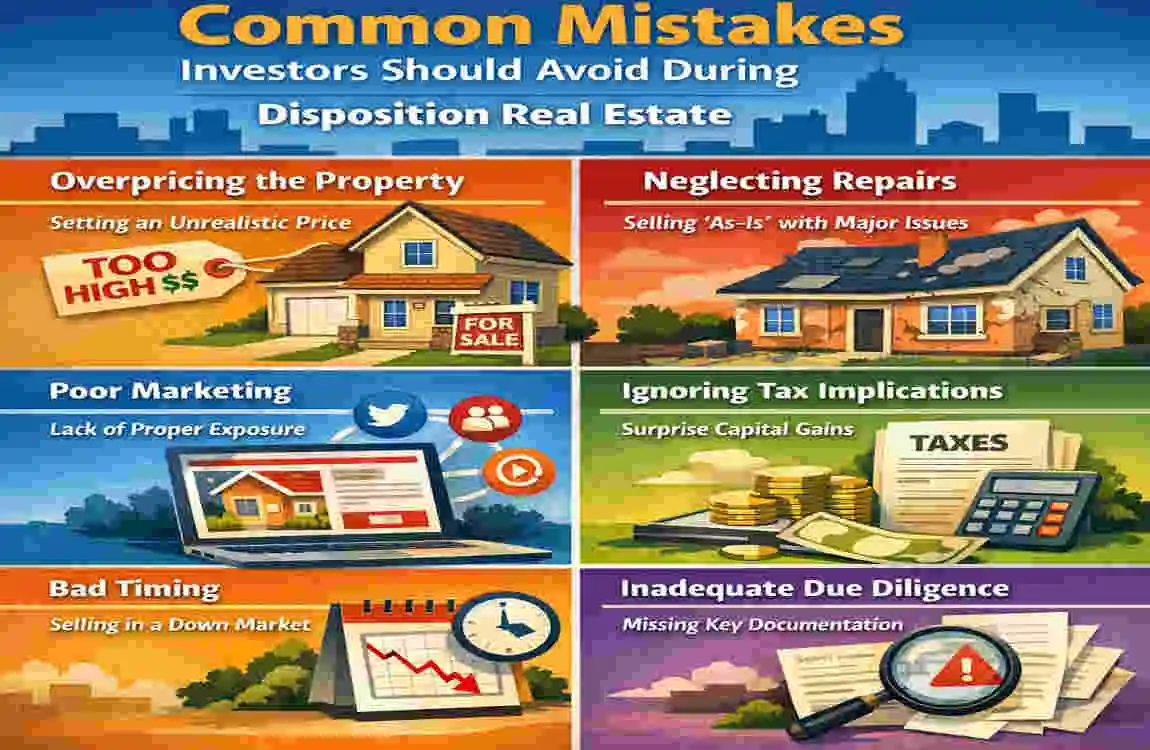
Selling Too Fast
Some investors sell without checking market value or current performance. That can leave money on the table.
Ignoring Costs
A strong sale price means little if expenses are high. Always focus on net proceeds, not just the top-line number.
Weak Preparation
A messy property, poor records, or missing documents can hurt buyer confidence and lower the final offer.
Waiting Too Long
Delaying too much can increase risk. Property conditions can change, financing can shift, and market demand can weaken.
Simple Ways to Improve Your Disposition Strategy
Set Clear Goals
Know why you are selling. Are you taking profit, reducing risk, or moving into a better property?
Watch the Market
Watch local pricing, demand, and interest rate changes.
Keep Good Records
Strong financial records make the property easier to value and market.
Compare More Than One Offer
Do not focus only on the highest price. Look at timing, terms, buyer strength, and closing certainty.
Plan the Next Move
A smart exit is easier when you already know where the money is going next.
Real Estate Disposition FAQs
What does disposition mean in real estate?
It means selling, transferring, or exiting a property investment.
What does disposition mean in property investment?
It refers to the investor’s exit strategy and the process of turning a property into cash or another asset.
What is the difference between acquisition and disposition?
Acquisition is buying a property. Disposition is the exit or sale of that property.
Why do investors dispose of properties?
They may want to take profits, reduce risk, rebalance their portfolio, or reinvest elsewhere.
Is disposition the same as selling real estate?
Selling is the most common form of disposition, but disposition can be broader.
| Topic | Short Information |
|---|---|
| Real Estate Disposition | The process of selling or otherwise exiting a real estate investment. |
| Main Goal | Generate profits, recover invested capital, or rebalance a portfolio. |
| Common Disposition Methods | Property sale, refinancing, portfolio sale, or transfer of ownership. |
| Key Timing Factors | Market conditions, property performance, interest rates, taxes, and investor goals. |
| Property Valuation | Investors typically assess market value, income potential, expenses, and comparable properties. |
| Selling Costs | May include broker fees, closing costs, legal fees, repairs, and taxes. |
