
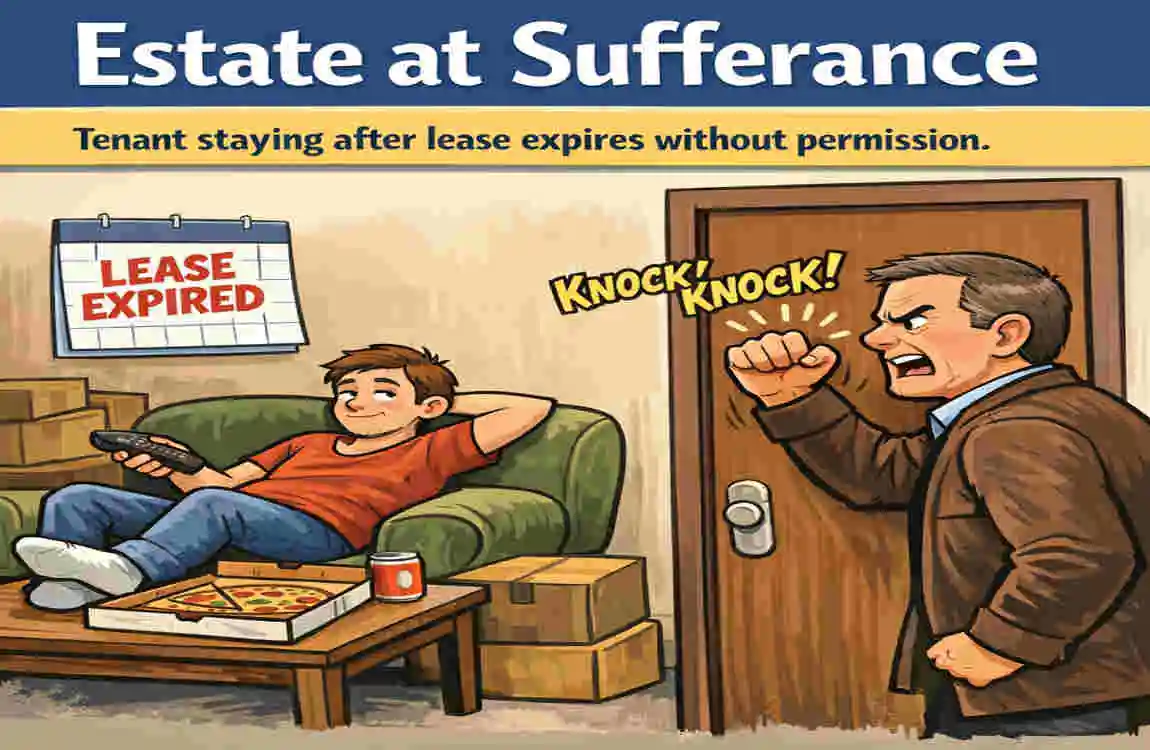
An estate at sufferance happens when a tenant stays in a property after the lease ends without the landlord’s permission. This situation comes up often in rental housing, commercial spaces, and property management.
If you work in real estate, own rental property, or rent a home yourself, this is a term worth knowing. It affects what happens next, who can stay, who must leave, and what legal steps may follow.
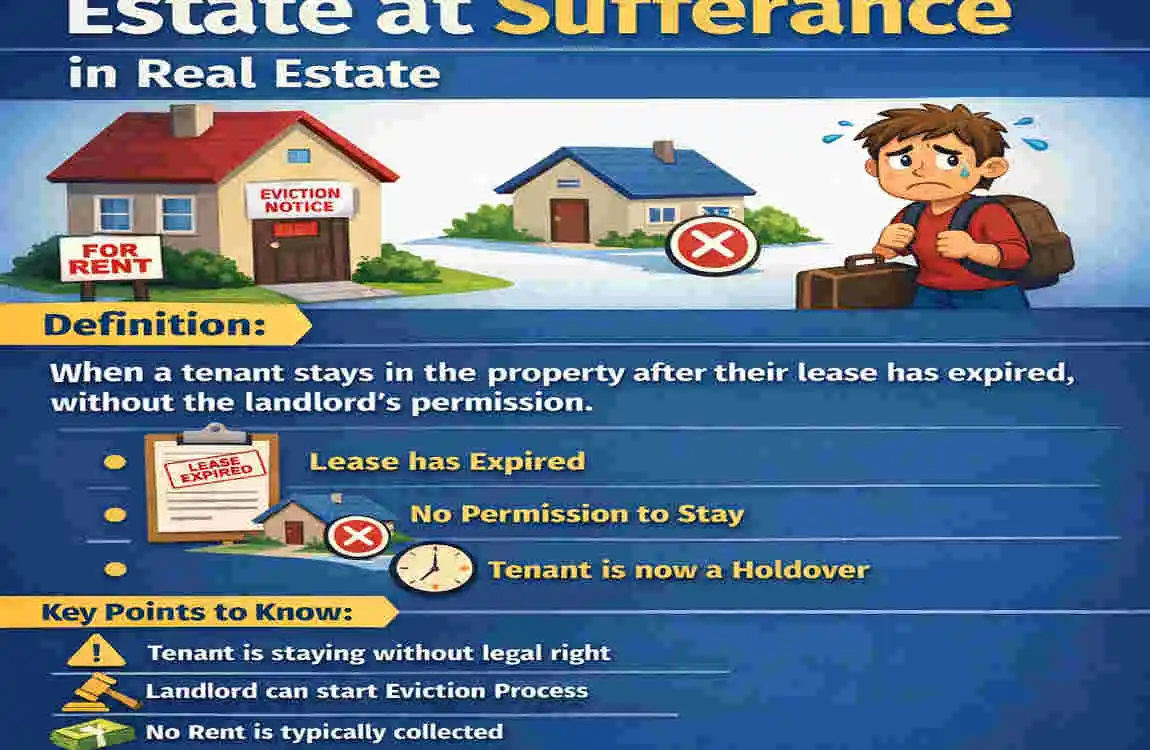
In simple terms, the estate at sufferance real estate definition describes a tenant who originally entered the property legally but stays after the lawful agreement ends. That may sound small, but it can lead to rent issues, eviction action, and disputes over possession.
Understanding the Estate at Sufferance Real Estate Definition
What Does Estate at Sufferance Mean?
An estate at sufferance is not a new lease. It is a legal status that arises when a tenant remains in the property after the lease expires.
The key point is this: the tenant was allowed to enter the property at first, but the permission to stay has ended. If the landlord does not agree to the tenant remaining, the situation becomes an estate at sufferance.
This term is common in landlord-tenant law because it helps explain what happens after a lease ends but before the tenant moves out.
Key Characteristics of an Estate at Sufferance
An estate at sufferance usually has a few clear signs:
- The lease has ended or been terminated.
- The tenant is still occupying the property.
- The landlord has not agreed to extend the tenancy.
- No new lease has been signed.
- The landlord may have the right to recover possession.
This is important because staying in the property does not automatically create a new right to remain.
How Does an Estate at Sufferance Begin?
This situation can begin in several ways.
A tenant may stay after a fixed-term lease expires. A renter may ignore a valid move-out notice. A commercial tenant may continue using the building after the contract ends.
The outcome depends on the lease, the notices given, and the laws in the state or city where the property is located.
Is an Estate at Sufferance Legal?
Yes, but only as a legal status, not as permission to stay forever. It describes what happens when someone remains after their lawful right to occupy ends.
Landlords usually cannot just change the locks or remove the tenant themselves. In most places, they must follow the legal eviction process. The exact rules vary by location.
How an Estate at Sufferance Works in Real Estate
The Role of an Expired Lease
A lease establishes the tenant’s right to live in or use the property. When that lease ends, the legal right to stay also ends unless both sides agree otherwise.
That is why lease dates matter so much. If the tenant doesn’t move out on time, the landlord may need to take action to protect the property and regain possession.
What Happens When a Tenant Stays After Lease Expiration?
Once the lease expires, the tenant’s stay may become unauthorized. That can create problems such as unpaid rent, use-and-occupancy charges, or damage claims.
Sometimes the landlord and tenant talk and work out a new arrangement. Other times, the landlord wants the tenant out right away. What happens next depends on communication and local law.
Estate at Sufferance vs. Holdover Tenancy
These two terms are closely related. A holdover tenant is simply someone who stays after the lease ends.
An estate at sufferance is often the legal label used before the landlord accepts the continued stay. In some places, if the landlord accepts rent or agrees to keep the tenant, the arrangement may turn into a different kind of tenancy.
Residential vs. Commercial Estate at Sufferance
This issue can happen in both residential and commercial real estate.
In residential settings, it often involves apartments or houses. In commercial settings, it may involve offices, shops, or warehouses. Commercial leases often include special holdover clauses that explain what happens if the tenant stays too long.
Rights and Responsibilities of Landlords and Tenants

Landlord Rights During an Estate at Sufferance
The landlord may have the right to recover the property. They may also seek unpaid rent or other losses allowed by law.
Good documentation matters. Landlords should keep records of lease dates, notices, messages, and property condition. That helps if the matter goes to court.
Tenant Rights During an Estate at Sufferance
Even if the lease has expired, tenants may still have legal protections. They may be entitled to proper notice and protection from illegal eviction.
But those rights usually don’t mean the tenant can stay forever. If the lease has ended, the tenant should quickly understand the local rules.
Tenant Responsibilities After Lease Expiration
The tenant should vacate when required, pay any remaining balance, and leave the unit in reasonable condition. Returning keys and keeping written proof of communication can also help.
Can a Landlord Accept Rent From a Holdover Tenant?
Sometimes yes, but this can change the legal situation. In some places, accepting rent may create a new periodic tenancy or suggest the landlord agrees to let the tenant stay.
That is why landlords should be clear about whether any payment covers past occupancy only or continued possession.
Can a Tenant Be Evicted Immediately?
Usually not. In most places, landlords must give notice and follow court procedures before removing a tenant. The timeline depends on local law.
Estate at Sufferance vs. Other Types of Tenancy
Estate at Sufferance vs. Estate for Years
An estate for years is a lease for a fixed time, such as one year. An estate at sufferance begins only after that fixed time ends and the tenant stays without permission.
Estate at Sufferance vs. Periodic Tenancy
A periodic tenancy renews in regular periods, such as month-to-month. An estate at sufferance does not renew by itself and does not continue with permission.
Estate at Sufferance vs. Tenancy at Will
A tenancy at will continues with the landlord’s consent but without a fixed end date. Estate at sufferance happens when consent is missing.
Estate at Sufferance vs. Trespassing
A tenant at sufferance entered the property legally at first. A trespasser generally did not. That difference matters in law.
Real-Life Examples, Legal Consequences, and Prevention Strategies

Example of an Estate at Sufferance in a Home
Imagine a tenant with a one-year lease that ends on June 30. The tenant does not move out and has not signed a renewal. If the landlord has not agreed to extend the tenancy, the tenant may now be in an estate at sufferance.
At that point, the landlord can usually ask the tenant to leave and, if needed, begin the legal process to recover possession.
Example of an Estate at Sufferance in Commercial Property
Now imagine a retail tenant whose lease ends but the business keeps operating in the space. The lease may include a holdover clause that charges extra rent or adds penalties.
This can affect both sides. The landlord may lose the chance to lease the unit to someone else, and the tenant may face added costs.
Financial and Legal Consequences for Tenants
A tenant may face:
- Extra rent or use charges
- Eviction proceedings
- Possible damage claims
- Problems renting another property later
The exact outcome depends on the lease, the evidence, and local law.
Consequences for Landlords
Landlords may face delayed turnover, lost income, repair delays, and legal costs. They may also struggle to prepare the unit for a new tenant or buyer.
How Landlords Can Prevent an Estate at Sufferance
A few simple steps can help:
- Track lease end dates early
- Send renewal or move-out reminders in writing
- Put holdover terms in the lease
- Keep clear records
- Use lawful eviction procedures if needed
How Tenants Can Avoid Holdover Problems
Tenants can protect themselves by planning. Review the lease early, request an extension in writing if needed, and keep copies of every message and payment record.
If a dispute arises, local legal advice can help before the problem grows.
Frequently Asked Questions About Estate at Sufferance
What Is the Estate at Sufferance Real Estate Definition?
It is when a tenant stays in a property after the lawful tenancy ends without the landlord’s permission to continue living there.
How Does an Estate at Sufferance Occur?
It usually happens when a lease expires, or a tenancy is terminated, and the tenant remains in the property.
Is an Estate at Sufferance the Same as a Holdover Tenancy?
They are closely related, but the exact meaning can vary by jurisdiction.
Can a Landlord Collect Rent From a Tenant at Sufferance?
Sometimes yes. The landlord may be able to collect rent or compensation, depending on the lease and local law.
Can a Landlord Evict a Tenant at Sufferance?
Yes, but the landlord usually must follow the proper legal process.
Does an Estate at Sufferance Give a Tenant Ownership Rights?
No. It does not normally create ownership rights or a new lease.
How Can an Estate at Sufferance Be Ended?
It ends when the tenant leaves, the landlord regains possession, or both parties create a new lawful agreement.
Do Estate-at-Sufferance Rules Differ by State?
Yes. Notice rules, remedies, and eviction steps can vary by state.
| Topic | Short Information |
|---|---|
| Definition | An estate at sufferance occurs when a tenant remains in a property after the lease expires without the landlord’s permission. |
| Tenant Status | The tenant originally entered the property legally but stays beyond the agreed term. |
| Landlord Rights | The landlord may pursue legal eviction according to local laws. |
| Rent Payments | Accepting rent may change the tenant’s legal status, depending on local law. |
| Lease Expiration | This situation usually begins when the lease ends and the tenant does not leave. |
| Tenant Rights | Tenants may retain certain legal protections during the eviction process. |
| Estate at Sufferance vs. Tenancy at Will | Sufferance involves remaining without consent; tenancy at will generally involves the landlord’s permission. |
| Eviction Process | The landlord may need to provide formal notice and obtain a court order. |
| Real Estate Example | A tenant stays in an apartment after the lease ends without the landlord agreeing to extend it. |
| Legal Considerations | Rules vary by state or country, so landlords and tenants should check local property laws. |
