

If you are planning to buy, sell, invest, or work in property, these trends matter a lot. They help you make smarter decisions and avoid guessing. A market that looks strong one month can shift the next, so staying informed is always useful.
Several forces shape the market at once. Economic conditions, technology, and buyer behavior all play a big role. When interest rates change, people buy differently. When new tools make property searches easier, buyers expect more. When lifestyle habits change, home design and location choices change too.
Technology Is Transforming Real Estate
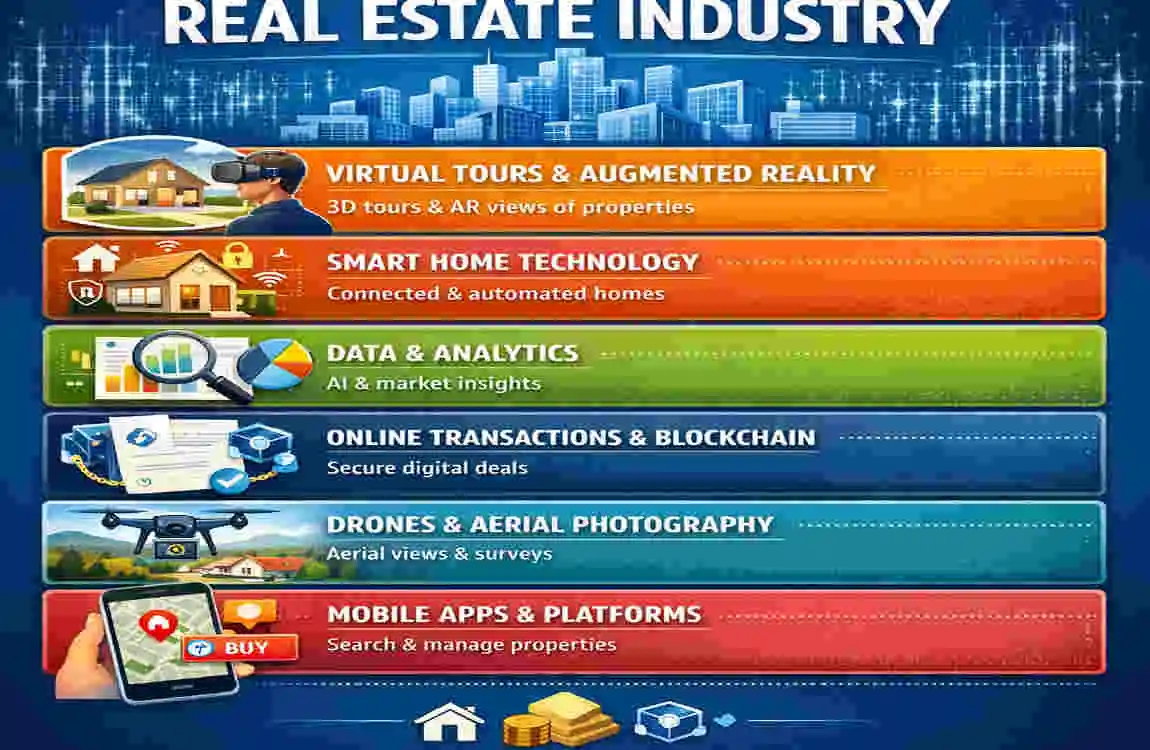
Technology has become one of the biggest forces shaping current real estate trends. It affects almost every part of the process, from home searches to closing documents.
AI and real estate tools
Artificial intelligence now helps buyers find homes faster and helps agents work more efficiently. It can sort listings, suggest matches, and speed up communication.
For property businesses, this means less time spent on manual tasks and more time spent on service. For buyers, it means a smoother search experience. For sellers, it means better exposure and faster responses.
Virtual tours and 3D viewing
Many buyers now expect to view a property online before visiting in person. Virtual tours and 3D walkthroughs make that possible.
This is especially helpful for out-of-town buyers or busy families. They can look around a home, study the layout, and decide whether it is worth a visit. That saves time for everyone.
Smart-home technology
Smart homes are becoming more common in modern property markets. Buyers often like features such as:
- Smart locks
- Video doorbells
- Connected thermostats
- Smart lights
- Remote security systems
These features make homes feel more convenient and more secure. They also add a modern touch that many buyers now expect.
Digital transactions and online platforms
Property deals are also moving online. People can search, compare, message, apply, and sometimes even complete parts of the transaction digitally.
This makes the process faster and easier to manage. It also gives buyers more control because they can review information on their own time.
What technology means for the market
Technology helps buyers decide faster, and it helps sellers reach more people. Agents can work more efficiently, and investors can study markets with better data.
In short, property technology is not just a trend. It is now part of how the industry works every day.
Changing Buyer and Seller Preferences
Buyer behavior is one of the clearest signs of current real estate trends. People are not just looking for a house anymore. They are looking for a lifestyle that fits their daily needs.
Flexible and functional homes
A home now needs to do more than one job. It may be a place to work, relax, exercise, and spend time with family. As a result, flexible layouts are in high demand.
Open spaces, bonus rooms, and multi-use areas all appeal to today’s buyers. People want rooms that can change with their needs.
Energy efficiency and sustainability
More buyers now ask about insulation, windows, heating systems, and utility costs. They want homes that cost less to run and are easier on the environment.
That is why sustainable real estate is getting more attention. Energy-efficient homes often feel more modern and more practical at the same time.
Remote and hybrid work
Work habits have changed a lot. Many people now split time between home and office. That shift has changed where people want to live and how they use their homes.
A dedicated home office has become important for many buyers. So have quiet space, strong internet access, and enough room to work without distractions.
Outdoor living space
Outdoor areas are also more valuable now. Buyers often want patios, gardens, decks, or balconies they can actually use.
Outdoor space adds breathing room. It also makes the home feel bigger and more versatile.
How lifestyle changes affect demand
Real estate demand now follows lifestyle more closely than before. Buyers want homes that support how they live, work, and relax.
That means homes with smart layouts, practical features, and comfortable spaces often stand out faster than homes that only look good on paper.
Housing Market and Investment Trends
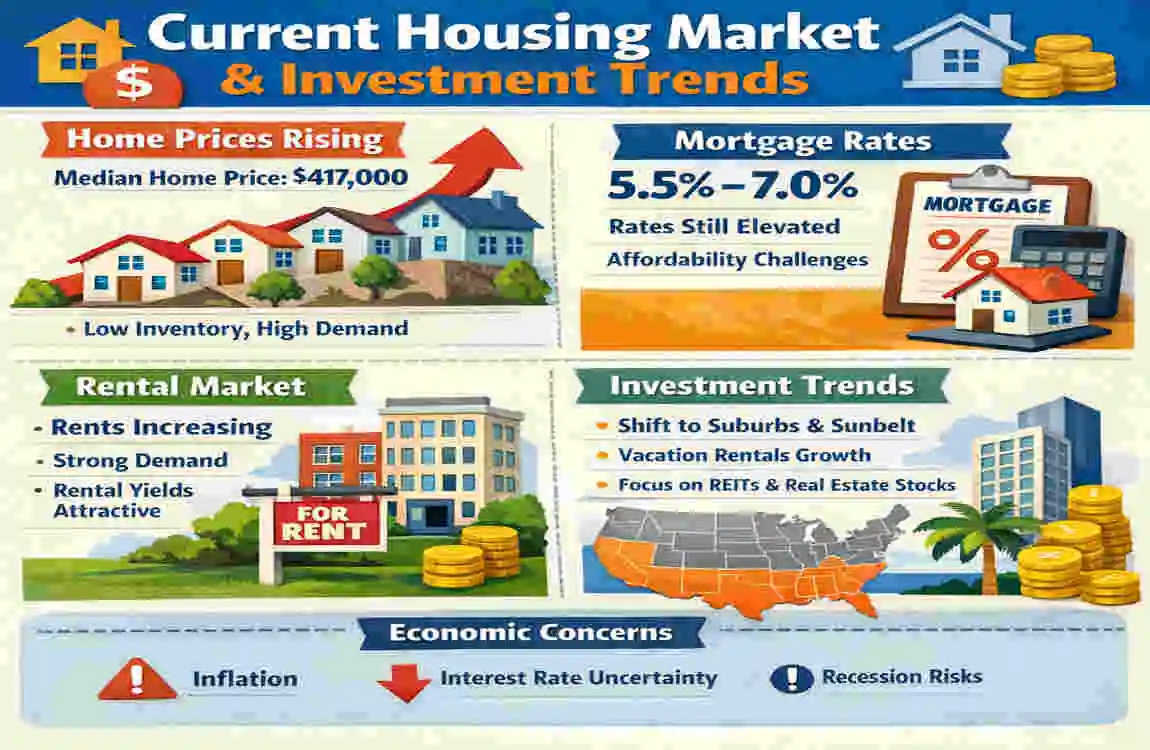
The housing market is always changing, and investors need to watch it carefully. Prices, demand, borrowing costs, and rental patterns all affect the bigger picture.
Home prices and demand
Home prices can rise or slow down depending on supply and demand. When fewer homes are available, prices often stay high. When more homes come onto the market, buyers may have more choices.
This is why local market data matters so much. National trends help, but the real story often depends on the city, neighborhood, or property type.
Mortgage rates and affordability
Mortgage rates strongly affect what buyers can afford. When rates go up, monthly payments rise too. That can reduce buyer demand.
When rates are lower, more people can enter the market. That can push prices higher if supply does not keep up.
Rental market developments
The rental market is also an important part of real estate investment trends. In many areas, renters are staying in the market longer because buying feels too expensive.
That has increased demand for rental homes and apartments in some places. Investors often watch this closely because strong rental demand can support long-term cash flow.
Commercial real estate changes
Commercial real estate is changing too. Offices, retail spaces, and mixed-use properties are all being affected by new work habits and shopping patterns.
Some office spaces are being redesigned to fit hybrid work. Some retail areas are shifting toward mixed-use models. That means commercial investors need to stay flexible.
What investors should monitor
If you are following the market, keep an eye on:
- Interest rates
- Local job growth
- Housing supply
- Rental demand
- Population movement
- Property taxes and costs
These factors can shift a market faster than many people expect.
Quick view of market forces
Trend Area What It Affects Why It Matters
Interest rates Buying power Changes affordability
Housing supply Home prices Impacts competition
Rental demand Investor income Supports cash flow
Technology Marketing and sales Makes transactions easier
Sustainability Buyer interest Increases long-term appeal
Sustainability and Smart Real Estate
Sustainability is now a major part of real estate trends. Buyers and investors are paying more attention to homes that save energy and support a healthier lifestyle.
Energy-efficient design
Homes that use less energy are becoming more appealing. This includes better insulation, efficient heating and cooling, and smart use of natural light.
These features do more than lower utility bills. They also make homes feel more comfortable year-round.
Solar and renewable features
Solar panels are more common in some markets, and many buyers see them as a long-term value feature. Renewable energy systems can lower operating costs and make a property more future-ready.
Not every home needs solar to be attractive. But homes with these features often stand out in competitive markets.
Sustainable building materials
Builders and renovators are also using more sustainable materials. That can include recycled products, lower-impact finishes, and materials that last longer.
Durable materials are important because they reduce waste and lower repair needs over time. That makes them appealing to both homeowners and investors.
Green certifications
Some properties earn green certifications or meet high environmental standards. These homes are often attractive because they suggest lower energy use and better building quality.
For buyers, that can be a strong selling point. For sellers, it can add a marketing advantage.
Smart systems in the home
Smart lighting, smart heating, and smart cooling are becoming more common. These systems help people control comfort more easily and avoid wasting energy.
They also fit well with the broader move toward connected homes. Many buyers now see these features as practical rather than luxurious.
Why this trend matters
Sustainable homes often appeal to modern buyers because they feel smarter, cleaner, and easier to live in. They also tend to hold attention better in future markets, especially if energy costs stay high.
What These Real Estate Trends Mean for the Future
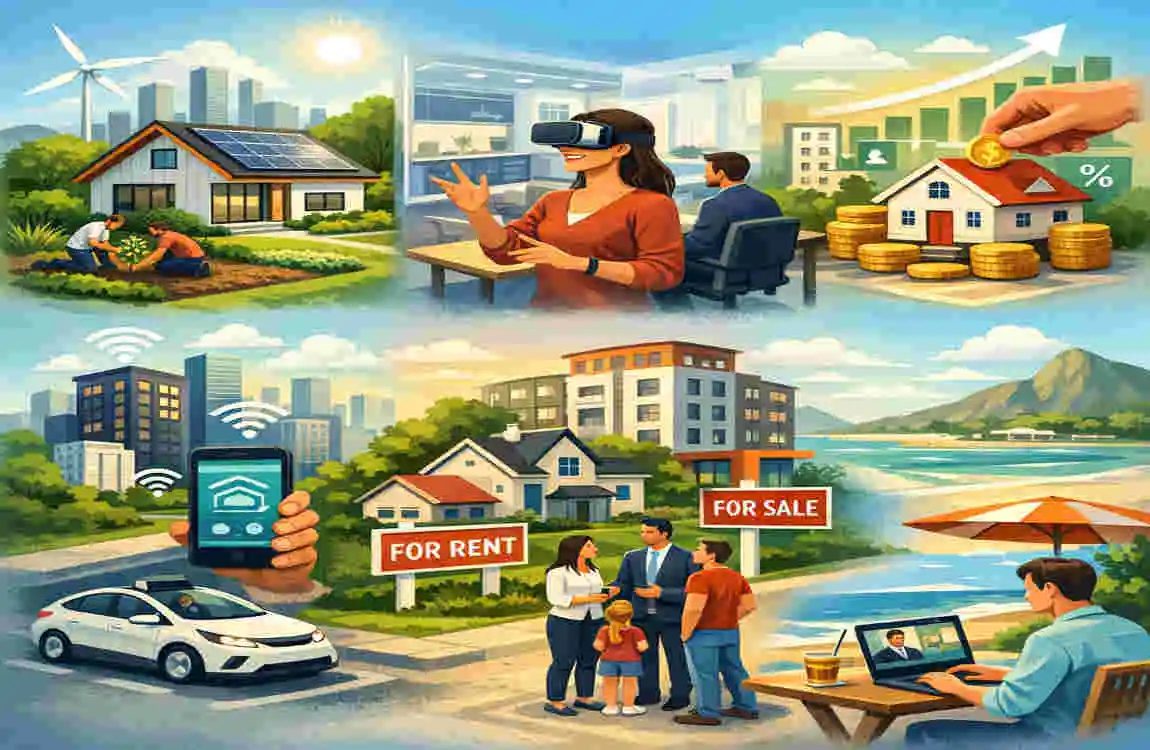
A mix of technology, lifestyle shifts, and affordability concerns will likely shape the future of property. That means buyers, sellers, and investors all need to stay flexible.
Technology will keep growing.
Technology will probably continue changing how properties are shown, marketed, and sold. Expect more digital tools, faster communication, and smarter property data.
That does not mean people will stop wanting personal service. It just means the process will become more efficient.
Residential and commercial spaces will evolve.
Homes may keep becoming more flexible, more efficient, and more connected. Commercial spaces may keep adapting to new work and shopping habits.
This creates both opportunity and pressure. Properties that adapt well may gain value. Those that stay outdated may struggle.
Affordability will remain a big issue.
One thing is clear: affordability will remain one of the biggest real estate topics. Buyers want value, but they also need manageable monthly costs.
That means location, design, and financing will keep mattering.
Investors will need to stay alert.
Real estate investors should watch local trends, not just national headlines. A strong neighborhood can still outperform a weak one, even in a slower market.
Smart investors will keep studying supply, demand, rents, and population shifts. That is how they find opportunities before others do.
How different people can adapt
If you are a buyer, focus on flexibility and long-term value. If you are a seller, highlight the features people want most right now. If you are a landlord, think about efficiency and tenant comfort. If you are an agent, use trend knowledge to guide clients clearly.
FAQ About Current Trends in Real Estate
What are the current trends in real estate?
The main current trends in real estate include technology growth, changing buyer preferences, higher interest in energy-efficient homes, rental demand shifts, and evolving investment patterns.
Is real estate still a good investment?
It can be, depending on the market, financing, location, and property type. Real estate often works best when buyers think long-term and study local conditions carefully.
How is technology changing real estate?
Technology is changing real estate through AI tools, virtual tours, digital transactions, smart homes, and better online property platforms. It is making the market faster and easier to navigate.
What are buyers looking for in homes today?
Many buyers want flexible rooms, home office space, outdoor areas, energy efficiency, and practical layouts that fit everyday life.
Are sustainable homes becoming more popular?
Yes, sustainable real estate is growing in popularity because buyers want lower energy costs, better comfort, and homes that feel more future-ready.
What should real estate investors watch?
Investors should watch interest rates, housing supply, rental demand, local job growth, and changing buyer behavior. These factors can shape returns and risk.
| Real Estate Trend | Short Explanation |
|---|---|
| Smart Homes | Technology-driven homes with automated lighting, security, and energy systems. |
| Sustainable Buildings | Growing demand for energy-efficient and environmentally friendly properties. |
| Remote Work Housing | Buyers increasingly seek homes with dedicated offices and flexible spaces. |
| Urban Redevelopment | Older properties and neighborhoods are being renovated for modern living. |
| Rental Market Growth | Rental properties remain attractive as affordability challenges affect buyers. |
