

If you are a landlord, one of the biggest worries is ending up with a tenant who pays late, causes damage, or breaks the lease. That leads to an important question: are real estate agents liable for bad tenants?
The short answer is not automatically. A real estate agent is not usually responsible just because a tenant later becomes difficult. Liability depends on what the agent agreed to do, how they handled screening, what they told the landlord, and what local law says.
That is why this topic matters. The agent’s role can change from one deal to another. In some cases, the agent only advertises the property and forwards applications. In other cases, the agent also screens tenants, collects rent, handles notices, and manages the property.
Are Real Estate Agents Liable for Bad Tenants?
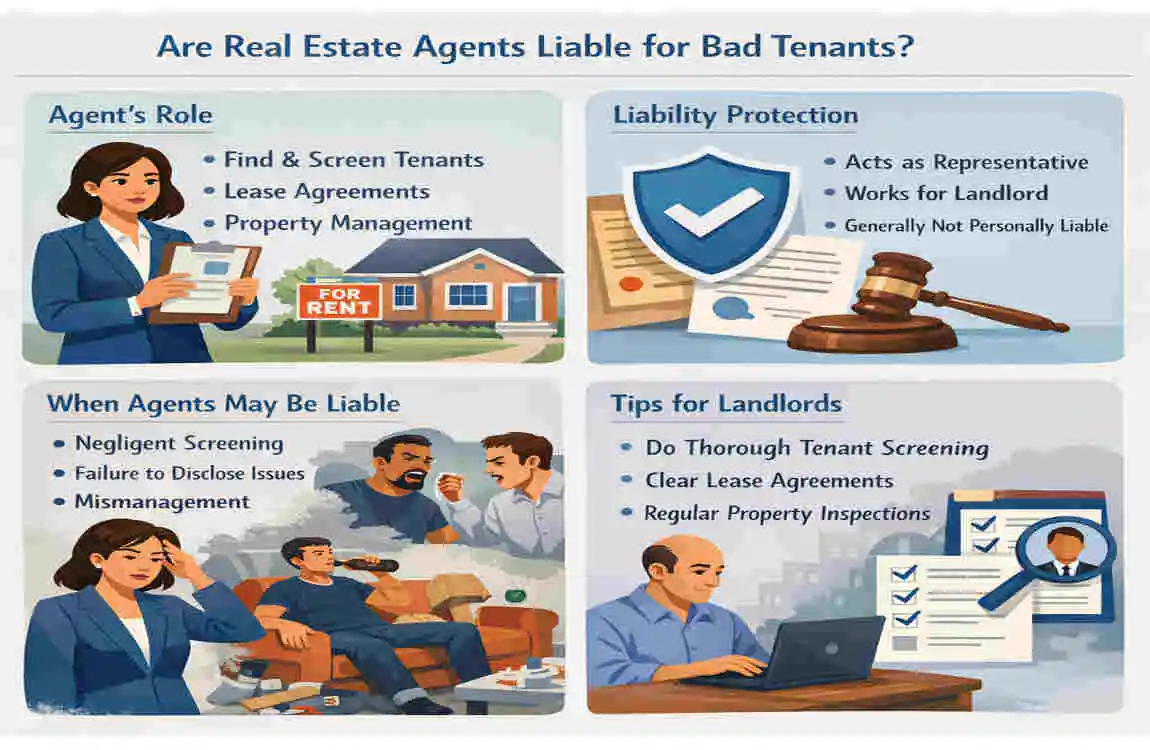
The simple answer
In most cases, no, real estate agents are not automatically liable for bad tenants. A tenant’s bad behavior is usually not the agent’s fault just because the agent helped find that tenant.
Liability becomes a real issue only when the agent fails to do what they promised, acts carelessly, or breaks a law or contract term. That is a much narrower question than “Did the tenant turn out badly?”
Real estate agent, leasing agent, and property manager
These roles sound similar, but they are not always the same.
A real estate agent may help market the rental and connect the landlord with possible tenants. A leasing agent often focuses on filling vacancies and handling applications. A property manager usually has broader responsibilities, such as collecting rent, coordinating maintenance, sending notices, and communicating with tenants.
The more responsibility the agent takes on, the more likely a problem becomes a liability issue.
Why liability is not automatic
A tenant can become a problem even after a careful application process. Someone may look good on paper and still later miss rent, damage the property, or violate the lease.
That is why the law usually does not blame the agent for every bad outcome. Instead, it asks whether the agent did their job properly.
Why the agreement matters
The agency agreement or management contract is often the most important document in this discussion. It should explain what the agent is responsible for, what the landlord is responsible for, and what steps the agent must follow.
If screening, rent collection, or dispute handling were not part of the agreement, the agent may not be responsible for those issues later.
What Responsibilities Does a Real Estate Agent Have?
Finding and presenting tenants
One basic job of many agents is finding potential renters. They may list the property, answer inquiries, and show the home to interested applicants.
This is a service role, not a guarantee role. The agent helps create opportunities, but the landlord usually still makes the final call.
Advertising the property
Agents often prepare rental listings and help present the home fairly and accurately. Good advertising matters because it brings in the right kind of applicants.
If the ad is misleading, that can create a different kind of problem. A landlord may argue that the agent overstated the property‘s features or gave false impressions about the rental.
Handling applications
In many cases, the agent collects applications and organizes documents for the landlord. That can include employment details, rental history, and references.
But collecting applications does not always mean the agent is fully responsible for the final tenant decision. That depends on the contract and local practice.
Screening when agreed
Sometimes the agent does more than collect paperwork. They may also perform or arrange tenant screening. That can include checking rental history, income, references, or credit information where allowed.
If the agent agreed to screen tenants, then they must do that job carefully and honestly.
Communicating with landlords and applicants
Agents also act as the middle point between landlord and applicant. They may share updates, explain requirements, and report whether a tenant appears suitable.
That communication should be clear and accurate. If the agent gives the landlord bad information, the landlord may later claim the agent caused the problem.
How responsibilities vary
The agent’s role can change based on the agreement, the market, and the local legal rules. In some cases, the landlord does most of the screening. In others, the agent handles nearly everything.
That is why you should never assume every agent has the same legal duty.
Can an Agent Be Responsible for Poor Tenant Screening?
What proper screening may include
When screening is part of the agent’s job, it often includes several checks. A solid process may look at:
- Rental history
- Income verification
- Credit information
- References
- Background checks where legally allowed
These checks help reduce risk, but they don’t guarantee a perfect outcome.
What careless screening can look like
Poor screening may happen when an agent rushes the process, skips important checks, or ignores warning signs. For example, they might overlook repeated late payments in a rental history or fail to verify income.
If the agent was supposed to screen carefully and did not, that may create a possible claim later.
Why agents should not promise perfect tenants
A professional agent should never guarantee that a tenant will always pay rent or always behave well. No screening process can predict the future with total certainty.
A good agent can say the process was followed and the applicant met the criteria. They should not promise that the tenant will never cause trouble.
Inaccurate statements about an applicant
If an agent gives the landlord false or misleading information about the tenant, that can become a serious issue. For instance, the agent might say income was verified when it was not, or claim strong references when the references were weak.
That kind of mistake can lead to a dispute if the landlord relied on the statement.
Consumer-report rules may apply.
If the screening process uses consumer reports in the United States, consumer-report laws may apply. That means the party handling those reports must follow the proper legal steps.
The main point is simple: when you use screening tools, handle the process carefully and lawfully.
Screening checklist
- Check rental history
- Verify income
- Review references
- Use allowed background checks
- Keep records of the process
- Avoid making promises you cannot support
When Could a Real Estate Agent Be Liable for a Bad Tenant?
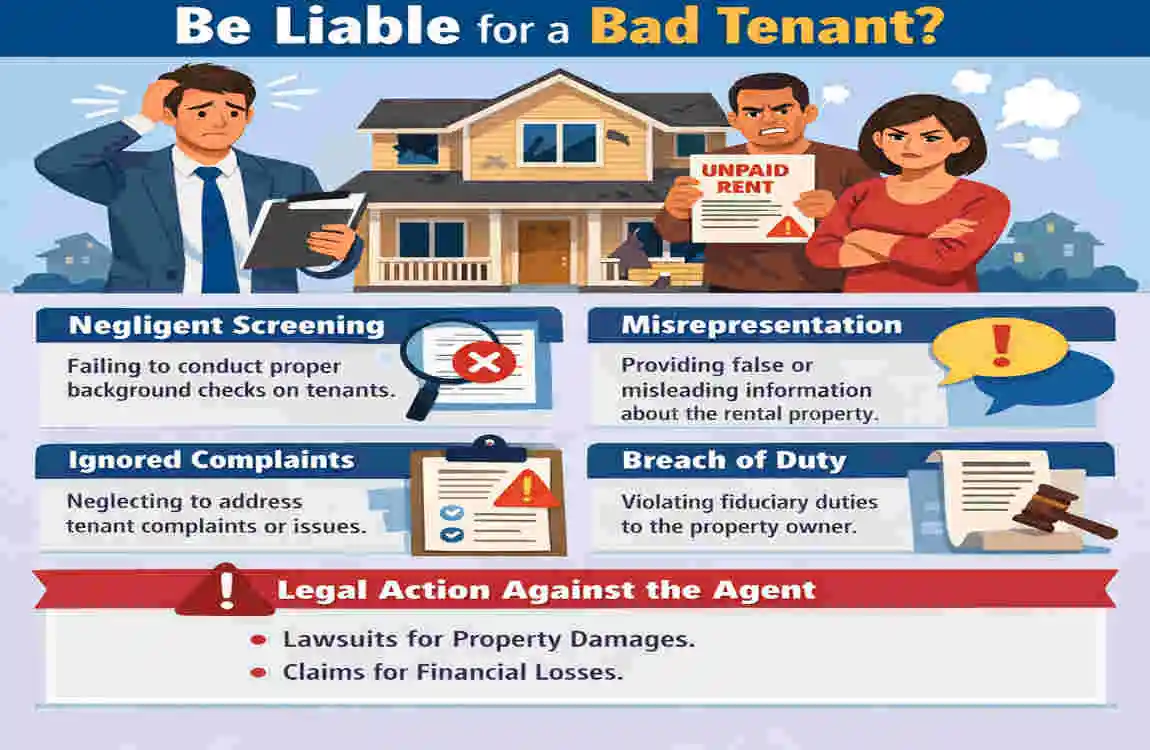
Failed an agreed screening duty
If the agent specifically agreed to screen tenants and then failed to do it properly, that could create liability. The issue is not that the tenant became bad later. The issue is that the agent did not complete the task they promised.
Ignored important information
If the agent had access to warning signs and ignored them, the landlord may claim negligence. For example, suppose the applicant had obvious rental issues that the agent was required to check but did not.
That could support a claim if the landlord suffered financial loss because of that failure.
Made false or misleading statements
If the agent made untrue statements and the landlord relied on them, that can become a problem. This matters most when the false statement helped the landlord choose the tenant.
Violated housing or rental laws
An agent may also face liability if they broke local rental rules or housing laws during screening, advertising, or management. This can include mishandling applications, using illegal screening practices, or violating fair housing requirements.
Failed property-management duties
If the agent was also the property manager and failed to carry out agreed duties like notices, rent collection, or inspection follow-up, liability may arise. Again, the key question is whether they were responsible for that task in the first place.
Duty, breach, and damages
To make a claim, you usually need proof of duty, breach, and resulting damages.
- Duty: the agent had a responsibility
- Breach: the agent did not meet that responsibility
- Damages: the landlord lost money or suffered harm
Without all three, a claim is much harder to prove.
Simple example
Imagine an agent agreed in writing to verify income and rental references. They skipped those checks, approved a weak applicant, and the tenant stopped paying rent soon after moving in.
In that case, the landlord might argue the agent’s negligence helped cause the loss. That does not guarantee liability, but it may create a stronger claim than a normal “bad tenant” situation.
When Is the Landlord Usually Responsible?
The landlord is the property owner.
The landlord usually remains the person with the biggest legal responsibility because they own the property and make the final tenancy decision. Even when an agent helps, the landlord often still approves the applicant.
That means tenant problems do not automatically shift blame to the agent.
Bad tenant behavior is not the same as agent fault.
A tenant may stop paying rent, damage the property, disturb neighbors, or break lease rules. None of those actions automatically mean the agent did something wrong.
The tenant is usually responsible for the misconduct. The landlord may need to take enforcement action, even if the agent helped place the tenant.
Common tenant problems
Some of the issues landlords often deal with include:
- Unpaid rent
- Property damage
- Noise complaints
- Lease violations
- Neighbor disputes
- Unauthorized occupants
These problems can be frustrating, but they do not by themselves prove agent liability.
Decisions after the application
In many cases, the landlord reviews the application materials and makes the final choice. If the landlord approved the tenant after reviewing the information, they may still bear primary responsibility for that decision.
Why jurisdiction and agreements matter
Local laws can change the answer. So can the management agreement. A landlord in one place may get a very different result than a landlord in another.
That is why the facts of each case matter so much.
Situation Usually Responsible Party Why
Tenant stops paying rent Landlord, sometimes property manager if rent collection was their duty The lease is usually between landlord and tenant.
Agent skipped agreed screening Agent may share responsibility The agent may have breached a duty.
Tenant damages property Tenant first, then landlord enforcement The damage is the tenant’s conduct, not automatically the agent’s fault.
Agent gave false applicant info Agent may face liability Landlord relied on inaccurate information.
Lease violation after move-in Usually landlord, unless agent had management duties Ongoing enforcement depends on the agreement
How Landlords Can Reduce Problems With Bad Tenants
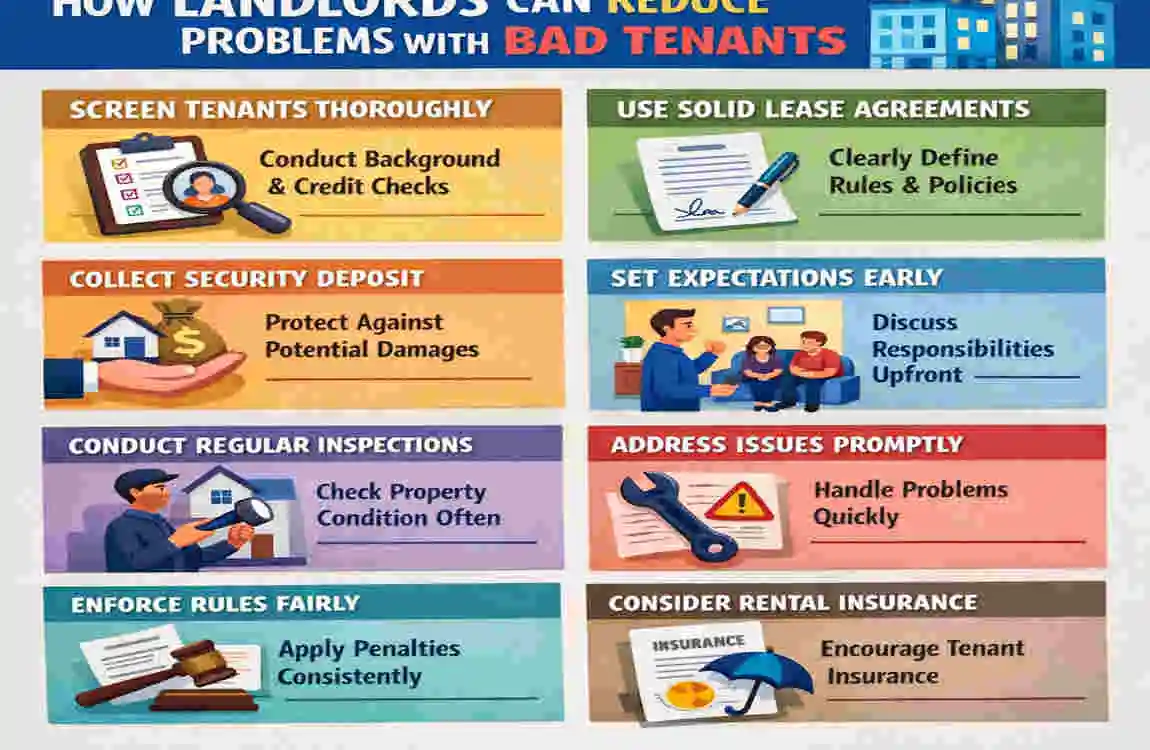
Use clear tenant-selection criteria.
The best way to reduce risk is to decide in advance what makes an applicant acceptable. That may include income standards, rental history, and reference requirements.
When the rules are clear, the process becomes more consistent and easier to defend.
Put responsibilities in writing.
Don’t leave the agent’s role vague. Write down who handles advertising, applications, screening, notices, rent collection, and disputes.
A clear agreement helps prevent confusion later.
Keep screening records
Keep copies of applications, notes, screening reports, references, and approval decisions. Good records can protect you if a dispute comes up later.
Documentation is one of the simplest and strongest forms of protection.
Use the same process for every applicant.
A consistent screening process helps reduce bias and mistakes. It also makes your decisions easier to explain if challenged.
If one applicant gets extra checks while another does not, that can create problems.
Inspect the property when allowed.
Regular inspections can help catch lease issues early. If the property shows signs of misuse or neglect, the landlord can respond sooner.
Early action often prevents bigger damage later.
Respond quickly to violations.
If a tenant breaks the lease, do not wait too long to act. Delayed responses can make problems worse.
Follow local law and use the proper notice process before taking enforcement steps.
Define who handles what
Make sure everyone knows who deals with rent collection, repairs, notices, and tenant complaints. Confusion about responsibilities often leads to mistakes.
Review local laws before acting.
Landlord-tenant rules vary widely. Before you issue notices or take enforcement action, check the local requirements first.
That helps reduce legal mistakes and keeps the process fair.
Landlord protection tips
- Use written criteria
- Store screening records
- Assign duties clearly
- Inspect regularly when allowed
- Act quickly on violations
- Follow local law before enforcement
FAQ
Are real estate agents liable for bad tenants?
Not automatically. An agent is usually only liable if they failed to do a duty they agreed to perform, acted carelessly, or broke the law.
Can a landlord sue a real estate agent for a bad tenant?
Yes, in some situations. A claim may exist if the landlord believes the agent was negligent, gave false information, or failed to complete an agreed task.
Is a property manager responsible for tenant damage?
It depends on the management agreement and local law. If the property manager had a duty to inspect, enforce the lease, or respond to damage, responsibility may be shared.
What happens if an agent fails to screen a tenant properly?
The landlord may face legal or financial consequences if it can show the agent was supposed to screen carefully and did not. The result depends on the contract and the facts.
Who is responsible when a tenant stops paying rent?
Usually, the tenant is responsible for paying rent, and the landlord is responsible for enforcing the lease. If the agent was hired to collect rent, they may also have a role.
Can a real estate agent guarantee a tenant will be good?
No. A professional agent should not guarantee future tenant behavior because no screening process can promise that.
How can landlords protect themselves from bad tenants?
Use written screening rules, document every decision, keep records, inspect when allowed, and define the agent’s responsibilities clearly in the contract.
| Responsibility | What the Agent Does |
|---|---|
| Tenant Screening | Helps verify applicants and rental history. |
| Lease Compliance | Monitors basic lease violations and reports issues. |
| Communication | Communicates concerns between landlord and tenant. |
| Rent Issues | May assist with late-payment notices or landlord follow-up. |
| Property Damage | Documents reported damage and informs the property owner. |
| Noise Complaints | Helps address repeated complaints according to the lease. |
| Eviction Process | Coordinates with the landlord and legal professionals when needed. |
