
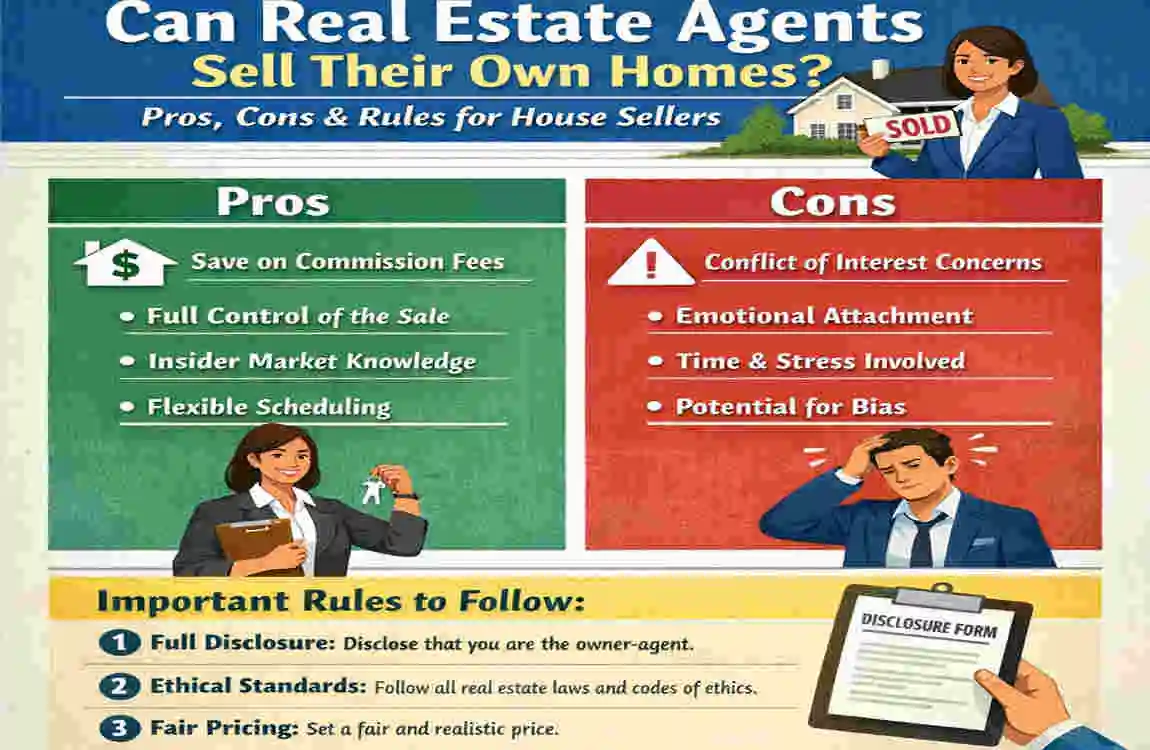
If you are a licensed real estate professional, you already know the ins and outs of the housing market. You know how to stage a living room, how to negotiate a tough inspection, and how to close a deal. So, when it comes time to pack up and move your own family, handing over a hefty commission to another agent might feel incredibly frustrating.
With housing costs continuing to rise in 2026, taking the “For Sale By Owner” (FSBO) route is becoming increasingly appealing for licensed agents. You might be thinking about the massive savings on agent commissions you could keep in your own pocket. But you might also be sweating over potential legal headaches or wondering whether you can truly be objective about your own property.
The short answer is yes! You can absolutely take charge of your property sale. However, you must navigate strict ethical guidelines, legal disclosures, and emotional hurdles to succeed.
| Aspect | Details | Requirements/Risks |
|---|---|---|
| Legality | Yes, licensed agents can sell personally owned homes in most states. | Disclose ownership and license status in writing to all buyers/public. |
| Disclosure | Must note “agent-owned” in listings, ads, and contracts. | NAR Code of Ethics mandates this; failure risks lawsuits/ethics violations. |
| Commissions | No listing commission owed to self; pay buyer’s agent (2.5-3%) if applicable. | FSBO saves full listing fee (~3%), but negotiate buyer agent split. |
| MLS Listing | Allowed via brokerage; mark as “owner/agent.” | Broker approval needed; some policies restrict due to E&O insurance risks. |
| Dual Agency | Possible if buyer unrepresented, but often restricted (e.g., CO, FL). | Written consent required; avoids conflicts of interest. |
| Broker Role | Inform broker first; may need their oversight for paperwork/showings. | Varies by brokerage—some prohibit self-sales. |
The Legality Basics: Playing by the Rules

Let us address the most pressing question right out of the gate. Yes, agents can legally sell their personal properties as a For Sale By Owner (FSBO). But—and this is a massive but—you cannot simply stick a sign in your yard and pretend you are an average, everyday homeowner.
Because you hold a real estate license, the law holds you to a much higher standard. You possess insider knowledge, which means you have an unfair advantage over an unrepresented buyer. To level the playing field, transparency is your best friend.
The Golden Rule: Mandatory Disclosure
If you want to know whether a real estate agent can sell their own home, the answer depends heavily on your willingness to disclose your status. You must tell everyone involved that you are a licensed real estate agent.
This is not a detail you can casually mention at the closing table. You need to declare your licensed status in your marketing materials, on the Multiple Listing Service (MLS), and in writing on the very first draft of the purchase agreement. If you fail to do this, you could face severe fines, lawsuits, or even the loss of your real estate license. Buyers need to know they are negotiating with a trained professional.
Navigating Dual Agency Rules
When you sell your own house, you act as the seller. If an unrepresented buyer walks into your open house and wants to make an offer, you might find yourself in a tricky situation known as dual agency.
Dual agency rules dictate what happens when one agent represents both the buyer and the seller in the same transaction. When you are the seller, representing the buyer creates a massive conflict of interest. How can you negotiate the best price for the buyer when you want the highest price for yourself?
Because of this conflict, several states have strictly banned dual agency altogether. States like Colorado and Florida have severe restrictions or outright bans on this practice. In states where it is legal, you must get written consent from the buyer acknowledging that you are looking out for your own best interests as the seller.
MLS Access for Owner/Agents
As an agent, you have the magic key: access to the MLS. This is a huge advantage. You can list your home personally, bypassing the need to pay a listing agent. However, MLS boards have strict formatting rules.
When you enter your property details, you must check the box or add a disclaimer that clearly states the property is “owner/agent”- owned. This alerts buyer’s agents that they will be dealing directly with a fellow real estate professional.
State-by-State Disclosure Rules
Real estate laws vary wildly depending on where you live. Here is a quick look at how different states handle agents selling their own homes.
StateRule for Agents Selling Their Own Home Disclosure Requirement
California Allowed. Dual agency is permitted but highly scrutinised. Full written disclosure is required immediately upon first serious contact.
Texas Allowed. Cannot act as an intermediary for yourself. Must disclose licensed status in writing before entering into any contract.
Colorado Allowed. Dual agency is strictly illegal. Must treat unrepresented buyers as customers, not clients—full disclosure required.
Florida Allowed. Transaction broker rules apply. Must disclose your licensed status in all advertising and contracts.
New York Allowed. Dual agency requires advanced informed consent. Must provide a specific disclosure form at the first substantive contact.
Steps to Stay Legally Compliant
To make sure your license stays safe and your sale goes smoothly, always follow these basic compliance steps:
- Update all marketing: Add “Owner is a licensed real estate agent” to your flyers, social media posts, and yard signs.
- Update the MLS: Check the appropriate “Owner/Agent” boxes in your local MLS portal.
- Put it in the contract: Write your disclosure directly into the purchase agreement.
- Consult your broker: Always loop in your managing broker. They might have specific brokerage policies regarding personal transactions.
Key Pros of Agents Selling Their Own Homes
Now that we have the legal warnings out of the way, let us talk about the fun part: the benefits! If you are wondering, “Can realtors sell their house without a listing agent?” you will be thrilled to know that doing so comes with some massive perks.
You are not an average homeowner trying to figure out how a lockbox works. You are a trained pro, and you can leverage FSBO for agents into a highly profitable endeavour.
Keep Your Hard-Earned Money: Agent Commission Savings
The absolute biggest draw to selling your own home is the money you will save. In a traditional real estate transaction, the seller pays roughly 5% to 6% of the home’s final sale price in agent commissions. This is usually split evenly between the listing agent and the buyer’s agent.
If you sell your own home, you act as the listing agent. This means you instantly save that 2.5% to 3% listing side commission.
Let us look at the math. If you are selling a $500,000 home, a 3% listing commission equals $15,000. By doing the work yourself, you get to keep that $15,000 in your family’s bank account. You will still need to offer a competitive percentage to the buyer’s agent to entice them to show your home, but saving half the total commission is a massive financial win.
Pro-Level Marketing Expertise
Civilian FSBO sellers often struggle because their marketing falls flat. They take dark, blurry photos with their smartphones and write dull property descriptions.
You, on the other hand, know exactly what makes buyers click. You already have a network of professional real estate photographers. You know how to arrange for stunning drone shots, immersive virtual tours, and beautiful twilight photography. You understand how to stage a room to make it look spacious and inviting. Because you can deploy this pro-level marketing without a learning curve, your home will look just as polished as any other top-tier listing on the market.
Masterful Negotiation Skills
When an average homeowner gets a lowball offer, they often take it personally. They get offended and push the buyer away.
As a real estate agent, you negotiate contracts for a living. You know how to remove your ego from the table. You know how to counter-offer effectively, how to ask for appraisal gaps, and how to structure repair credits to keep the deal from falling apart. Your ability to negotiate fiercely but professionally ensures you will get top dollar for your property.
A Built-In Network for Faster Sales
You don’t just have marketing skills; you have a Rolodex full of eager buyers and fellow agents. When you decide to sell, you can easily blast a “Coming Soon” email to your brokerage. You can post it in private agent Facebook groups.
Because of this insider network, agents who sell their own homes often experience incredibly fast sales.
- Agents using FSBO sell 10-20% faster than the average market pace, according to industry trends.
- Real example: Consider an agent who lists their $400,000 home. Because they pitched it at their Tuesday morning office meeting, a colleague brought a buyer the very next day. They sold the home in two weeks, compared to the local market average of 45 days!
Quick Breakdown: The Pros of Being Your Own Agent
ProBenefit for Agents
Commission Savings: Pocket the listing-side fee (save thousands of dollars).
Insider Pricing You know how to pull accurate comps for maximum value.
Staging/Marketing: You provide a pro-level presentation without the extra learning curve.
Direct Communication: Cut out the middleman and negotiate directly with the buyer’s agent.
Major Cons and Risks: The Flip Side of the Coin
While the perks are fantastic, we need to be realistic. Asking if a real estate agent can sell their own home means looking at the dark side of the process, too. There are distinct reasons why some top-producing agents still choose to hire another agent to sell their personal houses.
Let us break down the downsides so you can make an informed choice.
The Conflict of Interest and Buyer Distrust
Buyers are naturally cautious. When they find out the seller is a licensed real estate agent, their guard often goes up. They might feel like they are at a disadvantage, worrying that you will use your industry knowledge to outsmart them.
This distrust can make negotiations tense. Buyers might view your perfectly fair counteroffer as a sneaky “agent trick.” Overcoming this scepticism requires a lot of patience, total transparency, and a very gentle, accommodating approach.
The Massive Time Drain
You already work a demanding job. You spend your weekends hosting open houses for your clients and your evenings writing up contracts. Do you really have the time to do all of that for your own house, too?
When you act as your own agent, you have to handle every single showing, answer every phone call from curious buyers, and manage all the paperwork solo. Balancing your regular client load with the heavy lifting of selling your own home can quickly lead to severe burnout.
Emotional Bias Leads to Overpricing
This is the biggest trap for agents selling their own homes. When you pull comparative market analysis (CMA) reports for your clients, you are objective. You look at the cold, hard data.
But when you pull comps for your own house? Suddenly, you remember how much money you spent on that custom patio. You remember the blood, sweat, and tears you poured into painting the kitchen cabinets. Emotional bias creeps in, leading you to overprice your home.
If a home is overpriced, it sits on the market. It gets stale. Ironically, agents who mishandle their own sales often end up selling for 5-10% below market value because they refused to price it objectively from day one.
Lack of Buyer’s Agent Cooperation
If you decide to go with a pure FSBO and keep your home off the MLS to save on fees, you will face an uphill battle. Buyer’s agents rely on the MLS to find homes for their clients. If your home isn’t listed properly, or if you offer a stingy buyer’s agent commission, other agents will skip your house and take their clients elsewhere.
Legal Risks and Lawsuits
We touched on this earlier, but it bears repeating: your legal risk is much higher than that of an average seller. If you forget to disclose a leaky roof or a quirky property line issue, a buyer will not just sue you as a homeowner; they will accuse you of professional malpractice.
- A common pitfall: “I thought the buyer’s inspector would catch the ageing HVAC system, so I didn’t explicitly mention it. The buyer sued me for non-disclosure, and I lost $20,000 in legal fees, plus a strike on my license.”
FSBO Agent vs Hiring an External Agent
Use this table to weigh your options honestly before making a final decision.
Aspect Self-FSBO (You Act as Agent)Hire an External Colleague
Cost Low (You save the listing fee). High (You pay the full 5-6% commission).
Time Investment Very High (You do all the work). Low (They handle the marketing and calls).
Sale Price Risk Medium (Emotional bias might cause overpricing). Low (They provide objective pricing).
Stress Level: High (juggling clients and home). Low (You can relax and be the seller).
Step-by-Step Rules for Success
So, you have weighed the pros and cons and decided to take the plunge. You are confident and ready to act as a “house seller” for your own property.
To protect your license and maximise your profits, follow this actionable, step-by-step guide.
Disclose Your Status Immediately
Do not wait until a buyer is emotionally attached to drop the news. Add your disclosure to the public remarks of your listing. Write something simple but clear, like: “Seller is a licensed real estate agent in the state of [Your State].” Ensure this phrasing is on your yard sign rider, printed on your open house flyers, and clearly stated in all digital advertisements.
Choose Your Listing Strategy (MLS vs Pure FSBO)
You need to decide how you will get your home in front of buyers.
- The MLS Route: As an agent, you can usually list your home on your local MLS. Some brokerages may charge you a small transaction fee to do this. Alternatively, you can use a flat-fee MLS service ($300-$500) if you want to keep the listing separate from your brokerage.
- Pure FSBO: You can try to sell it entirely off-market through social media and word of mouth, but you will miss out on the massive syndication the MLS provides.
Price Objectively via a Blind CMA
Do not trust your own gut when pricing your home. Instead, ask a trusted colleague in your office to run a Comparative Market Analysis (CMA) for you. Ask them to be brutally honest. Look at the data as if it were a stranger’s house. If the comps say your house is worth $450,000, do not list it for $480,000 just because you love your landscaping. Price it right to incite a bidding war.
Market Like a Professional
Use all the tools at your disposal.
- Hire your favourite professional photographer.
- Get a 3D Matterport tour created.
- Syndicate your listing to major portals like Zillow and Realtor.com (which happens automatically if you use the MLS).
- Run targeted Facebook and Instagram ads highlighting the best features of your home.
Handle Offers with E-Sign Tools
When the offers start rolling in, keep everything strictly professional. Use your standard state-approved association forms. Use e-signature tools like DocuSign or Dotloop to manage paperwork efficiently. Keep a meticulous paper trail of all communications, counter-offers, and addenda. Remember, you are legally liable for this paperwork, so do not take shortcuts just because it is your own house.
Close with a Neutral Third Party
Do not try to handle the closing funds or escrow yourself. Always use a reputable title company or a specialised real estate attorney to handle the closing process. They will ensure the title is clear, the funds are distributed correctly, and all legal disclosures are filed with the county. Having a neutral third party handle the actual transaction protects you from claims of foul play.
Market Trends: Why Agent-FSBO is Booming
You might be asking, ” Can a real estate agent sell their own home better today than they could five years ago? Absolutely. The 2026 housing market has created a unique environment that strongly favours real estate professionals taking the reins of their own properties.
With mortgage interest rates hovering around 6% to 7%, buyer affordability is incredibly tight. Buyers are looking for deals, and sellers are seeking ways to maximise their net proceeds. Because traditional homeowners are feeling the pinch, the idea of paying a full 6% commission is daunting.
As an agent, you have a distinct advantage in this high-rate environment. You can use your agent commission savings to offer concessions to the buyer. For example, you can use the 3% you saved on listing fees to buy down the buyer’s interest rate. This makes your home much more attractive to struggling buyers, helping it sell faster.
Furthermore, 2026 is the year of advanced real estate tech. You now have access to AI-driven pricing models that remove human emotional bias from the equation. You can use AI to write incredibly engaging property descriptions in seconds. High-definition drone tours and virtual staging software are cheaper and more accessible than ever.
Because agents are already familiar with this cutting-edge technology, they are perfectly positioned to out-market standard FSBO sellers. In fact, industry forecasts predict a 20% increase in agent-FSBO transactions in 2026, simply because agents have the tools and the financial incentive to do it themselves.
Frequently Asked Questions (FAQ)
Still have some lingering doubts? Let us tackle some of the most common questions agents and buyers have about this process.
Can a real estate agent sell their own home without a license?
Yes, absolutely. As long as you strictly follow your state’s disclosure laws and clearly communicate your licensed status in all marketing and contractual paperwork, your license is perfectly safe. The issues only arise when agents try to hide their profession to gain a negotiating advantage.
Do agents pay commission on their own sales?
It depends on how you structure it. You do not have to pay yourself a listing commission. However, if another real estate agent represents a buyer, you will still need to pay the buyer’s agent commission (usually around 2.5% to 3%) to compensate them for bringing a qualified buyer to your door.
Is dual agency legal for my home sale?
This is highly dependent on your state. In states like Colorado and Florida, dual agency is entirely illegal. In states where it is allowed (like California), it is generally frowned upon when you are the seller, as the conflict of interest is too great. It is usually much safer to treat unrepresented buyers as “customers” rather than “clients,” meaning you do not represent their legal interests.
How much do agents save using FSBO?
Agents typically save the entire listing side of the commission, which averages 2.5% to 3% of the home’s total sale price. On a home priced at $400,000, an agent can easily save $10,000 to $12,000 by acting as their own listing representative.
What is the FSBO success rate for licensed agents?
While average civilian FSBOs often fail or sell for less than market value, agent-led FSBOs have a massive success rate. Because agents have MLS access, pricing expertise, and professional marketing tools, their success rate mirrors that of traditionally listed homes.
What are the best states for agent self-sales?
States with straightforward disclosure laws and no complex dual-agency traps are generally the easiest. Texas, for example, allows agents to sell their own homes, provided they do not act as intermediaries and disclose their status upfront.
What are the biggest mistakes to avoid as an agent seller?
The three biggest mistakes are: overpricing due to emotional attachment, failing to disclose your licensed status in writing, and skimping on buyer’s agent commissions. If you price it right, disclose your license, and pay the buyer’s agent fairly, your sale will be incredibly smooth.
