
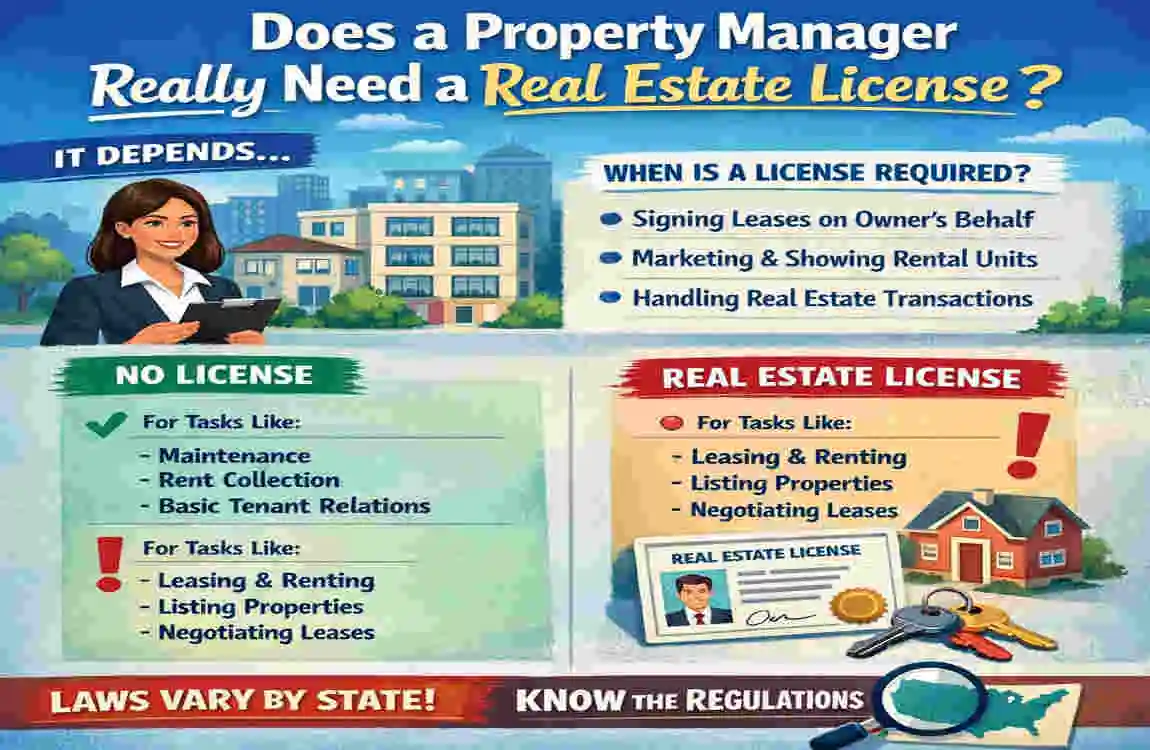
https://goldshinehome.com/what-does-ccr-stand-for-in-real-estate/Imagine this: You’ve just started your journey as a property manager. You’re handling leases, collecting rent, and managing tenant complaints. Everything seems to be going smoothly—until you receive a hefty fine for operating without the proper license. This scenario is more common than you might think, and it raises an important question: Does a property manager need a real estate license?
The answer isn’t as straightforward as you might hope. There’s no universal rule that applies across the board. Licensing requirements for property managers vary widely depending on the state you’re in and the specific tasks you perform. For example, leasing properties or managing trust accounts often requires a license in most states, while other duties might not.
| State Category | License Needed? | Key Examples | Common Tasks Requiring License |
|---|---|---|---|
| Broker Required | Yes | CA, TX, FL, NY, OH | Leasing, rent collection, advertising rentals |
| Property Manager License | Yes (specific) | OR, MT, SC, NV | Standalone PM credential or under broker |
| No License (exemptions) | Often No | ID, KS (residential), own properties | Maintenance only, on-site employee for owner |
Licensing Basics
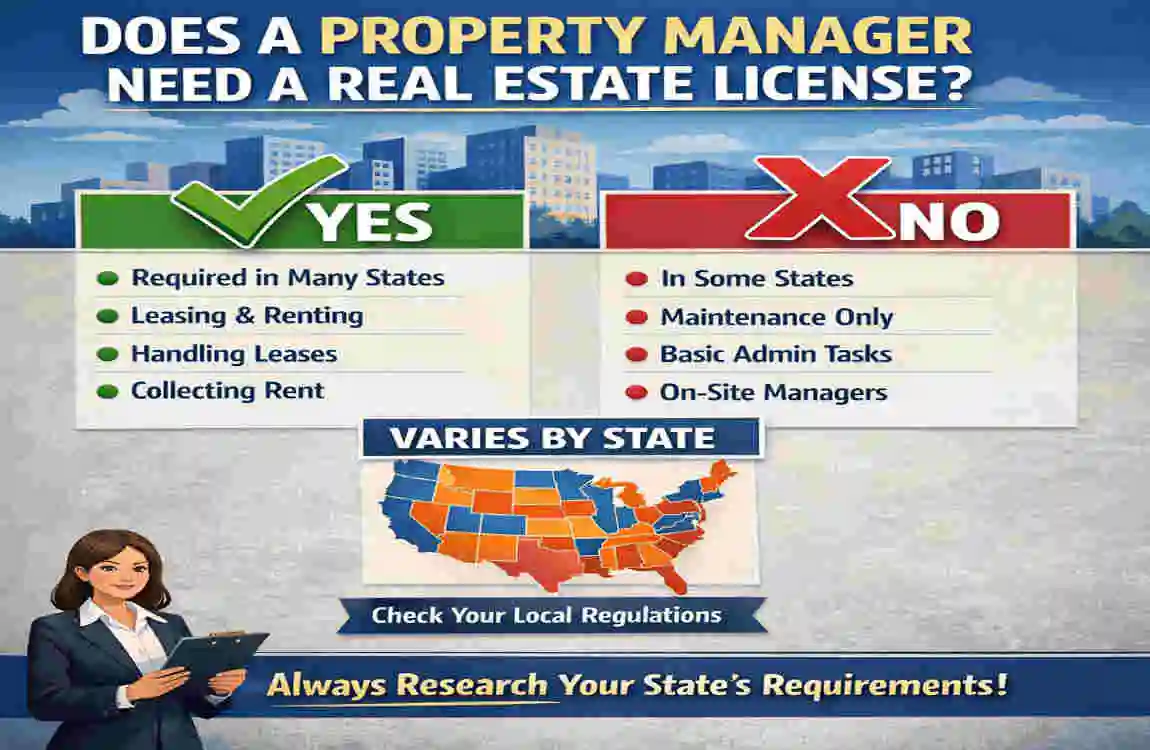
Before diving into state-specific requirements, let’s cover the basics. Licensing for property managers generally falls into three categories:
- Real Estate Salesperson License: The most basic level of licensure. It allows individuals to perform limited property management tasks, typically under the supervision of a licensed broker.
- Real Estate Broker License: This advanced license permits full property management duties, including leasing, negotiating, and managing trust accounts.
- Property Manager-Specific License: Some states, like Oregon and Montana, offer licenses specifically for property managers.
Here’s a quick overview in table form for clarity:
License Type: Allows Property Management? Examples
Salesperson Limited, under the broker Leasing, showings
Broker Full duties , Most states
Property Manager License : Specific states only Oregon, Montana
Who Regulates Licensing?
Licensing is primarily regulated at the state level through real estate commissions. While federal laws set overarching guidelines, the specifics—like education requirements and exam content—are determined by individual states.
State-by-State Requirements
Licensing requirements for property managers vary significantly across the United States. Let’s break it down into three main categories:
States Requiring a Broker License
In states like California, Texas, Florida, and New York, property managers must hold a real estate broker’s license to perform core duties such as leasing and negotiating. This is because these tasks are considered real estate transactions, which fall under the purview of brokers.
States Requiring a Property Manager License
Some states, such as Oregon, Montana, and South Carolina, have specific licenses for property managers. These licenses are tailored to the unique responsibilities of property management, including tenant relations and property maintenance.
States with No Licensing Requirements
In states like Idaho, Maine, and Vermont, property managers are not required to hold any license for basic management tasks. However, leasing or negotiating may still trigger licensing requirements.
Here’s a detailed table summarizing these categories:
CategoryStatesKey Rule
Broker Required FL, CA, TX, NY Leases trigger license
PM License OR, MT, SC Standalone credential
None ID, ME, VT Owner-direct exempt
Example: Florida
In Florida, property managers must hold a broker license if they earn commissions for leasing properties. Operating without a license can result in severe penalties, including fines and legal action.
Example: Oregon
Oregon offers a property manager-specific license, which allows individuals to manage properties without becoming a broker. However, this license still requires pre-licensing education and passing an exam.
Pros and Cons of Getting Licensed
Obtaining a property manager license comes with its own set of advantages and disadvantages. Let’s explore both sides:
Benefits
- Credibility: A license enhances your professional reputation, making you more trustworthy to property owners and tenants.
- Legal Protection: Operating without a license in states that require one can result in fines of up to $10,000.
- Access to Tools: Licensed property managers can access the Multiple Listing Service (MLS) and other industry tools.
- Higher Earnings: Certified property managers often earn 20% more than their unlicensed counterparts.
Drawbacks
- Time Commitment: Pre-licensing courses can take 60-90 hours to complete.
- Cost: Licensing fees, exam costs, and continuing education can add up to $500-$2,000.
- Not Always Necessary: In-house property managers or those managing their own properties may not need a license.
Here’s a quick list summarizing the pros and cons:
Pros
- Legal compliance avoids fines.
- Builds trust with clients.
- Opens doors to higher-paying opportunities.
Cons
- Time-consuming process.
- High upfront and ongoing costs.
- Risk of failing the licensing exam.
When You Don’t Need a License
There are situations where property managers can operate without a license. These exemptions typically include:
- Managing Your Own Properties: If you own the properties you manage, most states don’t require a license.
- On-Site Employees: On-site managers who are employed directly by property owners are often exempt.
- Non-Leasing Tasks: Duties like maintenance and tenant communication usually don’t require a license.
However, it’s important to note that unlicensed leasing or negotiating can lead to legal trouble in states with strict regulations, like Florida.
How to Get Licensed
If you’ve decided to pursue a license, here’s a step-by-step guide:
- Complete Pre-Licensing Education: Most states require 60-90 hours of coursework, which can often be completed online.
- Pass the Licensing Exam: Exams typically cover real estate laws, ethics, and property management practices.
- Undergo a Background Check: A clean criminal record is usually required.
- Affiliate with a Broker: In many states, you’ll need to work under a licensed broker to activate your license.
Costs and Timelines
The cost of getting licensed varies by state but generally ranges from $500 to $2,000. The process can take anywhere from a few weeks to several months, depending on your state’s requirements.
Business Implications
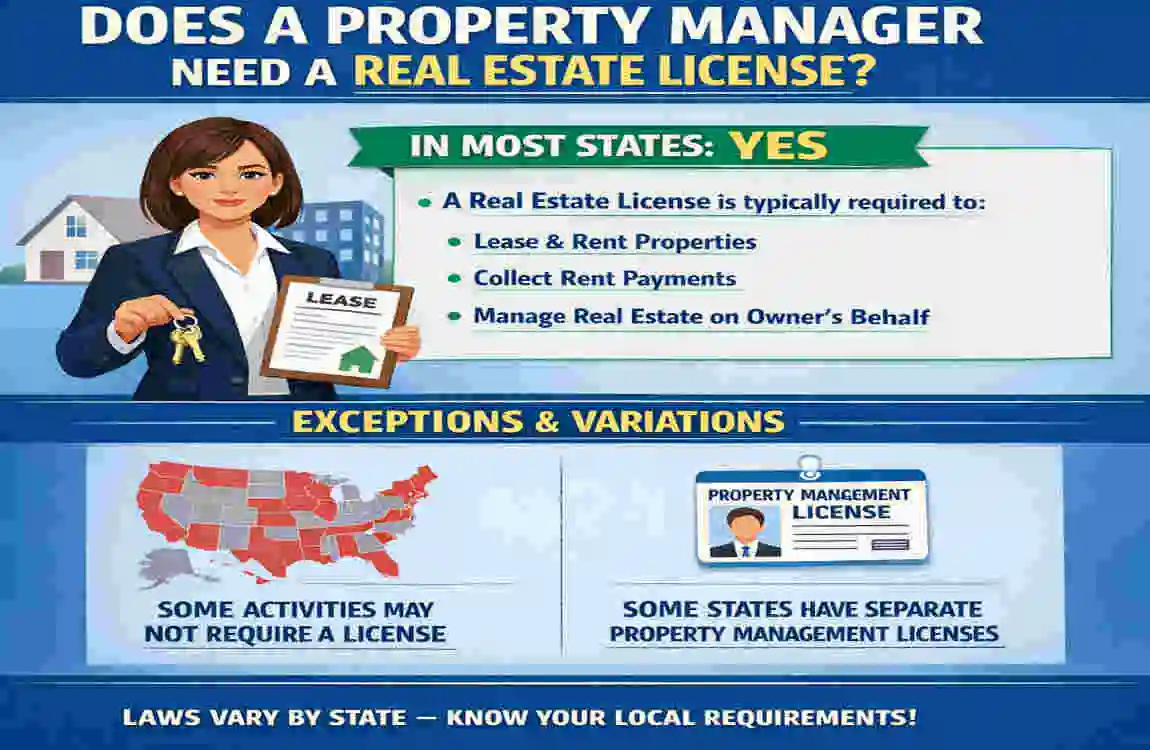
For property management firms, having licensed managers can be a game-changer. Licensing not only ensures compliance with state laws but also boosts your firm’s credibility. Clients are more likely to trust a firm that prominently displays its licensing credentials.
Additionally, being licensed can improve your online visibility. Keywords like “licensed property manager near me” are frequently searched, and having a license can help you rank higher in local search results.
FAQ: Does a Property Manager Need a Real Estate License?
Q: Do property managers need a real estate license?
A: In many places, yes. If a property manager is involved in leasing, renting, or negotiating on behalf of property owners, a real estate license is often required by law.
Q: Are there any exceptions?
A: Yes. Some regions allow on-site managers (like apartment supervisors) to work without a license if they are directly employed by the property owner and don’t handle leasing negotiations.
Q: Does the requirement vary by location?
A: Absolutely. Licensing laws differ by country, state, or region, so it’s important to check local regulations.
Q: What happens if a property manager works without a required license?
A: They could face fines, legal penalties, or even be barred from working in property management.
Q: Can a property manager work under a licensed broker?
