
Imagine this familiar scenario: It is a quiet Sunday morning. You are sitting on your couch with a fresh cup of coffee, casually scrolling through online house listings. You have been searching for your dream home for months. Suddenly, a property catches your eye. It has the perfect wraparound porch, a stunning modern kitchen, and a lush, sprawling garden. Your heart skips a beat. You eagerly look for the price tag to see if it fits your budget, but instead of a number, you see three little letters: POA.
You sit back, puzzled, and ask yourself, ” What does POA mean in real estate? Why would a seller intentionally hide the price of their home? And more importantly, why should you, as a homebuyer, care about this seemingly secretive pricing strategy?
If you have ever found yourself frustrated by these hidden price tags, you are certainly not alone. In the fast-paced and ever-changing property market of 2026, encountering a POA house listing is becoming increasingly common. In fact, recent market trends show that roughly 20% to 30% of luxury listings in hot, highly competitive markets are utilizing this exact strategy.
| Term | Meaning | Why Used for Houses | Buyer Tip |
|---|---|---|---|
| POA | Price on Application (contact agent for price) | Gauges offers on premium/unique homes without public anchor | Research comps first; negotiate 5-10% below estimate |
| POA (US variant) | Property Owners Association (like HOA) | Manages community rules/fees in neighborhoods | Check fees before buying; impacts resale value |
| vs. OIRO | Offers in Region Of (price guide) | More transparent for mid-range houses | Use for quick budget checks |
What Does POA Mean in Real Estate?

Let us start by clearing up the confusion and defining the term.
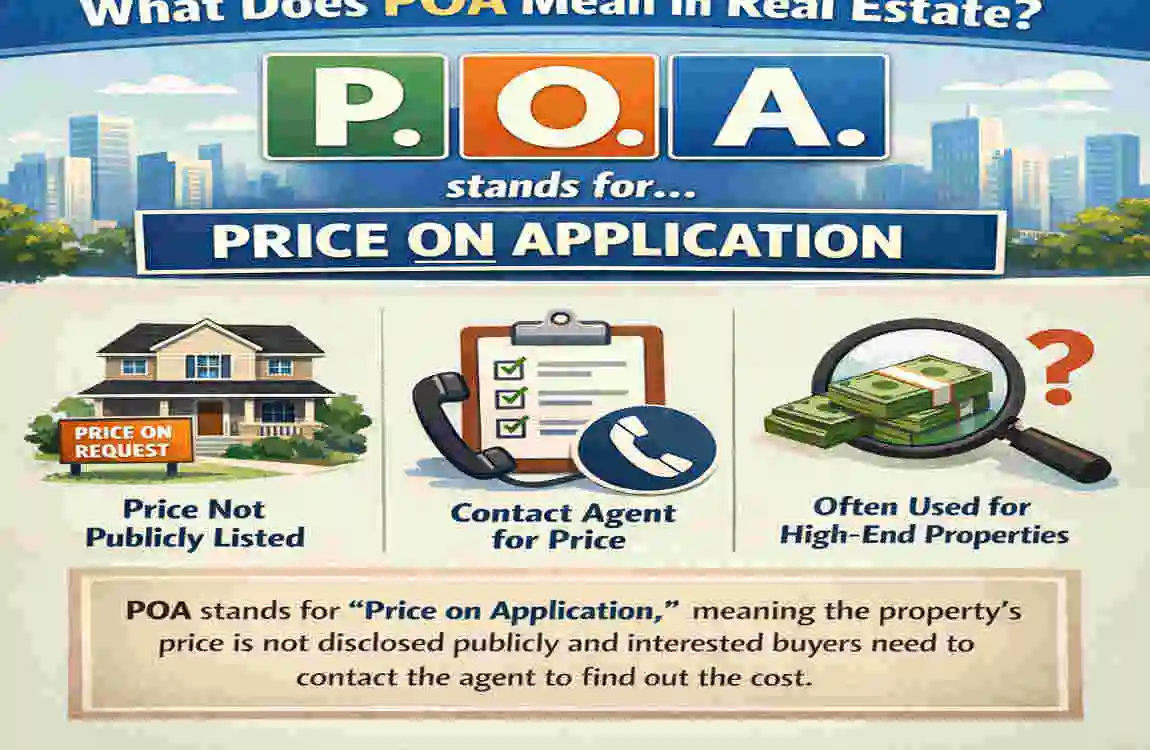
At its core, POA stands for “Price on Application.”
When you see a POA real estate meaning on a listing, it simply means that the seller has chosen to withhold the asking price from the general public. Instead of proudly displaying a price online or on a “For Sale” board, the seller requires interested buyers to contact the estate agent directly to find out how much the property costs.
Think of it like walking into a high-end seafood restaurant and seeing “Market Price” listed next to the lobster. It means the item is definitely for sale, but you’ll have to ask the server for the price. In the property world, this tactic is widely used for high-value houses, unique properties, or bespoke estates to gauge market demand and keep out casual “window shoppers.”
POA vs. Other Common Real Estate Terms
To truly master the property market, you need to understand how POA fits into the broader language of real estate. There are several other terms you might encounter while house hunting. Let’s break down how they compare to Price on Application.
Real Estate Term: What It Actually Means: House Relevance & Strategy
POA (Price on Application): The price is not available. You must inquire directly. Used for luxury homes and unique properties; invites serious offers.
OIRO (Offers in the Region Of) A guide price (e.g., OIRO £500k). The seller wants offers around this specific number. Used for mid-range houses; gives buyers a clear, flexible price guide.
Guide Price: An estimated starting point, commonly used in property auctions. Sparks competitive bidding wars; the final sale price is often much higher.
Offers Over. The seller has set a minimum bid threshold. They will not accept anything lower. Very common in highly competitive markets, pushing buyers to bid aggressively.
As you can see from the table above, POA is the only strategy that keeps the buyer completely in the dark until they take action. While an “Offers Over” listing tells you exactly what the baseline is, a POA listing forces you to engage in a conversation before any numbers are ever discussed.
How POA Changes Across the Globe
The real estate market is vastly different depending on where you live. The meaning and usage of POA can actually shift slightly depending on your geographic location. Let’s take a quick trip around the world to see how different markets handle hidden pricing.
The United Kingdom Market. In the UK, “Price on Application” is highly common. It is a traditional, widely accepted tactic primarily used for discretion. High-net-worth individuals, celebrities, or aristocratic families selling massive estates often use POA because they do not want their neighbors or the general public to know the exact value of their private assets. It is all about maintaining privacy and exclusivity.
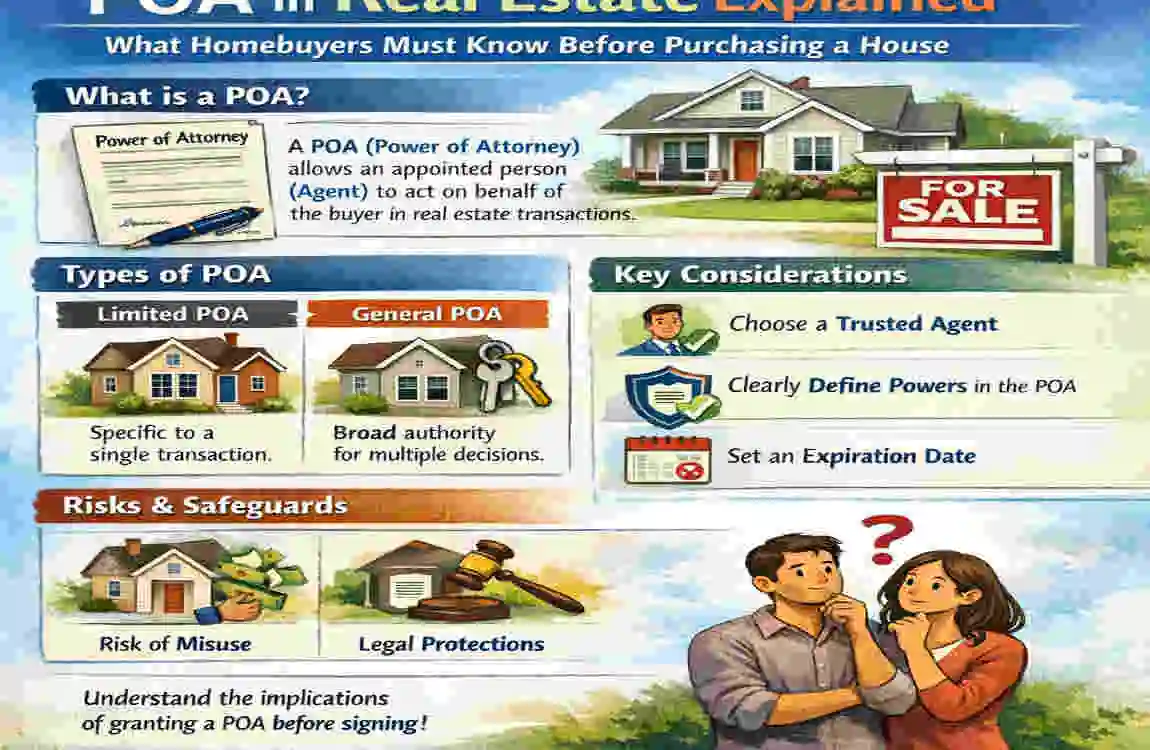
The United States Market. If you are buying a house in the US, the acronym POA can be confusing. In the American legal and real estate systems, POA much more commonly stands for “Power of Attorney.” This is a legal document that grants one person the authority to sign real estate contracts and to make financial decisions on behalf of another person. While you might occasionally see “Price on Application” on an ultra-luxury listing in Beverly Hills or Manhattan, US buyers need to clarify which “POA” the agent is actually referring to!
The Australian market is down; you might see POA. Still, you are just as likely to see the term EOI, which stands for “Expressions of Interest.” It functions in a very similar way. The seller lists the home without a set price and asks buyers to submit their “interest” (usually a blind financial offer) by a specific closing date. It turns the buying process into a blind auction, creating a massive sense of urgency.
Why Sellers Use POA on House Listings
Now that we have answered the question of what POA means in real estate, we need to look at the psychology behind it. Why would a seller purposefully make it harder for buyers to see their price? Doesn’t that push people away?
When used correctly, it is a highly strategic and powerful tool. Here are the main reasons sellers and their agents choose to hide the price tag.
Testing the Market Waters
Sometimes, a house is too unique to slap a standard price tag on. Imagine a homeowner who has spent the last ten years painstakingly renovating a gorgeous, historic Victorian house. They have added custom stained glass, imported Italian marble, and hand-carved woodwork.
Because there are no other houses like it in the neighborhood, the estate agent might have a genuinely hard time figuring out what it is worth. By using a POA listing, the seller can test the market waters. They can gauge buyer interest and hear what people are willing to pay without anchoring expectations to an arbitrary number. If twenty people call and offer around £800,000, the seller instantly knows the true market value of their unique home.
Ultimate Price Flexibility
The real estate market can be incredibly cruel to sellers who have to drop their prices. If a house is listed at £600,000, sits on the market for a month, and then drops to £550,000, buyers immediately become suspicious. They think, “What is wrong with the house? Is the seller desperate? Can I lowball them even further?”
Listing a house as POA eliminates this “desperate seller” stigma. Because the price is never public, the seller has total flexibility. They can quietly lower their price expectations in private when talking to new buyers, and no one else will ever know. It protects the property’s perceived value.
Spotlighting Premium Properties
Exclusivity sells. When you are selling a multi-million-pound estate, a sprawling equestrian farm, or a cutting-edge eco-smart home, you do not want thousands of people treating your house like a public museum.
Sellers of bespoke, premium houses use POA to filter out the noise. They want to draw in serious, highly qualified inquiries. By forcing buyers to pick up the phone and call, the estate agent can immediately vet the buyer’s financial situation before ever booking a viewing. It ensures that the seller only opens their doors to people who actually have the funds to make a purchase.
Gaining a Negotiation Edge
Make no mistake, real estate is a game of negotiation, and POA gives the seller a distinct upper hand. When buyers cannot see a listed price, they often let their emotions take over. They fall in love with the house and start imagining their lives there.
When multiple buyers inquire about a POA property, the agent can quietly spark competitive bids. Because no one knows the actual ceiling, buyers often bid aggressively to avoid losing out. In fact, industry data shows that successful POA sales can sometimes yield offers 15% to 25% higher than standard listings. For example, a luxury London townhouse that might traditionally be valued at £1 million could easily attract competitive bids of £1.2 million simply because the blind process drives up urgency and desire.
However, this tactic carries a heavy risk for sellers. If the agent vastly overprices the home behind the scenes, they will only succeed in wasting buyer time and having the property sit empty for months.
How POA Impacts Homebuyers
We have looked at the seller’s perspective, but let’s shift the focus back to you. When you are out there actively hunting for a home, how does a POA house listing actually impact your journey?
Buying a POA property is not like buying a normal house. It requires a different mindset, more patience, and a sharper negotiation strategy. Let’s break down the realities you will face.
The Big Pros for Buyers
Finding a POA listing can actually work massively in your favor if you know how to play the game.
Opportunity to Negotiate Below Market Value: Because there is no public asking price, there is no public baseline. If you do your research and realize the home is likely worth $500,000, but you know the seller has been trying to sell for 6 months, you can make an aggressive offer. You might confidently offer 10% under that inferred value. Without a public price tag, the seller might be more inclined to accept a solid, reliable offer to close the deal.
Access to Exclusive Listings: POA listings are often the best-kept secrets in a neighborhood. Because many average buyers are too intimidated to call the agent, your competition drops significantly. You get access to highly exclusive homes, and when you do inquire, you often deal with highly motivated sellers eager to have a serious conversation.
The Cons and Hidden Risks
Of course, dealing with hidden prices is not always a walk in the park. You need to be deeply aware of the risks involved so you do not get burned.
The Ultimate Time Sink: The most frustrating part of buying a POA property is the runaround. You might spend days falling in love with pictures, researching the neighborhood, and finally calling the agent, only to discover the seller wants a price that is literally double your maximum budget. It can lead to endless inquiries and wasted time.
Overpricing Traps: Some sellers get greedy. They use POA specifically to exploit market hype, hoping to trap an emotional buyer into paying a 20% premium over the house’s actual value. If you walk into a negotiation blind, without knowing the local market, you can easily end up drastically overpaying for a property.
Budget Shocks: There is nothing worse than the emotional whiplash of a budget shock. To protect yourself, you must be proactive. Before you ever call an agent, spend time on real estate portals like Zoopla or Rightmove to compare similar homes in that exact postcode to gauge a realistic price range.
Your Essential Buyer Checklist
If you are going to pursue a POA listing, you cannot go in unprepared. Before you make that phone call, run through this essential buyer checklist:
- Research the Comps: “Comps” is real estate slang for comparable sales. You need to find out what similar houses in that specific neighborhood have recently sold for.
- Establish a Budget Buffer: Because POA homes often spark bidding wars, you should realistically set aside a 10% to 15% buffer above your estimate of the house’s value, just in case you need to stretch.
- Get a Pre-Approved Mortgage: When you finally call the agent, you want them to take you seriously immediately. Having a mortgage pre-approval letter in your hand proves you are a qualified buyer ready to move fast.
Step-by-Step: Handling POA House Purchases Like a Pro
Understanding the theory is great, but how do you actually execute a purchase? In the fast-moving 2026 property market, hesitation will cost you your dream home.
If you want to buy a POA house successfully, you need a precise, calculated action plan. Here is your step-by-step guide to decoding the listing and securing the keys.
Spot the POA Listing and Gather Clues
Your work begins the moment you spot the listing. Even though the price is hidden, the listing is full of context clues. Filter your search results by your maximum budget. If a POA home shows up in a search capped at £750,000, the algorithm is giving you a massive hint about the backend price the agent has entered into the system!
Next, look closely at the location and the size. Count the bedrooms, look at the square footage, and note the condition of the kitchen and bathrooms. Is it newly renovated or a bit tired? Use these clues to build a mental profile of the property.
Inquire Smartly
This is where most buyers fail. They call the agent and ask, “How much is it?” Do not do this! You need to ask smart questions to extract as much information as possible.
When you call, ask the agent for a price range rather than a fixed number. Say something like, “I am looking for properties in the £600k to £700k range. Does this home align with my search?”
Furthermore, ask about the seller’s motivation. Ask the agent, “Why are they selling? Are they relocating for work? Are they downsizing?” A seller relocating across the country next month is far more likely to negotiate than one who is in no rush to leave.
Value the House Yourself
Do not rely solely on what the estate agent tells you. They represent the seller, not you! You need to value the house yourself.
Use publicly available tools to assess the property. Look up the home’s EPC (Energy Performance Certificate) rating, which is often public record. Poor energy ratings usually mean the house needs expensive upgrades, which you can use to negotiate the price down. If you are serious, hire an independent surveyor to provide an unbiased valuation of the property before you make an offer.
Make Strategic Offers
Once you have established an inferred price based on your deep research, it is time to make your move.
Do not start by offering exactly what the agent hinted at. Start your initial offer roughly 5% to 10% below the inferred price. This gives you vital room to negotiate upwards without blowing your budget. More importantly, always make your offer conditional on a satisfactory home survey. This protects your deposit if the surveyor finds a hidden nightmare, like a crumbling foundation or a leaky roof.
Close Fast
In 2026, amid fluctuating interest rates, POA sellers are looking for one thing above all: certainty. They want a sure thing.
If you find a POA deal you love, leverage your power to close quickly. If you are a cash buyer, make that loudly known. If you have your mortgage fully locked in, push for a rapid timeline. A seller is highly likely to accept a slightly lower financial offer if you can guarantee a fast, stress-free closing within 7 to 14 days. Use speed as your ultimate negotiation weapon.
Common POA Myths Debunked
Because “Price on Application” involves secrecy, it naturally breeds many rumors and misunderstandings among buyers. Let’s clear the air and separate the fact from the fiction.
Here is a quick look at the most common myths surrounding POA listings:
The Common Myth: The Real Estate Reality
Myth: POA means it is a “cheap house” that needs too much work. Reality: It is almost always the exact opposite. POA is overwhelmingly used for premium, high-value properties (e.g., £2M+ luxury homes) to maintain exclusivity.
Myth: Agents hide prices because it is a scam to rip off buyers. Reality: POA is a standard, legal market tactic. It is simply a marketing strategy designed to test demand and filter out unqualified window shoppers.
Myth: You should completely ignore all POA listings to save time. Reality: Ignoring them means you are leaving incredible homes on the table! Statistics show that roughly 30% of these homes sell above their private guide price due to competition. Still, it also means there are deals to be found if you are the only one brave enough to call.
Do not let these old myths scare you away from a potentially life-changing property. Treat a POA listing just like any other house hunt: do your research, keep a level head, and always trust your own financial boundaries.
FAQs: What Does POA Mean in Real Estate?
As we wrap up our deep dive into the world of hidden property pricing, let’s address some of the most frequently asked questions we hear from clients every single day.
What does POA mean in real estate for first-time buyers? For a first-time buyer, seeing POA means the price is intentionally hidden, and you must proactively ask the agent for the cost. It can be intimidating, but do not let it stop you! Call the agent early, state your budget clearly, and ask if the home is a realistic fit for you.
Is buying a POA house inherently risky? Yes, it can be risky if you go in blind. Without a public asking price, you lack a baseline. The biggest risk is dramatically overpaying. You must mitigate this risk by thoroughly researching local comps and bringing in property experts to help you determine the true value before making an offer.
What is the difference between POA and SSTC? These two acronyms mean very different things. POA (Price on Application) means the house is actively on the market and the seller is waiting for pre-offers. SSTC (Sold Subject to Contract) means a buyer has already made an offer, the seller has accepted it, and the house is effectively off the market. At the same time, the legal paperwork is being finalized.
How can I find out POA house prices without calling the agent? While you ultimately have to talk to the agent to make an offer, you can play detective online. Use online property estimators, check historical sold prices on the street, and filter your search parameters on property portals to see where the listing drops out of your search results.
Is the use of POA changing in the 2026 market? Absolutely. As the demand for luxury, remote, and highly bespoke homes continues to rise, more sellers are utilizing POA to protect their privacy and command premium prices. It is a trend that is only growing stronger.
