
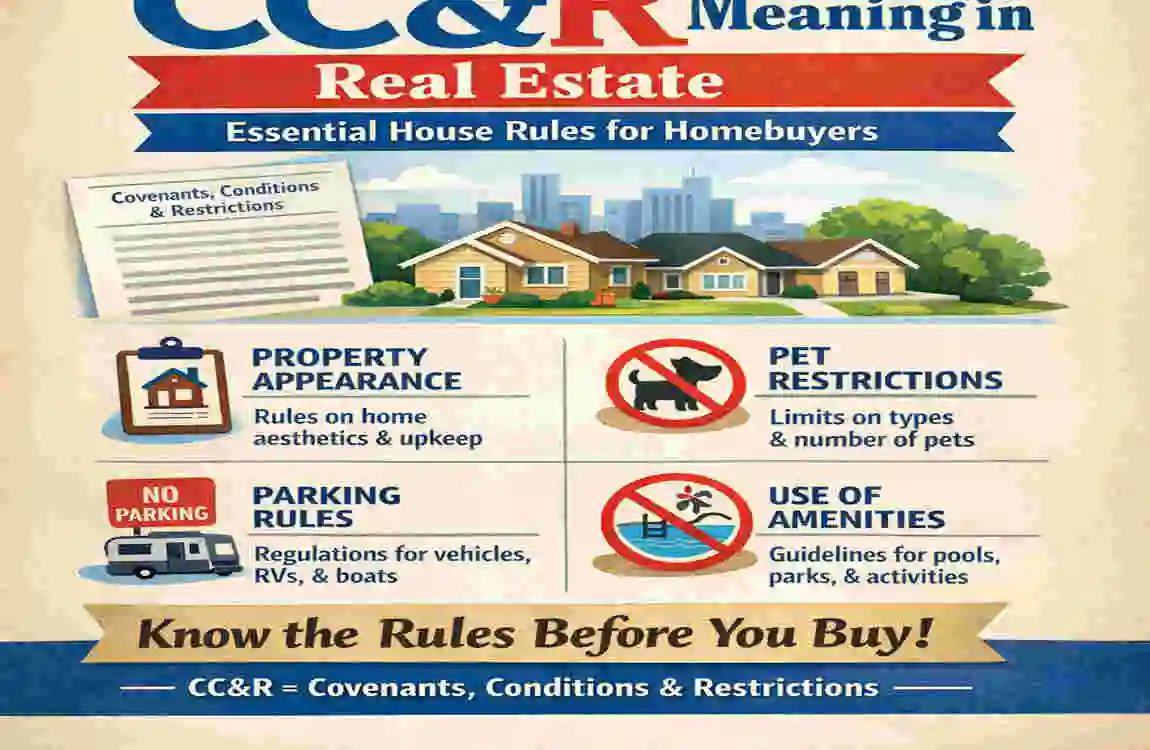
Imagine this scenario. You have just spent months searching for the perfect property. You finally found it, successfully navigated the closing process, and moved all your boxes into your beautiful new home. To celebrate, you decide to paint your front door a cheerful, bright red. It is your house now, right?
A few days later, you walk out to check the mail and find a formal letter warning you of a severe fine. As it turns out, your bright red door violates the neighborhood’s strict color palette.
If you are like many first-time buyers, this moment might be the exact time you frantically search the internet, wondering, ” What does CC&R stand for in real estate?
You are not alone. Countless buyers move into planned communities every year without fully understanding the essential house rules that govern their new neighborhoods. These rules, known as CC&Rs, heavily shape your homeownership experience. They dictate what you can and cannot do with your property, right down to the color of your mailbox and the type of dog you can own.
On one hand, CC&Rs are fantastic. They protect property values, keep neighborhoods looking pristine, and prevent your neighbor from turning their front lawn into a junkyard. On the other hand, they can severely limit your personal freedoms. This is exactly why every single homebuyer must thoroughly review them before signing on the dotted line.
| Term | Meaning | House Example |
|---|---|---|
| Covenants | Promises to uphold standards | Maintain lawn, uniform exteriors |
| Conditions | If-then usage clauses | Modifications need HOA approval |
| Restrictions | Prohibitions on activities | No RVs, pets over 50 lbs, short-term rentals |
What Does CC&R Stand For?
Let us start with the absolute basics. You have probably heard real estate agents throw this acronym around, but we need to define it explicitly.
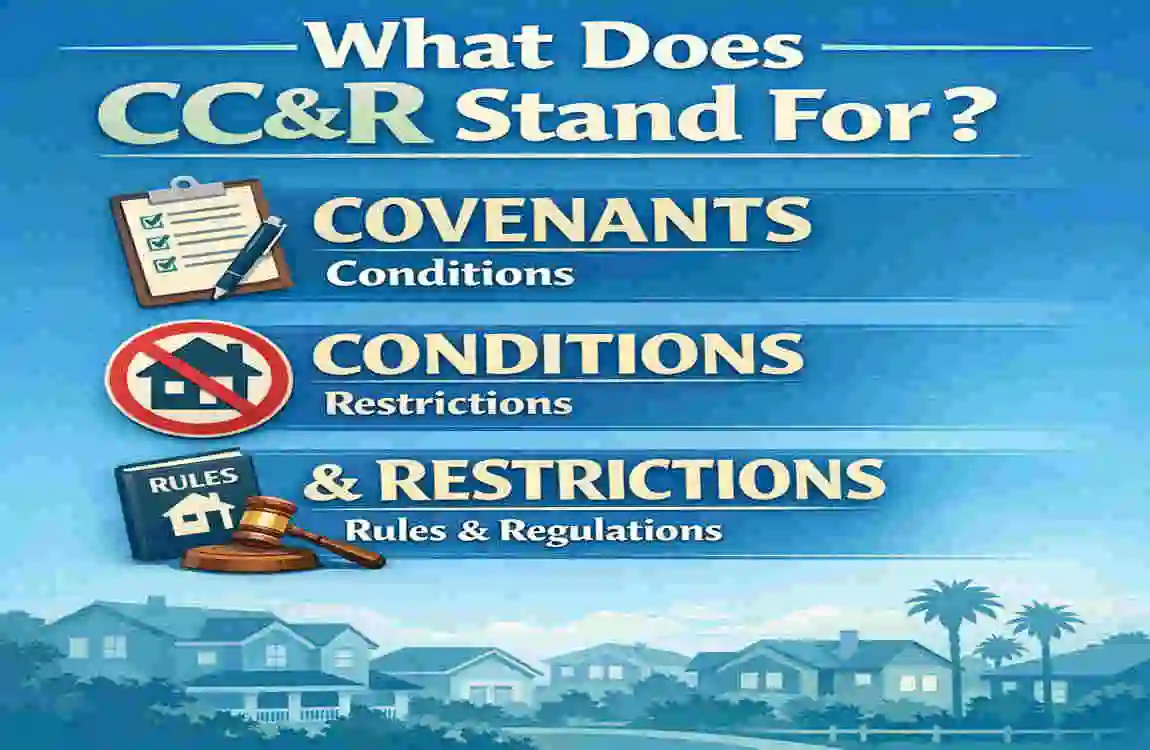
CC&R stands for Covenants, Conditions, and Restrictions.
These are the legally binding rules, regulations, and property covenants assigned to homes in planned communities, homeowner associations (HOAs), or specific subdivisions. When you buy a home in one of these neighborhoods, you automatically agree to abide by these rules. You do not get to opt out.
To truly understand what you are agreeing to, we need to break down the three individual components of the acronym.
Covenants: Your Promises to the Community
A covenant is a legally binding promise. When you buy the house, you are promising the community that you will maintain certain standards.
For example, a common covenant might require you to keep your lawn mowed, edge your driveway, and ensure your home’s exterior remains in good repair. You are actively promising to take steps to improve the neighborhood’s overall aesthetic.
Conditions: The “If-Then” Clauses
Conditions are the rules that dictate what happens if certain situations arise. They are the “if-then” clauses of your property ownership.
For instance, a condition might state that if you want to build a deck in your backyard, you must submit your architectural plans to the HOA board for approval before you pour concrete. If you fail to meet these conditions, the governing body can halt your project or even take legal action.
Restrictions: Your Property Limits
Restrictions are exactly what they sound like. These are the strict limits placed on how you can use your property. They outline exactly what you cannot do.
Deed restrictions often include bans on operating a commercial business out of your garage, limits on renting your home on short-term platforms like Airbnb, or restrictions on parking a massive recreational vehicle in your driveway.
So, what does CC&R stand for in real estate? Simply put, it is your community’s ultimate rulebook.
Think of it like an apartment lease, but for a house you actually own. When you rent an apartment, your lease tells you that you cannot knock down walls or own a noisy parrot. CC&Rs do the same thing for homeowners, ensuring everyone plays by the same rules to keep the peace.
History and Legal Basis of CC&Rs
You may be wondering where these rules came from. Did a group of neighbors wake up one day and decide to ban purple houses? Not exactly.
To understand why these rules exist, we have to look back a few decades. The modern concept of CC&Rs truly emerged in the 1960s. During this time, the United States saw a massive boom in suburban development. Developers were building massive, master-planned communities from the ground up.
To make these new neighborhoods highly appealing to buyers, developers needed a way to guarantee that the community would remain beautiful and uniform long after the final house was sold. They needed to standardize the developments. Thus, the modern CC&R was born.
The Legal Power of Your House Rules
Understanding what CC&R stands for in real estate starts with grasping its intense legal permanence. These are not just friendly suggestions tacked onto a community bulletin board. They are fierce legal documents.
CC&Rs are formally recorded in the county land records. They are officially attached to the property deed itself. In legal terms, we say that these rules “run with the land.”
This means that the rules do not apply to you as an individual; they apply to the dirt you are standing on. If you sell your house ten years from now, the new buyer automatically inherits those same rules. The CC&Rs bind all future owners.
Furthermore, these rules are backed by state laws. Many states govern these communities under frameworks like the Uniform Common Interest Ownership Act. This gives HOAs the legal teeth they need to enforce the rules, levy heavy fines, and even place a lien on your house if you refuse to pay.
With over 74 million Americans currently living in HOA communities, understanding the legal weight of these documents has never been more relevant.
Traditional Deeds vs. Modern CC&Rs
To give you a clearer picture of how powerful these rules are, let us compare them to traditional property deeds.
Aspect Traditional Property Deeds Modern CC&Rs
Overall Scope: Applies only to the individual property. Applies to the entire neighborhood community.
Rule Enforcement is primarily enforced through formal court proceedings. Enforced first through HOA fines, then courts.
Historical Evolution Roots date back to the 1800s and earlier. Exploded during the post-1960s housing boom.
Common CC&R Rules Affecting Your House
Now that we know what these documents are and why they carry so much legal weight, let us talk about your daily life. How will these rules actually affect how you live in your new house?
While every community is beautifully unique, most share a very similar set of restrictions. Here are the top CC&R rules that will directly impact your lifestyle.
Exterior Architectural Changes
This is the rule that trips up most new homeowners. In a managed community, you usually cannot alter the exterior of your home without written permission.
This means you cannot paint your house a new color unless it is on the pre-approved palette. You cannot install a different mailbox style. If you want to put up a fence to keep your dog safe, the CC&Rs will dictate exactly how tall that fence can be, what material it must be made of, and exactly where on your property line it can sit.
Parking and Vehicle Restrictions
Do you own a boat, a massive RV, or a commercial work truck? You need to read your rules carefully.
Many communities consider large vehicles to be an eyesore. Therefore, your CC&Rs might explicitly prohibit parking an RV in your driveway or on the street. Some strict neighborhoods even require that all personal vehicles be parked in the garage overnight, keeping the streets completely clear of cars.
Pet Ownership and Noise Control
We all love our furry friends, but your HOA might have a different opinion. It is incredibly common for CC&Rs to cap the number of pets you can own. They might say you can only have two dogs.
Even more importantly, they often have breed and size restrictions. You might find a clause stating that no dog weighing more than 50 pounds is allowed in the neighborhood. Additionally, you will likely find rules regarding noise. These “quiet hours” usually restrict loud music, power tools, and barking dogs between 10:00 PM and 7:00 AM.
Renting and Leasing Limits
If you are buying a property as an investment, pay close attention to this section. Many communities want to maintain a neighborhood of long-term residents, not a transient hotel vibe.
As a result, CC&Rs frequently ban short-term rentals entirely. If you plan to put the house on Airbnb, you might be out of luck. Furthermore, they often require minimum lease terms. For example, the rules might state that you cannot lease the home to a tenant for any period shorter than twelve consecutive months.
Landscaping and Lawn Maintenance
Finally, prepare to maintain your yard to a very specific standard. The rules might dictate exactly how short you must keep your grass. They might require you to pull weeds within forty-eight hours of noticing them.
Some environmental CC&Rs even dictate the exact types of approved plants and trees you can put in your garden to ensure the neighborhood maintains a cohesive, manicured look.
So, what does CC&R stand for in real estate? It stands for the rules that keep your house in harmony with the rest of the neighborhood.
Homebuyer Tip: Always review these rules before you make a formal offer. If you have a massive RV and four dogs, a strict HOA community is not the right fit for you. Be sure to check out our previous blog post on home inspections to learn what else you should look out for before closing!
CC&Rs vs. Other Real Estate Rules
The real estate world is full of acronyms and legal jargon. It is incredibly easy to confuse your CC&Rs with other common property rules.
To make this as simple as possible, let us break down the differences between the various types of rules you might encounter as a homeowner.
Rule Comparison Table
Rule Type: Who Creates the Rule?Common Examples: Is It Legally Binding?
CC&Rs: The Developer or the HOA. House color limits, pet bans. Yes, it runs with the land.
Zoning Laws, Local city Government Bans on commercial businesses, Yes, enforced by the municipality.
HOA Bylaws The HOA Board How board meetings are run Yes, but only for members.
Lease Rules: Your Landlord Bans Subletting the home. Yes, but only for the tenant.
Explaining the Differences
Let us dive a little deeper into this table so you know exactly who is telling you what to do.
Zoning Laws: These are created by your local city or county government. Zoning dictates the broad use of land. For example, zoning laws ensure a massive, polluting factory cannot be built right next to a residential neighborhood. Zoning applies to everyone in the city, regardless of whether they live in an HOA.
HOA Bylaws: People often mix up CC&Rs and bylaws. Think of it this way: CC&Rs dictate how you use your property. Bylaws dictate how the association is run. Bylaws cover procedural matters, such as how often the HOA board meets, how members vote for the president, and how the annual budget is calculated. Bylaws do not care about the color of your front door.
Lease Rules: If you decide to rent your home, you will need to create a lease. These rules only apply to the person signing the rental contract. Once the tenant moves out, those specific lease rules no longer apply. CC&Rs, on the other hand, stay with the house forever.
When you ask, “What does CC&R stand for in real estate vs. HOA rules?” remember that CC&Rs are the strict property restrictions. At the same time, bylaws are the neighborhood’s corporate procedures.
Pros and Cons for Homebuyers
You may be feeling overwhelmed. It sounds like buying a home in a managed community strips you of all your freedom. But that is not entirely true! There is a reason millions of people actively choose to live in these neighborhoods.
Let us take a balanced look at the pros and cons so you can decide if this lifestyle is right for you. Weighing what CC&R stands for in real estate is crucial for your house hunt.
The Pros: Why People Love CC&Rs
- Protects Property Values: This is the absolute biggest benefit. When everyone is forced to keep their lawns manicured and their houses painted nicely, the entire neighborhood looks Premium. This uniform aesthetic directly boosts your home’s resale value. You never have to worry about a neighbor dragging down your property value by leaving rusted cars on their front lawn.
- Shared Maintenance: Many CC&Rs require the association to handle the heavy lifting. Your dues might pay for a landscaping company to mow every front lawn in the neighborhood, or cover the cost of plowing snow off the streets in the winter.
- Community Appeal and Amenities: Because these rules protect the neighborhood’s finances, you often get access to incredible shared amenities. These communities frequently feature sparkling community pools, private tennis courts, secure gated entryways, and beautiful clubhouse facilities that you could never afford to build on your own.
The Cons: Why People Hate CC&Rs
- Expensive Fines for Violations: If you accidentally break a rule, you will be fined. HOAs are notorious for issuing steep fines. If you leave your garbage cans out an extra day, you might find a $50 fine in your mailbox.
- Massive Modification Hurdles: Want to add a beautiful sunroom to the back of your house? You cannot just hire a contractor and start building. You have to submit complex architectural plans to a committee, wait weeks or months for approval, and face the reality that they might say no.
- Resale Limits: Because the rules are so strict, they can occasionally make it harder to sell your home. A buyer with three large dogs or a commercial work truck will instantly walk away from your property if your CC&Rs ban them.
Ultimately, finding the right home requires a balanced view. If you are a busy family that wants a pristine, quiet neighborhood with a community pool, CC&Rs are your best friend. If you are a fierce individualist who wants to paint your house neon green and rebuild classic cars in your driveway, you need to look for a property without an HOA.
How to Review CC&Rs Before Buying
You have found a house you love, and you know it sits in a planned community. Before you sign closing documents and commit to a thirty-year mortgage, you absolutely must decode the rules.
Here is your essential, step-by-step guide to reviewing these documents like a pro. Decode what CC&R stands for in real estate with these actionable steps!
Request the Documents During Due Diligence
Do not wait until the day of closing to ask for the rules. The moment your offer is accepted, you enter a “due diligence” period. Immediately request a full, updated copy of the CC&Rs from the seller or the HOA management company. By law, they must provide these to you. You should also ask for a copy of the neighborhood’s financial statements to ensure the association isn’t secretly going bankrupt.
Scan Vigorously for Red Flags
These documents can be hundreds of pages long, filled with dense legal jargon. Grab a cup of coffee and a highlighter. You want to scan specifically for red flags that conflict with your lifestyle.
Look immediately for the sections covering pets, parking, and rentals. If you plan to rent the house out in 5 years but the document contains a strict rental ban, you need to withdraw your offer immediately.
Consult a Real Estate Attorney
Unless you have a law degree, you may struggle to understand some of the older, more complex clauses. This is completely normal.
It is highly recommended that you pay a local real estate attorney a small fee to review the document for you. They can translate the legal jargon into plain English and warn you about any unusually restrictive clauses that might cause headaches down the road.
Check the Enforcement History
Rules are only as strict as the people enforcing them. You might read a rule that says “no street parking,” but when you drive through the neighborhood, you see cars parked everywhere.
Ask the seller or the HOA board about their enforcement history. Are they currently handing out fines every single day? Or are they a laid-back community that only enforces the major rules? Getting a feel for the neighborhood’s culture is just as important as reading the actual text.
Real-Life CC&R Violation Examples
Sometimes, the best way to understand the power of these rules is to hear horror stories from people who ignored them. Let us look at a few real-life case studies that prove why you must take these documents seriously.
The $10,000 Fence Dispute
A homeowner in a master-planned community decided they wanted more privacy for their backyard pool. Without submitting plans to the HOA, they hired a contractor to build a beautiful, six-foot-tall, solid white vinyl fence.
The problem? The CC&Rs explicitly state that all fences must be made of wrought iron and may not exceed 4 feet in height. The HOA fined the homeowner daily until the fence was removed. Ultimately, the homeowner had to tear down the brand-new fence and lost over $10,000 in construction costs and HOA fines.
The Rental Ban That Forced a Move
A young couple bought a starter home in a quiet subdivision. Five years later, they had a child and needed more space. They decided to buy a bigger house and rent out their starter home to cover the mortgage.
Unfortunately, they never read the CC&Rs. The community had a strict cap on rentals: only 10% of the homes could be rented at any given time, and there was a five-year waiting list. The couple was legally banned from renting their home. Unable to afford two mortgages, they were forced to sell their beloved starter home in a down market, losing thousands of dollars in equity.
The Holiday Lights Fiasco
A family loved celebrating the holidays. They spent days covering their house in thousands of twinkling lights and inflatable yard decorations.
A week later, they received a cease-and-desist letter. The CC&Rs dictated that holiday decorations could be displayed for a maximum of 14 days before a holiday and had to be taken down within 48 hours afterward. Furthermore, inflatable decorations were entirely banned. The family had to spend their weekend taking everything down or face a $100 daily fine.
The Lesson: Always verify the rules before you act! Storytelling like this proves that ignorance is never an excuse when it comes to property covenants.
Updating or Challenging CC&Rs

What happens if you move into a neighborhood and absolutely hate a specific rule? Can you change it?
The short answer is yes, but the realistic answer is that it is incredibly difficult. Because CC&Rs run with the land, changing them requires a monumental community effort.
The Process of Changing the Rules
To update or remove a restriction, you cannot just complain to the board president. You usually need to initiate a formal community vote.
Most documents require a “supermajority” vote to pass an amendment. This means you need 67% or even 75% of the neighborhood’s homeowners to agree to the change legally. Getting dozens or hundreds of people to agree on anything is a massive logistical nightmare.
If the rule is genuinely illegal or wildly unreasonable (such as a rule that violates federal fair housing laws), you can take the HOA to court. A judge has the power to strike down unenforceable restrictions, but this process is expensive and time-consuming.
Modern Trends
Fortunately, we are seeing a shift in the landscape. As we move through 2026, many communities are intentionally updating their outdated documents. Amid nationwide housing shortages and a desire for more sustainable living, HOAs are relaxing rules to allow solar panels, drought-resistant landscaping, and even small accessory dwelling units (ADUs) in backyards.
The trend is moving toward flexible rules that accommodate modern life, rather than strict, outdated conformity.
Frequently Asked Questions (FAQs)
We know this is a lot of information to absorb. To summarize, here are the most common questions buyers ask us during the house-hunting process.
What does CC&R stand for in real estate? It stands for Covenants, Conditions, and Restrictions. These are the legally binding rules and property limitations enforced by a Homeowner’s Association or planned community. They dictate what you can and cannot do with your property.
Are CC&R rules negotiable? No. Unlike the purchase price of the home, you cannot negotiate these rules with the seller. When you buy the property, you automatically accept the rules as they are currently written.
Do these rules transfer when I sell the house? Yes. CC&Rs “run with the land.” They are attached to the property deed itself, meaning they automatically transfer to the next buyer, and the buyer after that, in perpetuity.
How do CC&Rs differ in condos versus single-family homes? Condo rules are usually much stricter. Because condo owners share physical walls and roofs, the CC&Rs will heavily dictate interior modifications, noise levels, and shared hallway usage. Single-family home rules focus primarily on the exterior aesthetic and yard maintenance.
What happens if I refuse to pay an HOA fine? Do not do this! If you ignore fines, the HOA has the legal authority to place a lien on your property. In extreme cases, they can actually foreclose on your home to collect the debt you owe them.
