
In real estate, agency relationships matter because they define who can do what, who is responsible for what, and how decisions get made. If you own property, buy property, or invest in real estate, this is not just legal theory. It affects your money, your time, and your peace of mind.
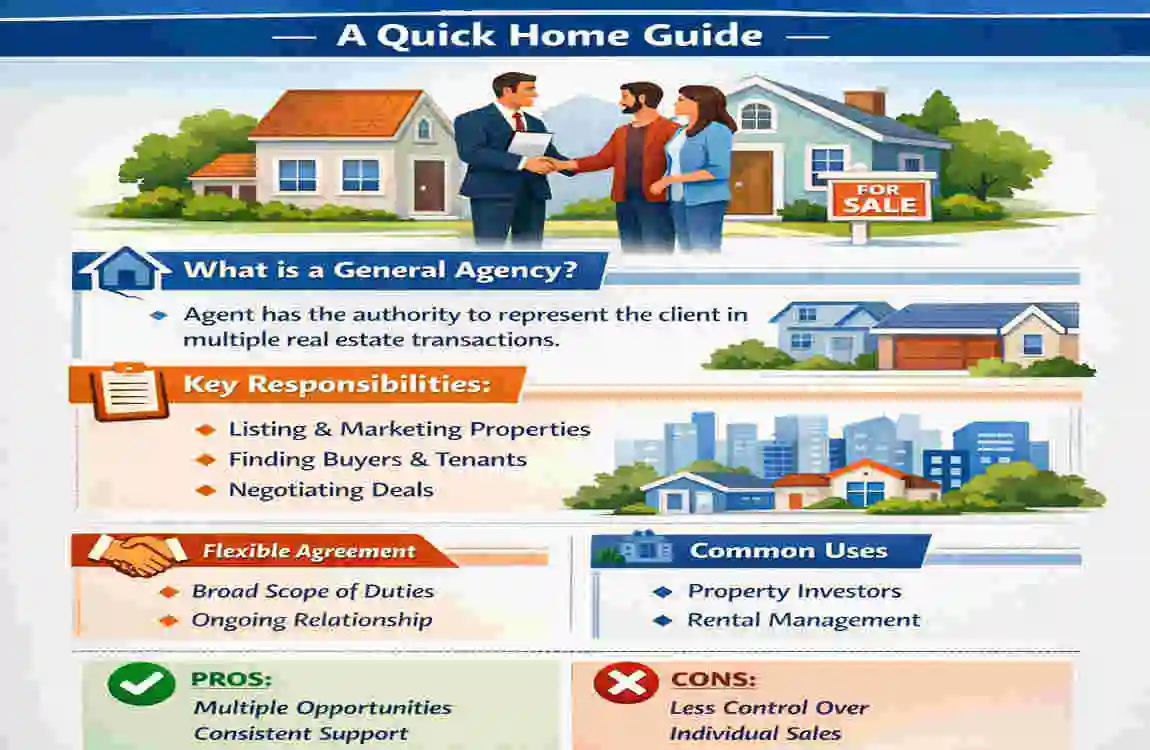
So, what is a general agency in real estate? In simple terms, it is a relationship in which a property owner grants someone else ongoing authority to manage property-related tasks on their behalf. This is common in rental homes, apartment buildings, and commercial properties.
What is a General Agency in Real Estate?

Definition of General Agency
A general agency in real estate is a legal relationship in which one person, called the principal, authorises another, called the agent, to handle ongoing property matters.
The agent does not act for just one small task. Instead, the agent handles a range of duties over time. These duties usually relate to the daily management of a property.
For example, a property owner may authorise a manager to collect rent, speak with tenants, arrange repairs, and oversee the property’s general condition. That is a general agency in action.
How a General Agency Works
A general agency works when the owner gives the agent broad authority within a set area.
That means the agent can make decisions and perform tasks without asking the owner every single time. However, the agent still has limits. Those limits come from the agreement between the two parties.
The agent’s role is usually ongoing. This makes general agency different from one-time representation. It is not just about closing one deal. It is about managing property-related responsibilities over time.
Simple Real-Life Example
Imagine you own a duplex but live in another city. You hire a property manager to manage the rental units.
That manager may:
- Collect monthly rent
- Handle tenant complaints
- Schedule repairs
- Renew leases
- Communicate with contractors
In this case, the property manager acts as a general agent because they manage many ongoing tasks for the owner.
Key Characteristics of General Agency in Real Estate
Broad Decision-Making Authority
One of the most significant features of a general agency is its broad authority. The agent can handle several types of property matters without needing approval for every small step.
This makes property management smoother and faster. It also helps the owner avoid being involved in day-to-day issues.
Ongoing Relationship
A general agency is usually a long-term relationship. It does not end after one transaction.
Instead, it continues as long as the owner wants the agent to manage the property and the agreement remains active.
Duties and Responsibilities
The agent has several responsibilities. These may include managing tenants, arranging maintenance, collecting payments, and keeping the property in good condition.
Because of this, the agent must stay organised and act carefully.
Fiduciary Obligations
A general agent must act in the owner’s best interests. This is called a fiduciary duty.
That means the agent should be honest, loyal, and careful with the owner’s property and money.
CharacteristicDescription
Authority handles multiple property-related tasks
Duration Usually long-term
Responsibility : Manages daily operations
Loyalty : Must act in the owner’s best interests
Types of Real Estate Agency Relationships
General Agency
A general agent has broad authority to manage ongoing property tasks. This is common in property management.
It is useful when an owner wants help with continuous operations, not just one-time services.
Special Agency
A special agent has limited authority to complete a specific task.
For example, a real estate agent hired to help sell one home is usually a special agent. Their authority is tied to that one transaction.
Universal Agency
A universal agent has very wide authority, almost unlimited in scope. This type is rare in real estate.
A common example is someone holding a power of attorney, who may act on behalf of another person in many legal and financial matters.
Agency TypeAuthority LevelTypical Example
General Agency Broad but limited to certain activities Property Manager
Special Agency Limited authority Real Estate Agent
Universal Agency Almost unlimited authority Power of Attorney Holder
Examples of General Agency in Real Estate
Property Management Companies
A property management company is one of the clearest examples of general agency.
It may manage many parts of a rental property, including rent collection, tenant support, and maintenance coordination.
Apartment Building Managers
An apartment manager often acts as a general agent for the owner or landlord.
They deal with rent, repairs, leasing, and tenant communication every day.
Commercial Property Managers
Commercial properties, such as office buildings and retail centres, often require active management.
A commercial property manager may oversee vendors, maintenance, lease renewals, and tenant concerns.
Vacation Rental Management Services
Vacation rental managers also fit this model. They handle bookings, guest issues, cleaning schedules, and property upkeep.
Key Examples List
- Collecting rent
- Coordinating repairs
- Hiring contractors
- Managing tenant communications
- Handling lease renewals
Benefits of General Agency for Property Owners
Saves Time
The biggest benefit is time savings. The owner does not need to handle every small issue personally.
This is especially helpful if the owner has many properties or lives far away.
Professional Property Management
A general agent brings experience and structure. That can improve how the property is run.
Better management often leads to fewer mistakes and better results.
Better Tenant Relations
When a manager responds quickly to tenant concerns, tenants are usually happier.
That can reduce conflict and improve retention.
Efficient Maintenance Management
Repairs and upkeep are easier to manage when one person is responsible for coordination.
This helps prevent small issues from becoming bigger and more expensive problems.
Reduced Stress for Owners
Property ownership can be stressful. A general agent takes over many daily duties, which gives the owner more freedom and less pressure.
Potential Risks and Limitations of General Agency
Miscommunication Issues
If the owner and agent do not communicate clearly, mistakes can happen.
The agent may act in ways the owner did not expect, or important tasks may be missed.
Financial Management Concerns
Since the agent may handle rent and payments, financial trust is important.
The owner should always know how money is collected, tracked, and reported.
Exceeding Authority
A general agent should not exceed the authority granted in the agreement.
If the agent makes decisions outside that scope, it can create legal or financial problems.
Importance of Written Agreements
A written agreement helps avoid confusion.
It should clearly explain what the agent can and cannot do, and how the relationship works.
How to Establish a General Agency Relationship
Create a Written Agreement
Start with a clear written contract. This protects both the owner and the agent.
It should explain the role, duties, payment terms, and authority limits.
Define the Agent’s Authority
Be specific about what the agent can handle.
For example, can they approve repairs? Can they sign leases? Can they collect deposits? These details matter.
Set Responsibilities and Expectations
Both sides should understand what is expected.
This includes communication rules, reporting schedules, and performance standards.
Review and Monitor Performance
The owner should check in regularly.
That helps ensure the agent is doing the job well and staying within the agreed terms.
Quick Steps List
- Choose a qualified agent.
- Draft a clear agreement.
- Define duties and limits.
- Maintain regular communication.
- Review performance periodically.
Why Understanding General Agency Matters in Real Estate

Understanding what general agency in real estate is helps owners protect their interests. It makes it easier to choose the right person, give the right authority, and avoid legal confusion.
It also supports better decision-making. When everyone knows the rules, property management becomes safer and more efficient.
In short, understanding how general agency works can save time, reduce risk, and improve property management.
Frequently Asked Questions
What is a general agency in real estate?
General agency is a relationship in which a property owner authorises an agent to handle ongoing property-related tasks on their behalf.
Who is an example of a general agent in real estate?
A property manager who oversees rental properties and handles daily operations is a common example.
How is general agency different from special agency?
A general agency provides broader authority for ongoing tasks, while a special agency is limited to specific transactions.
Can a general agent sign contracts for a property owner?
It depends on the authority granted in the written agreement between the owner and the agent.
Why is general agency important in real estate?
It helps property owners delegate responsibilities, improve property management, and save time while maintaining professional oversight.
| Aspect | Details |
|---|---|
| Definition | A legal relationship where a property owner authorizes an agent to handle multiple real estate matters on their behalf. |
| Authority Level | Broad authority to perform various tasks related to property management and transactions. |
| Common Examples | Property managers managing rentals, collecting rent, arranging repairs, and handling tenant issues. |
| Key Responsibilities | Marketing properties, managing leases, coordinating maintenance, and representing the owner’s interests. |
| Duration | Continues until the agreement expires, is revoked, or the assigned duties are completed. |
| Benefits | Saves time, provides professional expertise, and simplifies property management. |
| Limitations | The agent must act within the authority granted by the property owner and cannot exceed agreed responsibilities. |
| Best For | Landlords, busy homeowners, and investors who need ongoing property management assistance. |
