
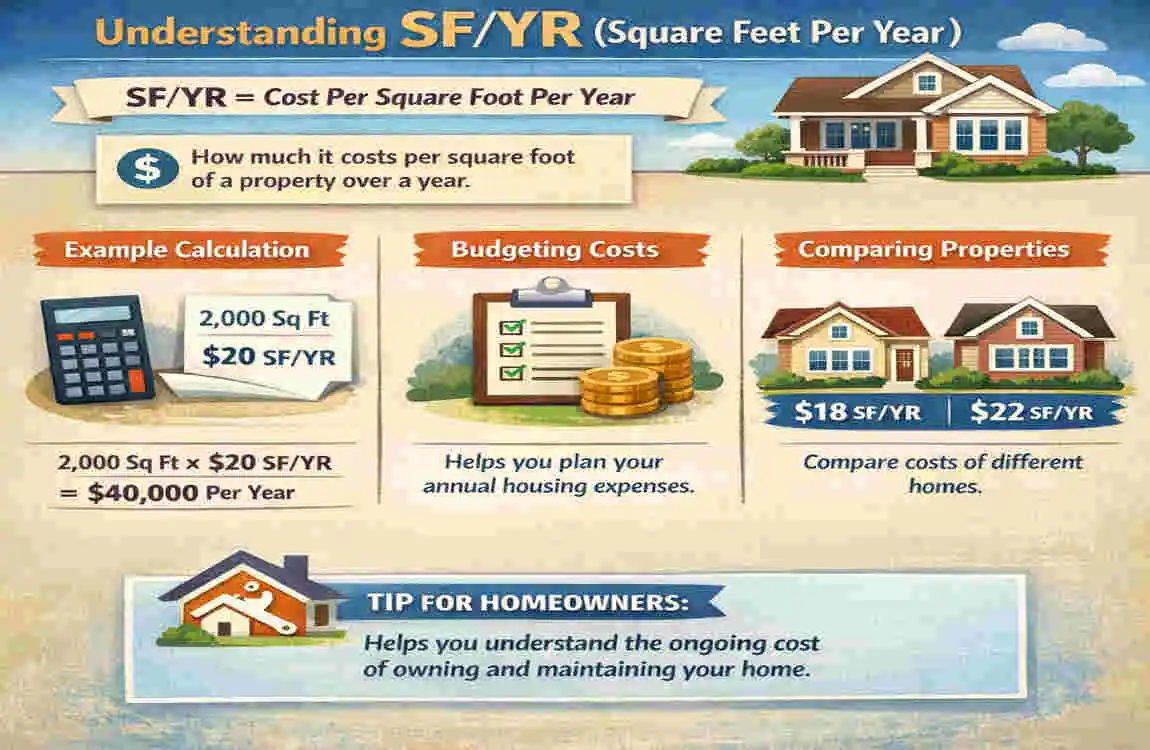
Real estate listings often use short forms and abbreviations that can feel confusing at first. One of the most common terms you may see is SF/YR. If you have ever wondered what SF/YR means in real estate, you are not alone.
This term is very important because it helps buyers, renters, homeowners, and investors understand how property pricing works. It is especially common in commercial real estate, where rent is often shown as a yearly cost per square foot. Once you understand it, you can compare properties more easily and make smarter decisions.
What Does SF/YR Mean in Real Estate?
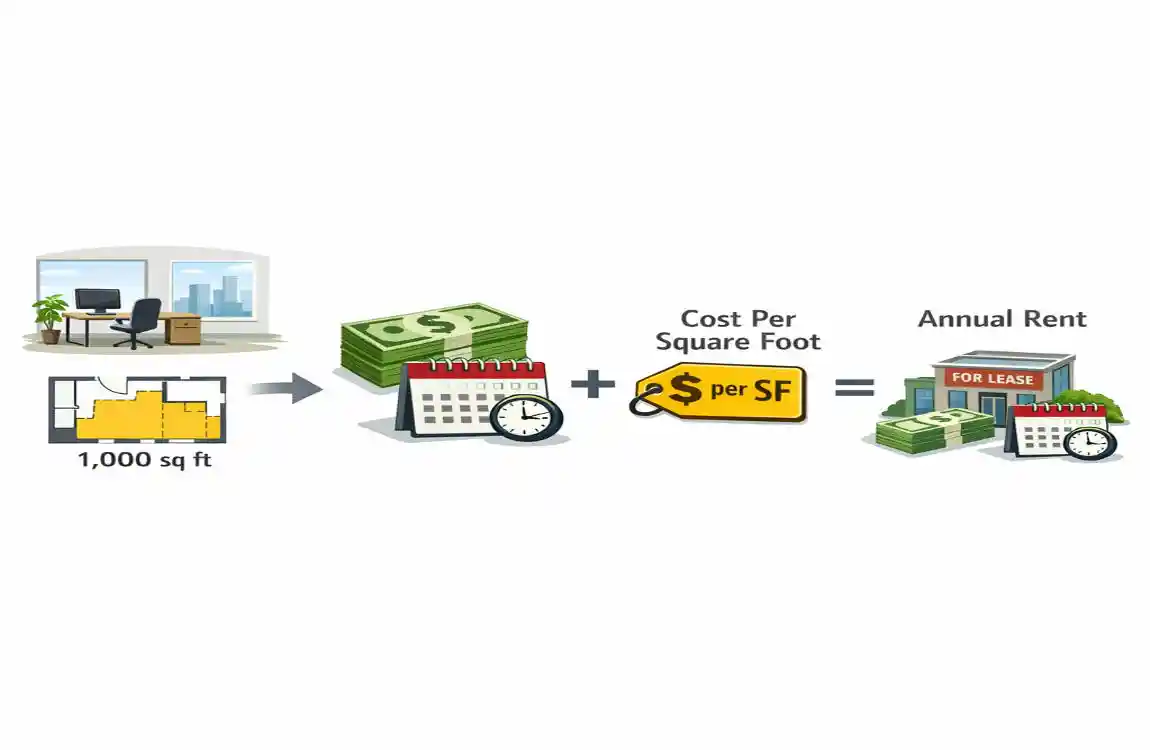
SF/YR stands for square feet per year. It is a pricing method that shows the annual rent per square foot of a property.
Here is the simple idea:
- SF means square foot
- YR means year
So when a listing says $24 SF/YR, it means the rent is $24 per square foot each year.
This term is most often used in commercial real estate, such as office buildings, retail stores, and warehouses. Instead of showing rent as a single monthly total, landlords use SF/YR so tenants can clearly compare spaces of different sizes.
Breaking Down the Formula
The formula is easy to understand:
Annual rent ÷ total square footage = SF/YR rate
For example, if a space costs $30,000 per year and is 1,500 square feet, then the SF/YR rate is:
$30,000 ÷ 1,500 = $20 SF/YR
That means the tenant is paying $20 per square foot per year.
This method makes it easier to compare one property against another, even if the buildings are different sizes.
Why Is SF/YR Important in Real Estate?
SF/YR matters because it provides a standard way to measure rental costs. Without it, comparing property listings would be much harder.
Helps Compare Properties
If you are looking at two commercial spaces, one may be bigger than the other. A space that costs more overall may still be a better deal if its SF/YR rate is lower.
For example:
- Property A: 1,000 sq. ft. at $22 SF/YR
- Property B: 1,500 sq. ft. at $18 SF/YR
Property B may be the better value, even though the total rent is higher.
Helps With Budgeting
Knowing the SF/YR rate helps you estimate the total yearly and monthly cost before signing a lease. That makes it easier to plan your budget and avoid surprises.
Helps in Lease Negotiations
When you understand the rate, you can ask better questions during negotiations. You may also spot when a landlord is charging too much compared to similar spaces nearby.
Benefits for Homeowners and Investors
For homeowners who own rental property or investors who buy income-producing buildings, SF/YR helps with:
- Property evaluation
- Income planning
- Market comparison
- Rental strategy
It gives a clearer picture of how much value a space can produce.
How to Calculate SF/YR Rates
Calculating SF/YR is simple once you know the numbers.
Step-by-Step Calculation
- Find the annual rent
- Measure the total square footage
- Divide the annual rent by the square footage
That gives you the SF/YR rate.
Example Calculation
Let’s say:
- Annual rent = $24,000
- Property size = 1,000 sq. ft.
Now divide:
$24,000 ÷ 1,000 = $24 SF/YR
So the rent is $24 per square foot per year.
Converting SF/YR to Monthly Costs
You may also want to know the monthly rent. To do that, follow this simple method:
SF/YR × square footage ÷ 12 = monthly rent
Using the same example:
$24 × 1,000 = $24,000 per year
Then divide by 12:
$24,000 ÷ 12 = $2,000 per month
So the monthly rent is $2,000.
Quick Formula Table
Property Size SF/YR Rate Annual Rent Monthly Rent
1,000 sq. ft. $24 $24,000 $2,000
1,500 sq. ft. $20 $30,000 $2,500
2,000 sq. ft. $18 $36,000 $3,000
This table shows how using the same pricing method can help you quickly estimate real costs.
Where Will You See SF/YR in Real Estate Listings?
You will usually see SF/YR in commercial property listings. It is less common in standard home rentals, but very common in business spaces.
Commercial Office Spaces
Office buildings often use SF/YR because companies want to know the cost of using office space over a full year.
You may see:
- Small office suites
- Corporate spaces
- Shared work areas
This helps businesses compare several offices before choosing one.
Retail Properties
Retail spaces such as stores, shopping units, and storefronts often list rent by square foot per year.
This is helpful because store size affects both cost and business planning. A larger store may cost more, but it could also bring in more customers.
Industrial Properties
Warehouses, storage spaces, and manufacturing buildings also use SF/YR. These spaces are usually larger, so pricing by square foot makes the numbers easier to manage.
Mixed-Use Developments
Mixed-use buildings have both residential and commercial areas. In these cases, you may see SF/YR for the business portion of the property, especially if the ground floor is used for shops or offices.
SF/YR vs. Monthly Rent: Understanding the Difference
SF/YR and monthly rent are both measures of cost, but they are used differently.
Annual Pricing Structure
SF/YR shows the yearly rate per square foot. It is useful for long-term property comparison and business planning.
This is especially helpful when:
- Comparing multiple commercial spaces
- Estimating yearly rental expenses
- Reviewing lease terms
Monthly Lease Payments
Monthly rent is easier for many people to understand because it shows the amount due each month.
This works well for:
- Personal budgeting
- Short-term planning
- Simple rent comparisons
Which Pricing Method Is Better?
Neither one is always better. They serve different purposes.
- SF/YR is better for commercial analysis
- Monthly rent is better for quick budgeting
If you are a tenant or buyer, it helps to understand both. That way, you can see the full picture and avoid confusion.
Factors That Affect SF/YR Rates
Many things can change the SF/YR rate of a property. Some spaces cost more because they are in a better location, while others cost more because they offer more features.
Property Location
Location is one of the biggest price factors. A property in a busy city center usually costs more than one in a suburban or less active area.
Why? Because location affects:
- Customer traffic
- Convenience
- Business visibility
- Access to transportation
A strong location often means a higher SF/YR rate.
Property Condition
A new or well-maintained building usually has a higher rate than an older building in poor condition.
Buyers and tenants often pay more for:
- Modern interiors
- Updated systems
- Better structure
- Fewer repair needs
Amenities and Features
Extra features can raise the SF/YR rate. These may include:
- Parking spaces
- Security systems
- Elevators
- Energy-efficient systems
- Smart building features
These details matter because they can make a property easier and more comfortable to use.
Market Demand
When demand is high, prices usually rise. When there are many empty spaces in the market, rates may go down.
Important market factors include:
- Local business activity
- Interest rates
- Economy conditions
- Supply and demand in the area
Understanding these factors helps you see why one listing costs more than another.
Common Mistakes When Interpreting SF/YR
It is easy to misunderstand SF/YR if you are not used to reading real estate listings.
Ignoring Additional Fees
The SF/YR rate may not include all costs. Some listings add extra charges such as:
- CAM fees
- Maintenance costs
- Taxes
- Insurance
Always ask what is included before making a decision.
Miscalculating Square Footage
Not all square footage numbers mean the same thing. Some listings show gross space, while others show usable space.
This matters because the rent should match the space you can actually use.
Confusing Annual and Monthly Rates
A very common mistake is reading an annual rate as if it were monthly.
For example, $20 SF/YR is not the same as $20 per month. It is the annual cost per square foot.
Always check whether the listing shows:
- Yearly price
- Monthly price
- Total annual rent
- Extra charges
Tips for Homeowners and Renters
If you are looking at a property, a few simple habits can save you money and stress.
Compare Multiple Listings
Do not look at only one property. Compare several spaces with different SF/YR rates. This helps you see what is fair in the current market.
Ask About Additional Costs
Always ask if the rent includes extra charges. A low SF/YR rate may look attractive, but hidden fees can raise the final cost.
Negotiate Lease Terms
If the rate seems high, you may be able to negotiate. You can ask for:
- Lower rent
- Better lease length
- Included maintenance
- Free parking
Small changes can make a big difference over time.
Future Trends in Real Estate Pricing

Real estate pricing is becoming more transparent and data-driven. More listings now use digital tools that help people compare prices quickly.
Technology-Driven Pricing
New software and market tools make it easier to estimate fair rent using real data. This helps landlords and tenants make better decisions.
More Transparent Listings
Many property listings now show clearer pricing details, which makes SF/YR easier to understand than before.
Better Market Analysis
As more data becomes available, pricing will likely become more accurate. That means tenants and investors may have a better sense of value before they sign anything.
FAQs
What does SF/YR mean in real estate?
SF/YR means square foot per year. It shows the annual rent per square foot.
How do you calculate SF/YR?
Divide the annual rent by the property’s total square footage.
Is SF/YR used in residential real estate?
It is mostly used in commercial real estate, but it may also appear in discussions of investment and mixed-use properties.
How can I convert SF/YR to monthly rent?
Multiply the SF/YR rate by the square footage, then divide by 12.
Why do commercial listings use SF/YR?
It gives a standard way to compare different spaces, even when they are not the same size.
Are additional fees included in SF/YR?
Not always. Ask about CAM charges, taxes, insurance, and maintenance costs before signing anything.
| Term | Meaning | Real Estate Use |
|---|---|---|
| SF | Square Feet | Measures the size of a property, home, room, or land area. |
| YR | Year Built | Indicates the year a property was originally constructed. |
| SF/YR | Square Feet per Year Built Reference | A listing abbreviation showing property size alongside its construction year. |
| Example | 2,000 SF / 2018 YR | A home with 2,000 square feet built in 2018. |
| Why It Matters | Size + Age Overview | Helps buyers quickly compare homes based on living space and construction date. |
| For Homeowners | Property Evaluation | Useful for estimating value, maintenance needs, and market appeal. |
| For Buyers | Faster Decision-Making | Provides key property details at a glance in listings. |
