
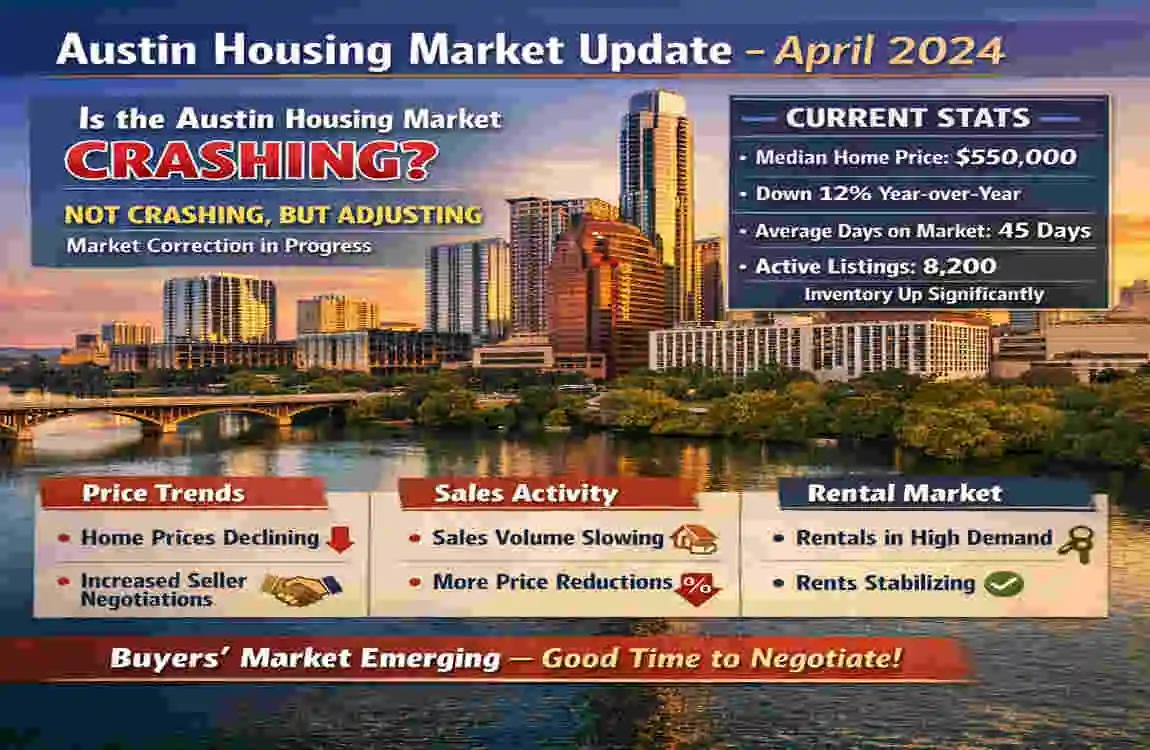
The short answer is this: Austin is not in a full crash. What we are seeing is a market correction. That means prices are softening, homes are taking longer to sell, and buyers have more room to negotiate than they did during the boom years.
This matters because a real estate crash is very different from a normal slowdown. A crash usually means a sharp drop in prices, heavy panic selling, and deep financial stress across the market. Austin does not look like that right now. Instead, it looks like a city that grew too fast and is now settling into a more normal pace.
Overview of the Austin Real Estate Market
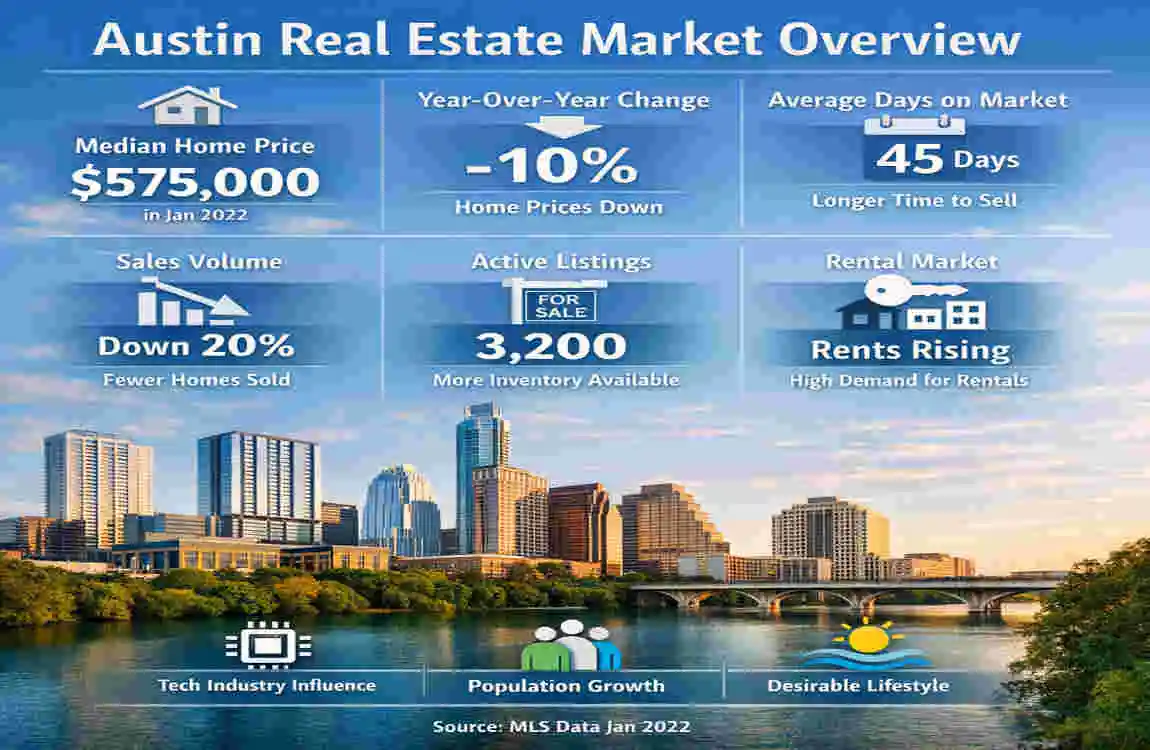
Austin’s housing market has had a strong rise over the last decade. The city grew rapidly due to job growth, business expansion, and population growth. Tech companies like Tesla, Apple, and Oracle helped bring in more workers, which pushed up demand for homes.
Then the pandemic changed everything. More people worked from home and wanted more space. Many buyers moved to Austin because they saw it as a growing city with good jobs and a strong lifestyle. That created a huge wave of demand.
At the same time, low mortgage rates made buying feel easier. As a result, home prices rose quickly, and bidding wars became common.
Now the market is different. Prices are no longer rising as fast, and in some areas they have fallen slightly. This does not mean the city is weak. It means the market is adjusting after a very hot run.
Is the Austin Housing Market Crashing?
To answer this clearly, it helps to understand the difference between a crash, a correction, and a slowdown.
- Crash: A fast and serious drop in luxury home prices
- Correction: A price pullback after a period of rapid growth
- Slowdown: Homes sell more slowly, and buyers act more carefully
Austin fits the correction-and-slowdown category, not the crash category.
Market Signals Right Now
Market Signal: What It Means
Home prices are softening in some areas, stabilising in others
Inventory: More homes are available than during the boom
Days on market: Homes are staying listed longer
Buyer demand is still present, but less intense
Investor activity is slower than during the peak
One of the biggest signs of change is that homes are not flying off the market in hours anymore. Buyers now have time to think, compare, and negotiate. That is a major shift from the peak years.
Also, some investors who rushed into the market earlier have stepped back. That has taken some pressure off prices.
So, is the Austin housing market crashing? No. It is cooling, balancing out, and becoming more realistic.
Why Is the Market Slowing Down?
There are a few main reasons behind the slowdown.
Higher Mortgage Rates
This is one of the biggest factors. When interest rates rise, monthly payments go up. Even if a home’s price stays the same, borrowing money becomes more expensive.
That has made many buyers pause. Some can no longer afford the same homes they could buy a few years ago. Others choose to wait.
Lower Affordability for Buyers
Austin became much more expensive after the boom. For first-time buyers, this created a real problem. Wages did not rise as fast as home prices.
So even though Austin is still attractive, many people now feel priced out of the market.
More Housing Supply
During the boom, there was a shortage of luxury homes. Now more properties are available. When supply goes up and demand cools, prices usually level off.
This does not mean homes will collapse in value. It just means sellers cannot always name any price they want.
Tech Market Normalisation
Austin’s tech growth was a huge driver of demand. But the tech sector, like any sector, can change. Hiring has normalised, and the frantic pace of the pandemic years is over.
That has reduced some of the heat in the market.
Slower Migration
People still move to Austin, but not at the same pace as during the peak years. During the pandemic, many buyers rushed in from larger, more expensive cities. That wave has slowed.
What Is Happening to Home Prices?
Home prices in Austin are not moving in one straight line. Some neighbourhoods are holding up better than others.
Different Areas, Different Results
Luxury homes, mid-market homes, and entry-level homes all behave differently.
- Luxury homes may take longer to sell
- Mid-market homes often see the most activity
- Entry-level homes can still attract strong interest if priced well
In some neighbourhoods, sellers have had to lower asking prices. In other areas, especially those with strong schools or desirable locations, prices remain more stable.
Rental Market Impact
Rent also matters. When more people rent rather than buy, rental demand can remain strong. That can support the broader housing market, especially if buyers are waiting for better mortgage rates.
So while some home values have eased, Austin is still a city with real housing demand.
Buyer vs Seller Market Conditions
Austin has clearly moved away from the extreme seller’s market seen during the boom.
What Buyers Should Know
Buyers now have more power than before. They may be able to ask for:
- Lower prices
- Closing cost help
- Repairs
- Builder incentives on new homes
This is a major change from the days of nonstop bidding wars.
What Sellers Should Know
Sellers need to be realistic. Overpricing a home can cause it to sit on the market. That often leads to price cuts later.
Well-priced homes can still sell, but the market rewards patience and smart pricing, not guesswork.
Expert Forecast for Austin Real Estate
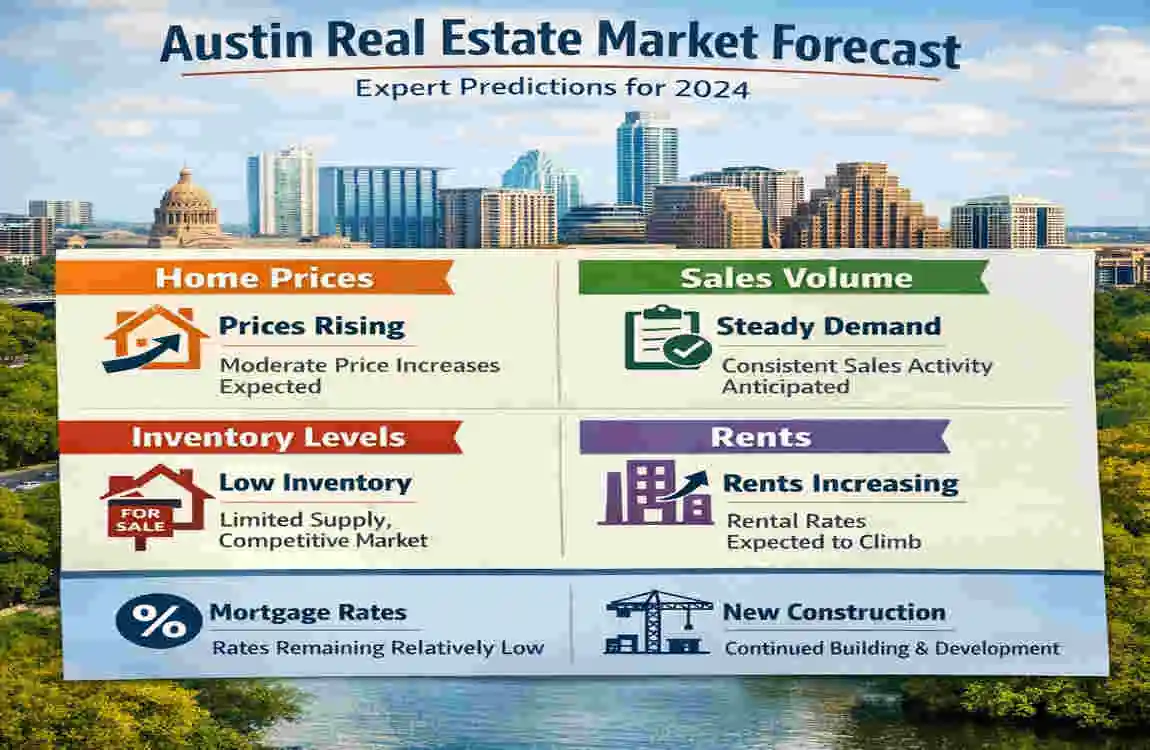
Looking ahead, Austin is likely to remain stable rather than fall apart.
Short-Term Outlook
In the next 6 to 12 months, the market may stay soft. Some areas could see small price drops, while others may hold steady.
Long-Term Outlook
Over the longer term, Austin still has strong support from:
- Job growth
- Population growth
- Business expansion
- Strong city appeal
That makes a deep, long-term collapse unlikely unless there is a much larger national problem.
What Could Change the Market?
Interest rates will play a big role. If rates fall, more buyers may return. If rates stay high, prices may stay under pressure for longer.
Should You Buy or Sell in Austin Right Now?
This depends on your goal.
If You Are Buying
Buying now may make sense if:
- You plan to stay long-term
- You want more negotiating room
- You can handle current rates comfortably
If You Are Selling
Selling may make sense if:
- Your luxury home is priced realistically
FAQ: Austin Real Estate Crash
Is Austin’s housing market crashing right now?
No. The market is cooling, not crashing. Prices are stabilizing after rapid growth.
Why are Austin home prices dropping?
Mainly due to higher interest rates, lower affordability, and increased housing supply.
Will Austin home prices keep falling?
There may be small short-term declines, but a major crash is not widely expected.
Is Austin still a good place to invest in real estate?
Yes, long-term fundamentals like job growth and population increase remain strong.
Is it a buyer’s or seller’s market in Austin now?
It is shifting toward a more balanced market, giving buyers more negotiating power.
| Factor | Current Situation (2026) | What It Means |
|---|---|---|
| Home Prices | Down ~15%–20% from 2022 peak | Market correction, not a crash |
| Year-over-Year Prices | Slight decline (~1%–4%) | Prices mostly stabilizing |
| Inventory | High (≈10,000+ homes active) | Buyers have more choices |
| Buyer vs Seller Balance | ~116% more sellers than buyers | Strong buyer’s market |
| Days on Market | ~90–106 days average | Homes selling much slower |
| Price Cuts | 30%–50%+ listings reduced | Sellers adjusting expectations |
| Market Trend | “Correction / Reset phase” | Cooling, not collapsing |
| Forecast | Further small declines possible (1%–5%) | No major crash expected |
