
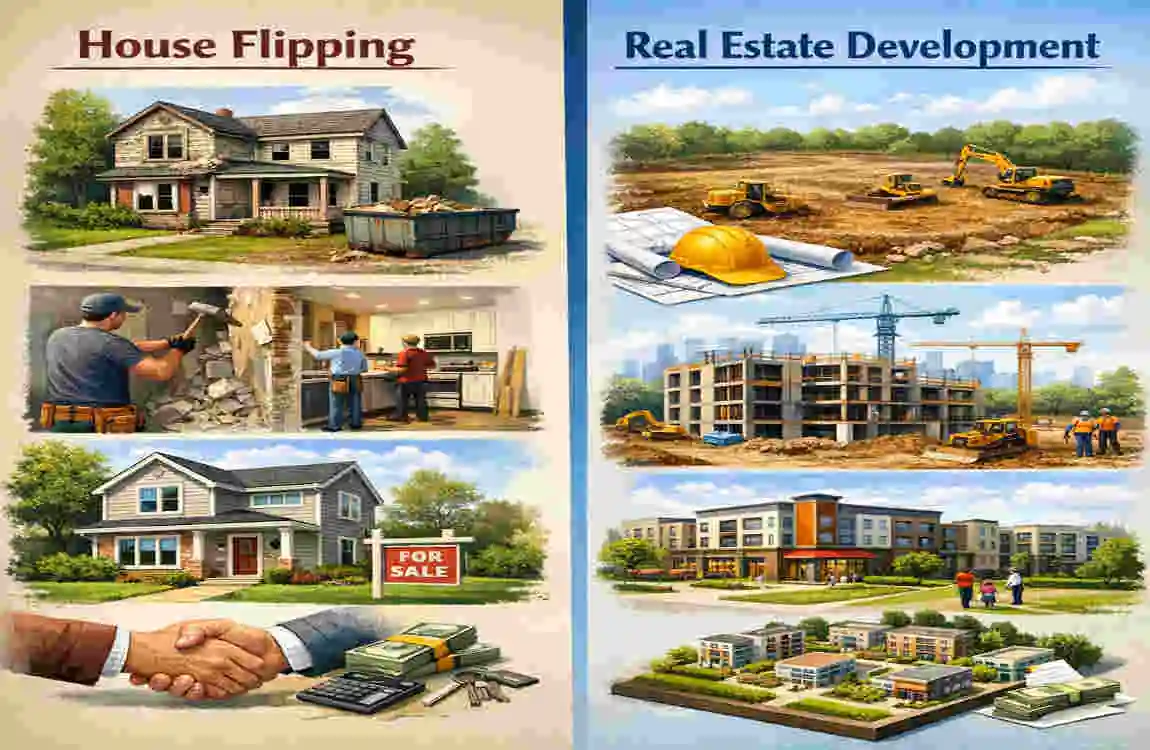
If you are exploring property investing, you may be asking, is house flipping real estate development? The short answer is not exactly.
House flipping and real estate development are both ways to make money in property, but they are not the same thing. Flipping usually means buying an existing home, fixing it up, and selling it for a profit. Development usually means creating something new or making a much bigger transformation.
House Flipping Explained
What Is House Flipping?
House flipping is the process of buying a property, improving it, and then selling it quickly for a higher price.
Most flippers look for homes that are outdated, damaged, or undervalued. These homes often need work, but they also offer room for profit if the renovation is done well.
Common upgrades include:
- kitchen updates
- bathroom remodels
- new flooring
- fresh paint
- roof repairs
- landscaping
The goal is simple: buy low, improve smartly, sell higher.
How Does a House Flip Work?
A typical flip follows a clear process.
First, the investor studies the market and looks for homes in strong selling areas. Then they buy the right property at the right price. After that, they carefully estimate renovation costs.
Once the work begins, they repair, upgrade, and stage the home for resale. Finally, they list it and try to sell it for a profit.
The key numbers are:
- purchase price
- renovation budget
- holding costs
- selling price
If costs are too high or resale prices are too low, profit can disappear quickly.
Is House Flipping Considered Real Estate Development?
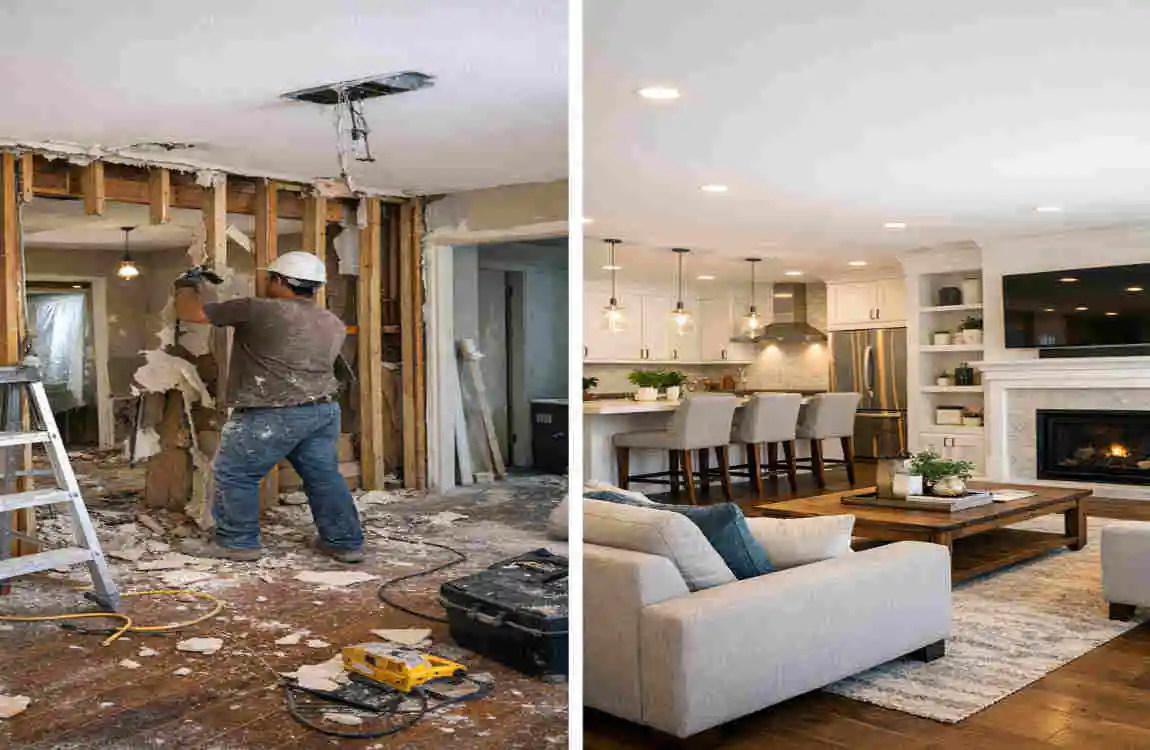
This is where the confusion starts.
House flipping can overlap with real estate development in some cases, but it is usually not the same thing. Flipping is mainly about improving an existing property and reselling it.
Real estate development is usually broader. It may involve land, design, approvals, construction, or major redevelopment. So while flipping is a form of real estate investment, it is not usually called full-scale development.
What Is Real Estate Development?
Real Estate Development Explained
Real estate development is the process of turning land or property into a new or significantly improved project.
That could mean building homes, creating subdivisions, or redeveloping an older site into something much larger or more useful.
Development can involve:
- residential projects
- commercial projects
- mixed-use projects
For this article, the main focus is residential development, since that is the area most often compared with flipping.
Common Types of Residential Development
Residential development comes in several forms:
- new single-family home construction
- subdivisions
- townhouses and multifamily buildings
- major redevelopment of older properties
- land preparation for future building
These projects usually require more planning than a simple home flip.
The Real Estate Development Process
Development usually has many steps:
- market research
- land or property purchase
- zoning and planning review
- design and engineering work
- permits and approvals
- financing and budgeting
- construction
- marketing, leasing, or selling
As you can see, development is often a larger and more complex process than flipping.
Key Differences Between House Flipping and Real Estate Development
Property Type and Project Scope
House flipping usually starts with one existing home. The investor improves what is already there.
Real estate development may start with vacant land, an older building, or a larger site that needs major transformation.
So the scale is different. Flipping is usually smaller. Development is usually broader and more complicated.
Investment and Financing
Flipping often needs moderate capital. Many flippers use cash, short-term loans, or private funding.
Development usually needs more money because it may involve land, permits, engineering, infrastructure, and construction. It may also require special financing, such as development loans or investor partnerships.
In simple terms, development usually costs more to start.
Timeline
A flip can often be finished faster than a development project.
That is because flipping focuses on renovation, not full construction and approval processes. Development usually takes longer because it includes planning, drawings, permits, and building.
Delays can increase holding costs and reduce profit, especially in larger projects.
Risk Level
Both strategies carry risk, but their risk profiles differ.
With flipping, risks may include:
- hidden repair problems
- contractor delays
- market changes
- underestimated renovation costs
With development, risks often include:
- zoning problems
- permit delays
- construction issues
- financing pressure
- environmental or site problems
Because development is bigger, it often brings greater financial risk.
Skills and Expertise
Flipping requires good judgment about home values, renovation budgets, and resale pricing.
Development requires those skills too, but it also needs strong project management. Developers often work with architects, engineers, attorneys, contractors, lenders, and city officials.
That means development usually demands a wider skill set.
Profit Potential
Flippers make money by increasing the resale value of an existing property.
Developers create value by building, expanding, or transforming a property into something more valuable.
Development may offer larger profit potential, but it also usually requires more capital, more time, and more risk.
House Flipping vs. Real Estate Development: Quick Comparison
FactorHouse FlippingReal Estate Development
Main goal Renovate and resell Create or transform property
Typical property Existing home Land, site, or large property
Project size Smaller Medium to large
Timeline Usually shorter Usually longer
Capital needs Moderate Often substantial
Main work Repairs and updates Planning, approvals, construction
Complexity Moderate High
Common risks Renovation and resale risks Regulatory, construction, and financing risks
Profit source Increased resale value Value created through development
Expertise Renovation and market knowledge Broader development knowledge
Which Strategy Is Better for Investors?
When House Flipping May Make Sense
House flipping may be better if you want a smaller, faster project.
It can work well for beginners who understand basic renovation, or for investors who already have trusted contractors. It also helps if you know your local housing market well.
Flipping may be a good fit if you want a return sooner and do not want to manage a large construction project.
When Real Estate Development May Be a Better Choice
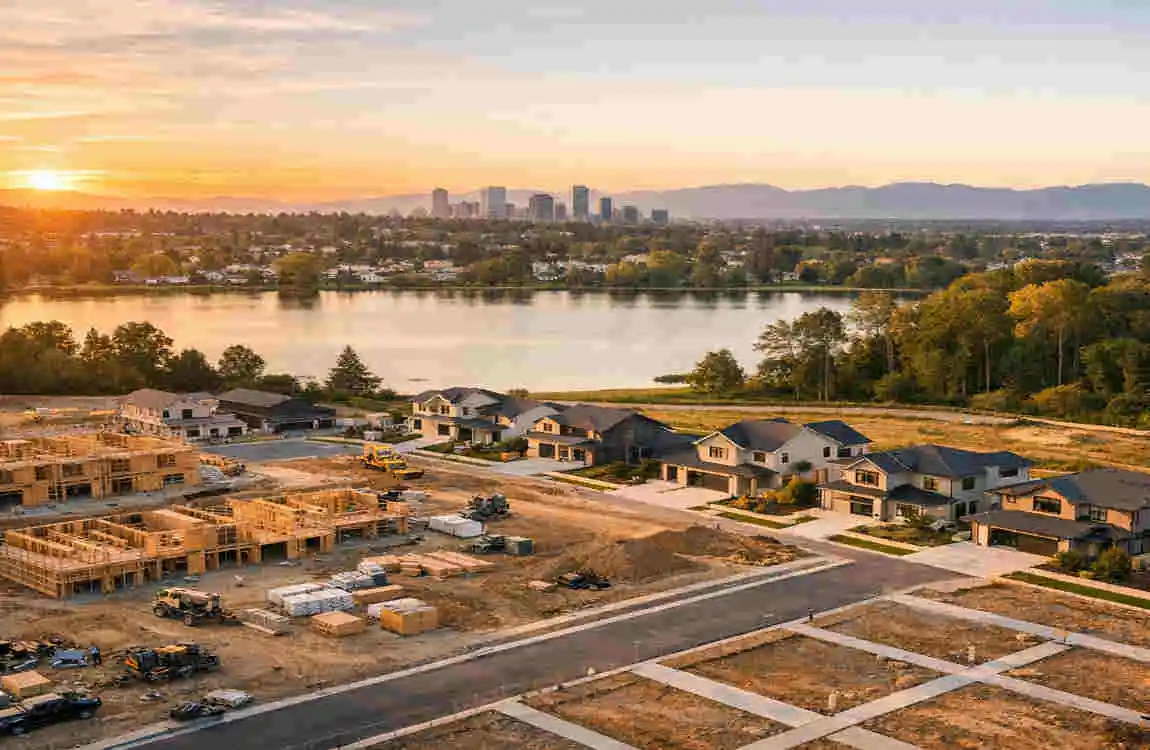
Development may make more sense if you have more capital and more experience.
It can suit investors with knowledge of construction, planning, finance, or project management. It may also be a better choice if you want to create multiple homes or bigger residential projects.
Development usually works best when you can think long-term and handle greater complexity.
Questions to Ask Before Choosing
Before you decide, ask yourself:
- How much capital do I have?
- How much risk can I handle?
- How much time can I commit?
- Do I understand my local market?
- Do I have renovation or construction experience?
- Do I need a fast return?
- Do I have access to reliable professionals?
These questions can help you avoid choosing a project that is too big for your budget or experience.
Costs, Risks, and Profit Considerations
Common House-Flipping Costs
Typical flip costs include:
- purchase price
- closing costs
- renovation materials
- contractor labor
- utilities and insurance
- property taxes
- financing costs
- holding costs
- selling commissions
Common Development Costs
Development costs may include:
- land acquisition
- surveys
- architecture and engineering
- permits and approvals
- site work
- infrastructure
- construction
- legal and professional fees
- marketing and sales
Why Budgeting Matters
Budgeting is one of the most important parts of both strategies.
Small surprises can cut into profit fast. Material prices can rise. Labor can cost more than expected. Projects can also take longer than planned.
That is why smart investors build a contingency fund into every budget.
FAQ About House Flipping and Real Estate Development
Is house flipping real estate development?
Not usually. House flipping is mainly an investment strategy focused on renovating and reselling an existing property. Development is broader and often involves creating or significantly transforming property.
What is the main difference between flipping and developing a property?
Flipping usually means buying an existing home, improving it, and selling it. Development may involve land purchase, planning, permits, construction, and larger-scale transformation.
Is house flipping considered a real estate investment?
Yes. House flipping is widely viewed as a real estate investment strategy because profit comes from buying, improving, and reselling property.
Is real estate development more expensive than house flipping?
Usually yes. Development often requires more money for land, professional services, permits, and construction, and entails longer project timelines.
Can a beginner start house flipping?
Yes, but beginners should start carefully. It is important to understand property values, renovation costs, and market demand before buying.
Which is more profitable: house flipping or real estate development?
Neither one guarantees profit. Development may offer larger returns, but it usually entails higher costs, greater risk, and longer timelines.
| Aspect | House Flipping | Real Estate Development |
|---|---|---|
| Main Goal | Buy, improve, and resell a property for profit | Create or significantly transform property for long-term value |
| Typical Property | Existing homes needing repairs or updates | Land, vacant lots, or large properties |
| Project Length | Usually a few months | Often several months to multiple years |
| Work Involved | Renovations, repairs, and cosmetic upgrades | Planning, construction, permits, infrastructure, and design |
| Investment Level | Generally lower | Usually much higher |
| Risk | Moderate | Higher due to larger projects and longer timelines |
| Profit Source | Difference between purchase, renovation, and sale price | Increased property value, sales, or rental income |
| Best For | Investors seeking faster returns | Investors comfortable with larger, long-term projects |
