

A commercial real estate dispute can happen when two or more parties disagree about a property, a lease, a sale, a construction project, or how a building is managed. These disputes can involve owners, tenants, buyers, sellers, investors, contractors, or developers.
What Is a Commercial Real Estate Dispute?

A commercial real estate dispute is simply a disagreement tied to business property. This may involve office buildings, retail spaces, warehouses, apartment complexes, or development land.
These disputes often start when one party believes another side broke an agreement or failed to meet a duty.
Common Examples
A commercial property dispute may involve:
- Lease disagreements
- Boundary issues
- Contract breaches
- Construction defects
- Rent payment problems
- Property management conflicts
These issues can become expensive if they are ignored. That is why early action matters.
Why These Disputes Happen
Most disputes begin because a contract is unclear, one party misses a deadline, or both sides expect different things. In business property matters, small misunderstandings can quickly turn into bigger legal problems.
Common Causes of Commercial Real Estate Disputes
Lease and Tenant Disputes
Lease problems are one of the most common sources of conflict.
These often involve:
- Unpaid rent
- Lease violations
- Repair and maintenance duties
- Renewal or termination disagreements
Sometimes the tenant believes the landlord failed to maintain the property. Other times, the landlord believes the tenant damaged the space or broke the lease terms.
Purchase and Sale Disputes
A real estate contract dispute can arise during a sale if one party fails to meet the terms of the contract.
Common issues include:
- Misrepresentation
- Title problems
- Contract breaches
- Failure to close on time
These disputes can delay a sale or even stop it completely.
Construction and Development Disputes
Construction projects often involve many moving parts. That makes disputes more likely.
Typical problems include:
- Delays
- Poor artistry
- Cost overruns
- Contractor disagreements
When a project falls behind, both time and money can be lost quickly.
Partnership and Investment Disputes
Business partners and investors may disagree about money, control, or ownership.
Common problems include:
- Profit-sharing disagreements
- Management conflicts
- Investor obligations
- Ownership issues
These disputes can be especially stressful because they may affect the property’s long-term future.
Rights of Parties in a Commercial Real Estate Dispute
Your rights usually come from the documents you signed and the law in your state.
Important Documents to Review
If you are involved in a commercial real estate dispute, start with:
- Lease agreements
- Purchase contracts
- Property records
- Loan documents
- Emails and written messages
These papers often explain who must do what, when payments are due, and what happens if one side fails to perform.
Why Deadlines Matter
Many contracts require formal notice before legal action can begin. Some also include strict deadlines for complaints, repairs, renewals, or termination.
If you miss a deadline, you may weaken your position.
State and Local Law
Your rights may change depending on where the property is located. Local laws can affect leases, evictions, contract enforcement, and property use. That is why the same issue may be handled differently in different states.
How to Handle a Commercial Real Estate Dispute
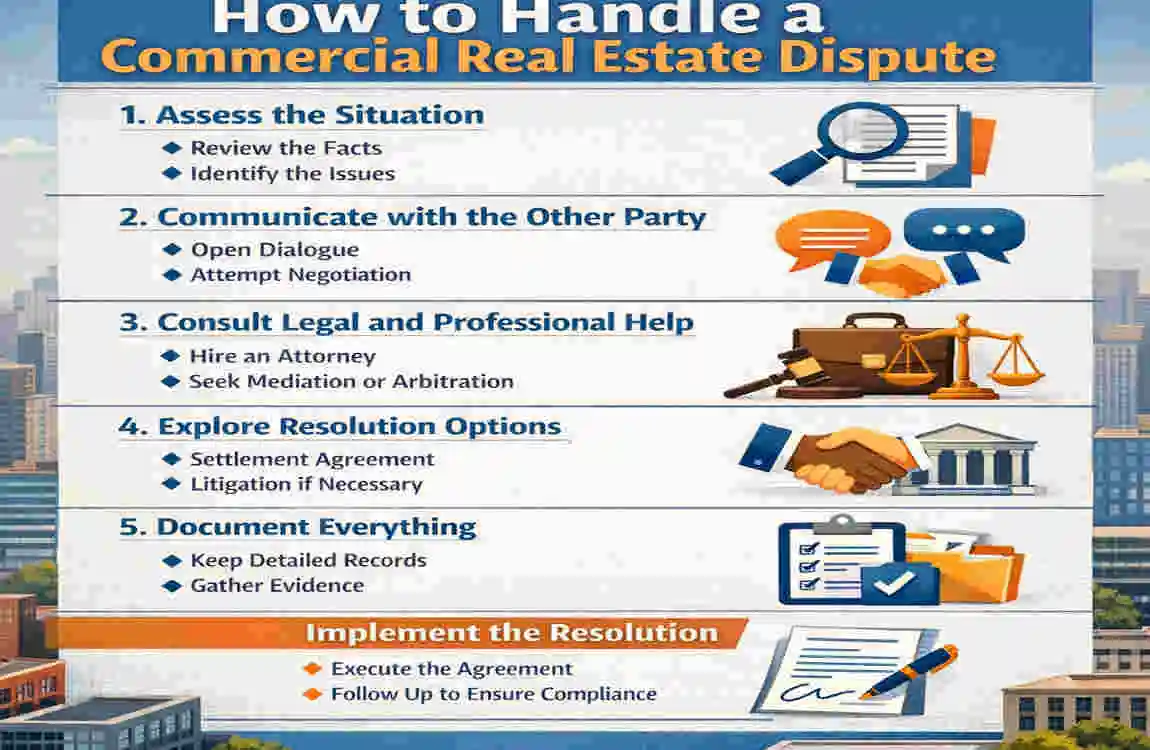
Identify the Exact Issue
Start by asking a simple question: What is the real problem?
Is it unpaid rent, a broken contract, poor construction, or a management issue? A clear answer helps you choose the right next step.
Review the Agreement
Read the lease, contract, or partnership agreement carefully. Look for clauses about notice, payment, repairs, deadlines, and dispute resolution.
Communicate Professionally
Try to speak or write in a calm and businesslike way. Clear communication can solve many problems before they get worse.
Keep Good Records
Save:
- Payments
- Notices
- Repair requests
- Photos
- Emails
- Letters
Strong records can help support your side later.
Get Legal Advice When Needed
If the dispute involves serious money, ownership rights, or possible litigation, speak with a qualified real estate attorney.
Legal and Alternative Options for Resolving the Dispute
There are several ways to resolve a dispute without always going straight to court.
OptionWhat It MeansBest For
Negotiation Direct discussion between parties Faster, low-cost solutions
Mediation A neutral third party helps reach agreement Preserving business relationships
Arbitration A private decision-maker hears the case Contract-based dispute resolution
Litigation The dispute goes to court Serious or unresolved conflicts
Negotiation
This is often the fastest path. Both sides speak directly and seek a practical solution.
Mediation
A mediator does not take sides. The goal is to help both parties find common ground. This can be useful when both sides want to keep working together.
Arbitration
Arbitration is more formal than mediation but usually less public than court. In many contracts, arbitration is required before litigation.
Litigation
If nothing else works, the dispute may go to court. This can take more time and cost more money, but it may be necessary when the facts are serious, or the stakes are high.
How to Protect Your Business During a Real Estate Dispute
Simple Ways to Reduce Risk
- Read contracts before signing
- Make responsibilities clear
- Keep organised records
- Respond quickly to notices
- Avoid careless statements
- Get legal help early when needed
Why This Matters
A small mistake can grow into a much larger legal property problem. Careful planning, written communication, and proper documentation can protect your business and help you stay in control.
Commercial Real Estate Dispute: FAQs
What is a commercial real estate dispute?
It is a disagreement involving business property, such as a lease, a sale, a construction project, an ownership issue, or a management conflict.
What are the most common commercial real estate disputes?
The most common ones involve leases, contracts, construction problems, rent, ownership, and payment issues.
Can a commercial real estate dispute be settled without going to court?
Yes. Many disputes are resolved through negotiation, mediation, or arbitration.
When should I hire a commercial real estate attorney?
You should get legal help if the dispute involves major financial loss, ownership rights, contract interpretation, eviction, or threatened litigation.
How long does a commercial real estate dispute take to resolve?
It depends on the issue, the contract, the location, and the method used to resolve it. Some disputes end quickly, while others take months or longer.
What documents are useful in a commercial real estate dispute?
Useful documents include contracts, leases, notices, invoices, photos, property records, and emails.
What happens if a commercial real estate dispute goes to court?
The case may move through pleadings, evidence review, hearings, and possibly trial. The court may also order money damages or other remedies.
Can I prevent future commercial real estate disputes?
Yes. Clear contracts, good records, proper inspections, and timely communication can reduce future problems.
| Issue | Common Problem | Possible Option |
|---|---|---|
| Lease Dispute | Rent, repairs, or lease terms conflict | Review lease and negotiate |
| Property Damage | Damage or maintenance disagreement | Document damage and seek repair |
| Contract Breach | One party fails to meet obligations | Send formal notice or pursue a claim |
| Rent Dispute | Unpaid or disputed rent | Negotiate payment or use legal remedies |
| Property Ownership | Disagreement over ownership rights | Review records and seek legal advice |
| Mediation | Parties cannot agree | Use a neutral mediator |
