
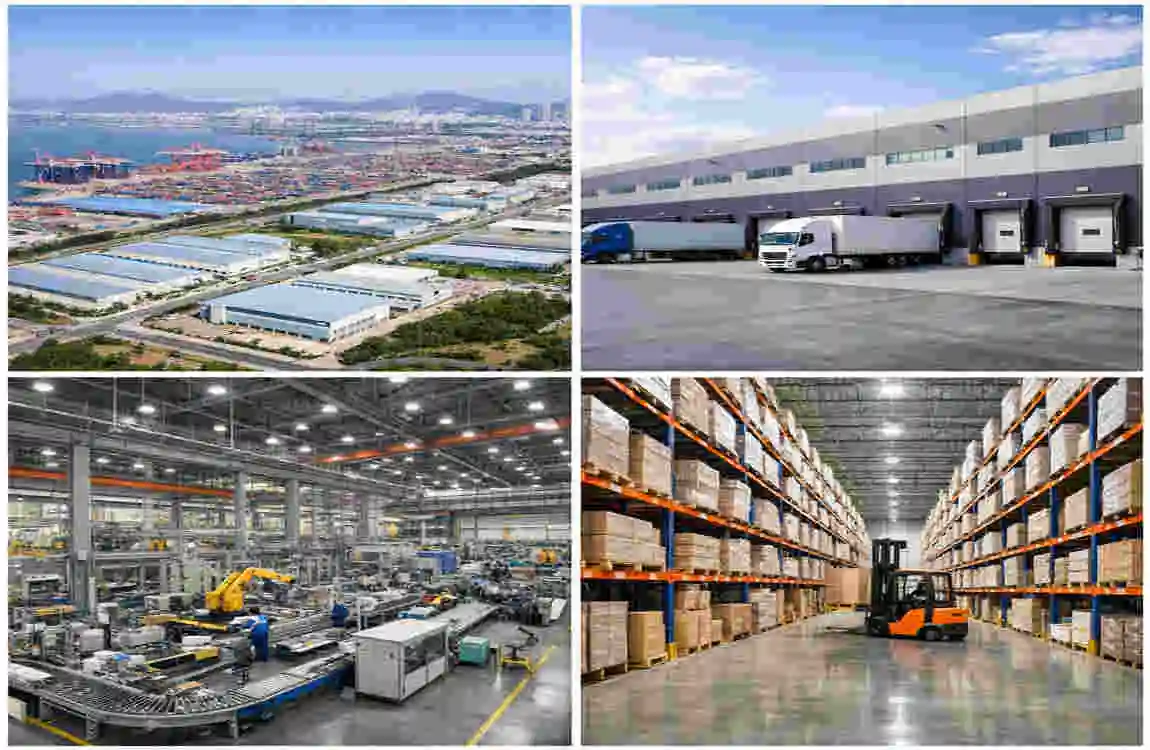
South Korea’s industrial real estate has become an important part of the country’s economy. It supports manufacturing, shipping, storage, delivery, and the growing needs of digital businesses. As more companies need modern operational space, the market for warehouses, factories, logistics hubs, and data centers continues to evolve.
If you are an investor, business owner, or market researcher, this sector is worth understanding. It offers opportunities, but it also comes with location risks, zoning rules, and changing demand patterns.
South Korea Industrial Real Estate Market Overview
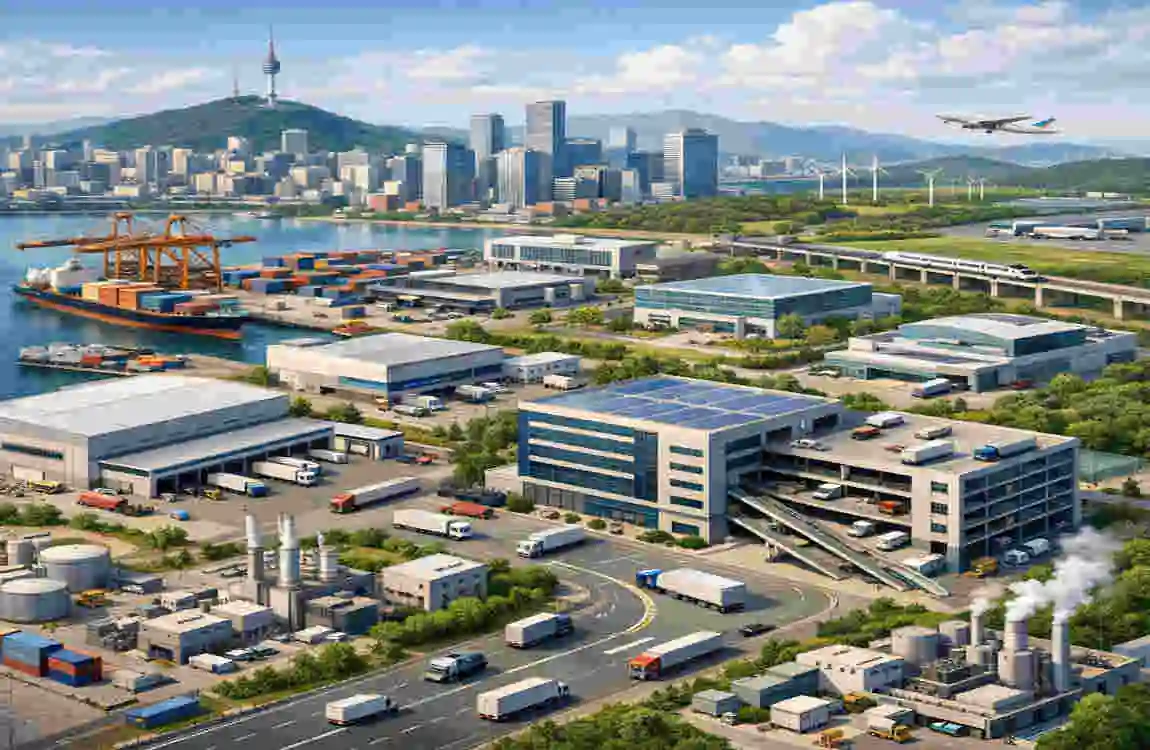
What the market looks like today
South Korea’s industrial property market is shaped by trade, manufacturing, technology, and logistics. The country has a strong export base and a busy supply chain network, so industrial buildings play a major role in keeping goods moving.
This market includes more than just old factory buildings. Today, it also includes modern logistics warehouses, distribution centers, cold-storage buildings, industrial parks, and data centers.
Main property types in the market
The industrial sector in South Korea usually includes:
- Logistics warehouses
- Manufacturing facilities
- Industrial parks
- Distribution centers
- Data centers
Each type serves a different purpose. Some properties are meant for storage and delivery. Others support heavy production, technology systems, or specialized supply chains.
Why demand keeps growing
A few major trends are pushing demand upward. E-commerce has made delivery speed more important. Companies now want space that helps them move products quickly and efficiently.
At the same time, manufacturers want facilities that can support modern operations. Many businesses are also looking for better power supply, loading access, and transportation links.
How location changes value
Industrial property value can vary widely depending on where the building is located. A site near Seoul, Incheon, Busan, or a major highway usually has stronger demand than a more remote area.
This is because businesses care about access to labour, ports, airports, and shipping routes. If a property saves time and transport costs, it becomes more valuable.
Major Industrial Real Estate Locations in South Korea
Seoul Metropolitan Area
The Seoul Metropolitan Area is one of the country’s most important industrial zones. It includes:
- Seoul
- Gyeonggi Province
- Incheon
This area has strong demand because it connects businesses to a large consumer base, major roads, and key logistics systems. Many companies prefer this region for warehouses and distribution centers because it supports fast delivery.
Incheon is especially important because of its port and airport connections. Gyeonggi Province also plays a major role because it surrounds Seoul and offers more space for industrial development.
Busan
Busan is another major location for South Korea’s industrial real estate. As a port city, it has a natural advantage in logistics and trade.
Industrial properties in Busan often serve shipping, import-export work, and storage. Businesses that depend on port access usually pay close attention to this region.
Daegu and surrounding industrial areas
Daegu has a strong manufacturing background. It is often linked to production, textiles, machinery, and industrial support services.
The surrounding area also matters because companies may need nearby land for factories, storage, or related operations.
Daejeon
Daejeon is known more for technology, research, and innovation than for heavy industry. Still, it plays a role in industrial real estate because some companies need space linked to advanced development, lab work, or specialized business use.
Its central location also helps with transportation across the country.
Ulsan
Ulsan is a major industrial city with a strong focus on:
- Automotive
- Shipbuilding
- Heavy industry
This makes it one of South Korea’s most important production zones. Industrial land and buildings here often support large-scale operations.
Gwangju
Gwangju also has a place in the industrial market, especially for manufacturing and regional business activity. It may not have the same national profile as Seoul or Busan, but it still supports important industrial development.
Why transport links matter so much
Industrial property depends heavily on access. A warehouse or factory is often more valuable when it is close to:
- Ports
- Highways
- Airports
- Rail connections
Good transportation access lowers costs and helps companies move goods faster. For that reason, the best industrial sites often have the best logistics reach.
Types of South Korea Industrial Properties
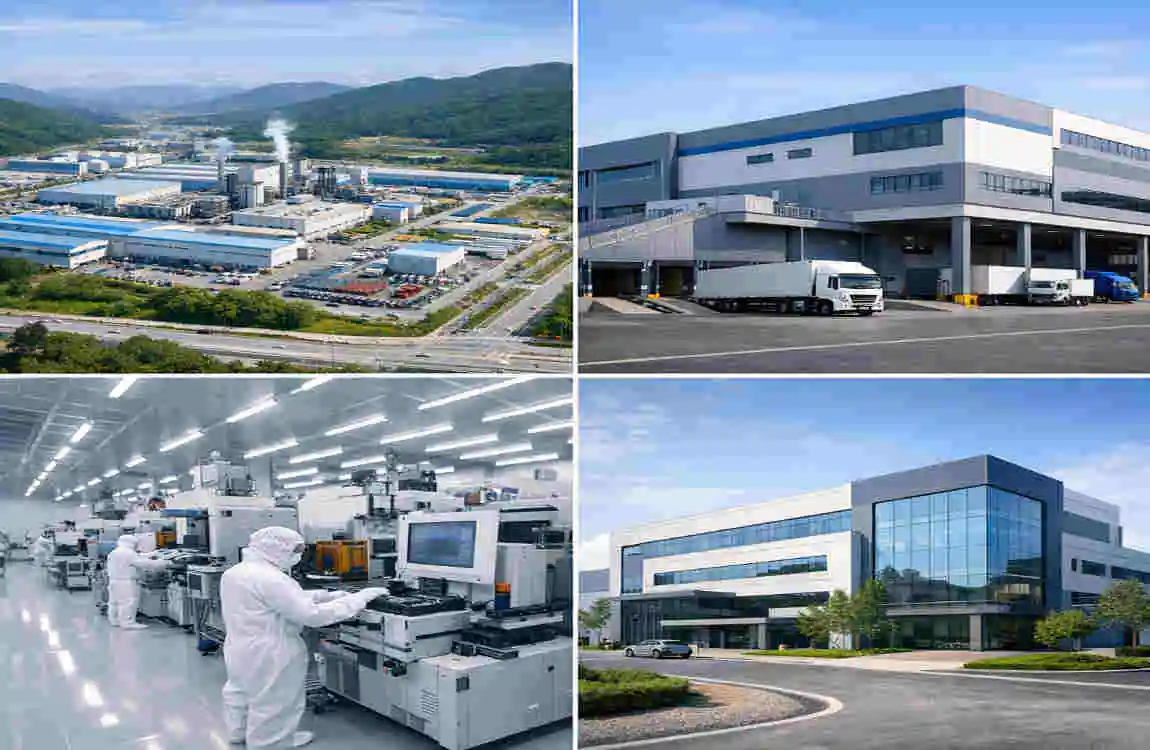
Warehouses and logistics centers
These are among the most in-demand property types today. Businesses use them to store goods, organize shipments, and support fast delivery.
Modern logistics centers often need large floor space, high ceilings, strong loading access, and efficient circulation areas.
Cold-storage facilities
Cold-storage buildings are important for food, medicine, and other temperature-sensitive products. These properties need special systems to maintain stable temperatures.
Because they are more technical, they often require more planning and higher operating standards.
Manufacturing plants and factories
Factories remain a key part of the industrial market. They support production, assembly, processing, and technical work.
Each factory’s needs can vary widely. Some require heavy power systems, while others need only moderate support.
Industrial complexes and business parks
Industrial complexes give multiple businesses space in one zone. This can help companies operate near suppliers, transport links, or other manufacturers.
Business parks may also include office support, storage space, and service facilities.
Distribution centers
Distribution centers help companies manage product movement to retail stores, warehouses, or final customers. These sites are especially important in e-commerce and retail supply chains.
Data centers and technology-related facilities
Data centers are becoming more important in South Korea’s industrial property market. These facilities need strong power, cooling, security, and reliable connectivity.
As digital demand rises, this segment may continue to grow.
Last-mile logistics properties
These smaller logistics sites are close to urban areas and help with final delivery. They support quick service and same-day or next-day distribution.
New-build versus older properties
New industrial buildings often offer better layout, efficiency, and technology support. Older buildings may cost less but can need updates.
When comparing them, buyers and tenants should look carefully at:
- Floor area
- Ceiling height
- Loading facilities
- Parking
- Power supply
- Transportation access
- Fire and safety systems
These features affect how practical the property will be for daily use.
Investment Opportunities and Market Factors
Why investors look at this market
Industrial property can be attractive because demand is linked to real business needs. Companies need space to store, move, and make things.
Unlike some other property types, industrial real estate often depends more on function than appearance. That can make demand steadier in the right location.
Domestic and international interest
Both Korean and foreign investors watch this market closely. Industrial assets can offer rental income, long-term demand, and strategic value in strong locations.
But investors still need to study local rules and property conditions carefully.
What affects price and rent
Several things influence industrial property pricing:
- Location
- Building quality
- Ceiling height
- Loading access
- Power capacity
- Lease length
- Nearby infrastructure
- Supply and vacancy levels
A modern building in a major logistics zone usually commands stronger pricing than an older property in a weaker location.
Key demand drivers
The main demand drivers include:
- E-commerce growth
- Manufacturing and export activity
- Technology and data-center needs
- Infrastructure development
- Supply-chain upgrades
These trends help support industrial real estate demand over time.
Main risks to watch
Industrial real estate is not risk-free. Buyers and tenants should think about:
- Vacancy
- Financing costs
- Construction costs
- Oversupply
- Economic cycles
- Location-specific demand
A strong location may hold value better, but a poor location can face weaker leasing demand.
Simple due diligence checklist
Before buying industrial property, check:
- Zoning and permitted use
- Building condition
- Lease status
- Access roads and logistics links
- Power and utility capacity
- Fire and safety compliance
- Potential repair or upgrade costs
This helps you avoid costly surprises later.
Costs, Regulations, and Buying Industrial Property in South Korea
Transaction costs and pricing basics
Buying industrial real estate usually involves more than just the purchase price. You may also need to account for taxes, legal fees, registration expenses, and possible renovation or equipment costs.
If you lease instead of buying, rental terms and maintenance responsibilities become especially important.
Taxes and related expenses
Industrial real estate deals can involve several layers of costs. These may include transaction-related taxes, legal review, and other closing expenses.
Because these can vary by deal type and location, it is wise to check current requirements before deciding.
Financing considerations
Financing can affect the total cost of ownership. Loan terms, interest rates, and lender requirements all matter.
If the building is for business use, lenders may also look at tenant quality, location, and long-term income potential.
Legal and regulatory issues
Industrial properties often need careful review for zoning, building compliance, environmental standards, and safety rules. The property’s permitted use matters a great deal.
You should also review:
- Building approvals
- Environmental requirements
- Safety standards
- Lease terms
- Tenant obligations
These issues can affect whether the property suits your plan.
Why professional advice helps
A legal, tax, or property expert can help you understand deal structure and local requirements. That is especially useful for foreign investors or first-time industrial buyers.
A good advisor may help you avoid mistakes around zoning, leasing, or compliance.
Considerations for foreign investors
Foreign investors can be interested in South Korea industrial real estate. Still, they should pay attention to local rules, document requirements, and market conditions.
The most important thing is to understand the property’s use case and whether the building truly fits your investment goal.
Future of South Korea Industrial Real Estate
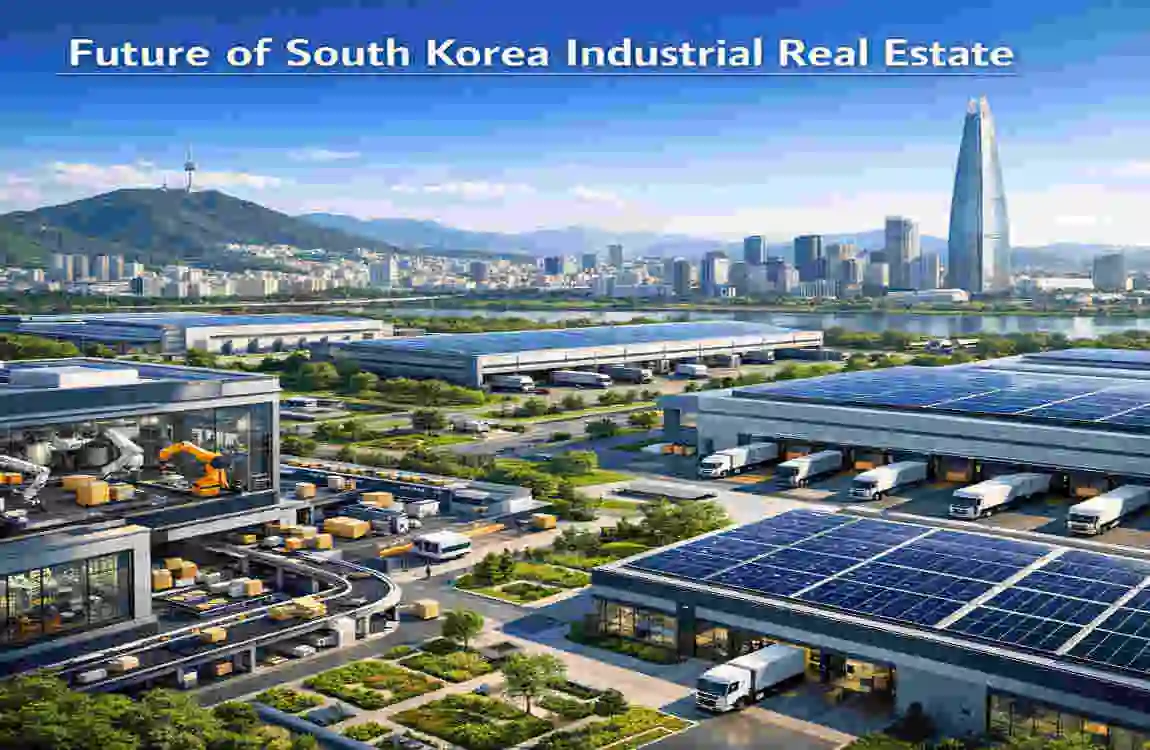
Growth of smart warehouses and automation
One of the biggest changes ahead is automation. Warehouses are becoming smarter, faster, and more technology-driven.
This means better storage systems, improved tracking, and more efficient space use.
Impact of AI and robotics
Artificial intelligence and robotics are likely to play a larger role in industrial operations. They can improve sorting, inventory handling, and efficiency.
That may increase demand for industrial buildings that can support upgraded systems.
E-commerce expansion
E-commerce continues to shape property demand. Faster delivery means businesses need well-located logistics buildings closer to customers.
This makes last-mile and distribution assets especially important.
Sustainable industrial buildings
Energy-efficient and sustainable buildings are becoming more important too. Companies want lower operating costs and better environmental performance.
That means future industrial spaces may need better insulation, lighting, power systems, and resource management.
Infrastructure and demographic change
New roads, transport projects, and urban growth can shift industrial demand over time. Population changes may also affect where companies want to place logistics and distribution facilities.
A good industrial location today may become even stronger if nearby infrastructure improves.
What investors should watch
Keep an eye on:
- Automation
- E-commerce growth
- Transport upgrades
- Energy-efficient building demand
- Vacancy trends
- Regional supply levels
These factors may shape the market’s next stage.
FAQ About South Korea Industrial Real Estate
What is South Korea industrial real estate?
It refers to property used for industrial purposes such as warehouses, factories, logistics centers, distribution buildings, and data centers.
Which areas of South Korea have the most industrial properties?
The Seoul Metropolitan Area, Busan, Ulsan, Daegu, and other transport-connected regions are major industrial locations.
What types of industrial real estate are available in South Korea?
The main types include warehouses, manufacturing plants, industrial parks, distribution centers, cold-storage facilities, and data centers.
Is South Korea industrial real estate suitable for foreign investors?
Yes, but foreign investors should review legal rules, market conditions, and local property requirements carefully before buying.
What factors affect industrial property prices in South Korea?
Location, building quality, transport access, power supply, size, demand, and vacancy levels are all important.
What are the main costs of buying industrial property in South Korea?
The main costs usually include the purchase price, taxes, legal fees, registration costs, and possible renovation or compliance expenses.
Are warehouses in high demand in South Korea?
Yes, especially in areas connected to e-commerce, logistics, and major transportation routes.
What should investors check before buying an industrial property?
They should review zoning, building condition, access, utilities, lease terms, and compliance requirements.
How does location affect industrial real estate value?
A property near ports, highways, airports, or large business areas usually has stronger demand and higher value.
| Topic | Key Information |
|---|---|
| Market Overview | South Korea has a developed industrial real estate market supported by manufacturing, logistics, and e-commerce. |
| Main Property Types | Warehouses, logistics centers, factories, industrial parks, data centers, and research facilities. |
| Major Locations | Seoul metropolitan area, Gyeonggi Province, Incheon, Busan, and major industrial cities. |
| Key Demand Drivers | E-commerce, advanced manufacturing, exports, logistics, technology, and supply-chain development. |
| Investment Factors | Location, tenant quality, lease terms, building condition, accessibility, and expected rental income. |
