
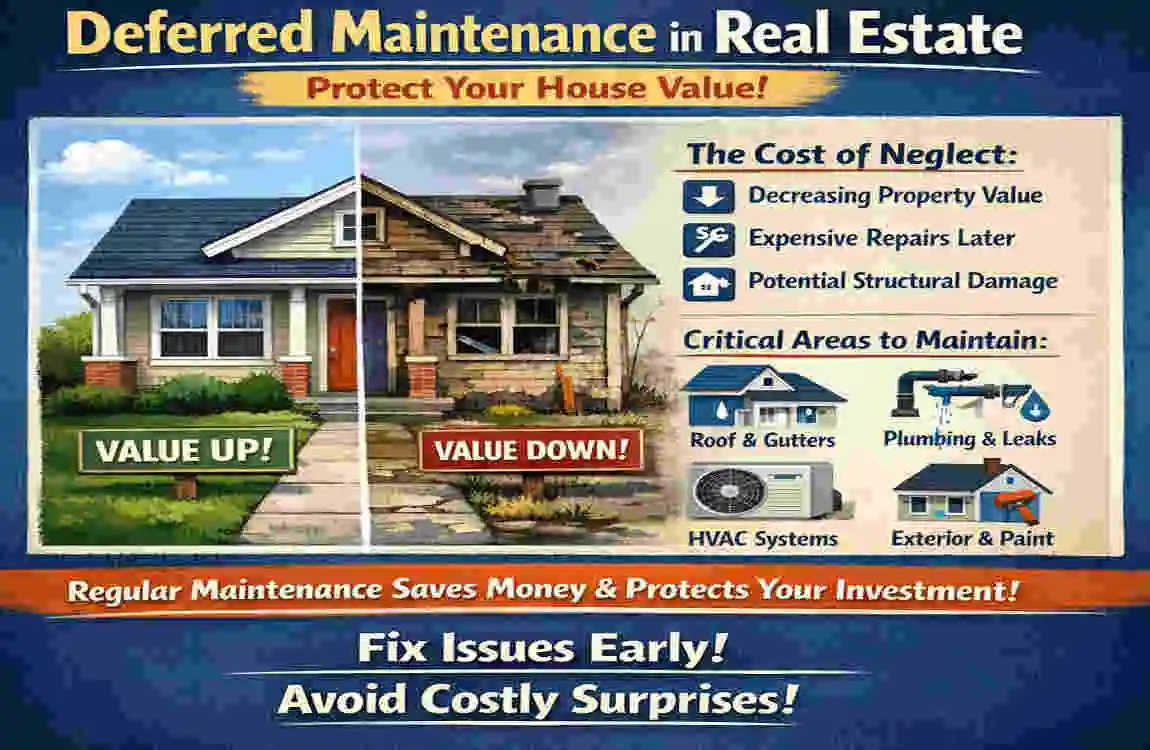
If you own a home, rent out property, or plan to sell soon, you shouldn’t ignore deferred maintenance. Simply put, it means putting off repairs or regular upkeep your house needs now.
| Topic | Short Information |
|---|---|
| Deferred Maintenance | Delaying necessary home repairs and upkeep |
| Common Examples | Roof leaks, plumbing issues, old HVAC systems, damaged siding |
| Main Risk | Small problems can become expensive repairs |
| Property Value | Poor maintenance can reduce a home’s appeal and market value |
| Buyer Impact | Visible defects may make buyers hesitate or negotiate a lower price |
| Cost Control | Fixing problems early can help manage long-term repair costs |
| Regular Inspections | Routine checks help identify issues before they worsen |
| Preventive Maintenance | Timely repairs protect the condition and functionality of the house |
| Best Approach | Create a maintenance schedule and address urgent issues promptly |
At first, a small issue may seem harmless. A tiny leak, a loose shingle, or a cracked wall can look minor today. But over time, these small problems can grow into costly repairs and lower your home’s value.
What Deferred Maintenance Means
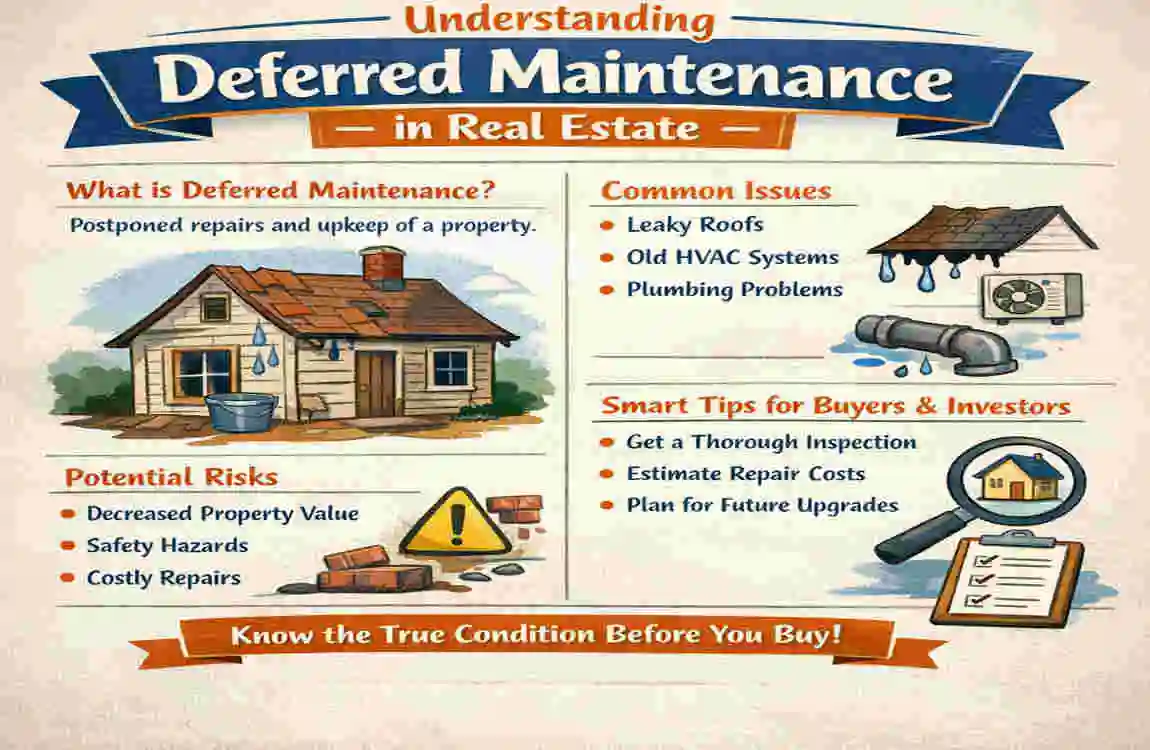
Deferred maintenance in real estate refers to a home where needed repairs have been delayed.
That may include things like:
- a roof leak you keep ignoring
- a faucet that drips for months
- peeling paint on the outside
- weak heating or cooling
- cracked flooring or wall damage
Why it matters
A house with neglected maintenance often looks less cared for. Buyers notice that quickly. Even if the home is still livable, the condition can affect market value, buyer interest, and inspection results.
Deferred maintenance vs. wear and tear
It helps to know the difference:
- Normal wear and tear is expected from daily use.
- Deferred maintenance is a repair that should have been done but was delayed.
- Major property damage is more serious and often comes from accidents, storms, flooding, or long-term neglect.
A little wear is normal. Trouble starts when you ignore repairs.
Common Types of Deferred Maintenance in a House
Some repair issues are more common than others. Homeowners often delay these.
Roof and gutter problems
Missing shingles, clogged gutters, and small roof leaks can lead to water damage, mold, and weak framing if you don’t fix them early.
Plumbing issues
Leaking pipes, slow drains, and weak water pressure may seem minor, but they can damage cabinets, walls, floors, and even foundations.
Electrical problems
Faulty outlets, old wiring, and broken fixtures can become safety risks. Don’t delay addressing electrical issues.
HVAC maintenance
Dirty filters, poor airflow, and weak heating or cooling make the home less comfortable and can shorten system life.
Exterior and interior issues
Cracked siding, peeling paint, broken windows, damaged floors, and wall cracks can make a home look tired and uncared for.
Maintenance Issue Possible Consequence Urgency
Roof leak Water damage, mold, higher repair cost High
Leaking pipe Wall or floor damage, mildew High
Faulty outlet Fire risk, safety concern High
Dirty HVAC filter Poor airflow, higher energy bills Medium
Peeling paint Lower curb appeal, wood damage Medium
Cracked flooring Trip hazard, bigger repair later Medium
How Deferred Maintenance Can Affect House Value
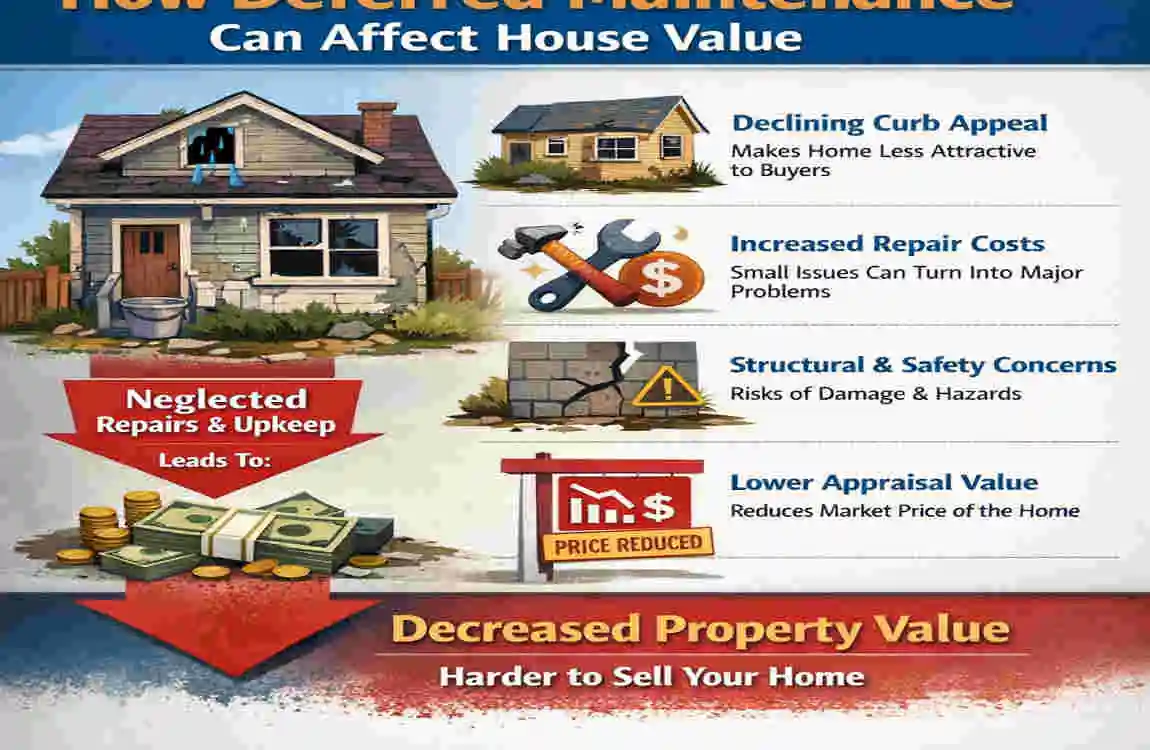
A home’s value is strongly tied to its condition. Even if the layout is good and the location is strong, visible repair issues can lower what buyers are willing to pay.
Buyer perception changes fast.
When buyers see broken items, they often assume there are more hidden problems too. One small issue can make the whole house feel neglected.
Inspections can reveal more.
A home inspection may uncover damage that was not obvious before. That can lead to repair requests, price cuts, or buyer hesitation.
Repairs affect offers and selling time.
Homes that need work often sit on the market longer. Buyers may offer less because they know they will need to spend money after closing.
Records help build trust.
Keeping maintenance receipts, repair records, and service dates can help show that the home has been cared for. This can support your asking price and make buyers feel more confident.
Financial Risks of Delaying Home Repairs
Putting off repairs usually costs more later. That is one of the biggest lessons in homeownership.
Early repairs are cheaper.
A small leak may cost little to fix now. But if it spreads, it can lead to drywall replacement, flooring damage, mold cleanup, and higher labor costs.
One issue can trigger another.
For example, a roof problem may lead to attic damage, insulation problems, and water stains inside the house. A plumbing leak can weaken wood and create hidden rot.
Emergency repairs are expensive.
When a system fails suddenly, you may have no time to compare prices. That often means paying more for urgent service.
Create a home maintenance reserve.
A simple reserve can help protect you from surprise costs. Try setting aside money for the following:
- Routine service costs like filters, cleaning, and tune-ups
- Small repairs like caulking, patching, and minor plumbing fixes
- Safety issues such as electrical or water damage
- Big system repairs like roof, HVAC, or water heater replacement
A home reserve does not have to be huge. What matters is that it exists and grows over time.
How to Identify Deferred Maintenance Before It Becomes Bigger
A quick home check can save you money. Walk through the house room by room and look for warning signs.
Roof and attic
Check for:
- water stains
- missing shingles
- damp insulation
- bad smells
- signs of leaks around vents or chimneys
Basement or foundation
Look for:
- cracks in walls or floors
- moisture
- mildew smell
- standing water
- shifting or uneven surfaces
Kitchen and bathrooms
Watch for:
- leaking faucets
- slow drains
- damaged cabinets
- peeling caulk
- mold near sinks, tubs, or toilets
Bedrooms and living areas
Check for:
- cracked walls
- damaged flooring
- stained ceilings
- poor airflow
- unusual odors
Exterior and garage
Look for:
- peeling paint
- broken siding
- damaged doors or windows
- clogged gutters
- cracked driveways or walkways
When to call a professional
You can usually handle small jobs like changing filters, cleaning gutters, or repainting. But call a qualified professional if you notice:
- electrical problems
- active leaks
- mold growth
- foundation cracks
- roof damage
- heating or cooling failure
Fixing Deferred Maintenance to Protect Your Investment
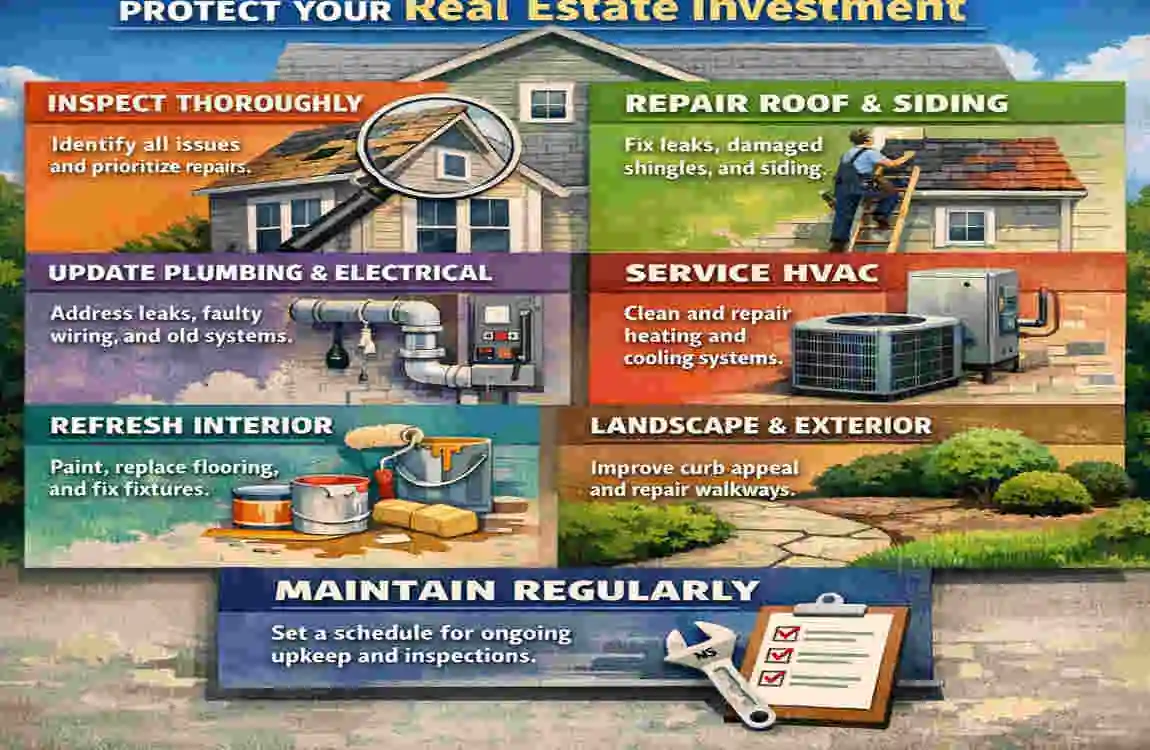
The best way to handle deferred maintenance is to make a clear plan.
Start with priority repairs.
Focus on repairs in this order:
- Urgent safety issues
- Water and structural concerns
- Essential system repairs
- Cosmetic updates
Set a realistic budget.
Do not try to fix everything at once if you cannot afford it. Start with the repairs that protect the home from damage or safety risks.
Get quotes for major work.
For bigger jobs, ask for professional estimates. This helps you avoid surprises and compare options.
Keep proof of repairs.
Save invoices, receipts, and before-and-after photos. These records can help when you sell the house or need to prove the work was done.
Prepare before listing a home.
If you plan to sell, handle visible maintenance issues first. A clean, well-maintained home usually feels more valuable to buyers.
Simple Deferred Maintenance Action Plan
Use this quick plan to stay on track:
- Walk through the house once a month
- Write down anything broken or worn
- Separate urgent repairs from cosmetic ones
- Budget a small amount every month for upkeep
- Fix water, electrical, and safety issues first
- Keep all repair records
- Review the home seasonally
This simple habit can save money and protect value over time.
FAQ: Deferred Maintenance in Real Estate
What is deferred maintenance in real estate?
It means delaying needed repairs or routine upkeep on a property.
How does deferred maintenance affect house value?
It can lower value because buyers may see the home as neglected or costly to fix.
What are the most common examples of deferred maintenance?
Common examples include roof leaks, plumbing drips, electrical problems, HVAC issues, peeling paint, and damaged flooring.
Is deferred maintenance the same as property damage?
No. Deferred maintenance is a delayed repair. Property damage usually comes from an event or accident.
Can deferred maintenance affect a home inspection?
Yes. Inspectors often find delayed repairs, and that can affect buyer negotiations.
Which home repairs should be handled first?
Start with safety, water, and structural problems.
How much should homeowners budget for maintenance?
A common approach is to save a regular monthly amount for repairs and seasonal upkeep.
Can fixing deferred maintenance increase a home’s market appeal?
Yes. A well-maintained home usually looks more attractive and can feel worth more to buyers.
Should sellers repair deferred maintenance before listing a house?
In most cases, yes. Fixing obvious issues can improve buyer confidence and reduce negotiation problems.
How can homeowners prevent deferred maintenance in the future?
Use a seasonal checklist, inspect the home often, and handle small issues early.
