
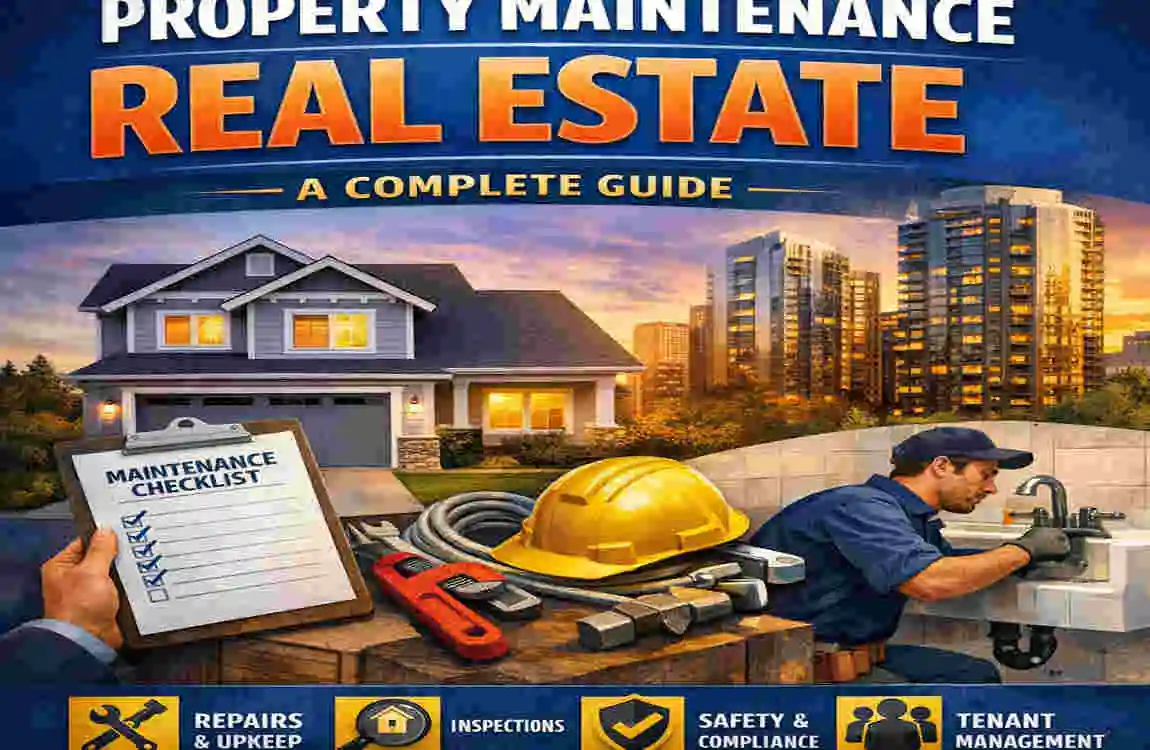
Property maintenance is one of the most important parts of owning, renting, and investing in property. It keeps a home safe, clean, working well, and more valuable over time.
If you own a house, manage rentals, or invest in real estate, you can’t ignore maintenance. Small problems often become big, expensive problems when you ignore them. That is why regular care matters so much.
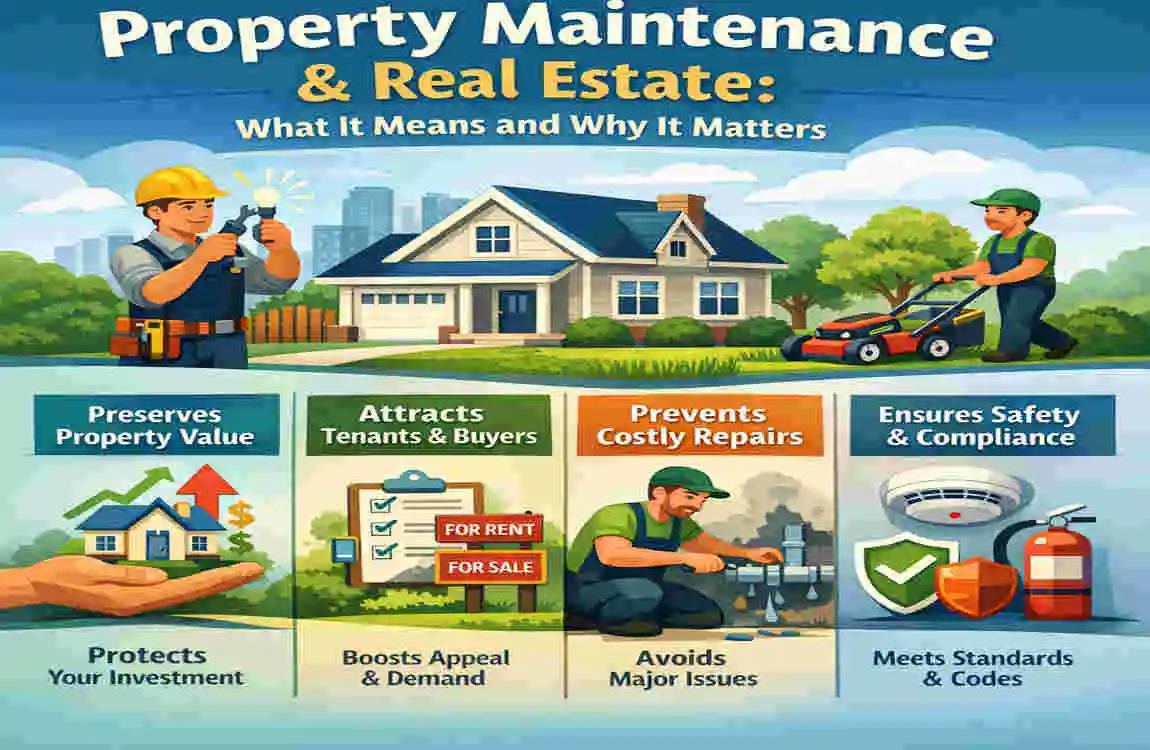
Property Maintenance Real Estate: What It Means and Why It Matters
What property maintenance means
Property maintenance in real estate means caring for a property so it stays in good condition. It includes repairs, inspections, cleaning, and regular upkeep.
It is not just about fixing things when they break. It is also about preventing damage before it starts.
Routine, preventive, and emergency maintenance
These three types of maintenance are different, and it helps to understand each one.
- Routine maintenance is the regular work that keeps a property running well, like changing filters or cleaning gutters.
- Preventive maintenance is planned work that helps stop future problems, like inspecting a roof before storm season.
- Emergency repairs are urgent fixes, like stopping a major leak or repairing storm damage.
Why it matters for homeowners and investors
Good maintenance protects the structure, improves comfort, and helps keep repair costs lower. For investors, it also supports rental income and long-term property value.
A well-maintained property usually attracts better tenants, fewer complaints, and stronger buyer interest later.
Essential Property Maintenance Tasks for Real Estate
Exterior property maintenance
The outside of the property is the first line of defense. If you neglect the exterior, water and weather can damage the inside too.
Key exterior tasks include roof checks, gutter cleaning, siding repair, and window and door inspection. Also check driveways, fences, and walkways for cracks or wear.
Interior property maintenance
Inside the home, check walls, ceilings, floors, plumbing, and electrical systems. These areas often show early signs of trouble.
A small water stain, a loose outlet, or a cracked floor tile may seem minor, but it can point to a larger issue.
Kitchen and bathroom maintenance
These rooms need extra care because they use water often. Look for leaks under sinks, damaged grout, slow drains, or worn fixtures.
A bathroom leak can spread quickly if you ignore it. In kitchens, old appliances and plumbing issues can also create bigger problems later.
Landscaping and outdoor care
Yards, trees, shrubs, and drainage all affect the property. Overgrown branches can damage roofs, and poor drainage can lead to foundation trouble.
A clean, cared-for yard also improves curb appeal and makes the whole property feel more valuable.
Seasonal maintenance checklist
A simple seasonal routine helps keep things under control:
- Spring: roof, gutters, windows, landscaping
- Summer: HVAC, exterior paint, pest checks
- Fall: heating system, leaves, drainage
- Winter: insulation, leaks, pipe protection
Preventive Property Maintenance for Real Estate Investments
What preventive maintenance means
Preventive maintenance means checking and fixing things before they fail. This saves money and lowers stress.
For example, replacing a worn HVAC filter is far cheaper than replacing a damaged system later.
Why scheduled inspections help
Regular inspections catch small issues early. That can prevent leaks, mold, rot, electrical problems, and roof damage.
This is especially important in rental properties, where a hidden problem can affect more than one tenant or unit.
Building a maintenance calendar
A good calendar keeps tasks organized. You can schedule inspections monthly, seasonally, and annually.
That makes it easier to stay consistent and avoid forgetting important work.
Preventive maintenance table
TimeframeTasks
Daily Safety checks, tenant issue review
Monthly Filters, leaks, alarms, visible damage
Seasonal HVAC, gutters, roof, landscaping
Annual Full property inspection, major system review
Why it helps rentals
For rental properties, preventive maintenance improves tenant satisfaction and lowers turnover. People want to live in a home that feels safe and cared for.
It also helps landlords avoid sudden, expensive emergencies.
Property Maintenance Costs and Budget Planning
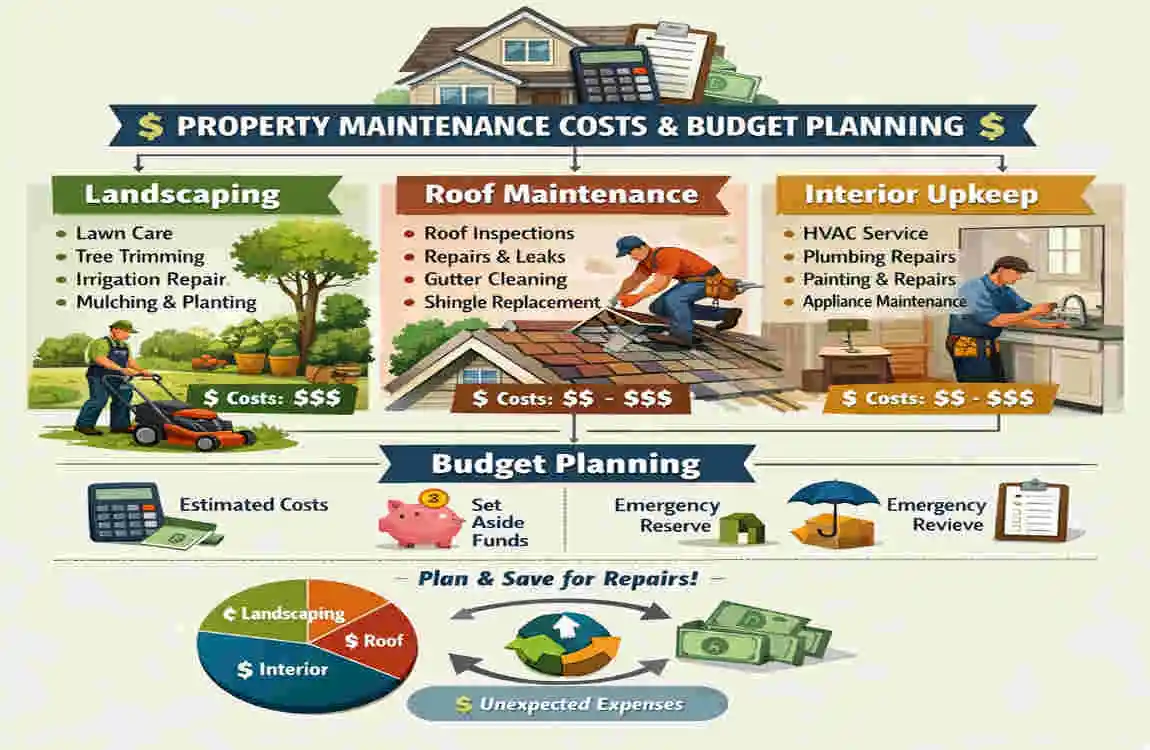
What affects maintenance costs
The cost of property maintenance depends on several things:
- Age of the property
- Size of the property
- Location
- Material quality
- Weather exposure
- Number of systems and appliances
Older homes often need more work. Larger homes usually cost more to maintain too.
Routine vs. major repairs
Routine maintenance is usually cheaper and easier to plan for. Major repairs, like roof replacement or plumbing work, cost much more and may happen suddenly.
That is why a reserve fund is so important.
Budget planning tips
A smart budget should include:
- Regular upkeep
- Seasonal work
- Small repairs
- Emergency funds
- Contractor labor
- Materials and replacement parts
Even if the exact amount changes from year to year, a budget keeps you prepared.
When DIY works and when to hire help
Simple jobs like changing filters, cleaning gutters, or tightening hardware can sometimes be done by the owner.
But licensed professionals should usually handle electrical work, roofing, plumbing, and structural repairs.
Property Maintenance for Landlords, Property Managers, and Investors
Landlord responsibilities
Landlords are usually responsible for keeping rental properties safe and livable. This includes fixing problems, responding to repair requests, and ensuring major systems work properly.
If you own rental property, maintenance should be part of your business plan, not an afterthought.
Role of a property manager
A property manager coordinates repairs, schedules inspections, and keeps records. They can also communicate with tenants and contractors.
That saves time and helps keep the property running smoothly.
Tenant reporting system
Tenants should have a clear way to report problems. This can be a phone number, email, or maintenance portal.
Fast reporting helps stop small problems from becoming large ones.
Maintenance record keeping
Keep records of:
- Repairs
- Invoices
- Inspection dates
- Contractor names
- Replacement schedules
Good records help with budgeting, planning, and future sales.
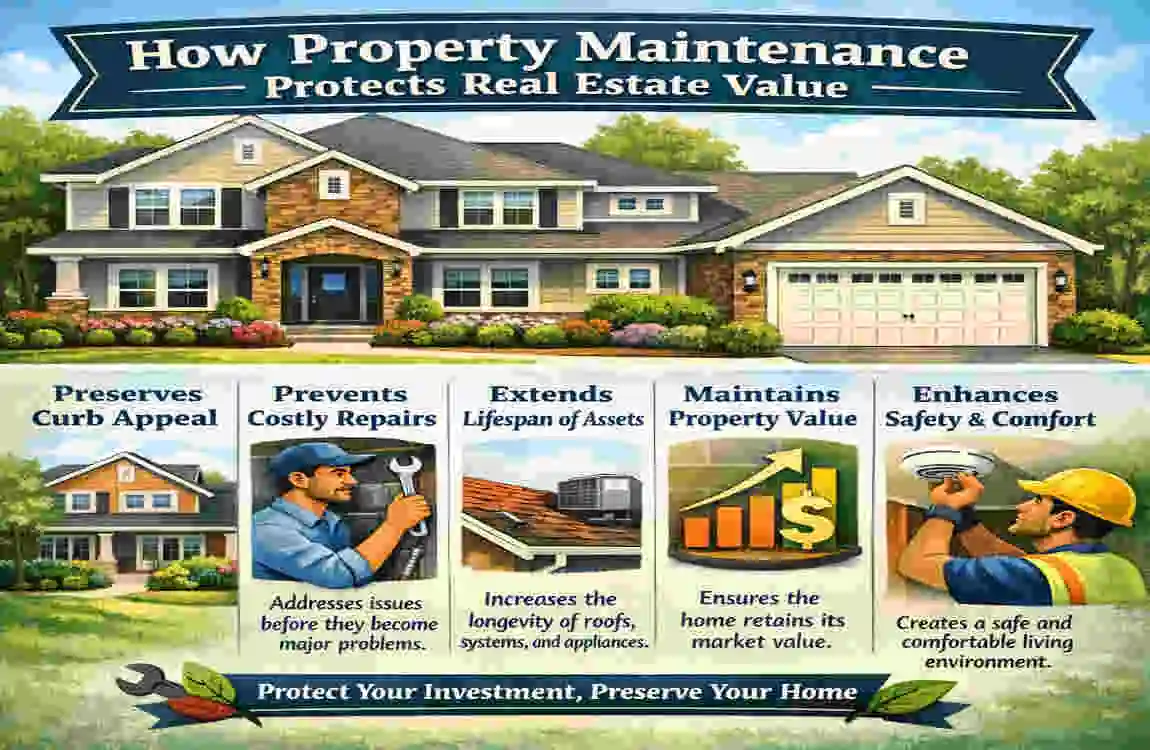
How Property Maintenance Protects Real Estate Value
Maintenance and property condition
A well-maintained property usually looks better, feels better, and performs better over time. Buyers and tenants notice that quickly.
On the other hand, neglected repairs can lower value and create doubt.
Curb appeal matters
The outside of the property shapes the first impression. Clean siding, healthy landscaping, and well-kept walkways all help.
Even small exterior improvements can make the home feel more appealing.
Maintenance before selling
Before selling, focus on small fixes that improve confidence. Patch leaks, repair broken fixtures, and handle visible damage.
Buyers often feel better about a home that looks cared for.
Well-maintained vs. neglected property
Well-Maintained Property vs. Neglected Property
Fewer surprises Hidden damage
Better curb appeal Poor first impression
Lower long-term costs Expensive emergency repairs
Stronger tenant satisfaction More complaints and turnover
Better resale appeal Lower buyer confidence
Long-term value protection
Maintenance protects the home’s roofing, plumbing, electrical systems, and structural components. Those are expensive to replace, so keeping them in good shape is a smart move.
Frequently Asked Questions
What is property maintenance in real estate?
It is the ongoing care, repair, and upkeep of a property to keep it safe, functional, and valuable.
Why is property maintenance important for real estate investors?
It helps protect value, reduce repair costs, keep tenants happy, and support steady income.
How often should a real estate property be inspected?
At least once a year, with monthly or seasonal checks for key systems and visible problems.
What are the most common property maintenance tasks?
Roof checks, gutter cleaning, HVAC care, plumbing checks, landscaping, and leak inspections.
How much should a landlord budget for property maintenance?
It depends on the property, but every landlord should set aside a steady reserve for both routine and emergency work.
What is the difference between preventive and emergency maintenance?
Preventive maintenance happens before a problem grows. Emergency maintenance happens after a sudden failure or urgent issue.
Who is responsible for property maintenance in a rental property?
Usually the landlord or property manager handles it, though tenants may be responsible for small items depending on the lease.
Can regular maintenance increase property value?
Yes. It helps protect condition, improve appearance, and support better resale or rental appeal.
| Aspect | Short Information |
|---|---|
| Property Maintenance | Regular care and repairs that keep a property safe and functional. |
| Routine Inspections | Check roofs, plumbing, electrical systems, walls, doors, and HVAC regularly. |
| Repairs | Fix leaks, cracks, broken fixtures, damaged flooring, and other issues quickly. |
| Preventive Maintenance | Scheduled maintenance helps reduce expensive future repairs. |
| Landscaping | Maintain lawns, trees, gardens, pathways, and outdoor areas. |
| Plumbing Care | Check pipes, faucets, drains, water heaters, and toilets for problems. |
| Electrical Maintenance | Inspect wiring, outlets, lighting, switches, and electrical panels. |
