
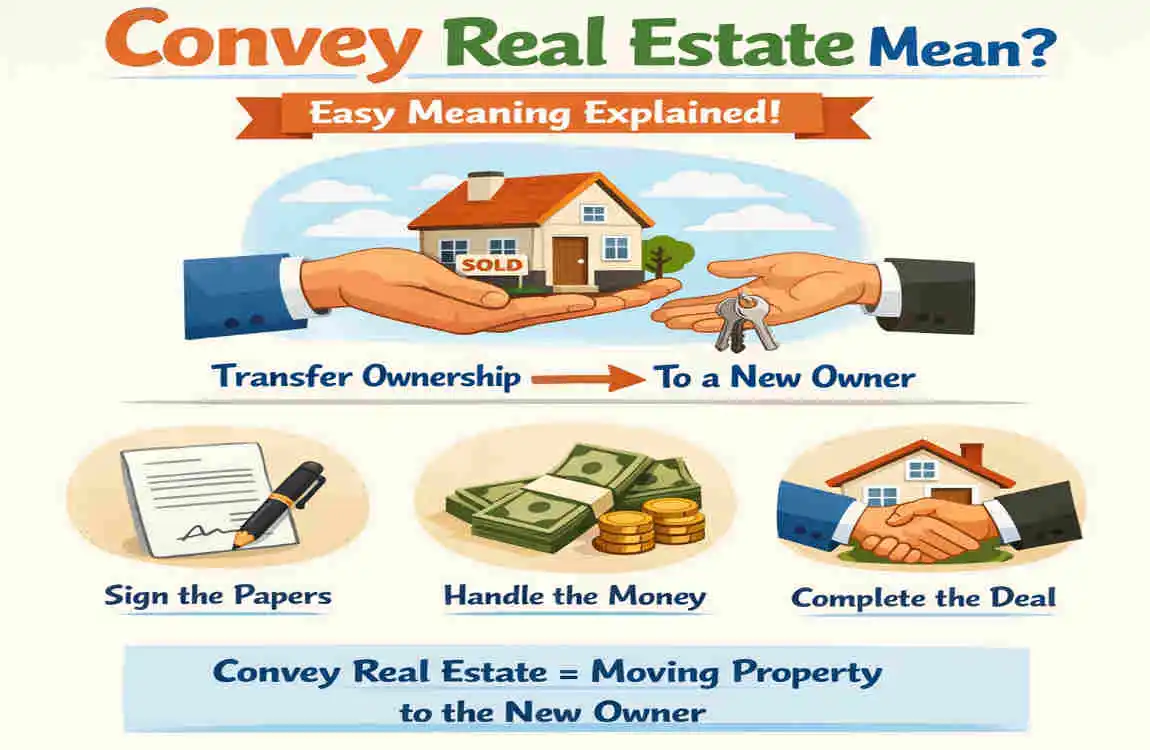
In simple words, to convey real estate means to transfer ownership or property rights from one person to another. You may see this word in contracts, deeds, and closing papers when a home, land, or other property changes hands.
In everyday language, “convey” can mean to carry or communicate something. But in real estate, it has a more specific meaning: the legal transfer of property.
Define Convey Real Estate: Meaning and Basic Explanation
What “Convey” Means in Simple Language
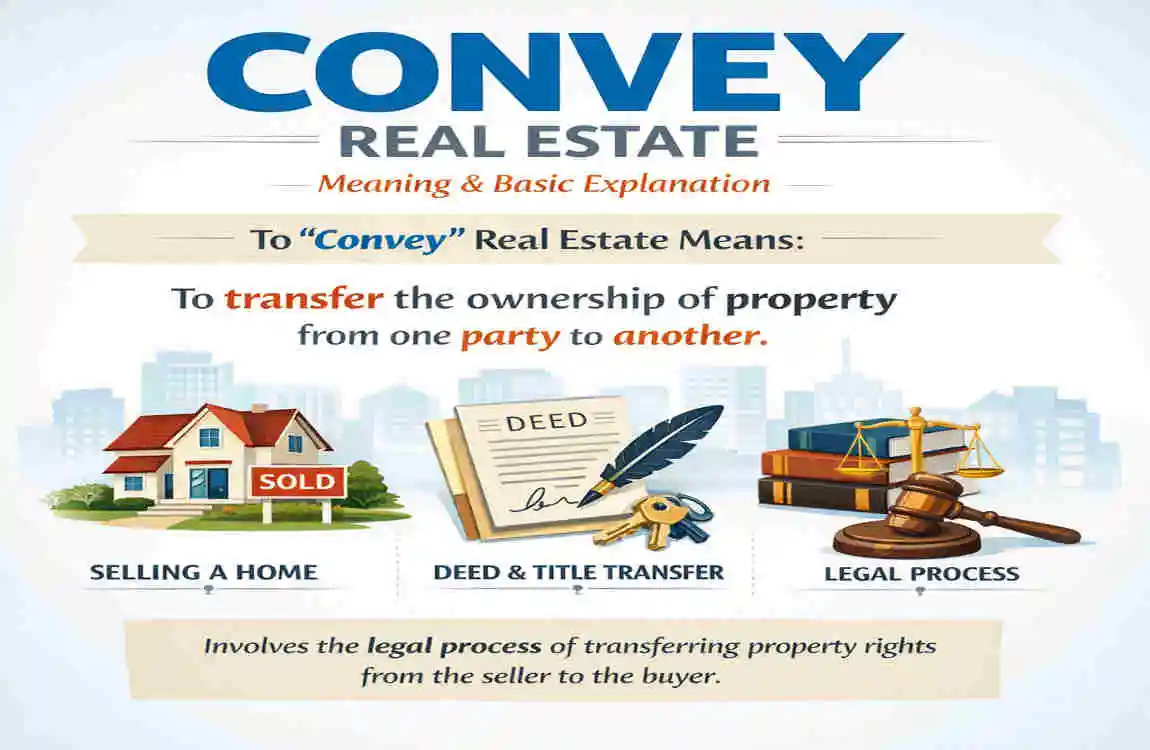
When people ask to define convey real estate, the easiest answer is this: it means legally transferring ownership of property from one party to another.
So if a seller conveys a house to a buyer, the seller gives the buyer the legal right to own the property.
What Happens When a Property Is Conveyed?
When property is conveyed, ownership doesn’t just “move” casually. It changes through a legal process. This usually happens through a deed or another transfer document.
The conveyance may include:
- The land
- The house or building
- Certain fixtures
- Some property rights, depending on the agreement
Convey vs. Sell
People often use convey and sell as if they mean the same thing, but they are not.
- Sell means the property is exchanged for money or another agreed value.
- Convey means the legal ownership is transferred.
A property can be sold, and then that sale is completed by conveyance.
Convey vs. Transfer
These words are very close, and in many cases, they are used similarly.
- Transfer is a broad word for moving something from one person to another.
- Convey is a more legal and property-focused term.
So, in real estate, conveyance is a kind of transfer.
How Property Is Conveyed During a Real Estate Transaction
The Agreement Begins
The process often starts with a purchase agreement. This document says the buyer and seller agree on the price and main terms of the sale.
It may also explain:
- What property is included
- What items stay with the home
- When closing will happen
- Who pays certain costs
The Transfer Document Is Prepared
Next, the proper document is prepared. In many cases, this is a deed. The deed is the legal paper used to convey real estate.
The deed usually includes:
- The names of the seller and buyer
- A legal description of the property
- The type of ownership being given
- Any legal language required by local law
Signing and Execution
The seller signs the deed, and sometimes other documents are signed too. This is called executing the document.
For the transfer to be valid, the signatures may need to be:
- Notarized
- Witnessed
- Done in a specific legal format
Delivery and Acceptance
The deed must be delivered to the buyer, and the buyer must accept it. This is a very important part of the process.
Without delivery and acceptance, the conveyance may not be complete.
Recording the Transfer
After closing, the deed is usually recorded with the local government office. This creates an official public record showing who owns the property.
Recording matters because it helps protect the buyer’s rights and makes ownership easier to prove later.
Closing
At closing, the sale is finished. Money changes hands, papers are signed, and the property is conveyed.
Why the Legal Description Matters
The legal description is the exact written description of the property. It is different from a street address.
This matters because it tells everyone exactly which land or property is being conveyed. A small mistake here can cause confusion or legal problems.
What Documents Are Used to Convey Real Estate?
The Role of a Deed
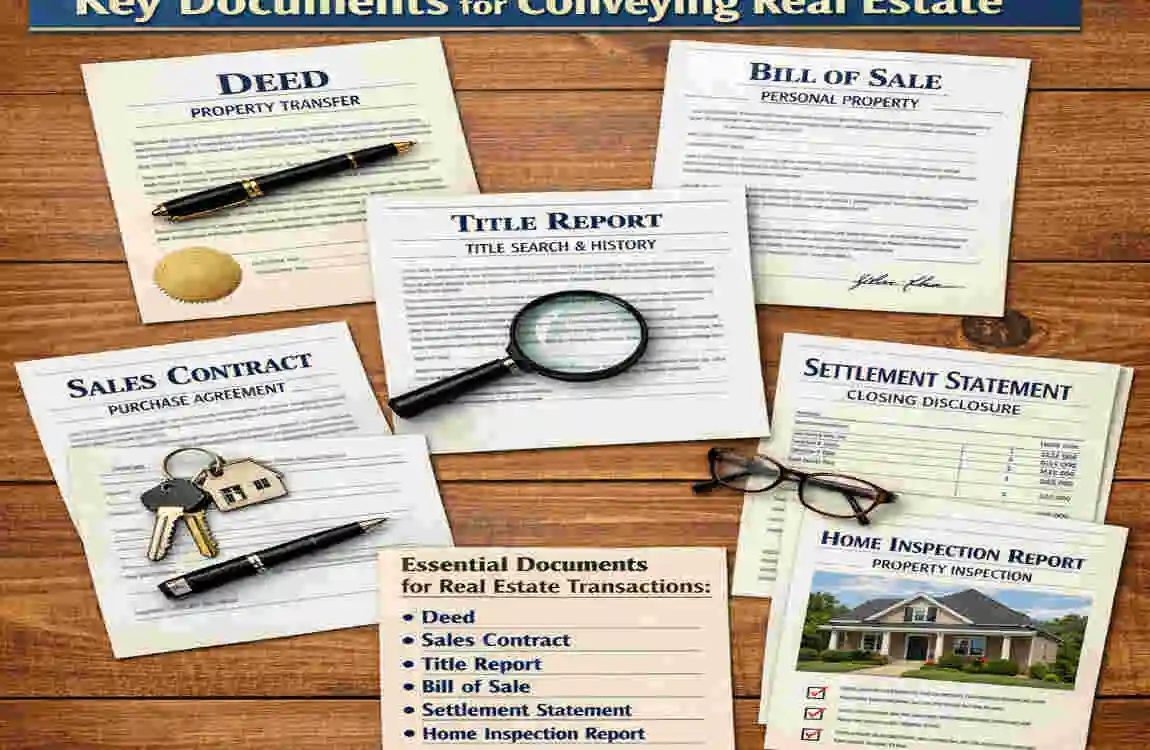
A deed is the most common document for conveying real estate. It legally proves that ownership is being transferred.
A deed does not always state the property was sold for a specific price. Its main purpose is to show the transfer of title.
Common Types of Deeds
Type of DeedWhat It Usually Means
Warranty deed The seller gives strong promises about ownership and title
Quitclaim deed The seller gives whatever interest they have, with fewer promises
Special warranty deed The seller promises against problems only during their ownership period
Other Transfer Documents
Sometimes other documents are used depending on the situation. For example, transfers may happen through:
- Trust documents
- Court orders
- Estate or inheritance papers
- Divorce settlement papers
Deed vs. Purchase Agreement
These two documents are different.
- The purchase agreement explains the deal between buyer and seller.
- The deed actually conveys the property.
So the agreement starts the sale, but the deed completes the legal transfer.
Why Local Laws Matter
Conveyance rules can change by state, county, or country. That is why the exact steps, wording, and paperwork may be different depending on where the property is located.
What Does “Conveyed With the Property” Mean?
Meaning of the Phrase
When something is conveyed with the property, it means the item or right is included in the transfer to the buyer.
This phrase matters because buyers may assume certain things stay, while sellers may think they are taking them.
Fixtures Usually Stay
A fixture is something attached to the property in a way that makes it part of the real estate.
Examples often include:
- Light fixtures
- Built-in cabinets
- Ceiling fans
- Attached shelves
- Plumbing fixtures
These often convey with the home unless the contract says otherwise.
Items That May or May Not Convey
Some things are less obvious. For example:
- A refrigerator may or may not stay
- A washer and dryer may or may not stay
- Curtains may or may not stay
- A mounted TV may or may not stay
This is why the contract should clearly say what is included.
Other Rights That May Be Conveyed
A real estate transfer may also include certain rights, such as:
- Easements
- Water rights
- Mineral rights
- Use rights in some cases
These rights do not always transfer automatically, so buyers should review the paperwork carefully.
How to Avoid Misunderstandings
To prevent confusion, buyers and sellers should write down exactly what stays and what goes.
A simple list can help:
- Items included in the sale
- Items excluded from the sale
- Special rights being transferred
- Anything needing separate agreement
Common Real Estate Terms Related to Conveyance
Important Terms to Know
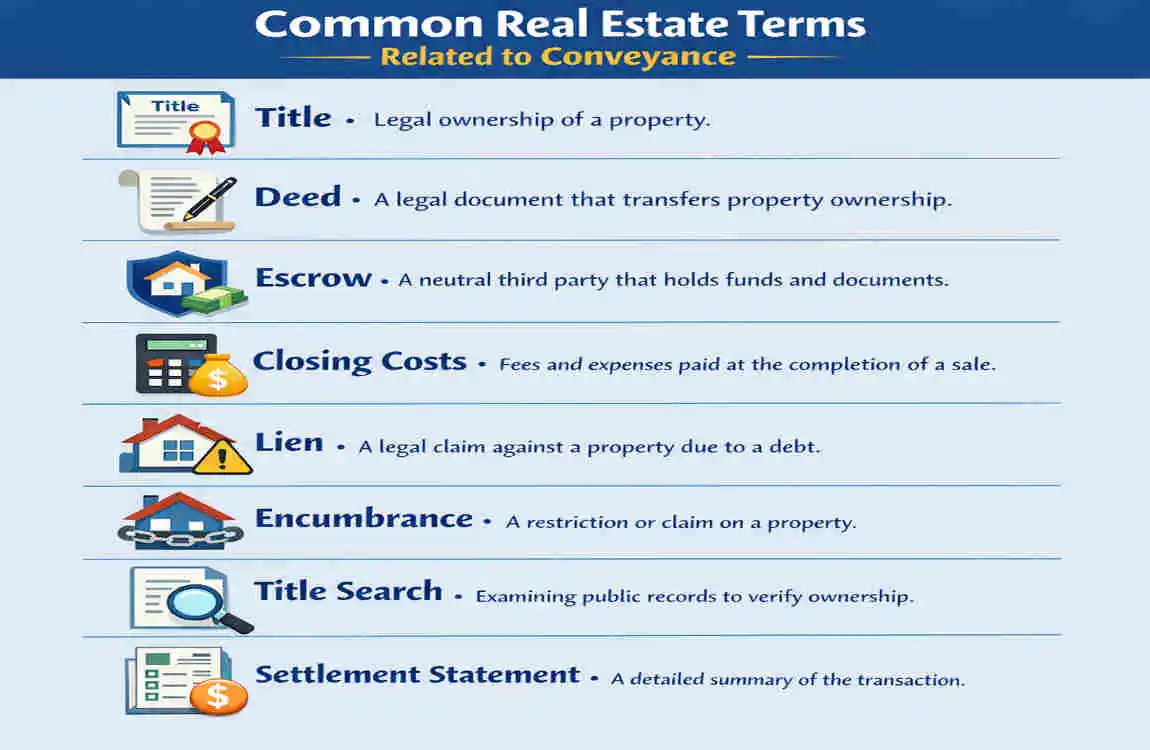
Here is a simple table of common words you may see during a property transfer:
TermSimple Meaning
Conveyance The legal transfer of property
Conveying title Passing legal ownership to someone else
Title transfer Moving ownership rights from seller to buyer
Grantor The person giving the property
Grantee The person receiving the property
Deed The document that transfers property
Legal description Exact legal wording that identifies the property
Encumbrance A claim, lien, or restriction on the property
Easement A right for someone else to use part of the property
Title search A review of ownership history and possible problems
Closing The final step where the sale is completed
How These Terms Work Together
A simple example helps:
- The buyer and seller agree on a price.
- A title search is done to check for problems.
- The deed is prepared with the correct legal description.
- The seller, called the grantor, signs the deed.
- The buyer, called the grantee, receives it.
- The property is conveyed at closing.
Frequently Asked Questions About “Define Convey Real Estate”
What does convey mean in real estate?
It means to legally transfer property ownership or property rights from one person to another.
What does it mean when a house conveys?
It means the house, and possibly certain rights or fixtures, are being transferred to the buyer.
Is convey the same as sell in real estate?
Not exactly. Sell means the property is exchanged for value, while convey means the legal transfer happens.
What is conveyed with a house?
Usually, the house itself, the land, and sometimes attached items like light fixtures or built-in features. The exact list depends on the contract.
Does a deed convey ownership?
Yes, a deed is the main document that conveys real estate ownership.
What is the difference between conveyance and transfer?
They are similar, but conveyance is the legal real estate term. Transfer is broader and can apply to many kinds of property.
Can personal property be included in a real estate conveyance?
Yes, sometimes. But you should clearly list personal property like furniture or appliances in the agreement.
Does every property sale require a deed?
Most real estate sales do use a deed. Still, the exact document can vary depending on the situation and local law.
What happens if something is not listed as conveying with the property?
If it is not clearly included, it may not stay with the property. That is why buyers and sellers should read the contract carefully.
Why is conveyance important when buying or selling a home?
Because it shows who legally owns the property, what rights are included, and what items or interests are part of the deal.
| Term | Easy Meaning |
|---|---|
| Convey | To legally transfer something from one person to another |
| Convey Real Estate | To legally transfer ownership of a property |
| Conveyance | The legal process or document used to transfer property |
| Seller | The person transferring the property |
| Buyer | The person receiving ownership |
| Conveyance Document | A legal document showing the property transfer |
| Example | A homeowner sells a house and legally transfers ownership to the buyer |
| Key Point | Conveying real estate means legally transferring property ownership |
