
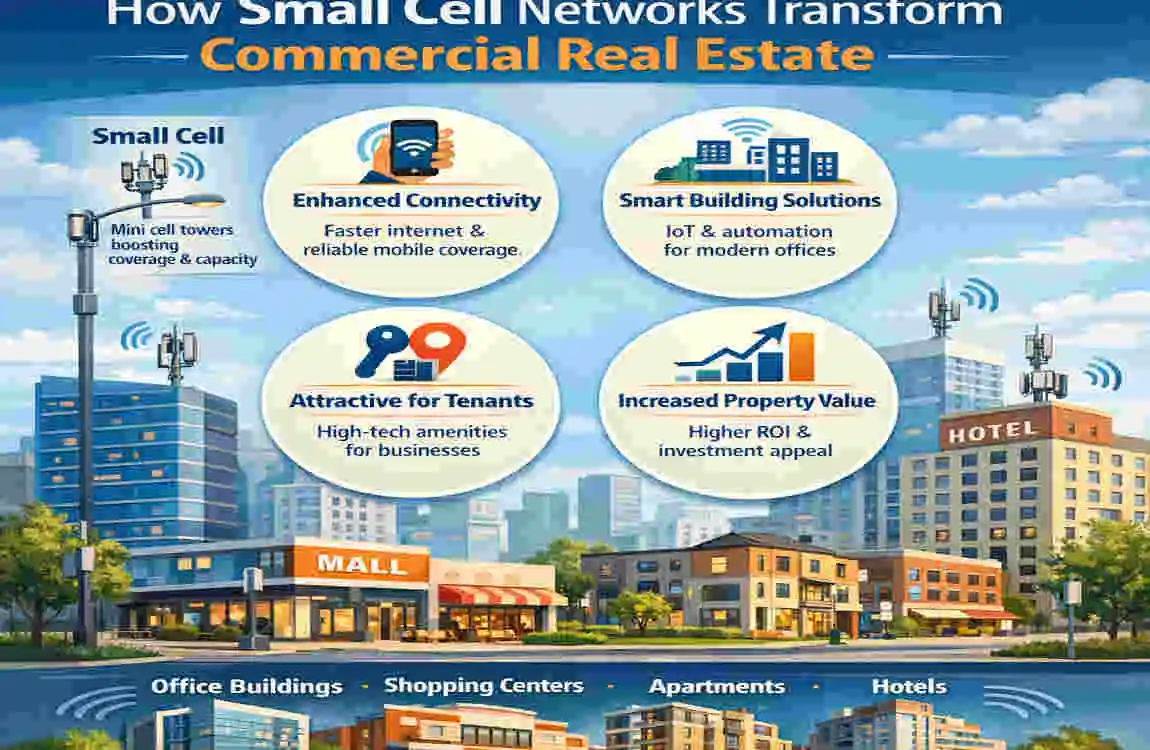
Modern buildings need more than good design and strong security. They also need fast, reliable wireless connectivity. That is where small cell networks for commercial real estate come in.
These networks help bring stronger mobile coverage into and around commercial properties. They support offices, retail centers, hotels, warehouses, and mixed-use buildings where people expect smooth digital access every day.
| Key Area | Impact on Commercial Real Estate |
|---|---|
| Better Connectivity | Improves mobile coverage inside offices and commercial buildings. |
| Higher Property Value | Strong connectivity may make properties more attractive to tenants. |
| Tenant Satisfaction | Supports reliable calls, video meetings, and daily business operations. |
| Smart Buildings | Helps support connected devices and building management systems. |
| Rental Opportunities | Property owners may earn income by leasing space for small cell equipment. |
| 5G Technology | Enables faster wireless connectivity and improved network capacity. |
| Business Competitiveness | Makes commercial spaces more appealing to technology-focused businesses. |
| Installation Costs | Requires planning, equipment, power, and possible maintenance expenses. |
| Property Challenges | Installation may involve permits, landlord approval, and coordination with network providers. |
| Future Growth | Positions commercial properties to adapt to evolving wireless technology. |
Today, tenants, employees, and visitors want wireless service that works without delays, dropped calls, or weak signals. They use cloud tools, video calls, smart devices, and mobile apps all day long. As a result, property owners are paying closer attention to network quality as part of the building experience.
What Are Small Cell Networks and How Do They Work?
Simple Definition
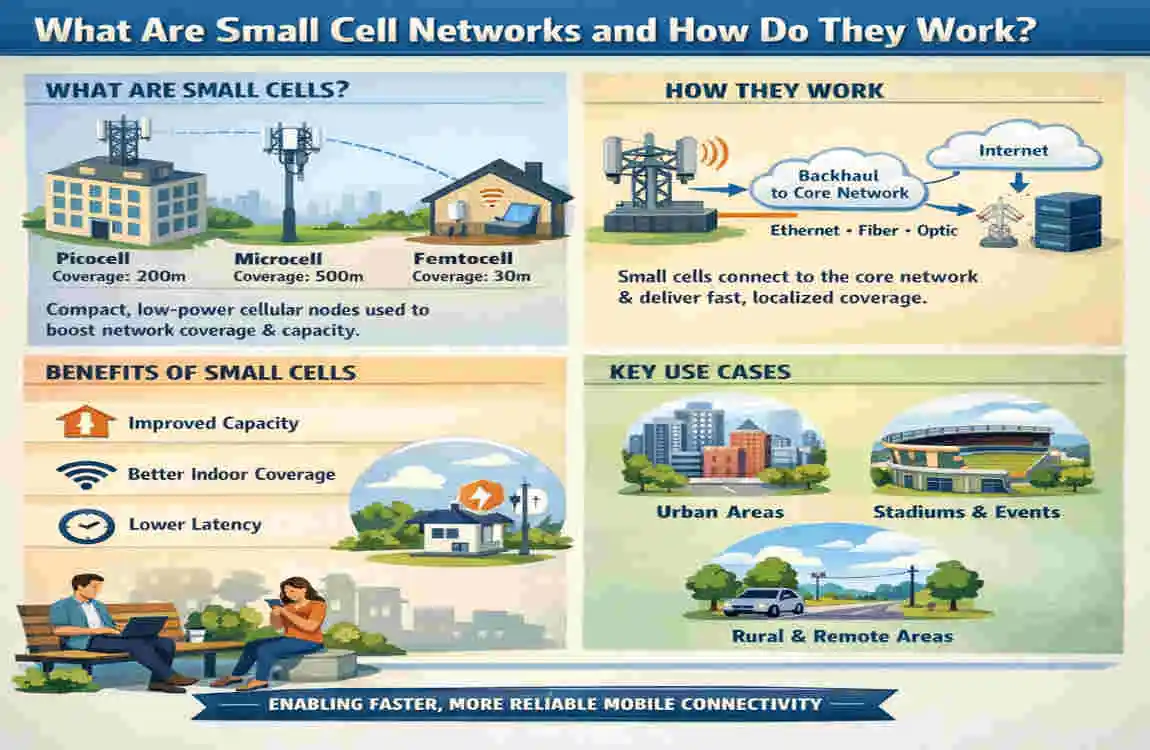
A small cell network is a group of low-power wireless devices that help boost mobile coverage in a specific area. Unlike large cell towers that cover a wide region, small cells focus on a smaller space and provide a stronger signal where it is needed most.
Think of them as local signal helpers. They are designed to support busy places where many people use wireless devices at the same time.
How They Differ From Traditional Cell Towers
Traditional cell towers cover large distances, but they can struggle in dense urban areas or inside large buildings. Small cells solve that problem by placing wireless equipment closer to users.
This shorter distance helps improve both coverage and capacity. In simple terms, more people can connect, and the signal is often better.
The Role of 4G LTE and 5G
Small cell networks can support both 4G LTE and 5G service. As 5G grows, small cells become even more important because 5G works best over shorter distances.
That makes small cells a strong fit for commercial areas with heavy traffic, tall buildings, and lots of connected devices.
Common Installation Locations
Small cells are often installed in places such as:
- Rooftops
- Exterior walls
- Parking garages
- Equipment rooms
- Indoor common areas
These locations extend service where people need it most, including lobbies, offices, retail floors, and shared spaces.
Why They Matter in Dense Commercial Areas
Busy commercial districts often have many people using phones, tablets, laptops, and wireless tools at once. Large towers alone may not handle that demand.
Small cells help fill those gaps. They make wireless service more reliable in crowded places and support daily business operations.
How Small Cell Networks Transform Commercial Real Estate
Better Connectivity for Tenants and Visitors
The biggest benefit is simple: better wireless service. Tenants can work more efficiently, visitors can stay connected, and employees can use their devices without constant frustration.
In commercial real estate, that matters. A building with strong connectivity often feels more modern and more useful.
Support for Offices, Retail, Hotels, and Industrial Properties
Different property types benefit in different ways.
Office Buildings
Offices depend on video meetings, cloud storage, and shared digital tools. Strong wireless coverage helps workers stay productive and connected.
Retail Centers
Shoppers use mobile apps, payment systems, and digital promotions. Better connectivity can improve the customer experience and support store operations.
Hotels
Guests expect fast internet for work, entertainment, and communication. Reliable wireless service can become a major part of guest satisfaction.
Industrial Properties
Warehouses and logistics spaces use connected devices, scanners, tracking tools, and automation systems. Small cells help keep those operations running smoothly.
Stronger Support for Modern Work
Many businesses now rely on remote work, hybrid schedules, and cloud-based systems. That means people need reliable access almost everywhere in the building.
Small cell networks make it easier for teams to join video calls, share files, and use apps without interruption. This can improve workflow and reduce daily stress.
Better Tenant Satisfaction and Retention
A tenant may not always notice a good network, but they will definitely notice a bad one.
When wireless service is strong, tenants are more likely to feel satisfied with the property. That can lead to longer leases, fewer complaints, and stronger tenant retention over time.
Smart Buildings and Connected Systems
Small cell networks also support smart building technology. These buildings often use connected systems for:
- Security cameras
- Access control
- Lighting
- Heating and cooling
- Occupancy tracking
- Maintenance alerts
With better connectivity, these systems can work more smoothly and respond in real time. That helps property managers run buildings more efficiently.
Attracting Technology-Focused Businesses
Many companies now choose buildings based on digital readiness. If a property supports strong wireless service, it may attract tech-driven tenants.
That can give owners an edge in a competitive leasing market.
Financial Benefits and Property Value Opportunities

Possible Income for Property Owners
One of the most interesting parts of small cell networks is the chance to earn income from available space. Landlords may lease rooftop areas, equipment rooms, or other suitable parts of the property to wireless carriers or network providers.
This can create a new revenue stream without changing the building’s primary use.
Why Connectivity Can Strengthen Competitiveness
A property with better connectivity may stand out from similar buildings nearby. In busy markets, that can make a big difference.
If tenants know a building supports fast, reliable wireless service, they may view it as a better long-term choice.
Costs and Considerations
Of course, installation is not free. Owners should consider equipment costs, labour, power, permits, and potential maintenance responsibilities.
They also need to understand how the agreement works. Some setups involve shared revenue, while others may focus on fixed rental payments.
Simple Comparison Table
Potential BenefitPossible CostKey Consideration
Better tenant connectivity Equipment and labour Does the building have enough space and access?
New rental income Permits and setup fees Who owns and maintains the equipment?
Stronger property appeal Cabling and power upgrades Will the installation disrupt operations?
Smart building support Ongoing service needs Is the network designed for long-term use?
Think About Return on Investment
Before installing anything, owners should review the expected return. The right setup can improve operations and tenant appeal, but every property is different.
A careful review helps ensure the project supports the owner’s business goals.
Installation Challenges, Regulations, and Property Management
Building Structure and Available Space
Not every property is ready for a small cell installation right away. Owners should first look at the building structure, roof access, indoor space, and equipment locations.
Some buildings may need extra cabling, power work, or technical adjustments before installation can begin.
Power, Fibre, and Access
Small cells often need reliable electrical power and fibre connectivity. They also need safe access for technicians during setup and future maintenance.
These details may seem small, but they are important for long-term performance.
Rules, Permits, and Agreements
Property owners also need to deal with zoning rules, building permits, and landlord permissions. In some cases, local regulations may affect where equipment can be placed and how it looks.
Careful agreements with network operators are also important. These agreements should cover access, responsibilities, maintenance, and any revenue terms.
Building Appearance and Ongoing Operations
Some owners worry about how the equipment will look. That is fair. Small cell installations should be planned so they do not harm the building’s appearance or interfere with daily use.
Good planning can reduce disruption and keep the property looking professional.
Security and Coordination
Because this is connected technology, security matters, equipment should be protected from tampering, and network systems should be handled by qualified providers.
Property managers should also coordinate with other building systems so everything works together smoothly.
Best Practice for Property Managers
The easiest way to reduce problems is to work with experienced telecommunications partners. They can help plan the installation, check the property’s readiness, and manage the technical details.
This lets managers focus on tenants while still improving the building’s wireless service.
Future Trends: Small Cell Networks and Smart Commercial Buildings
5G and Connected Buildings
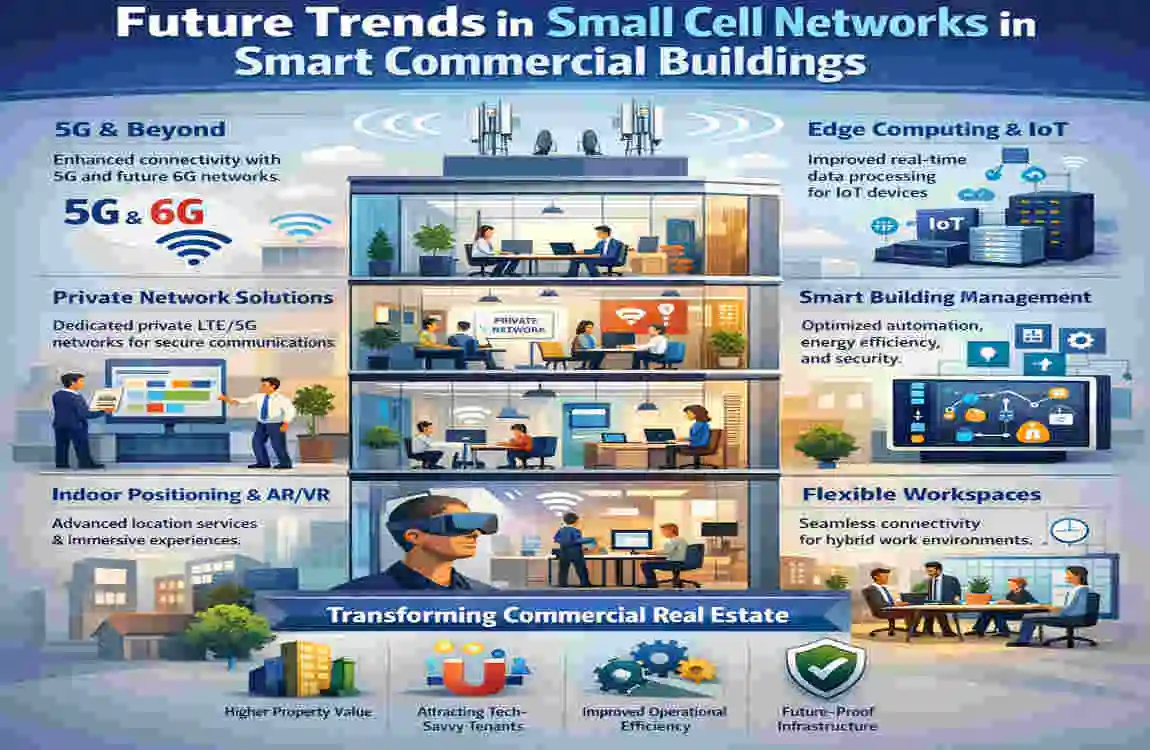
As 5G becomes more common, small cell networks will become even more important. Their short-range design fits well with the faster, more responsive demands of modern wireless use.
This is especially true in buildings that use connected tools and real-time monitoring.
Supporting IoT Devices
Small cells also help power the Internet of Things (IoT). These connected devices collect data, send alerts, and help manage building systems.
Examples include:
- Smart thermostats
- Occupancy sensors
- Security devices
- Energy monitoring systems
- Automated alerts for maintenance
Better Energy and Operations Management
Reliable connectivity helps buildings run more efficiently. Owners can track energy use, respond faster to issues, and automate common tasks.
This can reduce waste and improve the overall experience for tenants and staff.
Long-Term Leasing and Investment Decisions
Technology now plays a bigger role in leasing than it did in the past. Tenants increasingly want buildings that are future-ready.
Owners who plan for wireless infrastructure today may be better positioned tomorrow. In competitive markets, network readiness can become a real advantage.
Why Planning Matters
Commercial buildings last a long time. That is why owners should think beyond today’s needs and consider how communication technology will evolve over the next several years.
A property that is ready for future wireless demands is often a smarter long-term investment.
Frequently Asked Questions
What are small cell networks for commercial real estate?
Small cell networks are wireless systems that improve mobile coverage and capacity inside and around commercial properties. They provide stronger, more reliable service in busy buildings and dense areas.
How do small cell networks benefit commercial property owners?
They can improve tenant satisfaction, support leasing efforts, create possible income opportunities, and make the property more appealing to modern businesses.
Can small cell networks increase commercial property value?
They may improve a property’s competitiveness and usefulness, but they do not guarantee a specific increase in value. Results depend on the building, location, and market.
How much does it cost to install a small cell network?
Costs vary based on equipment, cabling, power needs, labour, permits, and the network design. Each property has its own setup requirements.
Where can you install small cells in commercial buildings?
They can be placed on rooftops, walls, parking structures, indoor common areas, and other suitable locations depending on the property.
Do small cell networks require special permits?
Often yes, but the rules depend on local regulations, the type of installation, and the property location.
Are small cell networks important for smart buildings?
Yes. They support connected devices, automation, security systems, and modern building management tools.
