
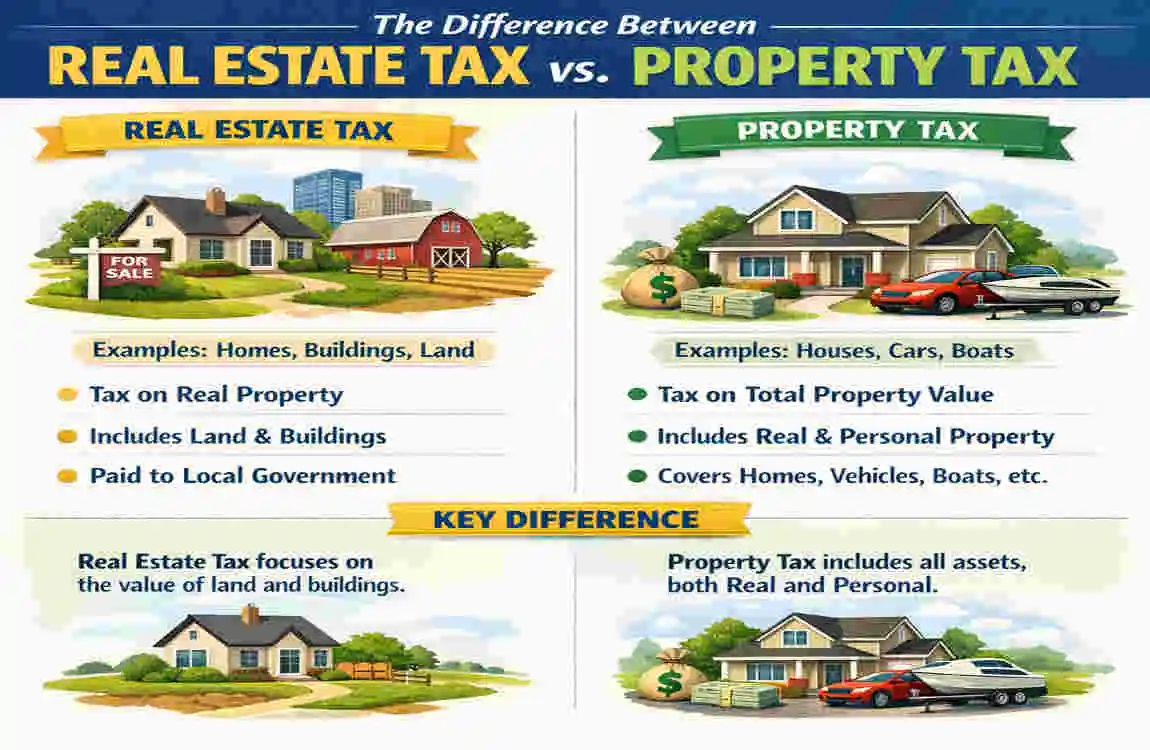
In everyday use, real estate taxes and property taxes often mean the same thing, especially in the United States. Most homeowners hear both terms and assume they point to the same bill, and in many cases, they do.
Still, the exact meaning can vary by location. Some areas use property tax as a broader term, while real estate tax may refer more specifically to tax on land and buildings. That is why it helps to know how your local government defines the terms.
If you are buying a home, owning a house, or comparing tax bills, this matters. You do not want confusion when tax season arrives or when your lender talks about escrow and monthly payments.
What Are Real Estate Taxes?
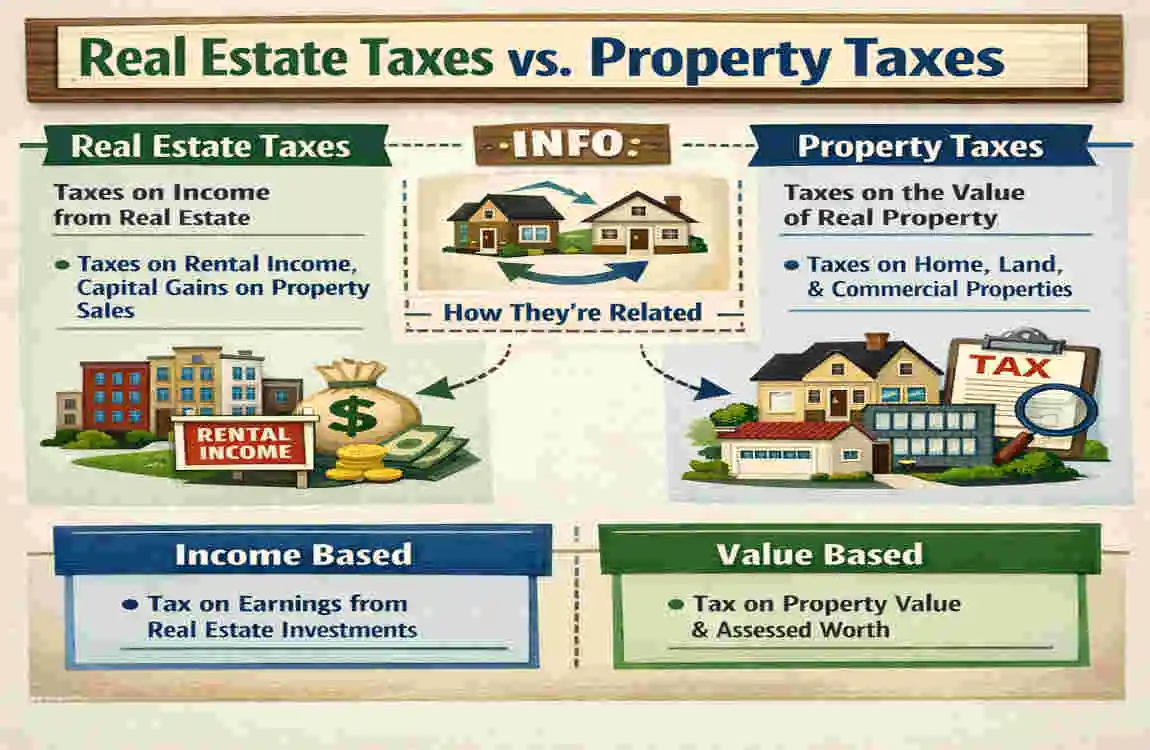
Definition of Real Estate Tax
A real estate tax is usually a tax charged on land and the buildings on it. If you own a house, condo, or other real property, this tax is often based on the value of that property.
In simple terms, the local government says your property has a certain value, then applies a tax rate to it. The money collected usually goes to local public services.
A city, county, town, or other local authority generally collects this tax. In many places, it is one of the most common taxes homeowners pay every year.
How Real Estate Taxes Work
Real estate taxes usually follow a basic process:
- The property gets assessed
- A tax rate is applied
- You receive an annual tax bill
- Payment is due by a set deadline
The assessed value is not always the same as market value. It is the value your local tax office uses to calculate what you owe.
If your property value changes, your tax bill may change too. If local tax rates go up, your bill may also rise even if your home value stays the same.
What Real Estate Taxes May Help Fund
Real estate taxes support many local services. These often include:
- Schools
- Roads and bridges
- Police and fire services
- Parks and public spaces
- Local government programs
So while the bill may feel like just another cost, it helps fund your community.
What Are Property Taxes?
Property Tax Explained
A property tax is a tax on property owned by a person or business. In many places, this means real estate, but in some cases it can also include other types of property.
That is where the confusion begins. Real property means land and buildings. Personal property can mean items like vehicles, equipment, or business assets, depending on local law.
For homeowners, the term usually refers to the tax on the home and land itself. For businesses, the tax may apply to real property and sometimes other taxable items too.
How Property Taxes Are Calculated
The basic idea is simple:
Assessed value × tax rate = estimated tax
But the real calculation may include more details, such as:
- Exemptions
- Local deductions
- Special district charges
- Reassessment changes
- Taxing authority rules
This means two homes that look similar can still have different tax bills. Location, local budgets, and exemptions all play a part.
Examples of Property Taxes
Property taxes can apply to many kinds of real estate, including:
- Single-family homes
- Condominiums
- Apartment buildings
- Commercial buildings
- Vacant land
In some areas, business equipment or personal property may also be taxed, but that depends on the local tax system.
Real Estate Tax vs. Property Tax: Key Differences
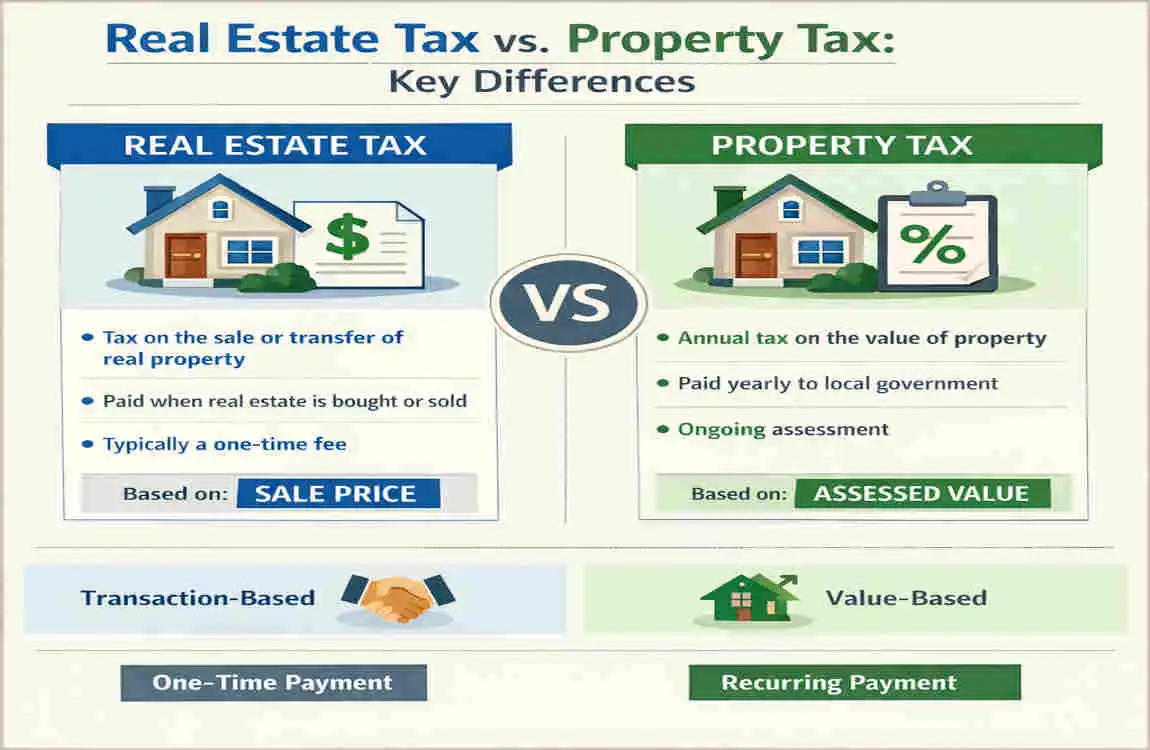
Here is a simple way to compare the two terms.
Feature Real Estate Tax Property Tax
Usually applies to Land and buildings Property, depending on local definition.
Common usage Often refers to real property taxes Broader term in some jurisdictions.
Based on value Usually yes Usually yes
Paid by Property owner Property owner
Local rules Vary by jurisdiction Vary by jurisdiction
Why the Terms Often Mean the Same Thing
In many places, people use the terms interchangeably. If you own a home, your real estate tax bill and your property tax bill may be referring to the same charge.
That is why homeowners often don’t notice a major difference in everyday conversation. The bill is the same, even if the wording changes.
When “Property Tax” Can Be Broader
In some jurisdictions, property tax can cover more than real estate. It may include taxes on business equipment, land improvements, or certain personal property.
So while real estate tax usually points to land and buildings, property tax can sometimes be the larger umbrella term.
Why Local Rules Matter
The key point is this: local tax laws define the meaning.
One city may use the terms almost the same way. Another may separate them more clearly. If you are unsure, check the wording on your tax notice or ask your local tax office.
How Real Estate and Property Taxes Affect Homeowners and Buyers
Impact on Homeownership Costs
Property taxes are not a one-time cost. They are an ongoing part of owning a home.
That means you should include them in your monthly and yearly budget. A home with a lower purchase price can still have a high tax bill, so the tax amount matters just as much as the mortgage.
For many homeowners, taxes are one of the biggest recurring housing costs.
Impact on Buying a Home
If you are buying a home, always look at the current property tax bill. It gives you a useful starting point, but it may change after you purchase.
That is because the home may be reassessed when ownership changes. If the new assessed value is higher, your taxes may increase.
You should also research local rates before making an offer. Two homes with similar prices can have very different annual tax costs.
Property Taxes and Mortgages
Many lenders collect property taxes through an escrow account. This means part of your mortgage payment goes toward taxes each month.
When the lender pays the tax bill for you, it helps you avoid one large lump-sum payment. But if taxes go up, your monthly mortgage payment may rise too.
That is why property taxes are important not just at closing, but throughout the life of the loan.
How to Estimate and Reduce Your Property Tax Bill
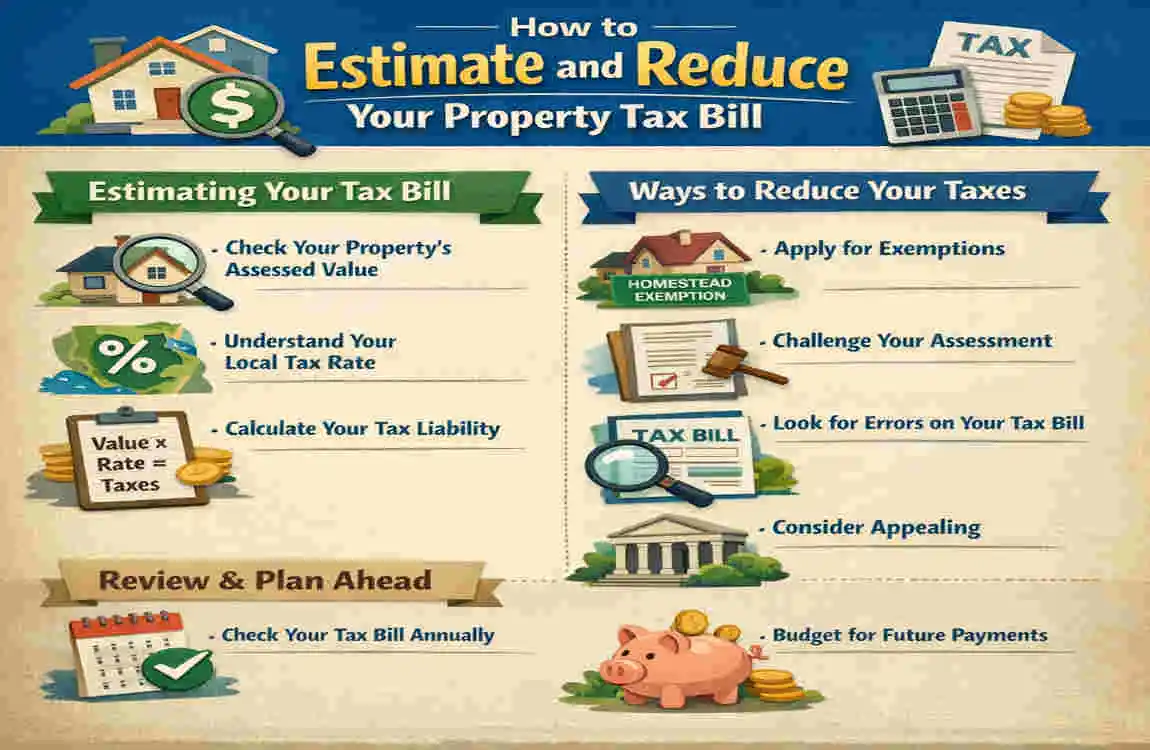
Estimating Your Tax
The basic formula is:
Assessed Value × Applicable Tax Rate = Estimated Tax
This gives you a rough number, but the final amount may change because of exemptions, credits, or local special assessments.
For a better estimate, use the current assessed value and the tax rate in your area. Then check whether any relief programs apply to you.
Common Tax Relief Options
Some homeowners qualify for tax relief. Common examples include:
- Homestead exemptions
- Senior exemptions
- Veteran exemptions
- Local property-tax relief programs
These programs aren’t available everywhere, and the rules can differ from place to place. Still, they can make a real difference in your yearly bill.
What to Do if You Disagree With an Assessment
If you think your property was valued too high, do not ignore the notice. Review it carefully and compare it with similar properties nearby.
Then take these steps:
- Check the assessment notice
- Look at comparable properties
- Contact the local assessment office
- Find the appeal deadline
- Gather documents that support your case
A successful appeal usually depends on good records and quick action.
Frequently Asked Questions About Real Estate and Property Taxes
Are real estate taxes the same as property taxes?
Usually, yes. In everyday use, the terms are often interchangeable. But local laws may define them differently, so it is best to check how your area uses the terms.
Is property tax the same as real estate tax on a house?
Most of the time, yes. If you own a house, the property tax on that home is often called a real estate tax.
Who pays real estate or property taxes?
The property owner is generally responsible for paying them. If you have a mortgage, your lender may collect the money through escrow and pay the bill.
How are real estate taxes calculated?
They are usually based on the property’s assessed value and the local tax rate. Exemptions, credits, and local rules may also affect the final amount.
Can property taxes increase every year?
Yes, they can. A tax bill may rise because of reassessment, higher local tax rates, property improvements, or changes in local government funding needs.
Are property taxes included in mortgage payments?
Often, yes. Many lenders include them in an escrow payment as part of your monthly mortgage amount.
Can you appeal a property tax assessment?
Yes, in most areas you can. The process usually involves reviewing the assessment, comparing similar properties, and filing an appeal before the deadline.
Why are property taxes different from one location to another?
They vary because of differences in property values, tax rates, local budgets, exemptions, and government policy. This is why two similar homes in different places can have very different tax bills.
| Feature | Real Estate Tax | Property Tax |
|---|---|---|
| Meaning | Tax charged on real estate such as land and buildings | Tax charged on property owned by an individual or business |
| What It Covers | Mainly land and permanent structures | Can include real estate and, in some places, other types of property |
| Who Pays? | Property or landowner | Property owner |
| Based On | Assessed value of the real estate | Assessed value according to local tax rules |
| Common Use | Local government services and infrastructure | Schools, roads, public services, and local government |
| Key Difference | Usually focuses specifically on real estate | Can be a broader term depending on the location |
