
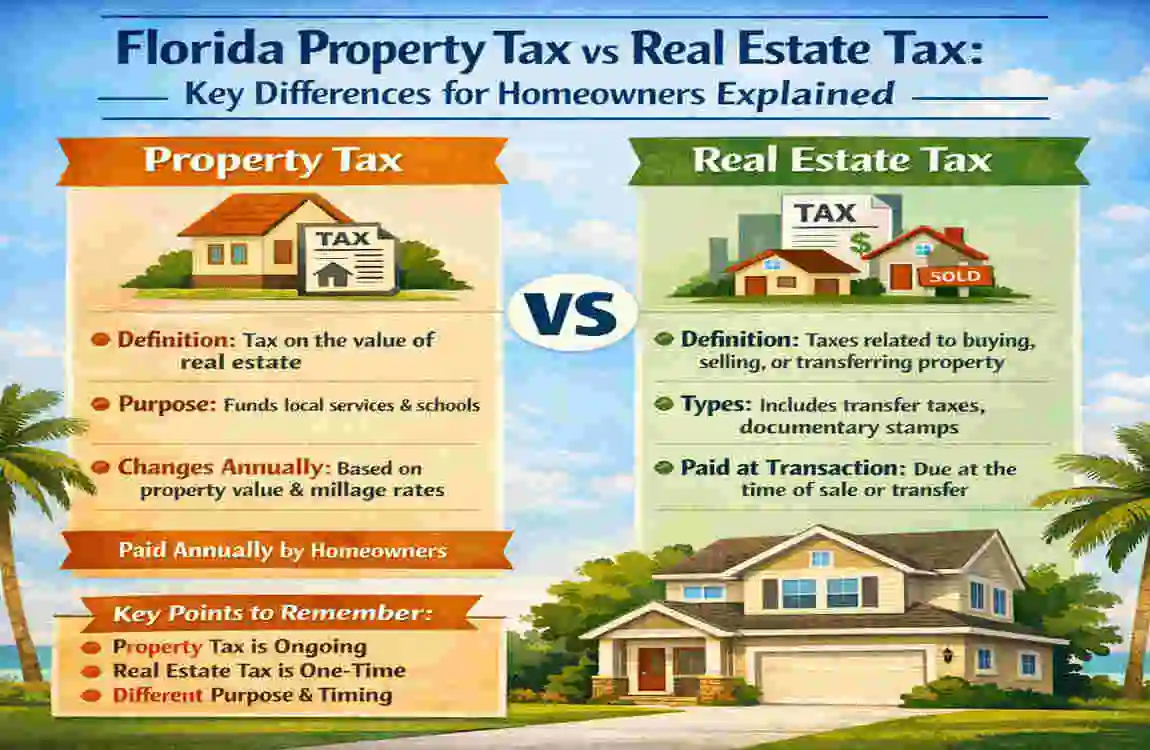
What’she difference is between real estate tax and property tax in Florida? You’re not alone. Many homeowners and buyers get confused by these terms because they often seem to overlap. But understanding the distinction—or the lack thereof—can save you money and headaches when managing your home expenses.
In Florida, the terms “property tax” and “real estate tax” are often used interchangeably, especially when referring to taxes on your home or land. However, there are subtle differences when you look at the broader tax system, especially if you own other types of property like business equipment or boats.
| Aspect | Pros | Cons |
|---|---|---|
| Legality | Allowed nationwide if disclosed | State/broker rules may add paperwork |
| Cost Savings | Skip listing commission (2.5-3%) | Still pay buyer’s agent fee (~2.5%) |
| Control | Full pricing, marketing decisions | Emotional bias risks overpricing |
| Expertise | MLS access, buyer network | Perceived conflicts erode buyer trust |
| Risk | Faster process for pros | Higher lawsuit risk (no E&O coverage) |
| Options | FSBO or self-list via brokerage | Many agents hire outsiders for objectivity |
Core Definitions and Terminology
What Is Property Tax in Florida?
Property tax in Florida is an ad valorem tax, which means it’s based on the value of your property. This tax applies to real property, including the land and any structures on it, such as your house or a garage.
Each year, your property is assessed by the county property appraiser as of 1 January. This assessed value is what the tax is based on—not necessarily the price you paid for your home. The tax is collected locally and is typically due by November 1st each year.
This tax helps fund local services, including schools, police, fire departments, and infrastructure. Because it’s collected locally, rates can vary widely depending on where you live in Florida.
What Is Real Estate Tax in Florida?
In Florida, real estate tax is the same as property tax for residential real estate. The IRS and local governments use these terms interchangeably for taxes on homes, condos, and land.
To clarify, here’s a simple table showing how these terms apply:
Term Applies To Florida Context
Property Tax Real property + personal property Mostly real property for homeowners
Real Estate Tax Land + fixed structures , Same as property tax for homes and condos
So, if you own a home in Florida, your real estate tax and property tax are the same. The confusion usually arises because “property tax” can also refer to taxes on personal property, such as business equipment, which is less common among typical homeowners.
Key Differences Explained
Real Property Tax vs Personal Property Tax
Here’s where things get interesting. While real estate tax focuses on immovable property—your land and buildings—property tax can be broader in scope. It includes personal property, which means movable items like business equipment or machinery.
In Florida, however, there is no personal property tax on vehicles like cars or boats. This is a big relief for many residents. But if you own a business, you might pay personal property tax on equipment used in your operations.
So, for most homeowners, the term “property tax” really just means the tax on their home and land, which is the same as real estate tax.
Why Terms Overlap for Florida Homeowners
For residential properties, the terms overlap because the tax is calculated and collected the same way. When you buy or sell a home, the tax is prorated based on the millage rates—local tax rates expressed in mills (thousandths of a dollar).
Here’s a quick comparison to help you see the overlap:
Aspect Real Estate Tax Broader Property Tax
Taxed Items: Homes, land, buildings. Includes equipment, boats, and other assets
Rate Example: Around 0.9% average in Miami-Dade. Varies, often lower for personal property
Payment Annual, due 1 November , mostly for businesses
Florida-Specific Nuances
Florida has some unique rules that affect your property tax bill:
- Save Our Homes Cap: This limits how much your assessed value can increase each year to 3%, protecting homeowners from sudden spikes.
- Post-Sale Reset: When you buy a home, the assessed value resets to the purchase price, which can sometimes increase your tax bill if the previous owner had a lower assessed value.
These nuances are important to understand because they directly impact how much you pay each year.
How Taxes Are Calculated
Florida Property Tax Calculation Formula
Calculating your property tax in Florida is straightforward once you know the formula:
Assessed Value × Millage Rate ÷ 1000 = Tax Owed
Let’s break it down with an example:
Imagine you own a home assessed at $300,000, and your local millage rate is 20 mills.
- Step 1: Multiply $300,000 by 20 mills (20 per $1,000 of value).
- Step 2: Divide by 1,000.
- Step 3: $300,000 × 20 ÷ 1,000 = $6,000 tax owed.
Here’s a simple numbered list of the steps:
- Determine the just (market) value of your property by the county appraiser.
- Apply any exemptions you qualify for, like the homestead exemption ($50,000 reduction).
- Multiply the taxable value by the local millage rate to find your tax bill.
Factors Affecting Your Bill
Several factors can change your property tax amount:
- Location: Urban areas like Miami tend to have higher rates (around 1.2%) compared to rural counties (around 0.7%).
- Improvements, such as adding a pool or remodeling, can increase your assessed value.
- Exemptions: Qualifying for homestead or senior exemptions lowers your taxable value.
Here’s a placeholder for a 2026 rate trends chart to visualize these differences:
County Average Millage Rate Effective Tax Rate (%)
Miami-Dade 20 1.2
Hillsborough 18 1.0
Rural County X 12 0.7
Exemptions and Savings for Homeowners
Top Florida Property Tax Exemptions
Florida offers several exemptions to help homeowners save money:
- Homestead Exemption: Reduces your taxable value by $50,000 and caps annual increases.
- Senior Citizens: Additional exemptions or caps for those over 65.
- Veterans and Disabled: Various exemptions depending on service and disability status.
- Widow(er)s: Extra $500 exemption.
- Deployed Military: Total exemption while deployed.
Here’s a quick list of common exemptions with eligibility:
- Homestead: Must be your primary residence.
- Seniors: Age 65+ with income limits.
- Veterans: Proof of service and disability.
- Widows/Widowers: Must be Florida residents.
- Military: Active deployment status.
Real Estate Tax Deductions on Federal Returns
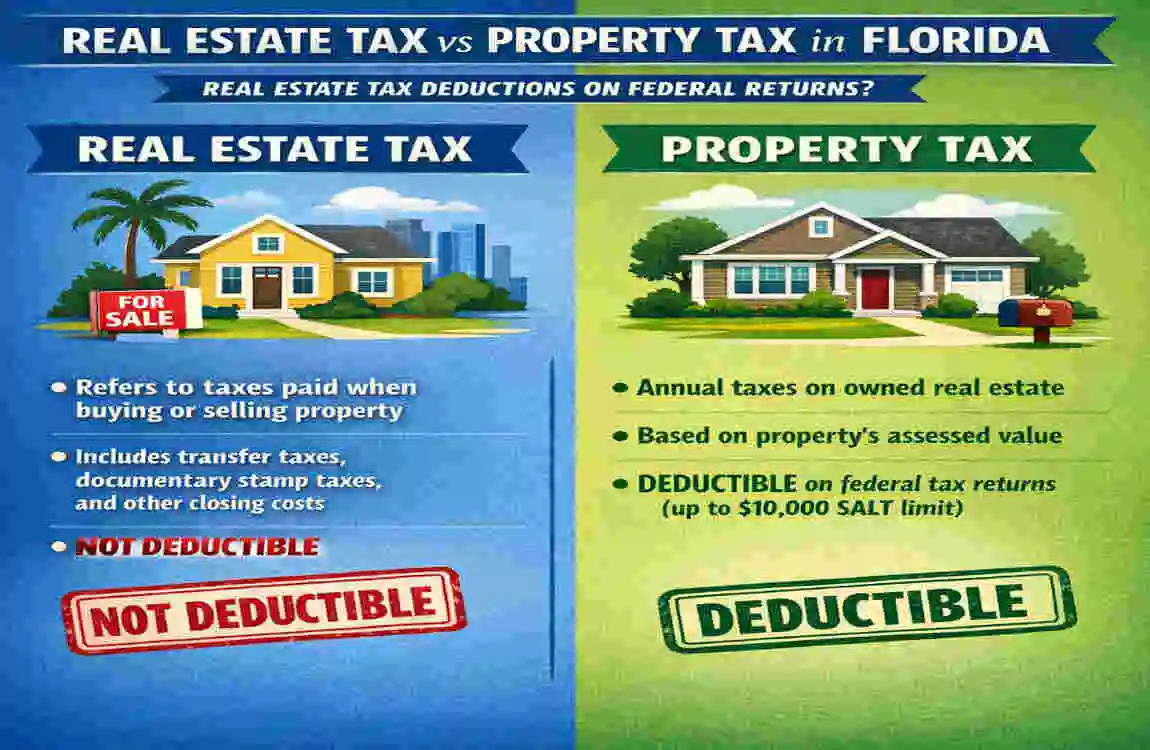
You can also deduct your property (real estate) taxes on your federal income tax return if you itemize deductions. However, the SALT (State and Local Tax) deduction cap is $10,000, so keep that in mind when planning your taxes.
Practical Impacts for Homeowners
Buying/Selling: Proration at Closing
When you buy or sell a home in Florida, property taxes are prorated at closing. This means:
- The seller pays taxes up to the date of sale.
- The buyer pays taxes from the date of sale forward.
For example, if you close on 1 April, the seller covers taxes from 1 January to 31 March, and you pay from 1 April to 31 December.
This ensures fairness so neither party pays for time they don’t own the property.
Budgeting and Appeals
It’s smart to budget for your property taxes as part of your annual home expenses. If you think your property has been over-assessed, you can appeal through the county’s Value Adjustment Board.
Most counties have online portals where you can check your assessment, file appeals, and find helpful tools to estimate your taxes.
FAQs
What’s the difference between real estate tax and property tax in Florida?
For homeowners, there is no difference. Both terms refer to the tax on your land and home. The confusion arises because “property tax” can also include personal property taxes, which are rare for most Florida residents.
What is the average Florida property tax rate?
The average effective property tax rate in Florida is about 0.8% to 1.1% of the assessed value, with a median tax bill of around $2,338 annually.
How can I lower my property tax bill?
You can lower your bill by applying for exemptions like the homestead exemption, appealing your assessment if it’s too high, or ensuring you qualify for senior or veteran exemptions.
When are property taxes due in Florida?
Property taxes are due by 1 November each year, with discounts available for early payment.
Does Florida tax personal property, such as cars?
No, Florida does not have a personal property tax on vehicles or boats, which is a big plus for residents.
