
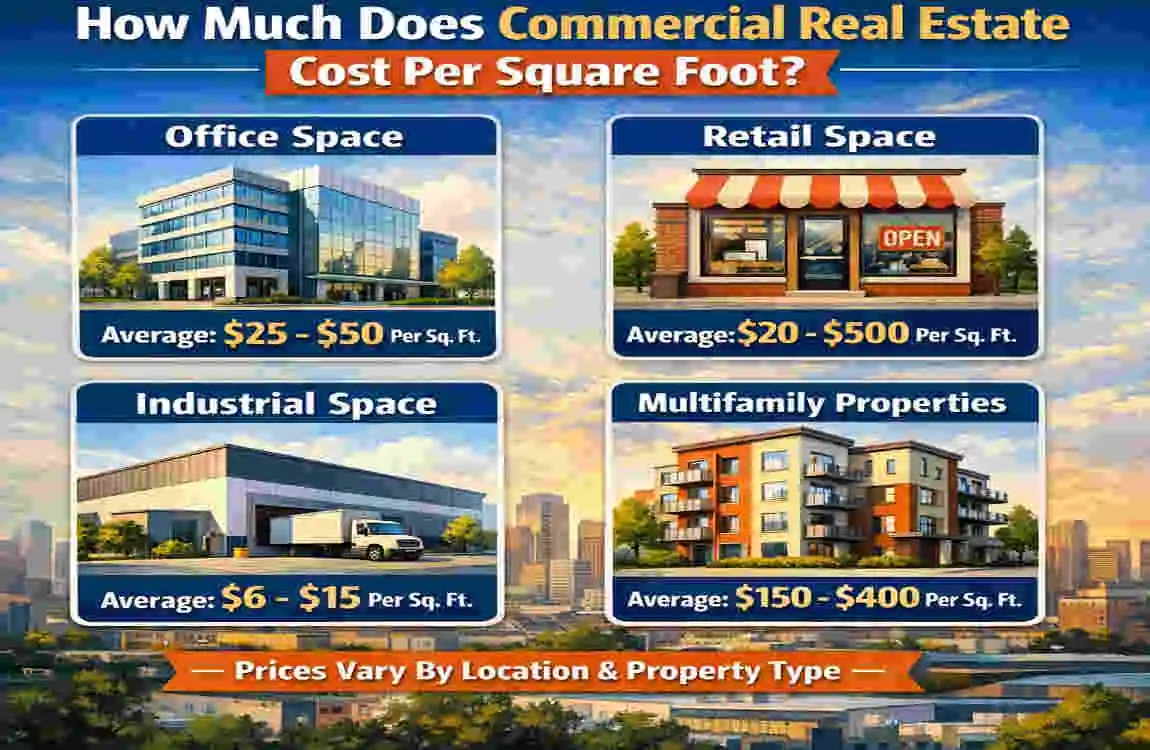
The average cost of commercial real estate per square foot can vary widely depending on the property type, location, and market demand. A small office in a busy downtown area may cost far more than a warehouse in a suburban industrial zone. That is why understanding price per square foot is so important before you start buying commercial real estate.
Commercial real estate is not one single market. It includes office buildings, retail centres, industrial properties, medical spaces, multifamily buildings, and mixed-use developments. Each one has its own pricing pattern. So instead of looking at price as one big number, it is better to break it down by square foot. That gives you a clearer view of commercial property value and helps you judge whether a deal is fair.
What Is the Average Cost of Commercial Real Estate Per Square Foot?
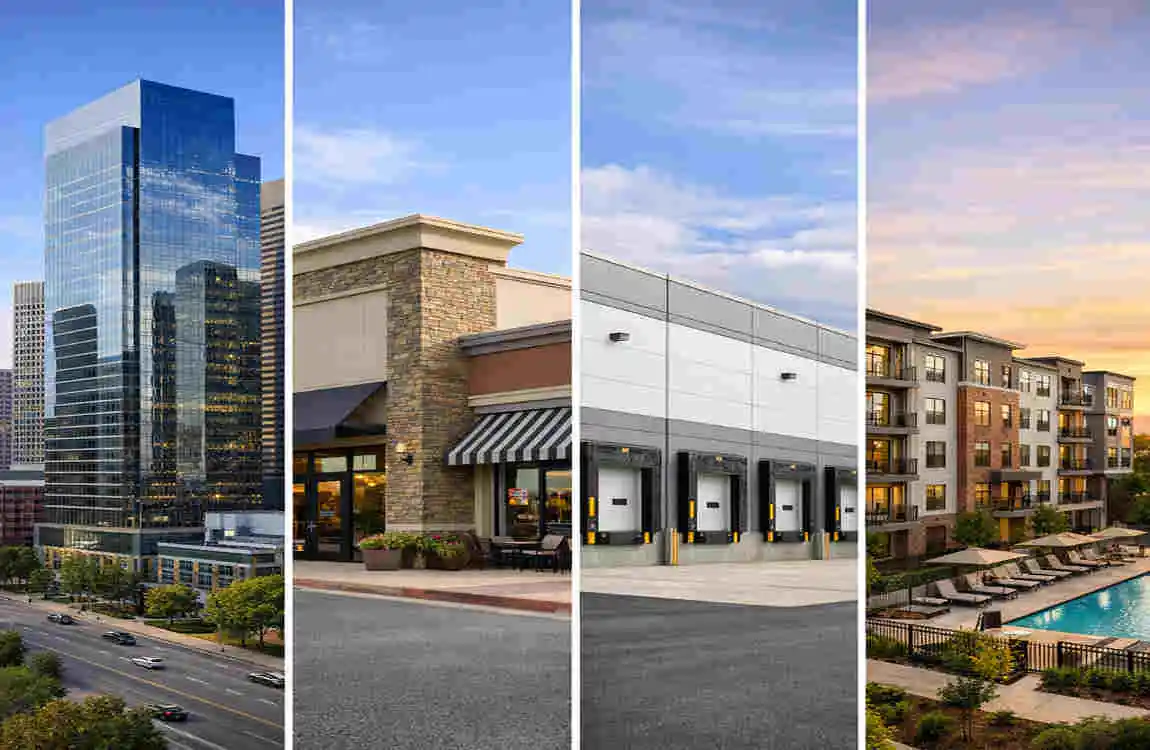
The average cost of commercial real estate per square foot usually ranges from $60 to over $500, depending on the property type and location. In simple terms, the more desirable the area and the better the building, the higher the price.
Buying and leasing are different too. When you buy, you pay the full price of the property. When you lease, the price per square foot usually refers to annual rent, not ownership cost. This means the same building can have very different numbers depending on whether you are looking at purchase price or lease terms.
Here is a simple breakdown of typical commercial property pricing:
Property Type Average Cost Per Sq. Ft.
Office Space $150–$500
Retail Space $100–$400
Industrial/Warehouse $60–$250
Multifamily Commercial $120–$350
Mixed-Use Property $180–$500+
These are broad averages, not fixed rules. A small warehouse in a low-cost market may fall below this range, while a luxury mixed-use property in a top city can go far above it.
Location also plays a major role. A building in a major city centre often costs much more than a similar one in a smaller market. That is why two properties with the same size can have very different commercial real estate pricing.
Factors That Affect Commercial Real Estate Prices
Many things shape the final price of a commercial property. If you understand these factors, you can make better choices and avoid overpaying.
Property Location
Location is one of the biggest price drivers. A downtown office tower usually costs more than a suburban office park because it offers better visibility, stronger foot traffic, and easier access.
State and city differences matter too. Some markets have higher taxes, stronger business growth, or tighter supply. That pushes commercial property prices per square foot upward.
Property Type
Different property types serve different buyers and tenants.
- Office properties often cost more in business districts.
- Retail spaces depend heavily on traffic and neighbourhood activity.
- Warehouses are usually cheaper because they need less prime land.
- Medical properties may cost more due to specialised build-outs.
- Hospitality properties can be expensive because they require more features and upkeep.
Building Age and Condition
Older buildings often sell for less, especially if they need repairs, updates, or code improvements. A newer building with modern systems, good energy efficiency, and clean finishes usually commands a higher price.
A well-maintained property also lowers risk for buyers. That is why condition matters just as much as size.
Market Demand
When demand is high and supply is low, prices rise. This is true for both buying and leasing. If many businesses want space in the same area, the commercial property value usually increases.
Local Economy
A strong local economy often supports higher property prices. Areas with job growth, new companies, and population growth tend to attract more buyers and tenants.
Amenities and Infrastructure
Easy highway access, nearby parking, public transit, loading docks, modern HVAC systems, and internet access all add value. These details may not seem huge at first, but they often make a big difference in real-world pricing.
Commercial Real Estate Cost by Property Type
Different property types come with different buyer goals and investment levels. Let’s look at the most common ones.
Office Buildings
Office buildings can range from small suburban spaces to large downtown towers. Their price depends on location, class, and tenant demand.
Average pricing: Mid to high range
Investment potential: Strong in business-heavy markets
Typical buyers: Investors, companies, developers
Office properties can be a smart choice, but they also depend heavily on work trends and tenant stability.
Retail Centers
Retail properties include storefronts, strip malls, and shopping centres. These buildings often earn value from foot traffic and tenant mix.
Average pricing: Moderate to high range
Investment potential: Good in busy commercial zones
Typical buyers: Retail investors, developers, real estate funds
Retail property value rises when the area is active and the tenants are stable.
Industrial Warehouses
Industrial buildings are often more affordable than office or retail properties. They are popular because they support logistics, storage, and manufacturing.
Average pricing: Usually lower than other property types
Investment potential: Very strong in supply chain markets
Typical buyers: Investors, businesses, logistics companies
Warehouse cost per square foot is often attractive to buyers seeking lower entry costs and steady demand.
Multifamily Commercial Properties
These include apartment buildings with commercial-scale ownership structures. Their pricing often depends on rental income and occupancy.
Average pricing: Moderate
Investment potential: Strong when rental demand is high
Typical buyers: Investors, property groups, syndications
Mixed-Use Developments
Mixed-use properties combine living, shopping, office, or entertainment spaces. They often cost more because they serve multiple purposes and are usually in prime locations.
Average pricing: High
Investment potential: Strong, but more complex
Typical buyers: Developers, long-term investors
Commercial Property Prices by Location
Location can change prices more than almost anything else. A building in New York or Los Angeles will usually cost far more per square foot than the same building in a smaller city.
Major Cities
In cities like New York, Los Angeles, Chicago, Dallas, and Miami, prices are often high because demand is strong and available land is limited. These markets also attract investors who want long-term growth.
Smaller Cities
Smaller cities often offer lower commercial property prices. That can be a big advantage if you want a lower entry cost and less competition.
Rural Markets
Rural areas usually have the lowest prices. However, the lower cost may come with weaker tenant demand, fewer services, and slower appreciation.
The key is to match the market with your goal. If you want steady rental income, look for a growing area. If you want lower upfront cost, a smaller market may make more sense.
How to Calculate Commercial Property Cost Per Square Foot
The formula is simple:
Cost Per Square Foot = Property Price ÷ Total Square Feet
For example, if a building costs $1,000,000 and has 5,000 square feet, the cost per square foot is:
$1,000,000 ÷ 5,000 = $200 per square foot
That number helps you compare one building to another.
It is also important to know the difference between:
- Gross square footage: The full building size
- Rentable square footage: The space that can be leased
- Usable square footage: The space a tenant can actually use
These numbers are not always the same, so always check which one is being used.
Tips for Buying Commercial Real Estate

Buying commercial real estate takes careful planning. A good deal is not only about the price tag. It is also about income potential, repair costs, and future growth.
Here are a few smart steps to follow:
- Set a realistic budget before you start looking.
- Compare several listings so you understand market pricing.
- Research neighbourhood growth and business activity.
- Hire a commercial real estate broker who knows the local market.
- Inspect the property carefully for damage or hidden costs.
- Review financing options and loan terms before making an offer.
- Think about long-term ROI, not just the purchase price.
These steps can help you avoid mistakes and make a more confident decision.
Is Commercial Real Estate a Good Investment?
For many buyers, the answer is yes. Commercial real estate can offer strong long-term value, especially if the property has good tenants and a solid location.
Why Investors Like It
Commercial properties can generate rental income, appreciate over time, and offer tax advantages. They may also give you more control than some other types of investments.
What to Watch Out For
There are risks too. Vacancies, repairs, loan costs, and market changes can affect returns. If the local economy slows down, the property may lose value or take longer to lease.
Still, many investors see commercial real estate as a strong long-term asset when they buy wisely and manage it well.
Frequently Asked Questions
What is the average cost of commercial real estate per square foot?
It usually ranges from $60 to over $500 per square foot, depending on the property type, location, and market conditions.
Why does commercial property cost vary so much?
Prices vary by location, property condition, demand, amenities, zoning, and local economic strength.
Which commercial property type is the most affordable?
Industrial warehouses and storage properties are often the most affordable options.
How do I calculate the cost per square foot for commercial real estate?
Divide the total property price by the total square footage.
Is buying commercial real estate better than leasing?
Buying builds equity and long-term value, while leasing offers more flexibility and a lower upfront cost.
What factors increase commercial property value?
Good location, modern features, strong tenant demand, updated infrastructure, and local growth can all raise value.
| Factor | Average Commercial Real Estate Cost Per Square Foot |
|---|---|
| Office Space | $150–$500+ per sq. ft. |
| Retail Space | $100–$400+ per sq. ft. |
| Industrial/Warehouse | $50–$250 per sq. ft. |
| Land (Commercial) | Varies widely by location and zoning |
| Prime Urban Areas | $500–$2,000+ per sq. ft. |
| Suburban Areas | $100–$300 per sq. ft. |
| Factors Affecting Cost | Location, property type, building age, amenities, market demand, and condition |
| Average U.S. Range | $50–$500+ per sq. ft. depending on the market and property type |
