
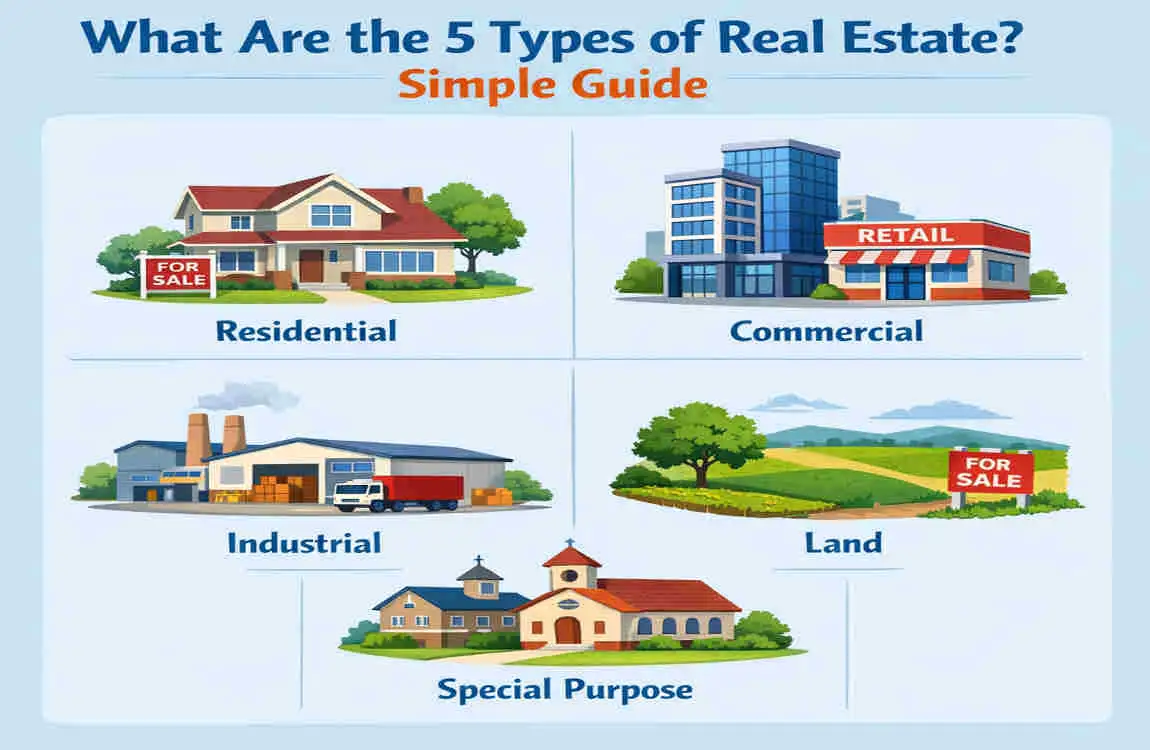
If you are asking what the 4 types of real estate are, the answer is simple: residential, commercial, industrial, and land. These four categories cover most property you will see in the market.
Understanding them matters because each type works differently. Some are better for living in, some for running a business, and others for long-term investment. When you know the difference, you can make smarter choices with your money and your goals.
What Is Real Estate?

Definition of Real Estate
Real estate means land and anything permanently attached to it, like houses, buildings, or other structures. It is different from personal property, which includes things you can move, like furniture, cars, or tools.
So, a home is real estate. The sofa inside it is personal property.
Why Real Estate Matters
Real estate plays a big role in daily life and wealth building. People use it for:
- Living
- Doing business
- Investing
- Creating long-term value
Because of this, real estate is often seen as one of the most important asset classes in the world.
What Are the 4 Types of Real Estate?
Residential Real Estate
Residential real estate is property used for people to live in. This is the type most people know best.
Common examples include:
- Single-family homes
- Condominiums
- Townhouses
- Apartments
- Vacation homes
This type is usually the easiest for beginners to understand because it is part of everyday life.
Commercial Real Estate
Commercial real estate is property used for business purposes. These properties help companies earn money or serve customers.
Examples include:
- Office buildings
- Retail stores
- Shopping centers
- Hotels
- Restaurants
Commercial property often costs more than residential property, but it can also bring in higher rental income.
Industrial Real Estate
Industrial real estate is used for storage, production, and large-scale operations. It is not meant for living or regular shopping.
Examples include:
- Warehouses
- Manufacturing facilities
- Distribution centers
- Research facilities
This type has become more important as online shopping and shipping have grown.
Land
Land is property that has not yet been developed or built on. It can be used in many ways depending on location and zoning.
Examples include:
- Undeveloped land
- Agricultural land
- Recreational land
- Future development land
Land can be a strong long-term investment, but it usually does not produce income right away.
Which Type of Real Estate Is Best for Investment?
The best choice depends on your goals and budget.
Residential Investment
Residential property can be a good option if you want steady demand. People always need places to live, so rental income can be more predictable.
It also gives you a chance to benefit from appreciation, which means the property may increase in value over time.
Commercial Investment
Commercial property often offers higher income potential than residential property. Many leases are also longer, which can mean more stability.
However, it usually needs more money upfront and may be affected more by the economy.
Industrial Investment
Industrial real estate can be attractive because of growing demand for shipping, storage, and logistics. Many industrial tenants sign long leases and often take care of the property well.
Land Investment
Land can grow in value over time, especially if the area develops. It may also offer future building opportunities.
Still, it usually does not create income right away, so patience is important.
Advantages and Disadvantages of Each Type
Residential
Pros:
- Easy to understand
- High demand
Cons:
- Maintenance costs
- Tenant management
Commercial
Pros:
- Higher rental income
- Long-term leases
Cons:
- Higher purchase price
- More sensitive to economic changes
Industrial
Pros:
- Stable tenants
- Low maintenance
Cons:
- Specialized properties
- Location matters a lot
Land
Pros:
- Low maintenance
- Possible future growth
Cons:
- No immediate income
- Development risk
How to Choose the Right Type of Real Estate
Define Your Goals
First, ask yourself why you want to buy property.
Do you want:
- A home to live in?
- A property to rent out?
- A business space?
- A long-term investment?
Your goal will help guide your choice.
Set Your Budget
Real estate is not just about the purchase price. You also need to think about:
- Closing costs
- Repairs
- Taxes
- Insurance
- Financing
Knowing your budget helps you avoid stress later.
Research the Market
Always look at the area before buying. Check:
- Location
- Demand
- Price trends
- Future growth
A good property in a weak market may not perform well.
Consider Risk Level
Some properties are safer, while others can bring higher rewards but more risk.
Think about whether you want:
- Short-term income
- Long-term growth
- Low maintenance
- Higher returns with more risk
Common Mistakes to Avoid
Here are a few mistakes many beginners make:
- Buying without research
- Ignoring maintenance costs
- Choosing the wrong location
- Overestimating rental income
- Skipping professional advice
Taking time to plan can save you money and stress.
Tips for First-Time Real Estate Buyers

If you are new to property, start simple.
- Learn the basics
- Compare property types
- Work with trusted professionals
- Inspect the property carefully
- Understand your financing options
These steps can help you feel more confident before making a big decision.
Future Trends in Real Estate
Real estate keeps changing. Some major trends include:
- Smart homes
- Sustainable buildings
- Industrial growth from e-commerce
- Mixed-use developments
- Technology in property management
These trends are shaping how people buy, sell, and use property.
Frequently Asked Questions
What are the 4 types of real estate?
The four main types are residential, commercial, industrial, and land.
Which type of real estate is the most profitable?
It depends on your goals, budget, and market conditions. No single type is best for everyone.
Is land considered real estate?
Yes, land is a type of real estate, including vacant land, agricultural land, and development land.
What is residential real estate?
Residential real estate includes homes, apartments, condominiums, townhouses, and other places where people live.
What is commercial real estate?
Commercial real estate includes offices, shops, malls, hotels, and other business properties.
What is industrial real estate?
Industrial real estate includes warehouses, factories, manufacturing plants, and distribution centres.
| Real Estate Type | Description | Examples | Primary Purpose |
|---|---|---|---|
| Residential Real Estate | Properties designed for people to live in. | Single-family homes, apartments, condos, townhouses | Living and housing |
| Commercial Real Estate | Properties used for business activities. | Office buildings, retail stores, shopping malls, hotels | Business operations and income |
| Industrial Real Estate | Properties used for manufacturing, storage, and distribution. | Warehouses, factories, distribution centers | Production and logistics |
| Land | Undeveloped or vacant property that can be developed or used for agriculture. | Vacant lots, farmland, ranches | Development, farming, or investment |
